Honey Gourami: Trichogaster chuna
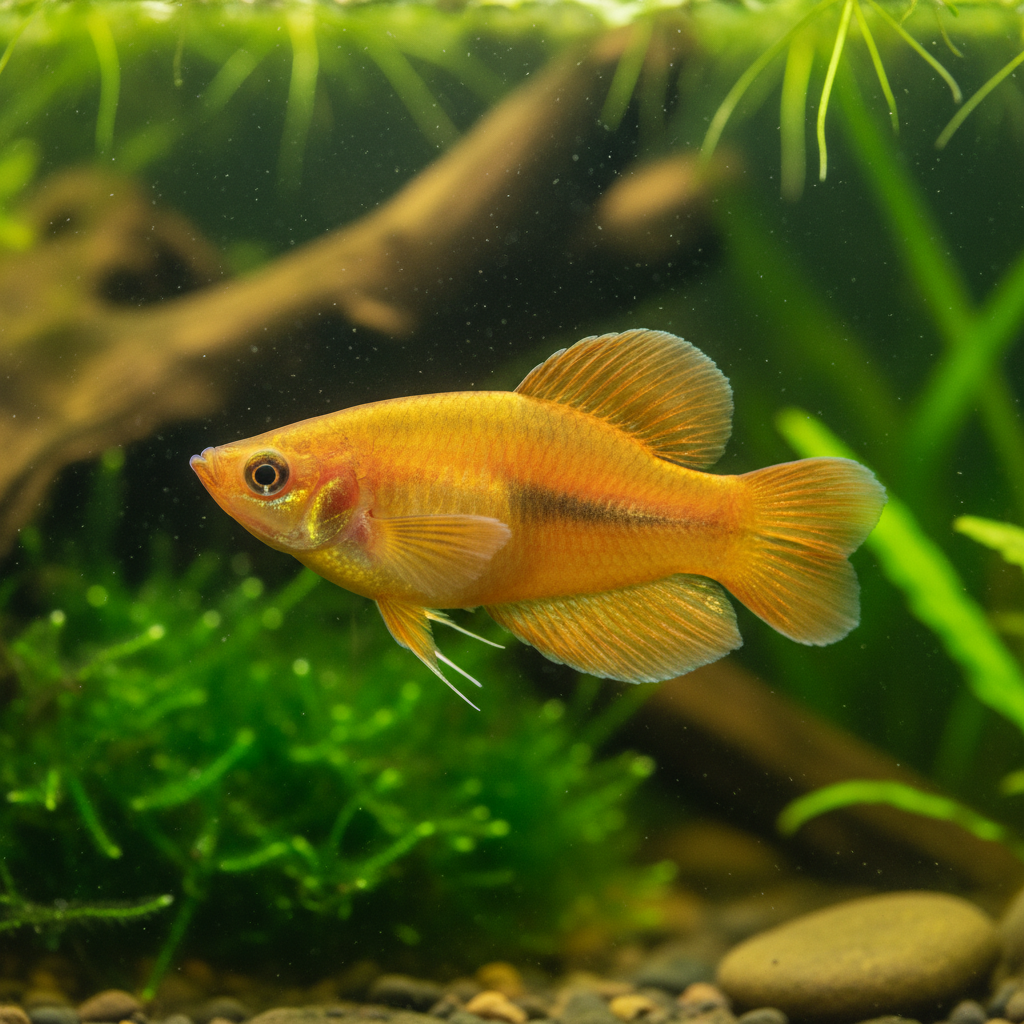
The Honey Gourami (Trichogaster chuna) is a gentle, golden labyrinth fish that is smaller, hardier, and significantly more peaceful than the common Dwarf Gourami.
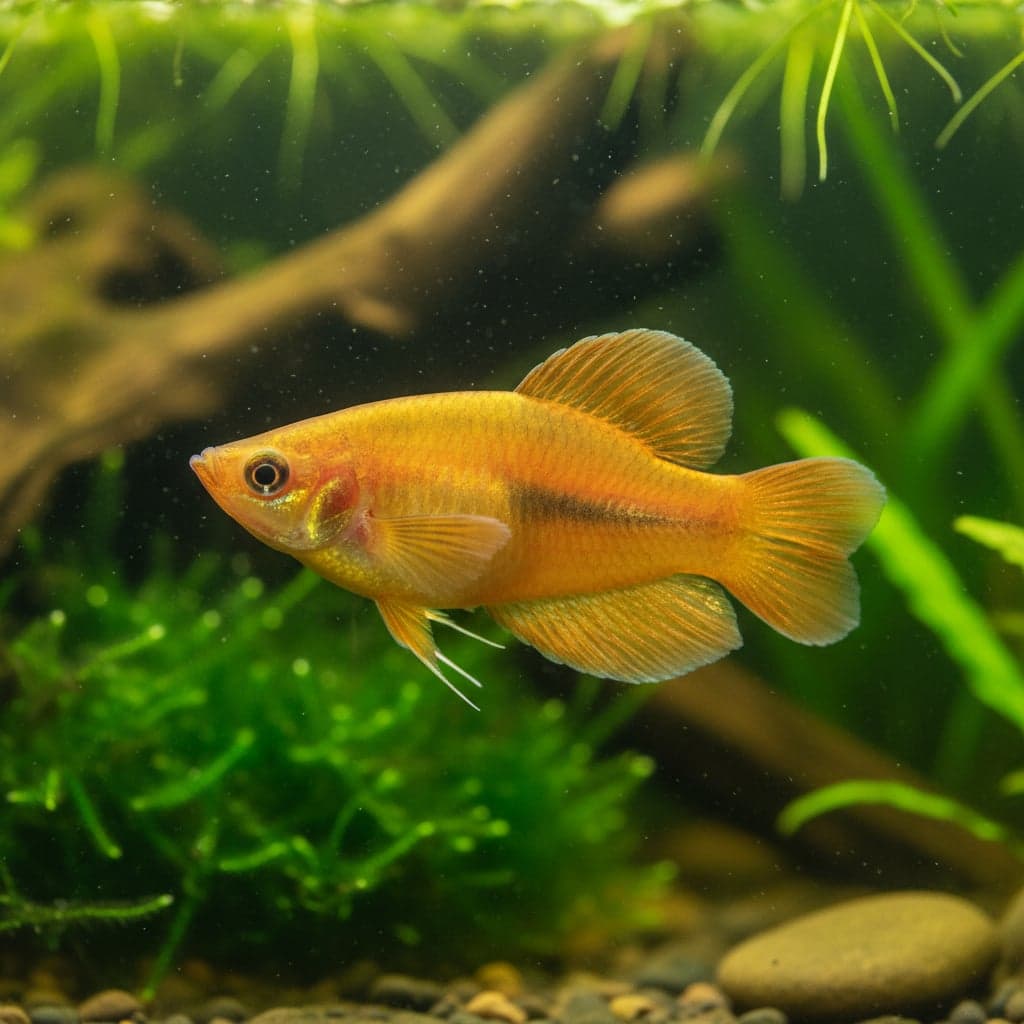
The Honey Gourami (Trichogaster chuna), formerly Colisa chuna, is high on the list of perfect fish for the peaceful planted aquarium. Unlike its cousin, the Dwarf Gourami (Trichogaster lalius), the Honey Gourami is known for its exceptionally docility and its relative resistance to the "Dwarf Gourami Iridovirus." It is a delicate labyrinth fish, capable of breathing atmospheric air using its specialized labyrinth organ, which allows it to thrive in the low-oxygen, stagnant waters of its native range.
In the aquarium, wild-type males develop a stunning, deep honey-gold color that can flush into a vibrant reddish-orange during spawning, often with a contrasting dark blue-black throat and belly. In contrast, the popular "Sunset" or "Gold" captive-bred color strains maintain a solid, luminous yellow throughout their lives.
Natural Habitat & Origin
Trichogaster chuna is native to the Ganges and Brahmaputra river basins in India and Bangladesh. They inhabit low-lying, sluggish waters such as rice paddies, flooded ditches, and slow-moving streams heavily choked with vegetation. These habitats are often "blackwater" in nature—soft, acidic, and stained with tannins from decaying organic matter.
Care Requirements
The Honey Gourami is an ideal choice for nano and medium-sized aquariums. A minimum tank size of 60 litres (15 gallons) is sufficient for a pair. They are slow swimmers and can be intimidated by heavy currents, so gentle filtration (like a sponge filter or a baffled hang-on-back) is preferred.
Maintain stable parameters: a pH of 6.0 to 7.5 and a temperature of 72°F to 82°F (22°C to 28°C). The tank should be heavily planted, providing plenty of surface cover and line-of-sight breaks. Floating plants (like Amazon Frogbit or Salvinia) are vital, as they provide the security the fish need to feel comfortable and are essential for males when building their bubble nests.
Diet & Feeding
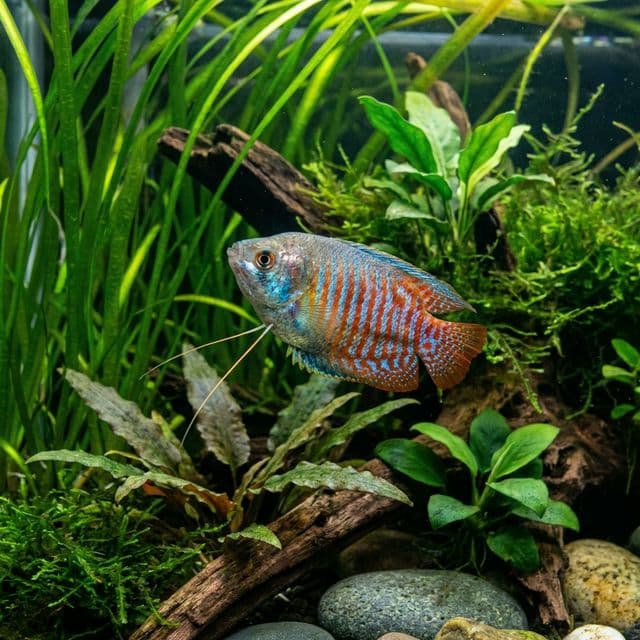
Honey Gouramis are generalist omnivores. In the wild, they use their thread-like pelvic fins (modified into sensitive "feelers") to navigate through murky water and find small invertebrates and insect larvae.
In captivity, they are easy to feed:
- High-quality tropical flakes and micro-pellets
- Frozen foods like Bloodworms, Brine Shrimp, and Daphnia (highly beneficial for color)
- Occasional live foods such as wingless fruit flies or baby brine shrimp
They are deliberate feeders and may be out-competed for food by more frantic schooling fish like Danios or certain Barbs.
Behavior & Temperament
They are peaceful and somewhat shy. They are best kept in pairs or small groups (1 male to 2+ females). Unlike many other gouramis, males are generally tolerant of one another unless they are actively guarding a bubble nest. They spend much of their time hovering among plant leaves, using their "feelers" to explore the environment and interact with tank mates.
Tank Mates
Suitable tank mates must be small and peaceful:
- Small Tetras (Neon, Cardinal, Ember)
- Rasboras (Harlequin, Chili)
- Corydoras and Otocinclus catfish
- Shrimps (though very small shrimplets may be snacked on)
- Peaceful Loaches (Kuhli Loaches)
Avoid housing them with "fin-nippers" like Tiger Barbs or very boisterous, fast-moving fish that will out-compete them or stress them with constant activity. Huge or aggressive cichlids are also unsuitable.
Breeding
Honey Gouramis are bubble nest builders. The male will create a nest of mucus-coated bubbles among floating plant leaves. During spawning, the male "embraces" the female under the nest. Once the eggs are laid and fertilized, the male drives the female away and takes sole responsibility for the eggs, aggressively fanning them and repairing the nest. The fry hatch in about 24-36 hours and are extremely small, requiring infusoria or "green water" initially before transitioning to baby brine shrimp.
Common Health Issues
They are relatively hardy but sensitive to high nitrates and poor water quality. Because they breathe atmospheric air, it is crucial that the air above the water surface is warm and humid to prevent damage to the labyrinth organ. They are occasionally susceptible to "Velvet" (Oodinium) and standard bacterial infections if the tank is not properly maintained.