Honeycomb Loach: Leptobotia taeniops
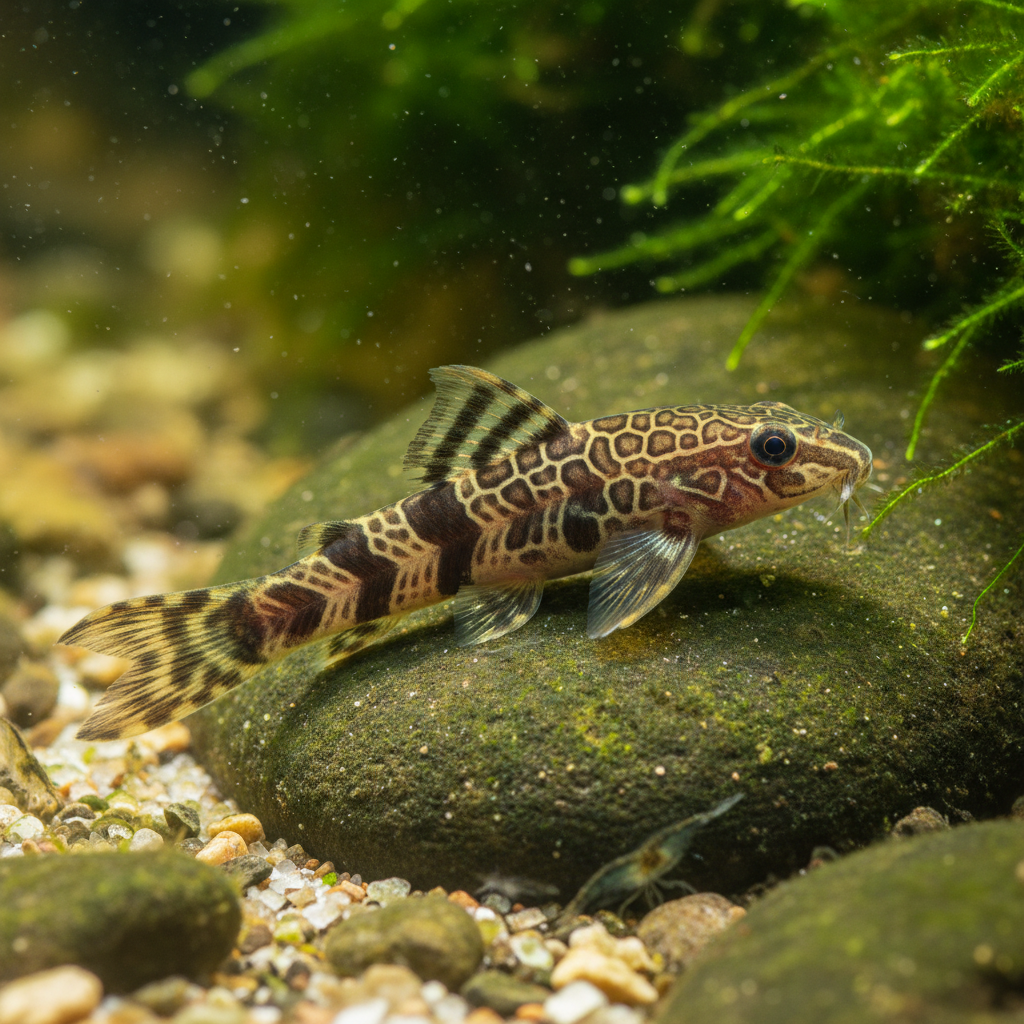
The Honeycomb Loach (Leptobotia taeniops) is a large, social botiid loach from the Yangtze River, prized for its intricate reticulated pattern and highly active personality.
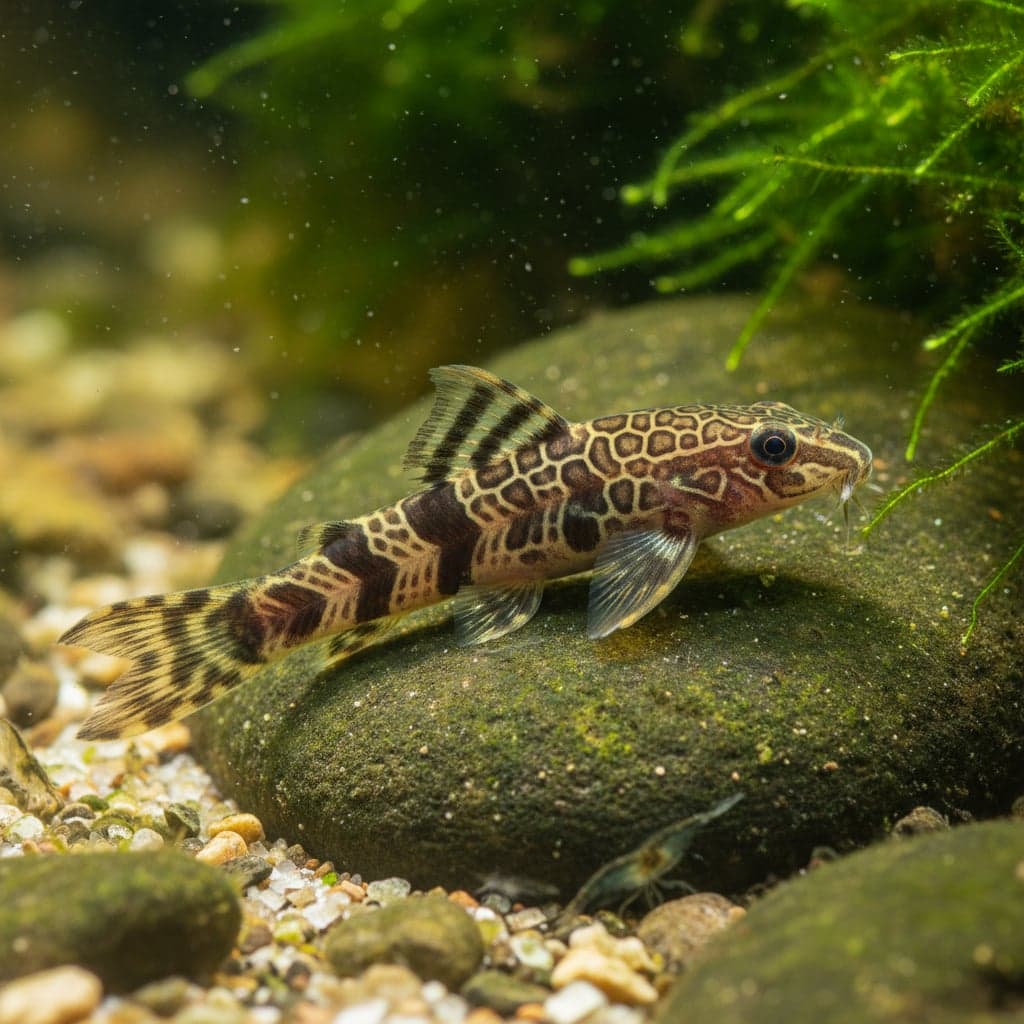
The Honeycomb Loach (Leptobotia taeniops), also known as the Chinese Reticulated Loach, is a heavyweight of the loach world. Unlike the smaller, more common gravel-dwellers, this species can reach lengths of over 9 inches (23 cm) and possesses a powerful, laterally compressed body built for navigating the strong currents of major river systems. It is named for the beautiful, dark reticulated or "honeycomb" pattern that develops as the fish matures, often overlaid on a base color that ranges from golden-brown to subtle pinkish-grey.
In the aquarium, they are prized for their intelligence and highly social nature. They form complex hierarchies and spend much of their time interacting with one another, making them a dynamic and engaging center-piece for a temperate or subtropical river manifold setup.
Natural Habitat & Origin
Leptobotia taeniops is endemic to the middle and upper sections of the Yangtze River basin in China. They are specialized for life in clear, well-oxygenated, fast-flowing water with substrates composed of smooth river stones, rocks, and coarse gravel. These regions are temperate to subtropical, meaning the water is significantly cooler than that of the tropical Amazon or Southeast Asian peat swamps.
Care Requirements
Due to its large size and social needs, the Honeycomb Loach requires a substantial aquarium. A minimum tank size of 65 gallons (250L) is recommended for a small group. They are extremely sensitive to low oxygen levels and poor water quality; a high-flow setup with additional powerheads or a river manifold system is highly recommended.
Maintain stable parameters: a pH of 7.0 to 8.0 and a cooler temperature range of 64°F to 75°F (18°C to 24°C). The tank should be scaped with large river stones, smooth boulders, and heavy driftwood to create plenty of crevices and hiding spots. Because they are active and can be powerful swimmers, the substrate should be rounded to prevent injury to their sensitive mouth and barbels.
Diet & Feeding
Honeycomb Loaches are primarily carnivores, specialized for hunting small invertebrates and crustaceans among the river rocks.
In captivity, they are vigorous feeders:
- High-quality sinking carnivore pellets and tablets
- Frozen foods like Bloodworms, Mysis shrimp, and chopped Krill
- Fresh seafood (shrimp or white fish) for larger specimens
- Live worms (earthworms or blackworms) are highly stimulating
They have a high metabolism due to their active lifestyle and should be fed twice daily.
Behavior & Temperament
They are highly social but can be territorial within their own species. To prevent bullying and see their full range of natural behaviors, they MUST be kept in a group of at least 3-5 individuals. They establish a clear "pecking order" through non-lethal sparring and chasing. While generally peaceful toward other species, their sheer size and active nature can intimidate smaller or very shy fish. They are also known to be "shrimper-eaters" and will likely consume any small ornamental shrimp in the tank.
Tank Mates
Suitable tank mates must be robust and prefer similar water conditions:
- Other temperate/subtropical fish like Hillstream Loaches or White Cloud Mountain Minnows (if large enough)
- Larger Barbs (like Rosy Barbs or Odessa Barbs)
- North American native fish (where legal)
- Robust Catfish or other large Botiid loaches (like Leptobotia elongate)
Avoid keeping them with small, slow-swimming tropical fish that require high heat or might be viewed as prey.
Breeding
Breeding Leptobotia taeniops in the home aquarium is extremely rare and poorly documented. They are likely seasonal spawners triggered by the rapid water chemistry and temperature changes of spring floods in the Yangtze. In commercial settings, hormonal induction is often used for production.
Common Health Issues
They are generally hardy if their oxygen and temperature requirements are met. However, like all "scaleless" loaches, they are highly susceptible to Ich (White Spot) and are sensitive to many common medications. Always use half-doses and maintain pristine water quality. They are also prone to "Skin Flukes" if the substrate is allowed to become excessively dirty.