Hornet Tilapia: Heterotilapia buttikoferi
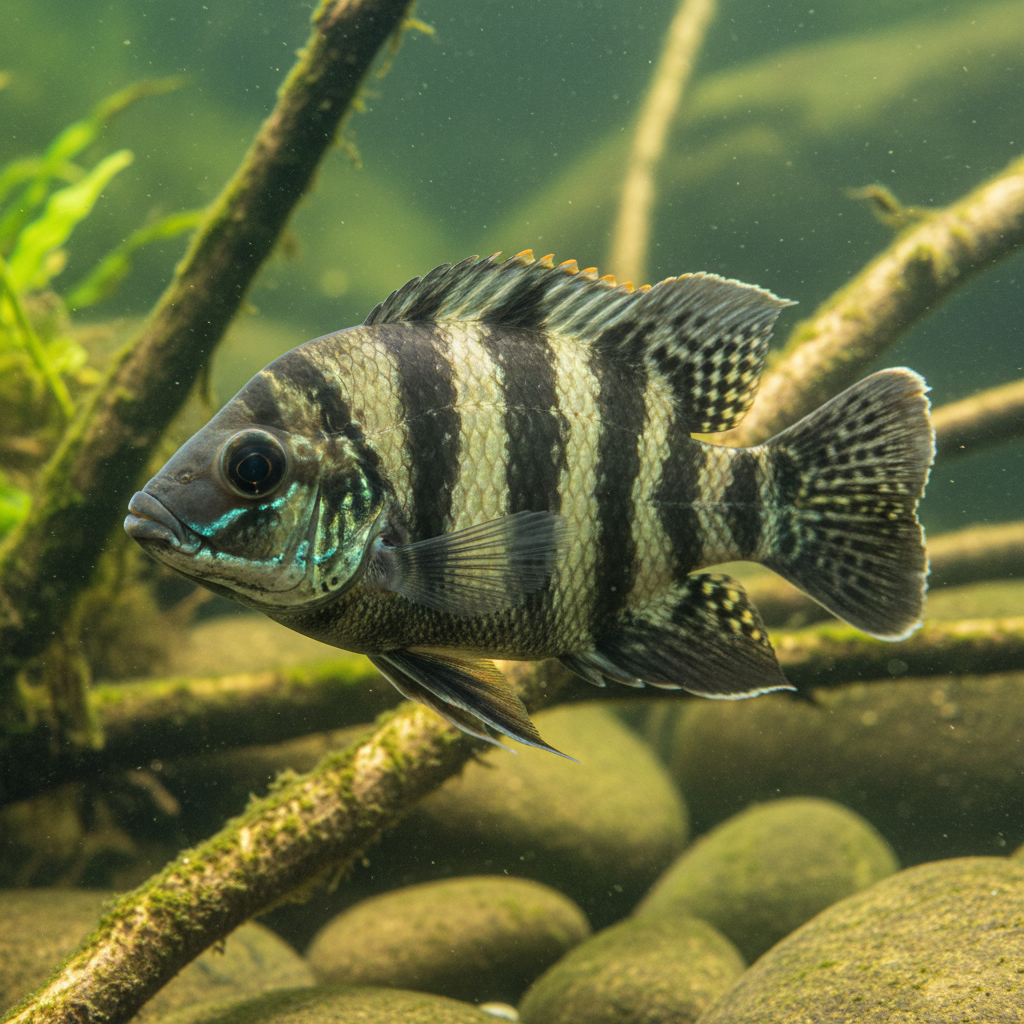
The Hornet Tilapia (Heterotilapia buttikoferi) is a massive, strikingly barred West African cichlid notorious for its extreme territorial aggression and impressive size.
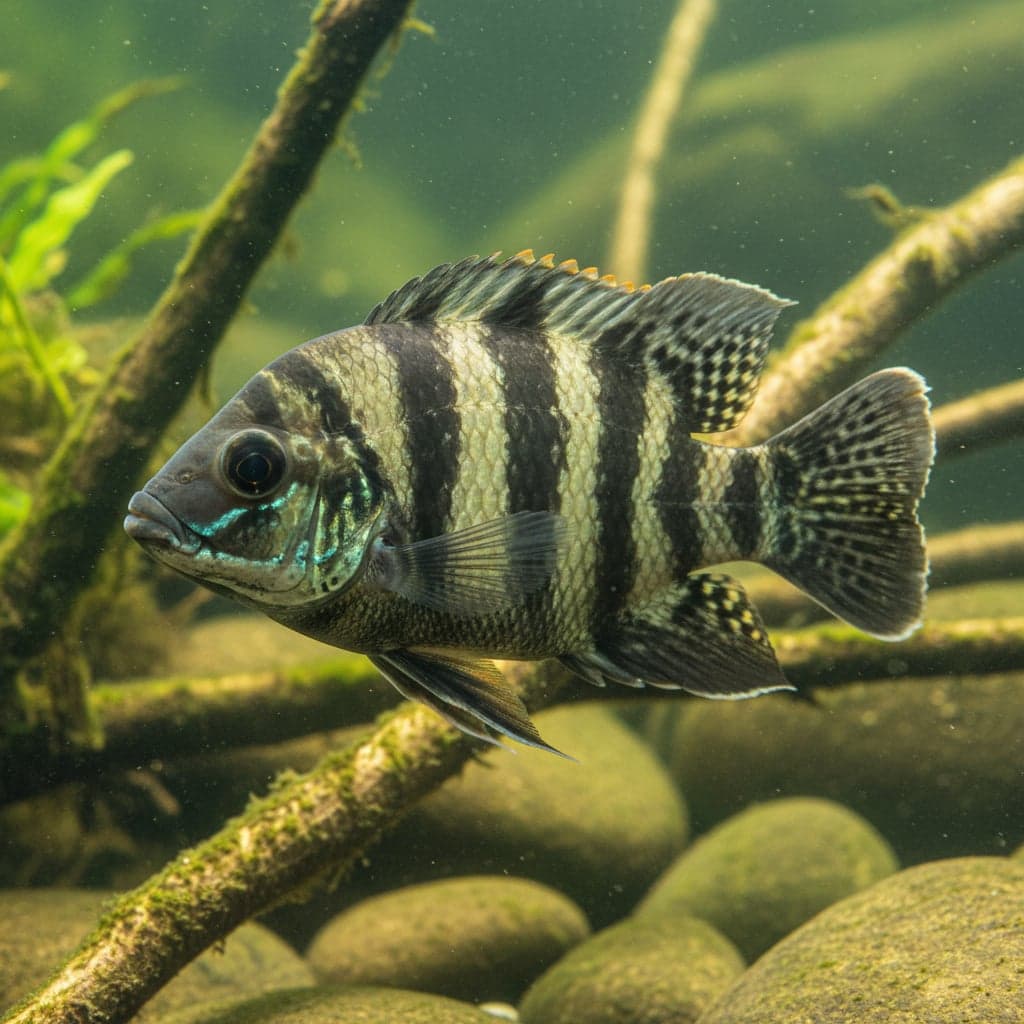
The Hornet Tilapia (Heterotilapia buttikoferi), also known as the Zebra Tilapia, is one of the most physically impressive yet behaviorally challenging cichlids in the freshwater hobby. Named for the stark, high-contrast vertical black and white bars that cover its body, this fish is a powerhouse of aggression. While juveniles are often sold as tiny, cute 2-inch fish, they quickly grow into massive, muscular specimens that can reach up to 16 inches (40 cm) in length.
In the aquarium, the Hornet Tilapia is often described as an "aquarium bulldozer." They are highly intelligent, personable, and will often interact with their owners, but they possess a level of territoriality that makes them unsuitable for almost any standard community tank.
Natural Habitat & Origin
This species is native to the coastal river systems of West Africa, specifically found in Liberia, Guinea-Bissau, and Sierra Leone. They inhabit large, slow-moving rivers and estuaries, often hiding among submerged logs and tangled roots. They are highly adaptable and can occasionally be found in brackish water, though they are primarily freshwater fish.
Care Requirements
Due to their massive size and extreme temperament, the Hornet Tilapia requires a specialized setup. A minimum tank size of 125 gallons (500L) is required for a single adult, and a much larger tank (240+ gallons) is needed if you plan to keep a pair. They have a very high metabolism and produce significant waste, requiring over-sized filtration and consistent water changes.
Maintain stable parameters: a pH of 6.5 to 7.5 and a temperature of 75°F to 82°F (24°C to 28°C). The tank decor should be extremely robust. Hornet Tilapia are notorious for rearranging their environment; they will move large rocks, pull up plants, and bite through heater cables if they are not protected. Use large boulders and heavy driftwood that are too heavy for the fish to move, and skip delicate live plants—they will likely be shredded.
Diet & Feeding
Hornet Tilapia are opportunistic omnivores with a voracious appetite. In the wild, they feed on aquatic plants, insects, crustaceans, and smaller fish.
In captivity, they are not picky:
- Large sinking cichlid pellets and sticks
- Frozen foods (Krill, Mysis, chopped seafood)
- Fresh vegetables (Blanched Peas, Spinach)
- Occasional live foods (feeder insects or worms)
They should be fed once or twice daily, but be careful of overfeeding as they will eat until they are bloated.
Behavior & Temperament
They are extremely aggressive and highly territorial. As they mature, they will often view the entire aquarium as their personal territory and will attack any other inhabitant, including much larger fish. This aggression is not limited to other fish; they have been known to bite the hands of owners during maintenance. They are best kept alone in a "specimen tank" where they can be the center of attention without having to share space.
Tank Mates
Finding compatible tank mates for a mature Hornet Tilapia is exceptionally difficult. In very large setups (6ft+ or 8ft+), they can sometimes be kept with other heavyweights:
- Large South American Cichlids (Oscars, Large Central Americans)
- Robust Catfish (Pangasius, Oxydoras)
- Large Silver Dollars
- Large L-number Plecos
However, many hobbyists eventually find that the Hornet Tilapia must be moved to its own tank as it ages.
Breeding
Breeding Heterotilapia buttikoferi is a high-stakes endeavor. They are substrate spawners, not mouthbrooders. A mated pair will clear a large area or flat rock and lay several thousand eggs. Both parents guard the nest with suicidal bravery, attacking anything—including the aquarium glass or the owner—that gets too close. The eggs hatch in 2-3 days, and the parents will move the fry to pre-dug pits in the substrate.
Common Health Issues
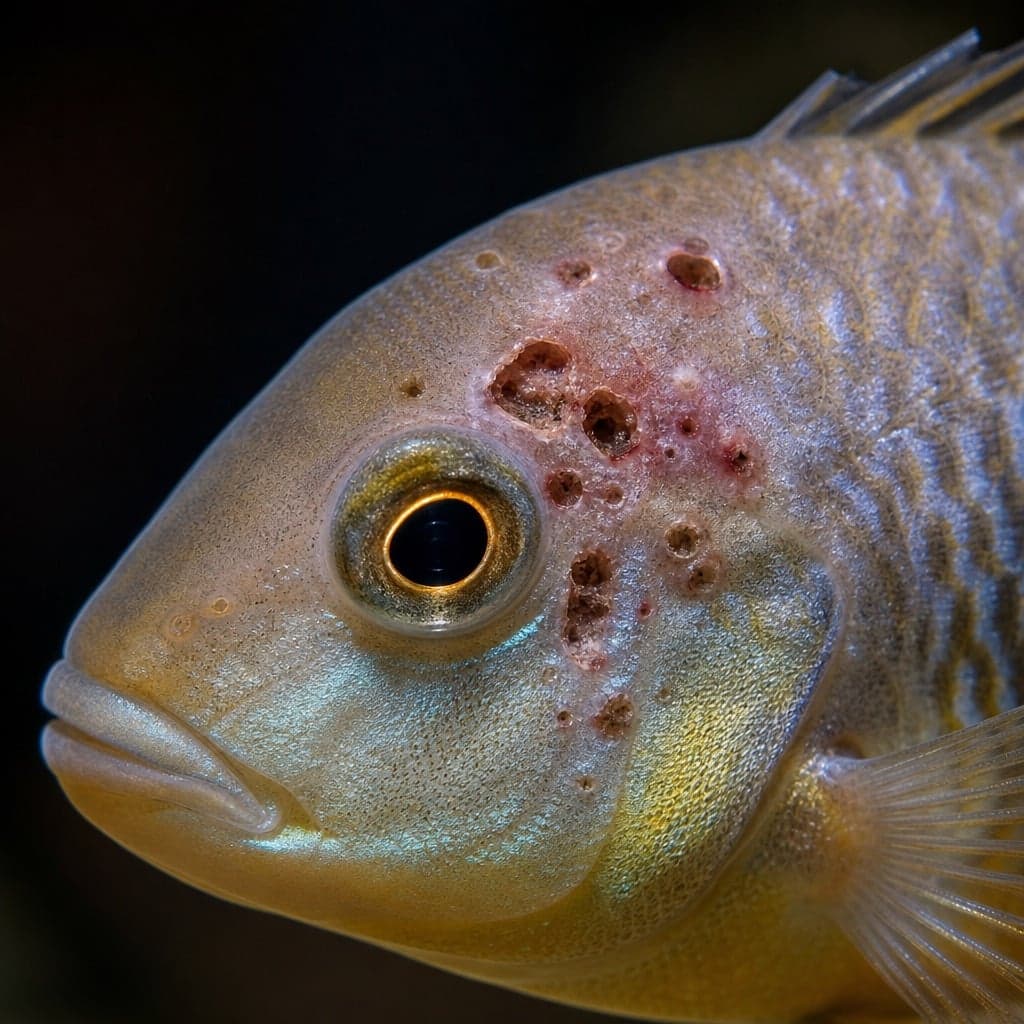
They are exceptionally hardy and resistant to most common diseases. However, they can suffer from Hole-in-the-Head (HITH) disease if water quality is poor or if their diet is too high in protein and low in vitamins. Maintaining pristine water conditions through heavy filtration and frequent water changes is the best way to ensure a healthy, long-lived Tilapia (10-15 years).