Hybrid Peacock: Aulonocara spp. (Hybrid)
The Hybrid Peacock (Aulonocara spp.) is a vividly coloured line-bred Lake Malawi peacock cichlid — hardy and spectacular, but a man-made hybrid, not a pure species.
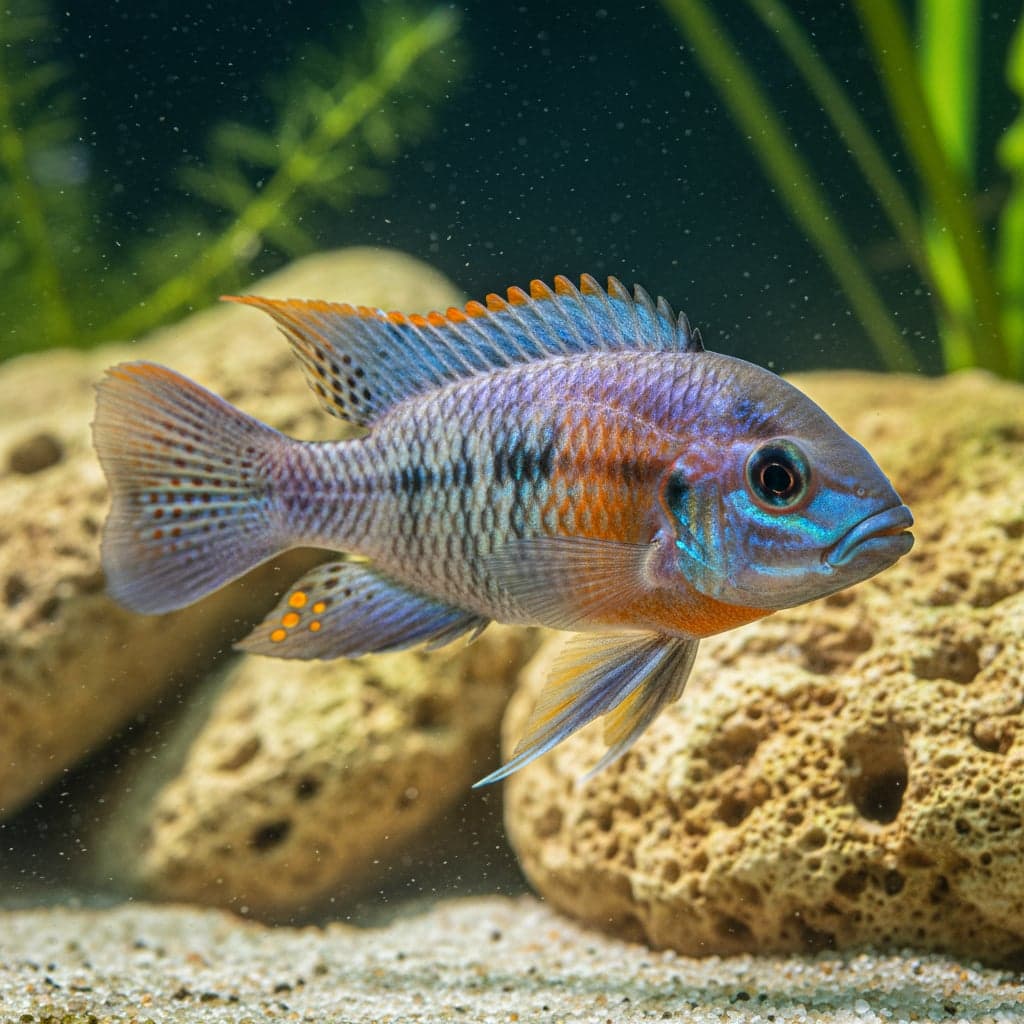
Hybrid Peacock Cichlid
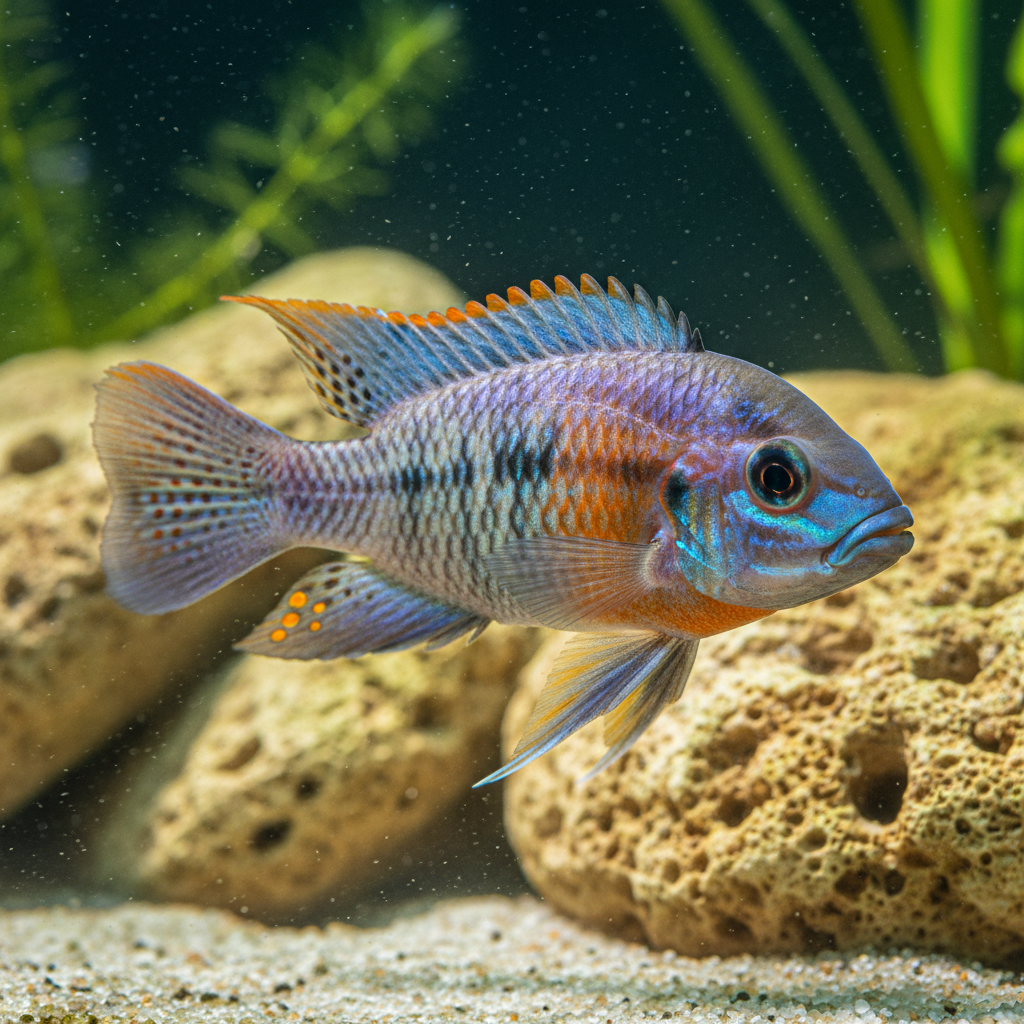
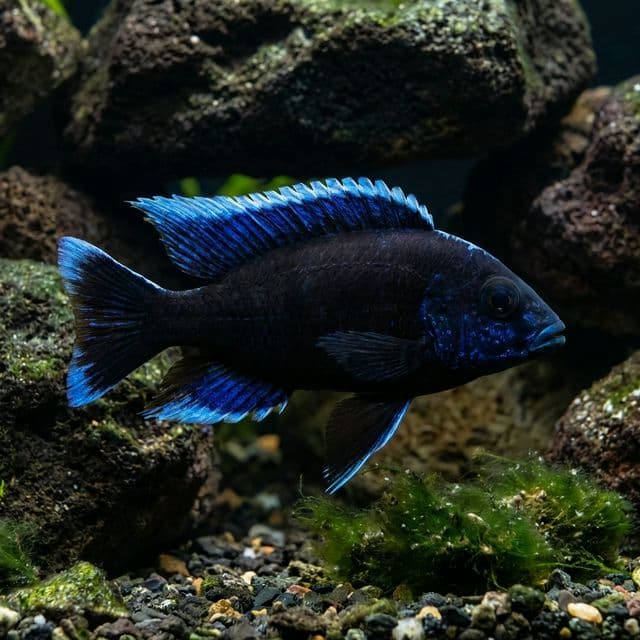
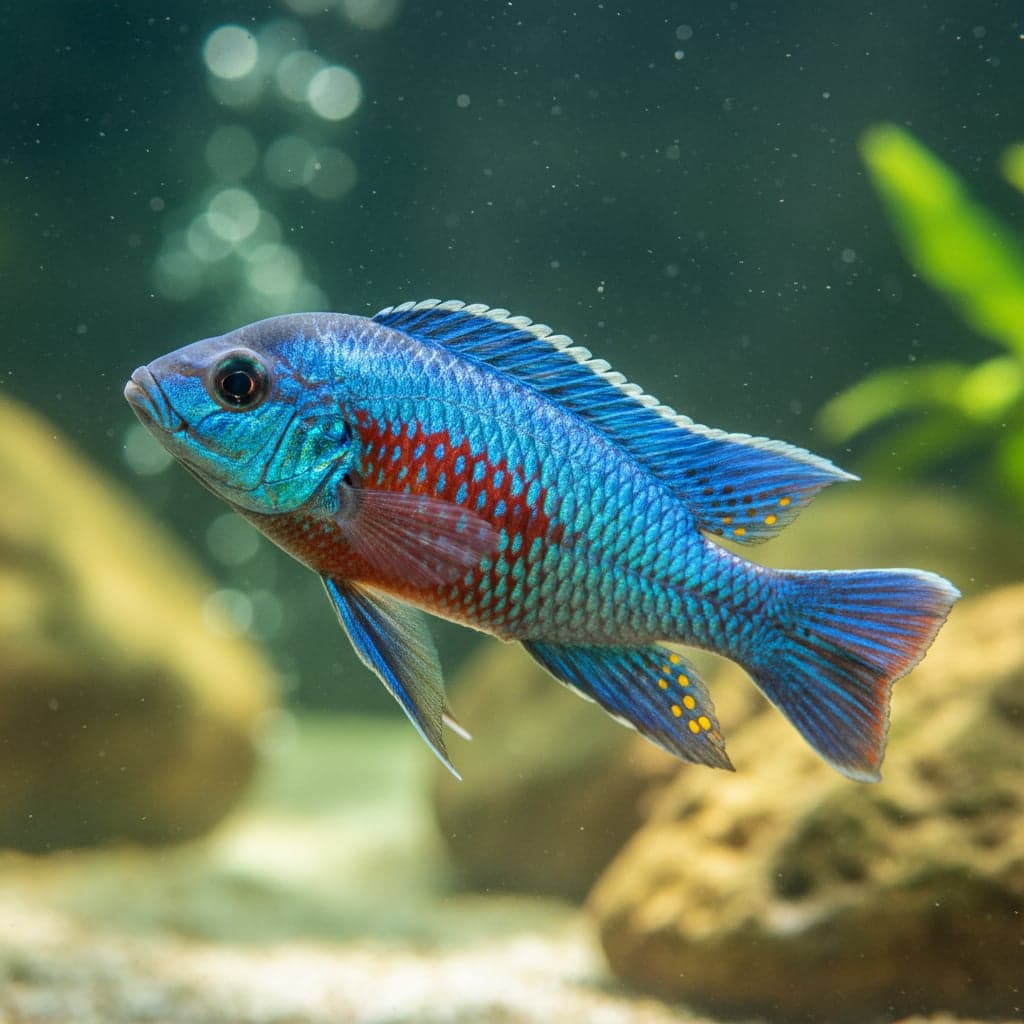
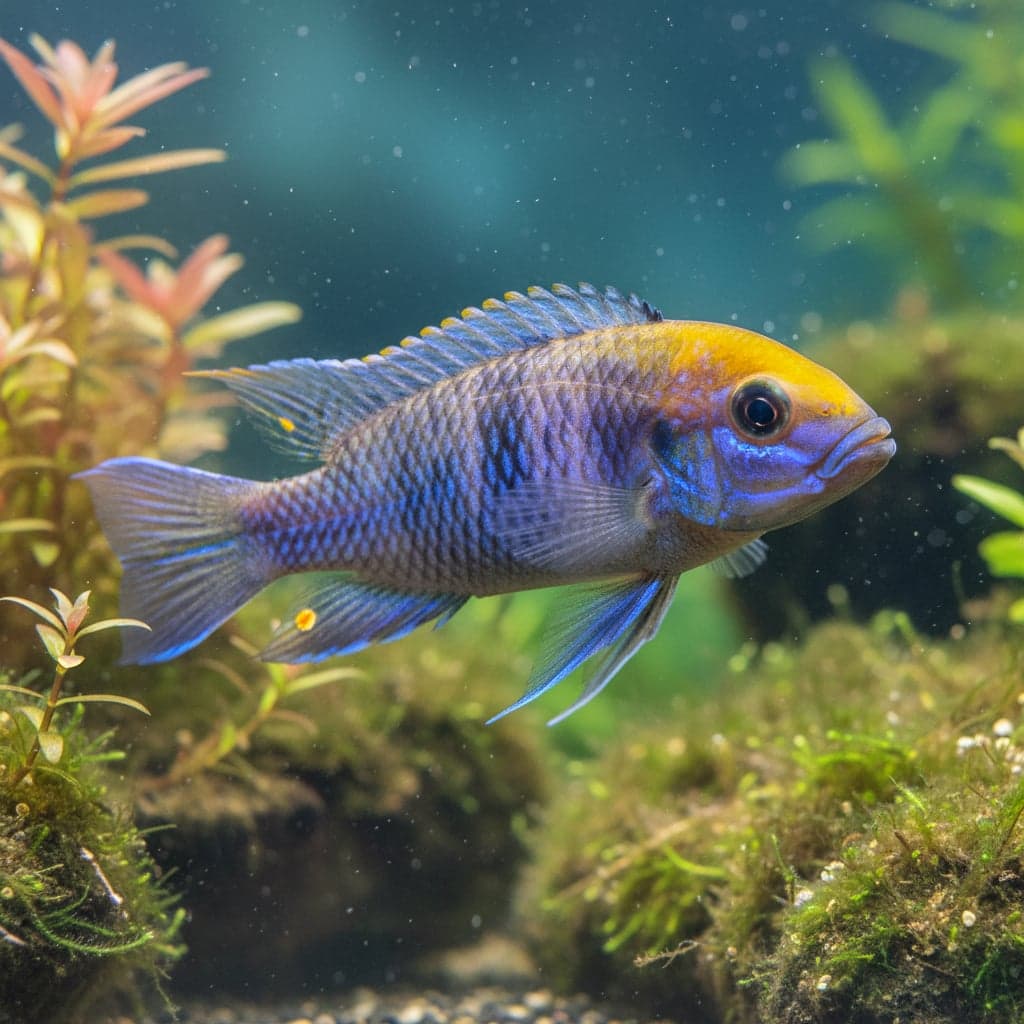
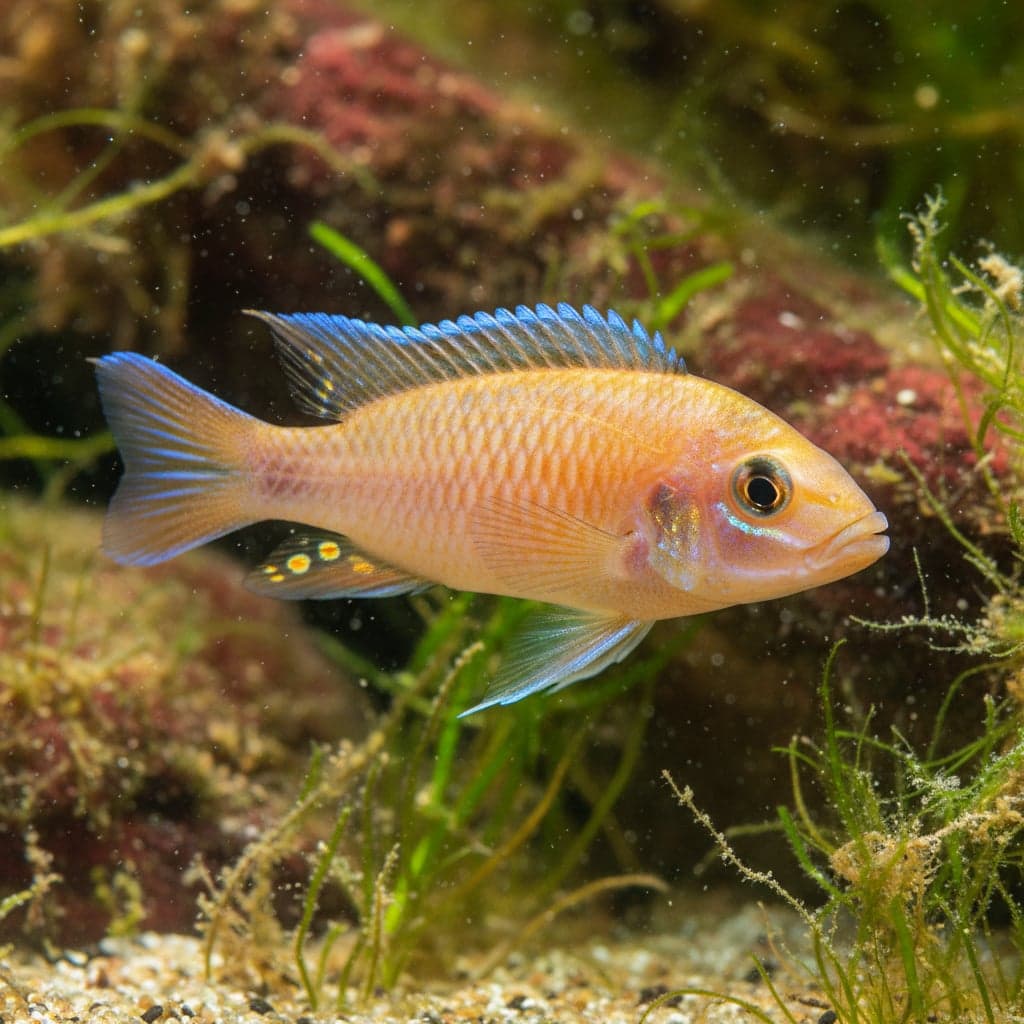
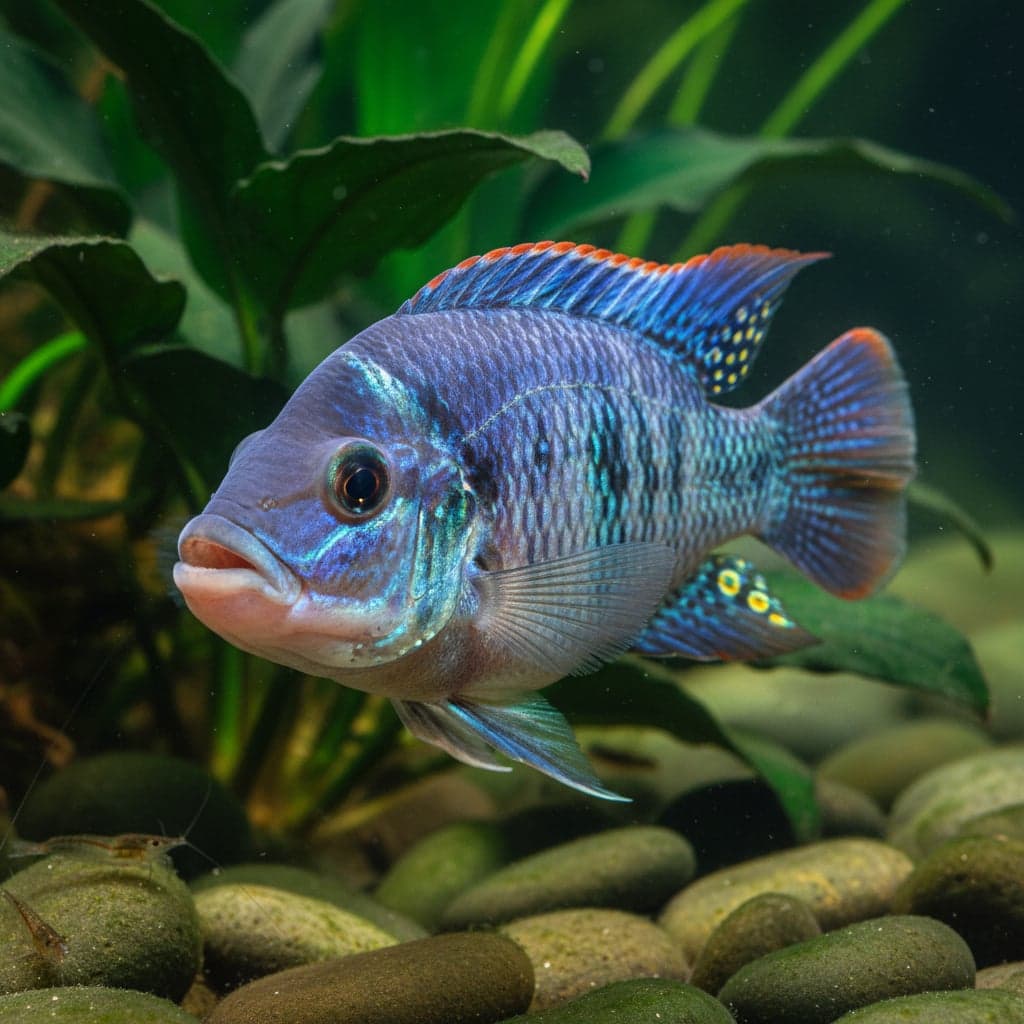
The Hybrid Peacock (Aulonocara spp., hybrid) is a man-made, line-bred cichlid produced by crossing various Lake Malawi peacock species and colour strains. Males can blaze in combinations of blue, red, orange and yellow — including blotched “OB” patterns that do not map cleanly to any single wild species. Spectacular and often inexpensive, hybrid peacocks are extremely popular for African cichlid display tanks.
Be honest about what you own. This is not a pure Aulonocara species with a fixed locality and adult look. Parentage, adult size, finnage and colour intensity vary by farm line and by which species were crossed generations ago. Shop labels rarely list that history with precision; treat “hybrid peacock” as a husbandry category, not a scientific identity. Do not sell or trade hybrids as pure-line peacocks if you care about genetic integrity in the hobby.
Natural Habitat & Origin
Wild ancestors live in Lake Malawi, East Africa, where pure Aulonocara species typically work sandy areas near rock, sensing and feeding on small invertebrates in the substrate. Lake Malawi is hard and alkaline. Hybrid peacocks themselves are aquarium-bred; they have no single “natural range” beyond the lake that supplied the parent species.
In the aquarium they appreciate a sandy substrate for natural foraging, with rockwork providing caves and territories. Recreate Malawi chemistry and sand sifting behaviour; do not invent a precise wild microhabitat for a fish whose exact lineage is unknown.
Care Requirements
Hard, alkaline water: pH around 7.8–8.6, temperature about 24–27°C (75–81°F), with strong filtration and regular water changes to keep nitrate low. Frontmatter lists about 250 litres (65 US gallons) or more for a group — treat that as a floor for a small colony, not a hard promise that every hybrid line stays compact. Adult size and aggression vary with lineage; some fish push past the typical peacock footprint, others stay modest. Plan tank length and rockwork for the fish you actually have, not for a catalogue average.
Provide open sand and structured rock to define territories. Hybrid peacocks are generally hardy given stable, clean, hard water. Quarantine new arrivals; white spot (Ichthyophthirius multifiliis) and shipping stress still apply. Use the Aquarium Tracker to log temperature, pH and changes — chronic dirty water shows up as faded males and bloat risk before deaths.
Diet & Feeding
Peacocks are micro-predators that, in wild pure species, sift sand for tiny invertebrates. Hybrids usually retain that foraging habit even when colour is artificial. Offer quality cichlid pellets, frozen mysis and brine shrimp, and similar foods. Avoid excessive protein-rich mammalian foods, which track with digestive problems (“Malawi bloat”); include some vegetable content for balance.
Feed small amounts once or twice a day. Dominant males colour up and often eat first — watch subordinates. Because lines differ, adjust portion size to body condition rather than assuming every hybrid matches a textbook Aulonocara growth curve.
Behavior & Temperament
Semi-aggressive and territorial, particularly among males competing for dominance and breeding rights. Keep groups with more females than males, and provide rockwork and sightline breaks to diffuse aggression. Dominant males colour intensely; subordinates stay muted — hierarchy, not a different product SKU.
Frontmatter lists shoaling because peacock-type fish are kept in colonies; that still means managed ratios and space, not unlimited males in 250 litres. Individual temperament varies with line and rearing: some hybrids are as calm as mild pure peacocks; others are pushier. Observe the fish you bought rather than assuming catalogue behaviour.
Tank Mates
House with other robust Lake Malawi cichlids of similar size and temperament — other peacocks, haplochromines and similar — that share hard-water needs. Avoid timid community fish and overly aggressive mbuna that may bully peacocks off the sand. A typical Malawi community of peacocks and haps often works.
If you also keep pure-line Aulonocara for conservation or locality breeding, do not mix hybrids into that colony. Crosses further scramble identities and make offspring useless for species-focused projects. Treat hybrid display tanks and pure breeding tanks as separate goals.
Breeding
Aulonocara-type fish are maternal mouthbrooders: the female holds eggs and fry in her mouth after spawning. Hybrid peacocks usually breed readily under Malawi conditions. Offspring are themselves hybrids of uncertain parentage — colour may be stunning, lineage is not. Continued crossing muddies bloodlines further; breed for a display colony if you like, but do not label fry as a named wild species.
Holding time and fry size follow the usual peacock pattern in broad strokes, but exact timing and adult morph of the next generation are not predictable down to species-level precision when parents are hybrids.
Common Health Issues
Hardy, yet open to white spot and Malawi bloat — the latter often linked to inappropriate diet, stress or poor water. Maintain clean, hard, stable water, feed a suitable diet low in mammalian protein excess, and quarantine new arrivals. Medication sensitivity is individual; follow product guidance and observe carefully.
Given honest labelling and Malawi basics, the Hybrid Peacock is a colourful, rewarding centrepiece for an African cichlid display. Pretend it is a pure locality fish, undersize the tank for the line you received, or feed it like a carnivore-only oscar and the same “spectacular and inexpensive” fish becomes a bloat and aggression story — with no wild population to blame for the genetics.