Hybrid Syno Catfish: Synodontis spp. (Hybrid)
The Hybrid Syno Catfish (Synodontis spp.) is a hardy, peaceful African catfish — an adaptable, long-lived scavenger popular as a bottom-dweller in cichlid aquariums.
Hybrid Syno Catfish
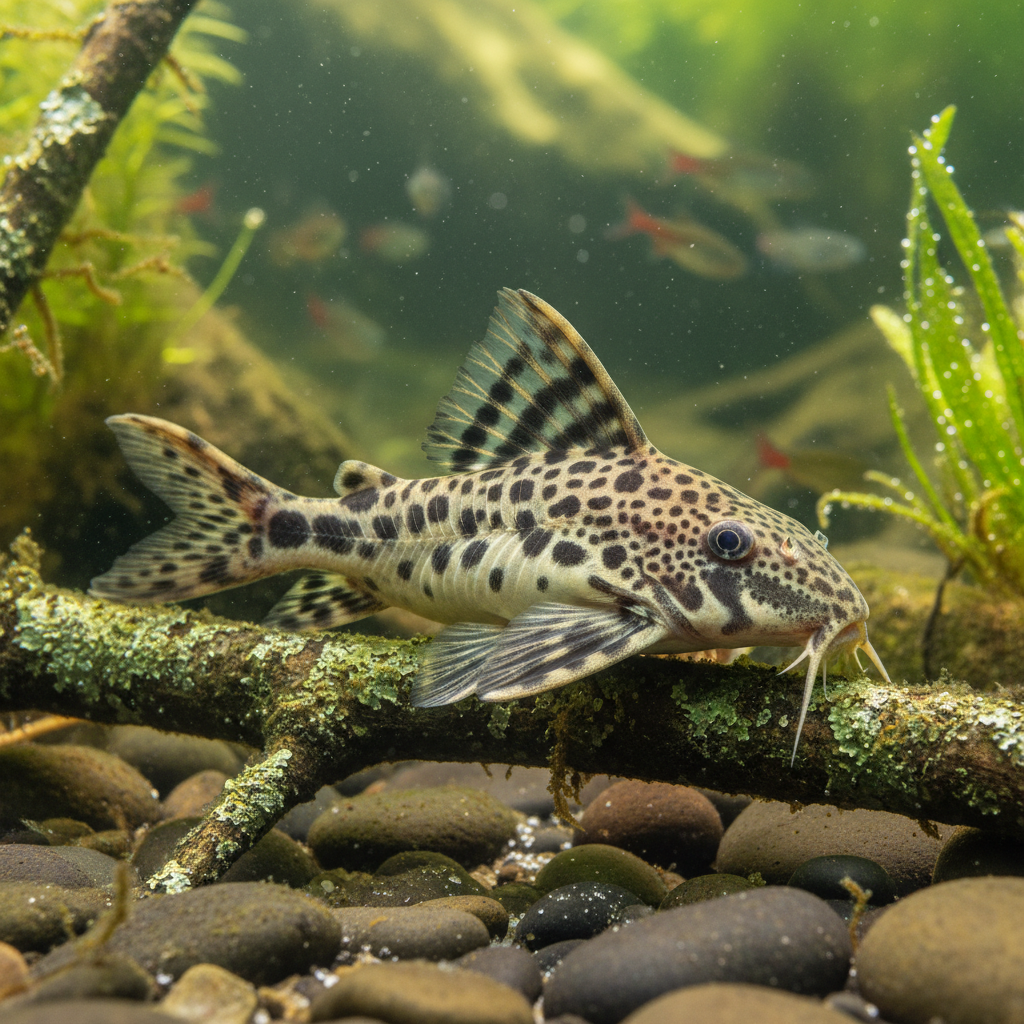
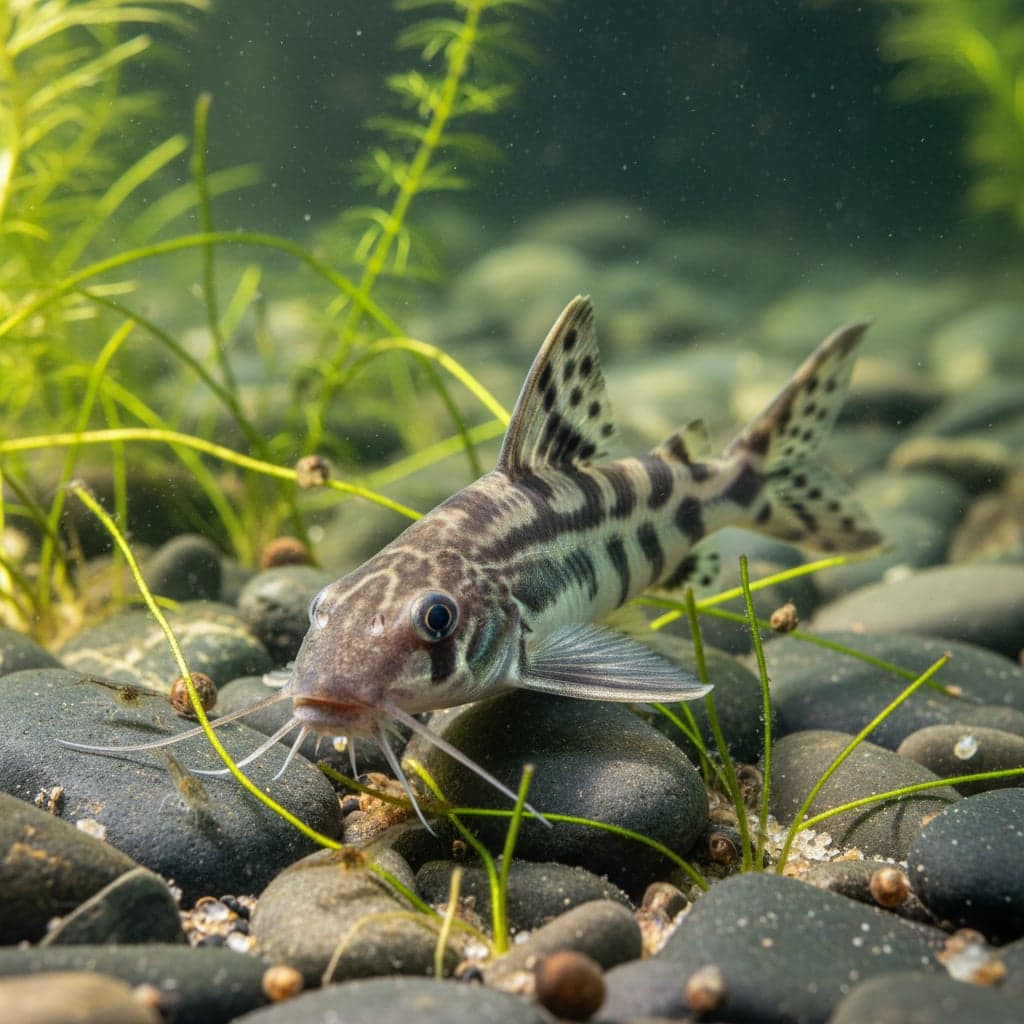
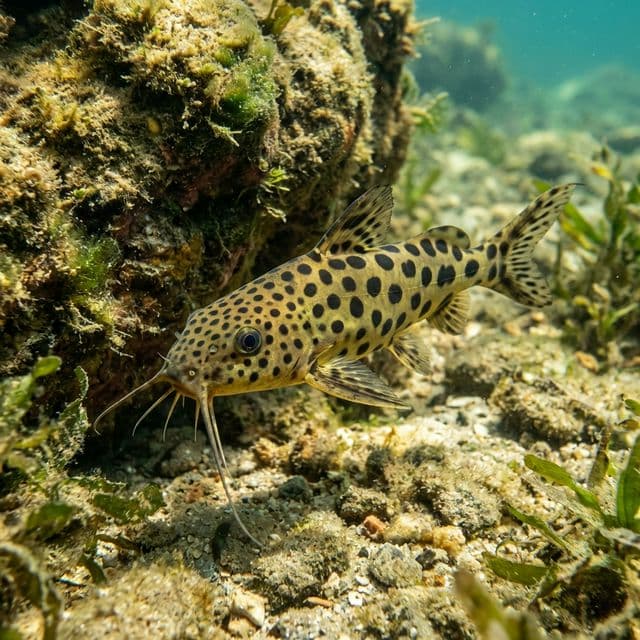
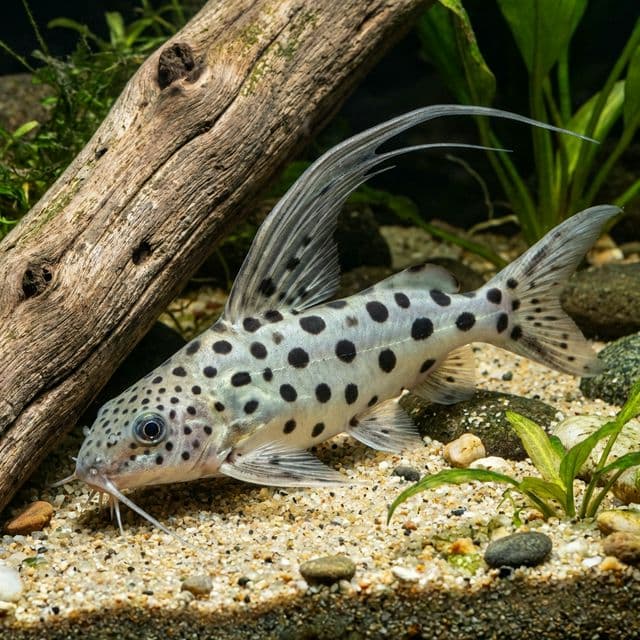
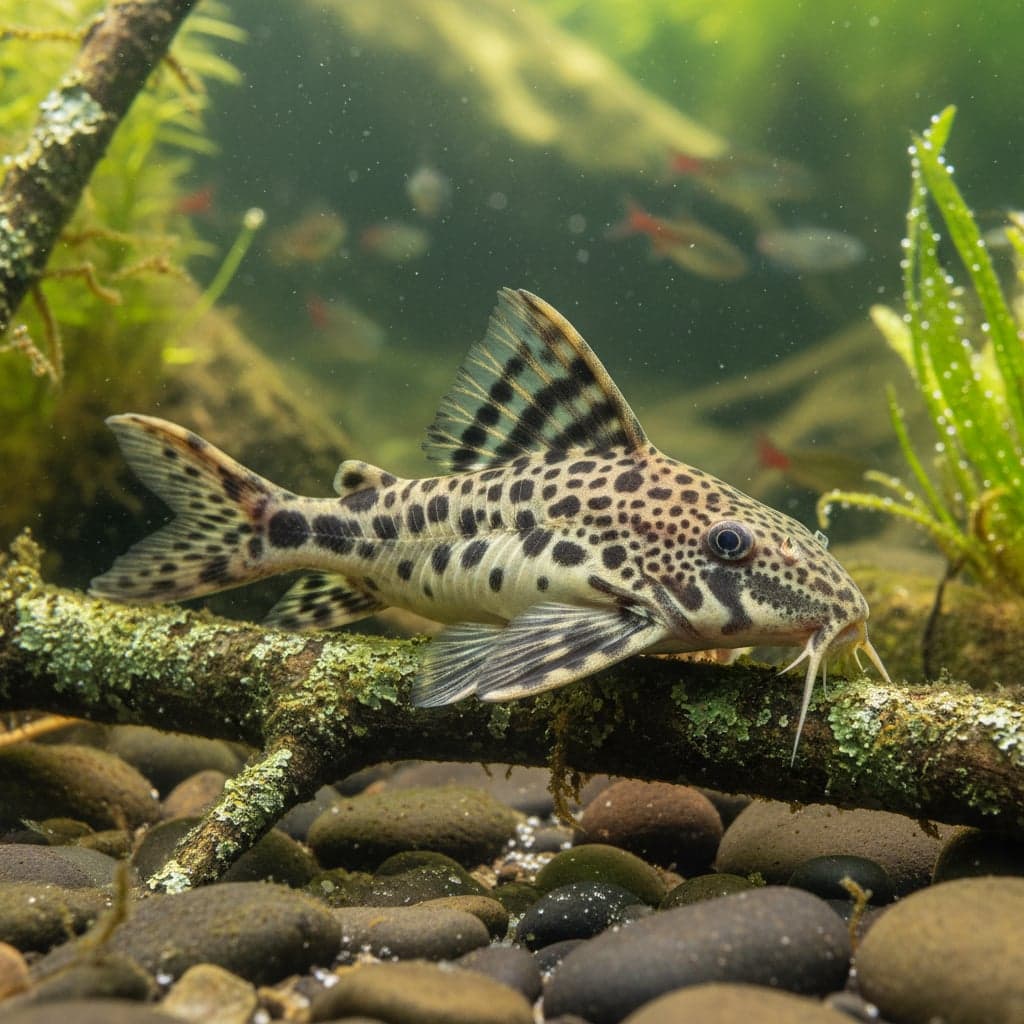
The Hybrid Syno Catfish (Synodontis spp., hybrid) is a line-bred African catfish produced by crossing Synodontis species — often smaller, hardy forms associated with rift-lake and related African trade lines. The result is usually an attractive spotted or marbled catfish that is tough, peaceful and long-lived, making it a favourite bottom-dweller for African cichlid and hard-water community aquariums. Active at dusk and after dark, it adds interest to the lower levels of the tank.
As a hybrid it does not represent a single natural species. Spot pattern, adult size, fin shape and exact hardiness vary with parentage and farm line; shop tags almost never list which species were crossed. Frontmatter lists about 15 cm as a typical trade expectation — treat that as a guide, not a guarantee. Some lines stay modest; others grow larger or look quite different as adults. Plan space and tankmates for the fish in front of you, not for a fixed species description.
Natural Habitat & Origin
Ancestors come from African lakes and rivers, including the rift lakes, where Synodontis species forage over rock and sand on a wide diet. Hybrid synos themselves are aquarium-bred. Many wild relatives favour hard, alkaline water, which is why these fish often sit comfortably beside Malawi or Victoria cichlids — but that is a preference pattern, not proof of a specific wild lake for your individual fish.
In the aquarium provide caves, driftwood and rockwork for daytime shelter, with open substrate to forage over at night. Dim corners and secure hides matter more than replicating one named river when lineage is unknown.
Care Requirements
Clean water with pH around 7.0–8.5 (generally tolerant across that band) and temperature about 23–27°C (73–81°F), with good filtration and regular water changes. Around 200 litres (about 50 US gallons) or more suits typical trade sizes; if your fish clearly outgrows the “small syno” look, upgrade rather than forcing a large hybrid into a footprint meant for a dwarf. Hiding places and open foraging space both matter.
They are exceptionally hardy and adaptable for beginners — forgiving of a wider parameter range than many rift cichlids — but “hardy” is not “ignore water changes.” Quarantine new arrivals. White spot (Ichthyophthirius multifiliis) and bacterial issues still follow stress. Use the Aquarium Tracker to log temperature and maintenance; chronic neglect shows up as clamped fins and eroded barbels before the fish stops scavenging.
Diet & Feeding
Omnivorous scavengers. Wild Synodontis take a broad diet; hybrids usually accept sinking catfish pellets and wafers, frozen foods such as bloodworms and brine shrimp, leftover food from tankmates, and some vegetable matter. Because they are often nocturnal or crepuscular, offer food toward evening so mid-water cichlids do not strip every meal first.
Feed modest amounts. “Clean-up crew” is not a licence to overfeed the tank and hope the syno vacuums mistakes — excess food still fouls water. Variety beats a single wafer brand forever; watch body condition, which varies with line and age.
Behavior & Temperament
Generally peaceful and social; many do better in a small group than alone, though exact schooling drive varies with lineage. Daytime is spent sheltering; activity rises as lights dim. While peaceful toward similarly sized fish, larger individuals may eat very small fish or shrimp — size tankmates to the adult your line actually reaches, not to the juvenile in the bag.
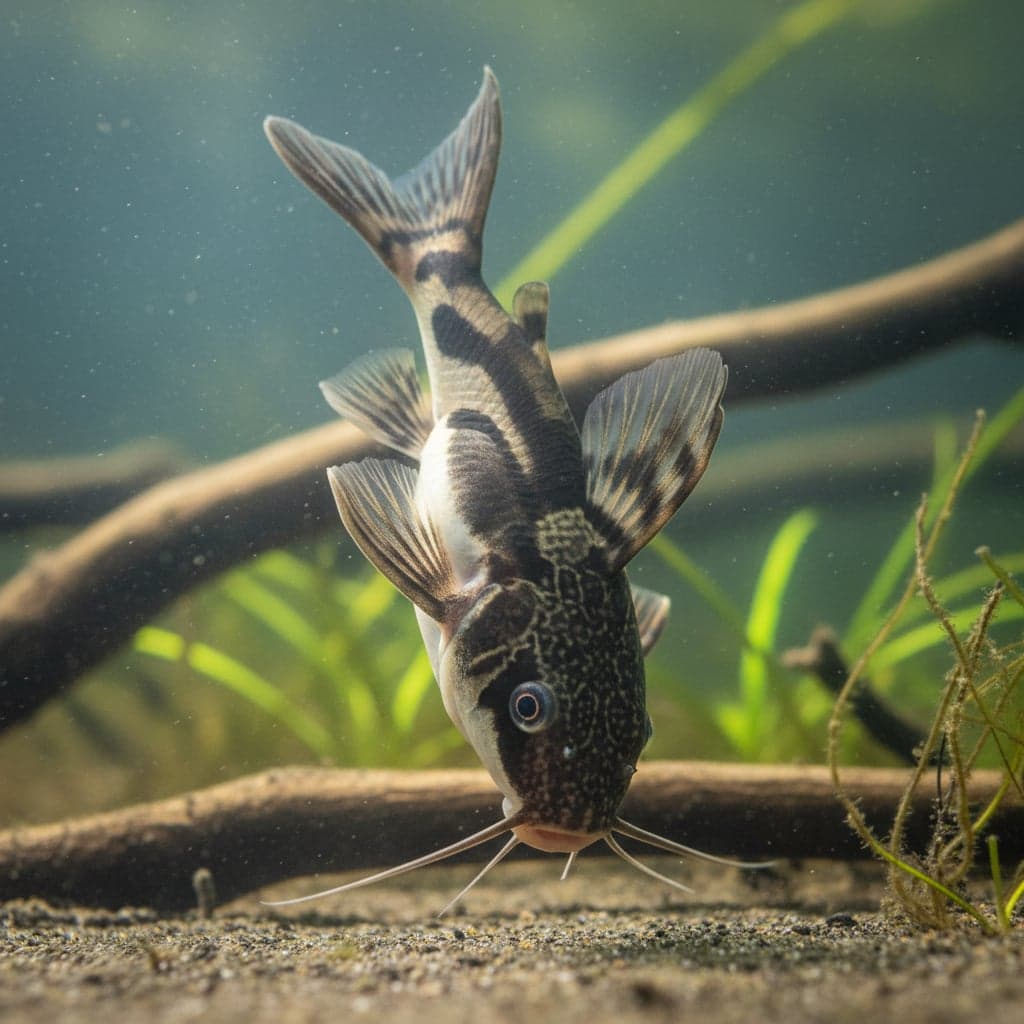
Barbels and whisker-like feelers are sensory tools; rough gravel that scrapes them is a poor substrate choice compared with sand or smooth rounded media. They coexist calmly with most hard-water community and cichlid tankmates when space and food are adequate.
Tank Mates
Excellent companions for African rift-lake cichlids that share hard-water preferences — peacocks, haps and similar — without matching cichlid aggression. They also suit general hard-water community tanks. Avoid housing them with very tiny fish that could be swallowed once the syno is adult, and with extremely aggressive cichlids that may harass a peaceful bottom-dweller out of its cave.
If you keep pure Synodontis species for breeding or locality interest, do not mix hybrids into that project. Crosses scramble identities the same way hybrid peacocks do; keep display hybrids and species colonies separate.
Breeding
Synodontis breeding is complex and largely commercial. Some species (notably the cuckoo catfish, often sold under the name multipunctatus) are brood parasites of mouthbrooding cichlids; other species spawn differently. Hybrid synos are produced through specialised line-breeding rather than casual home spawning. Home breeding of unnamed hybrids is uncommon and, when it happens, yields more fish of uncertain parentage — fine for a display colony, useless as a labelled species.
Do not invent a precise spawning protocol for “the” hybrid syno; without known parents you cannot honestly prescribe species-specific breeding behaviour.
Common Health Issues
Hardy, but open to white spot and bacterial infections in poor water. As catfish with limited scale cover they can be sensitive to some medications — dose carefully and follow catfish-safe guidance rather than copying cichlid-only protocols blindly. Maintain clean, stable water, provide shelter, and feed a varied diet.
Given those basics, this tough, peaceful catfish is a long-lived and useful member of a hard-water aquarium. Expect variation: two “hybrid synos” from different farms may not match in adult size or pattern. Buy for the specimen’s condition and your tank’s footprint, keep water honest, and it earns its place as characterful bottom life — without pretending it is a single wild species with a fixed adult form.