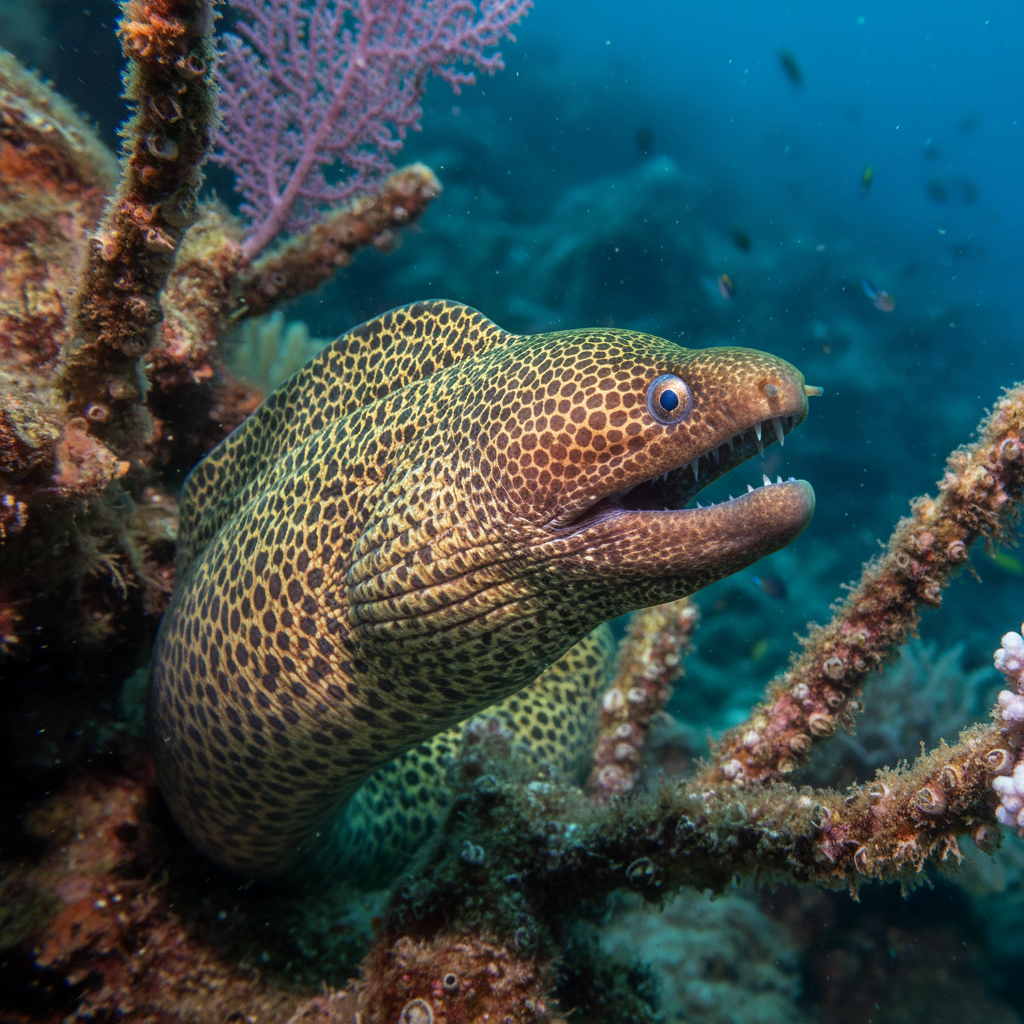
Indian Mud Moray Eel: Gymnothorax tile
The Indian Mud Moray Eel (Gymnothorax tile), often misleadingly sold as the "Freshwater Moray," is a true moray species that requires brackish to marine conditions and a dedicated predator setup.

The Indian Mud Moray Eel (Gymnothorax tile) is one of the few moray species found in estuarine environments. While it is almost universally marketed as a "freshwater" eel, this is a significant misconception. In the wild, it migrates between fresh, brackish, and marine waters, but in captivity, a strictly freshwater environment will eventually lead to kidney failure and a weakened immune system. It is a stunning, serpent-like predator with a dark olive-to-grey body covered in tiny, luminous gold or white spots, giving it a starry appearance.
In the aquarium, they are rewarding for those who can provide a large, brackish system. They are highly intelligent, can be incredibly long-lived, and often develop unique personalities, recognizing their keepers over time.
Natural Habitat & Origin
This species has a wide distribution across the Indo-West Pacific, ranging from India and the Andaman Islands to Indonesia and the Philippines. They primarily inhabit estuaries, mangroves, and the lower reaches of rivers. They are found in areas with soft, muddy or silty bottoms where they can hide among submerged roots, rocks, and debris. They are highly adaptable to changing salinities but are always within reach of the sea.
Care Requirements
The Indian Mud Moray Eel is a high-maintenance species that requires a specialized setup. A minimum tank size of 55 gallons (200L) is required for a single adult, but a 75-gallon or larger system is much better for maintaining stable water parameters.
CRITICAL WATER PARAMETERS: Success with this species requires brackish water with a specific gravity (SG) of at least 1.008 to 1.015. Long-term maintenance in pure freshwater is not recommended. Maintain a pH of 7.5 to 8.5 and a temperature of 75°F to 82°F (24°C to 28°C). The tank must have a tight-fitting, weighted lid, as morays are legendary escape artists and can squeeze through the smallest gaps. The environment should feature large PVC pipes or smooth rock caves that are wide enough for the eel to coil inside comfortably.
Diet & Feeding
Indian Mud Morays are specialized carnivores. They have a powerful sense of smell but relatively poor eyesight, relying on chemical cues to find food.
In captivity, they require a varied, meaty diet:
- Frozen prawns, whole shrimp (with shells), and strips of white fish
- Squid, mussels, and clams
- Live ghost shrimp or feeder fish (as an occasional treat, not a staple)
- Tip: Feed using long aquarium tongs. Do not hand-feed, as their backward-curved teeth are designed to hold onto prey and they can give a painful, infectious bite if they mistake your fingers for food.
Behavior & Temperament
They are reclusive and nocturnal, spending much of the day with just their heads poking out of their chosen cave. They are highly predatory and will consume any fish that can fit into their mouths. However, they are not typically aggressive toward fish too large to eat. They are intelligent and will quickly learn the feeding schedule, often coming out of their caves when they smell food in the water.
Tank Mates
Suitable tank mates MUST be large, robust, and capable of handling brackish conditions:
- Large Scats (Selenotoca multi-fasciata)
- Monos (Monodactylus argenteus)
- Archerfish (Toxotes species)
- Large Brackish Chromides (Etroplus suratensis)
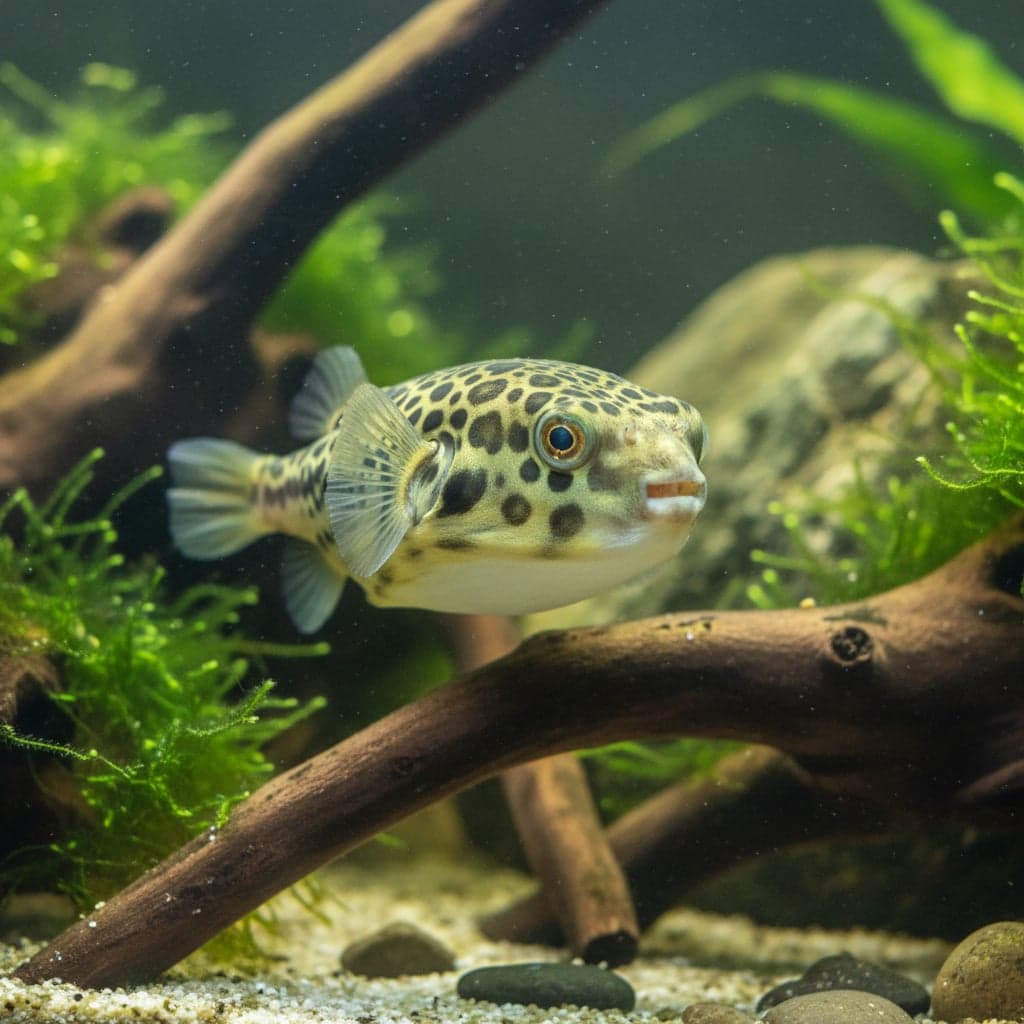
- Large, robust puffers (though they may nip at the eel's fins)
Avoid keeping them with any small, peaceful fish or other eels, as territorial disputes are common.
Breeding
Breeding Gymnothorax tile in captivity is currently impossible. Like all morays, they have a complex larval stage known as a leptocephalus, which drifts in the open ocean for months before settling into estuaries. All specimens in the hobby are wild-caught.
Common Health Issues
The most common issue is osmotic stress caused by keeping them in strictly freshwater. This manifests as lethargy, loss of appetite, and eventually death. They are also prone to "lockjaw" or vitamin deficiencies if fed a monotonous diet of only one type of food (like feeder goldfish). Supplementing their diet with marine-based vitamins and maintaining high-quality brackish water is essential for their long-term survival.