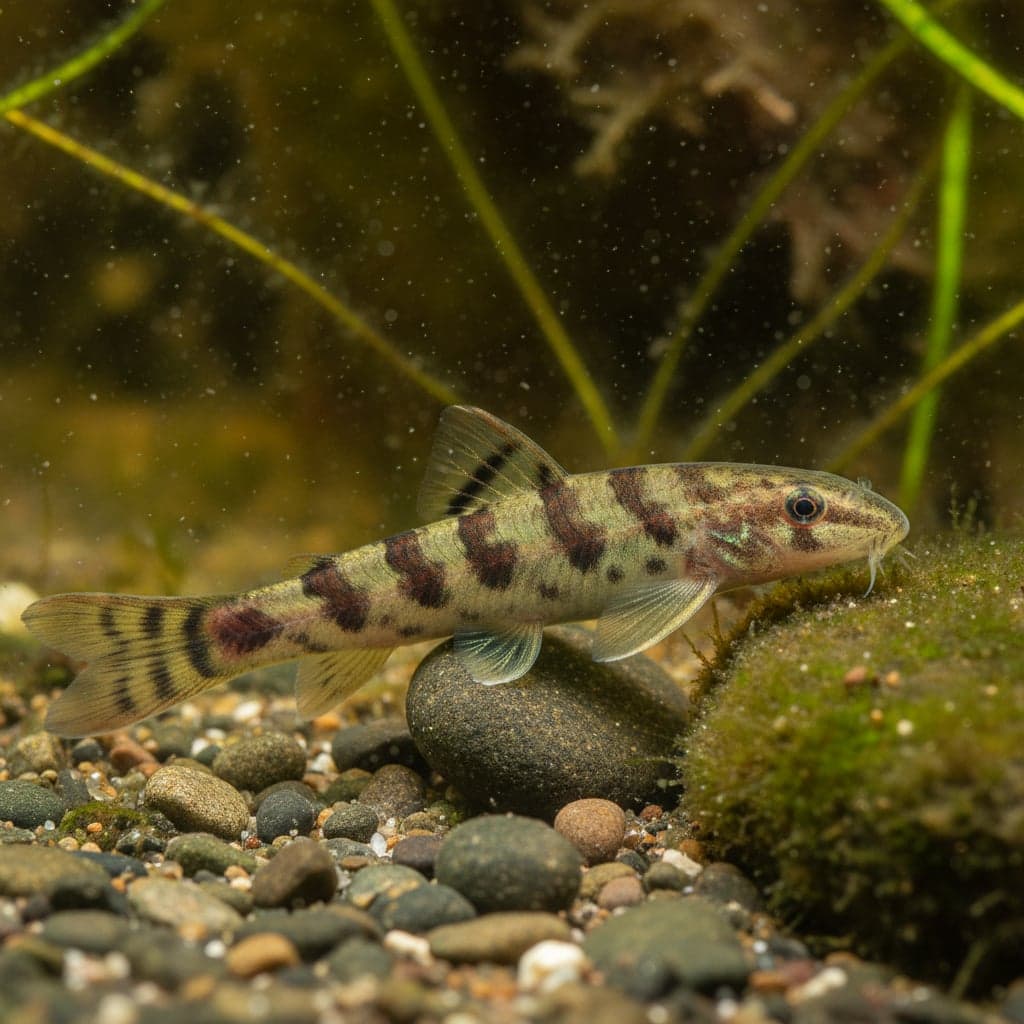
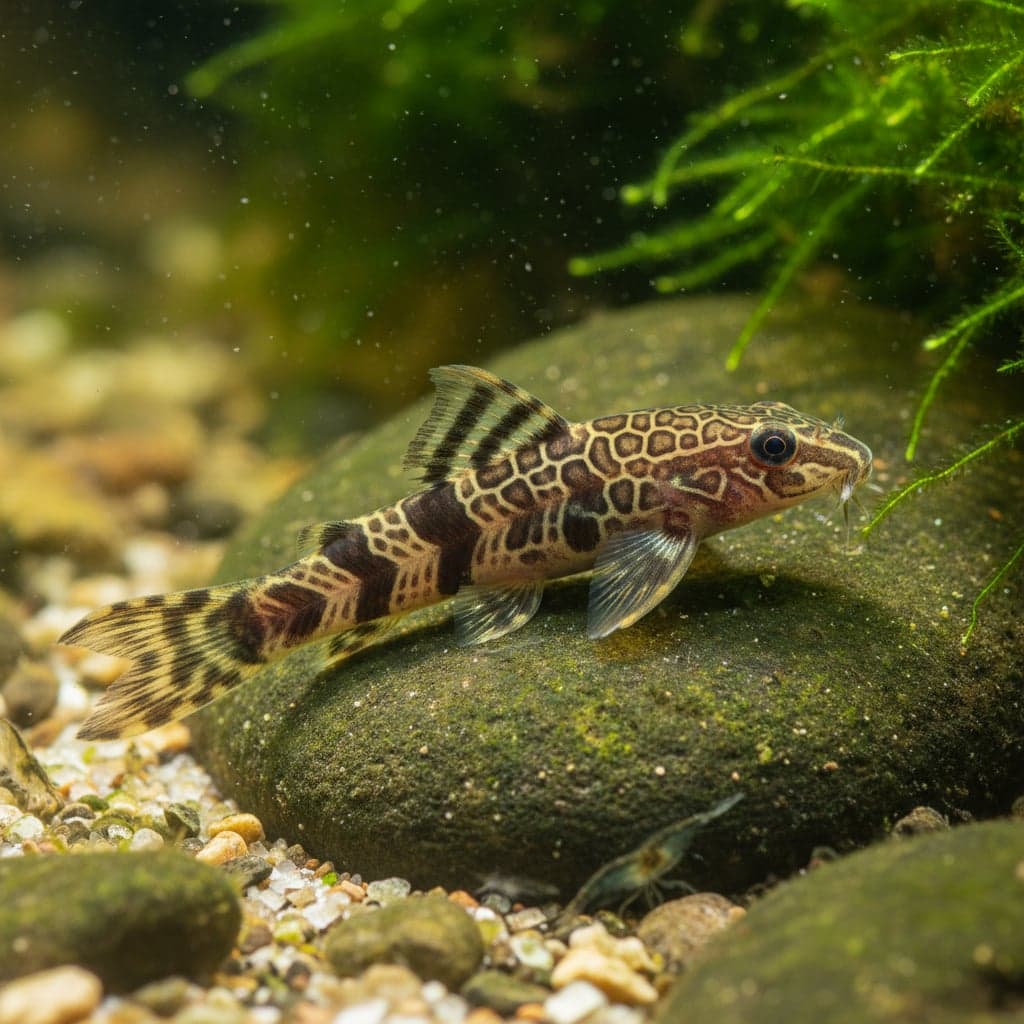
Japanese Monitor Lizard Loach: Niwaella delicata
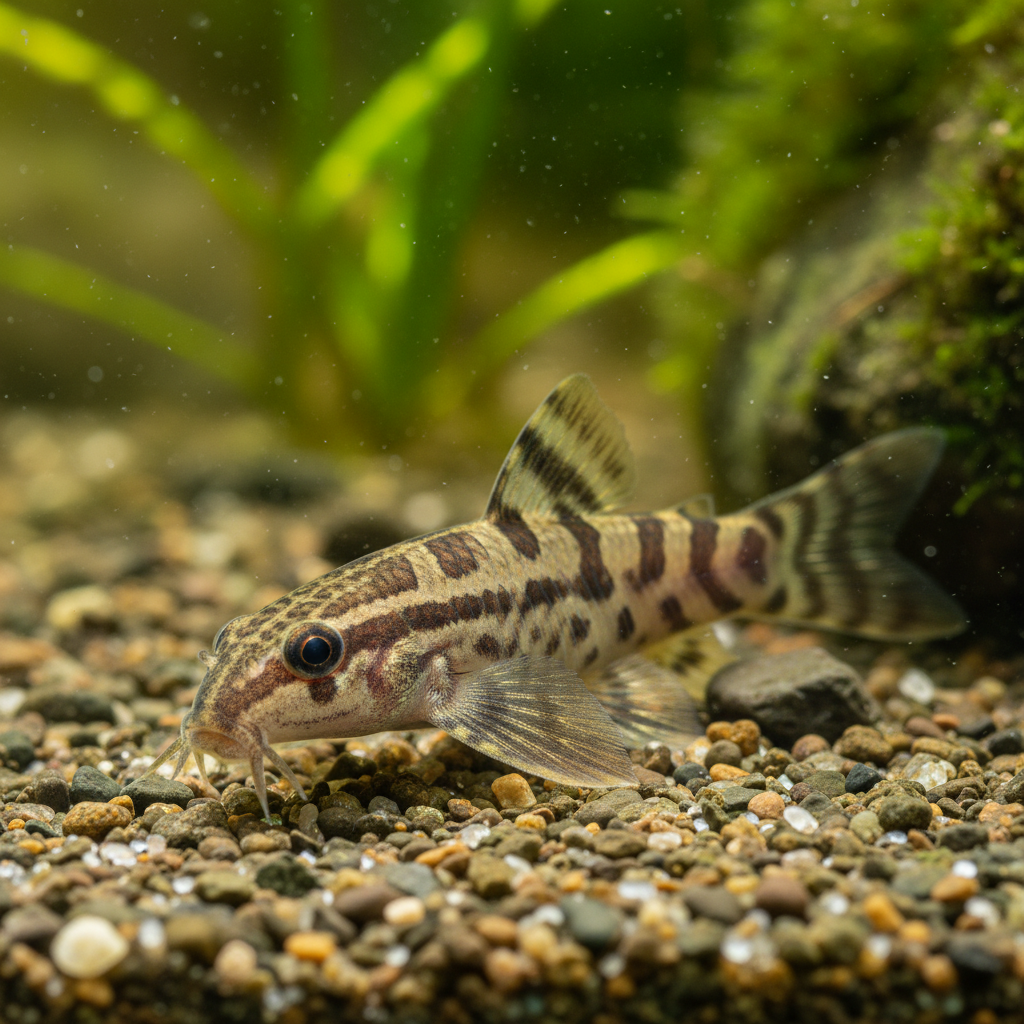
The Japanese Monitor Lizard Loach (Niwaella delicata), or Slender Loach, is a rare and elegant species from the mountain streams of Japan, prized for its slim, eel-like body and its striking leopard-like spots.

The Japanese Monitor Lizard Loach (Niwaella delicata) is one of the most elegant and elusive members of the loach family. Named for its remarkably long, slender, and almost eel-like body, it is adorned with a precise and beautiful pattern of dark, rounded spots that resemble the markings of a monitor lizard. Unlike the more common rounded "hillstream" loaches, Niwaella is a master of the interstitial spaces, effortlessly weaving through gaps in river stones. It is a specialized cool-water species that brings a unique, serpentine grace to any specialized river biotope.
In the aquarium, they are peaceful and social. They are industrious sifters, constantly tasting the substrate for small particles of food. While they are hardy if their specific environmental needs are met, they are sensitive to low oxygen levels and high temperatures, making them a dedicated choice for serious native-set-up enthusiasts.
Natural Habitat & Origin
Niwaella delicata is endemic to Japan, specifically found in the northern and central regions of Honshu Island. They inhabit the clear, fast-flowing mountain streams and headwaters where the water is cool and highly oxygenated. They are almost always found in areas with a substrate of mixed river cobbles, gravel, and coarse sand. They spend much of their time buried just beneath the surface of the gravel or hidden among the crevices of large stones to avoid the direct force of the current.
Care Requirements
The Japanese Monitor Lizard Loach is a specialized cool-water species that requires a dedicated river-style setup. A minimum tank size of 25 gallons (100L) is recommended for a group.
Maintain stable parameters: a pH of 7.0 to 8.0 and a temperature of 59°F to 72°F (15°C to 22°C). This species will not thrive in a standard tropical aquarium. They require high levels of dissolved oxygen and a moderate to strong current. The tank must feature a substrate of smooth, rounded river gravel and sand, along with plenty of larger cobbles to create natural hiding spots. Live plants such as Anubias or Bolbitis can be attached to the stones, but ensure the center of the tank remains focused on the rocky substrate they naturally inhabit.
Diet & Feeding
They are active omnivores. In the wild, they sift through the substrate for aquatic insect larvae, small crustaceans, and organic detritus.
In captivity, they are generally good feeders:
- High-quality sinking tablets and algae wafers should be the staple.
- They relish small frozen foods: Daphnia, Baby Brine Shrimp, and Cyclops.
- They will also graze on biofilm and fine algae growing on the river stones.
- Tip: They are non-aggressive feeders. Ensure they are not outcompeted by faster, more boisterous bottom-dwellers.
Behavior & Temperament
They are peaceful and social. They should always be kept in a group of 5 or more individuals; in isolation, they can become extremely reclusive and may stop feeding. They are fascinating to watch as they weave through the gravel, often poking only their heads out to scan for food. They are not territorial and will often huddle together in a single "prime" crevice. Because of their slender bodies and jumping ability, a tight-fitting lid is essential.
Tank Mates
Suitable tank mates must be peaceful and capable of thriving in cool, high-flow water:
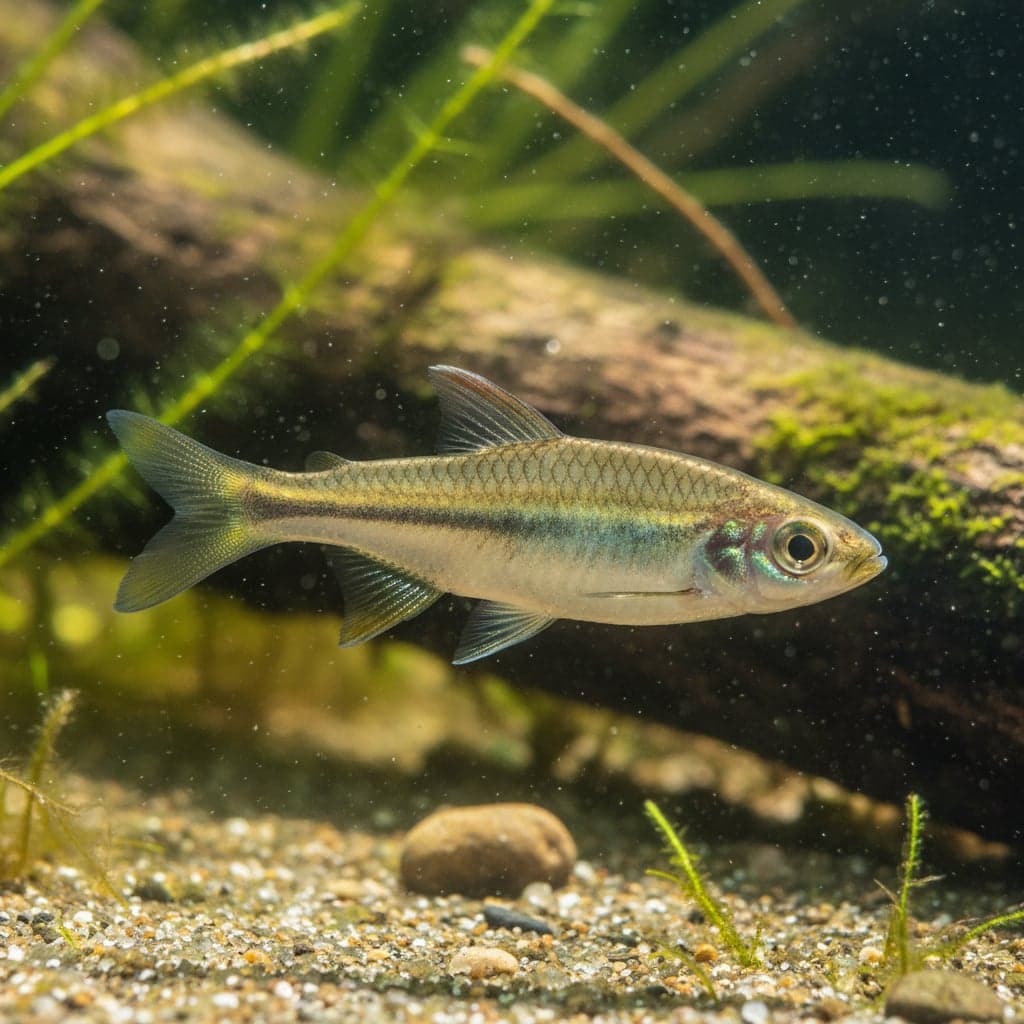
- White Cloud Mountain Minnows
- Japanese Ricefish (Medaka)
- Other peaceful hillstream loaches (Gastromyzon or Sewellia)
- Rhinogobius species (Japanese Freshwater Gobies)
- Rosy Barb (if the tank is large enough)
Avoid keeping them with large, boisterous fish or with tropical species that require high temperatures, as the loach's metabolism will suffer in warm water.
Breeding
Breeding Niwaella delicata in captivity is extremely rare and not well-documented in the hobby. They are thought to be seasonal spawners that deposit eggs deep within the gravel in the spring. Replicating the natural seasonal temperature shifts of Japanese mountain streams is likely the key to successful triggering. Most specimens in the trade are wild-caught.
Common Health Issues
The primary health concern is oxygen deprivation and heat stress during the summer months or if power failures occur. They are also prone to skin infections if kept over sharp or dirty substrates. Using a chiller or specialized fans to maintain cool temperatures and providing a clean, well-oxygenated environment is the best way to ensure their elegant "lizard" patterns remain sharp and their activity levels high.