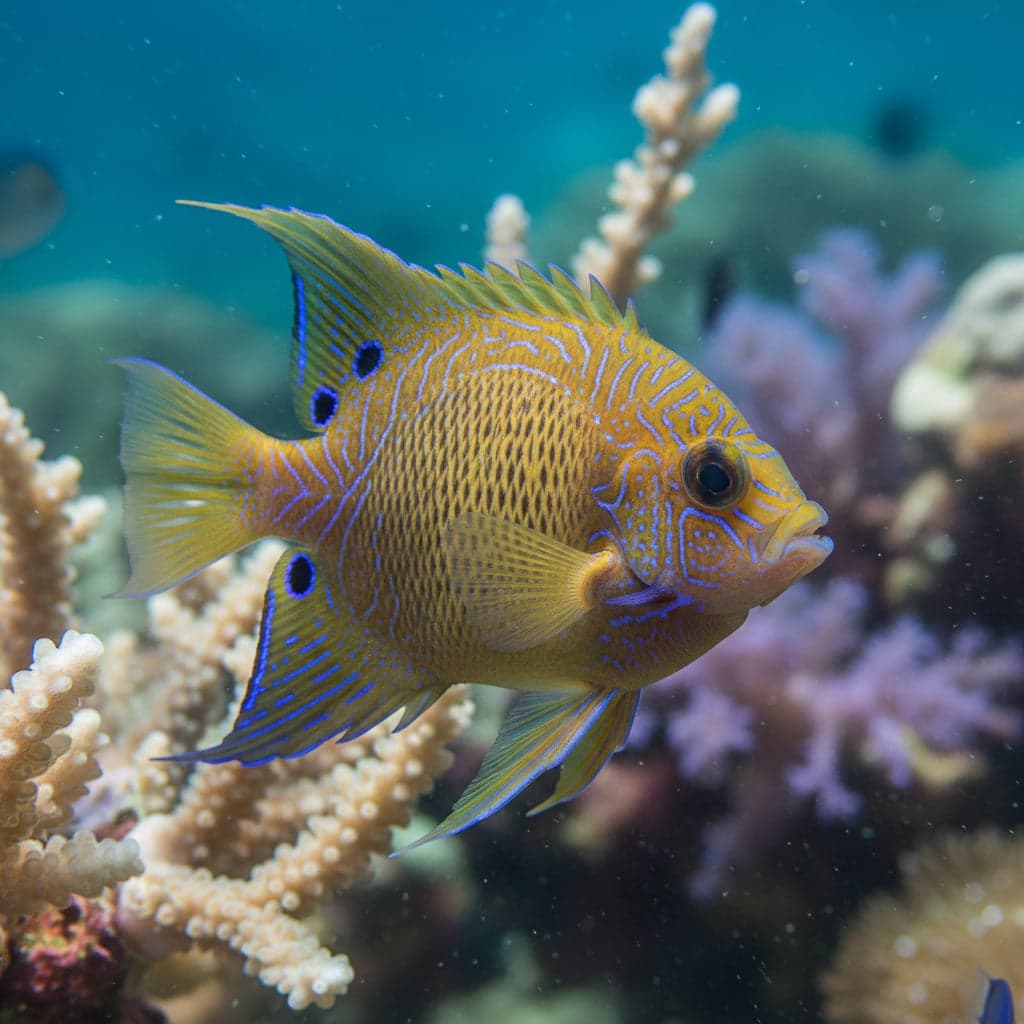
Japanese Pygmy Angelfish: Centropyge interrupta
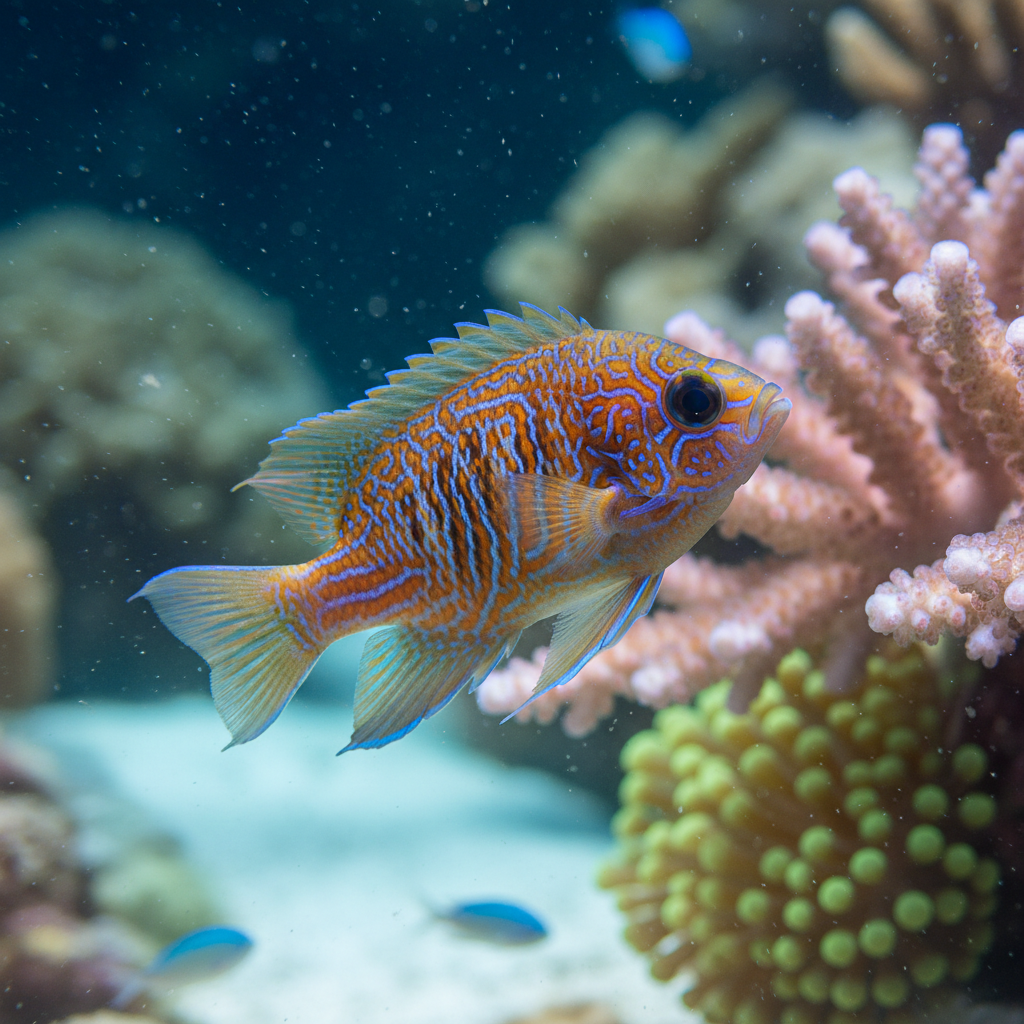
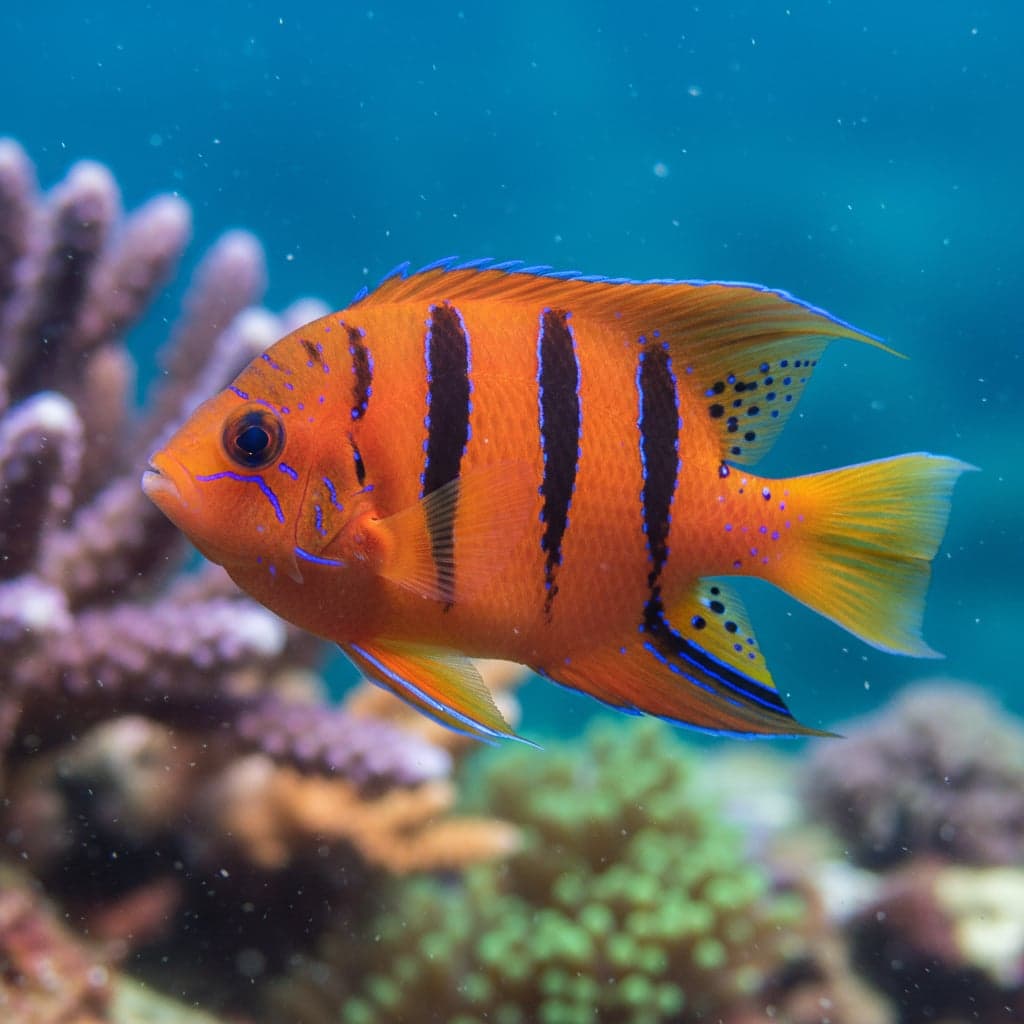
The Japanese Pygmy Angelfish (Centropyge interrupta), or Interrupted Angelfish, is a legendary "holy grail" species, prized for its stunning orange-and-purple gradient body and intricate metallic neon-blue speckling.
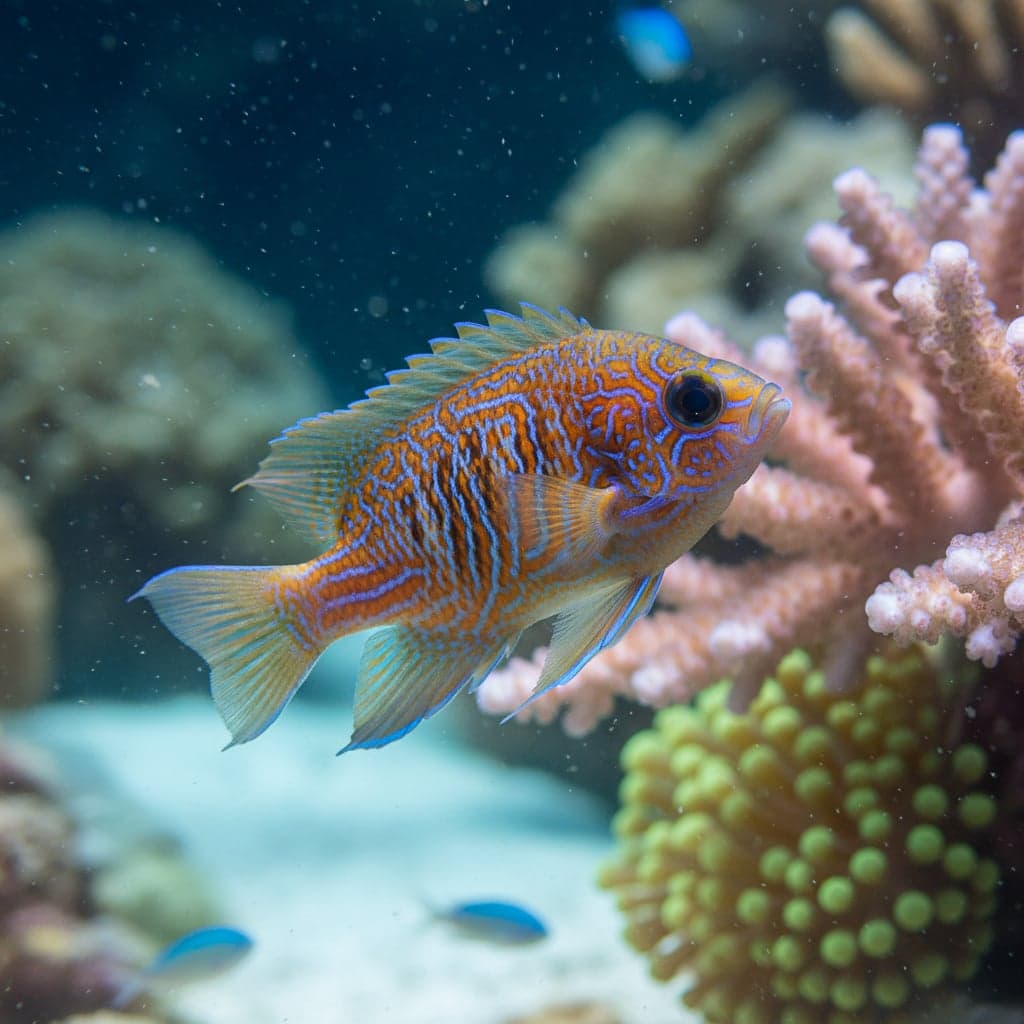
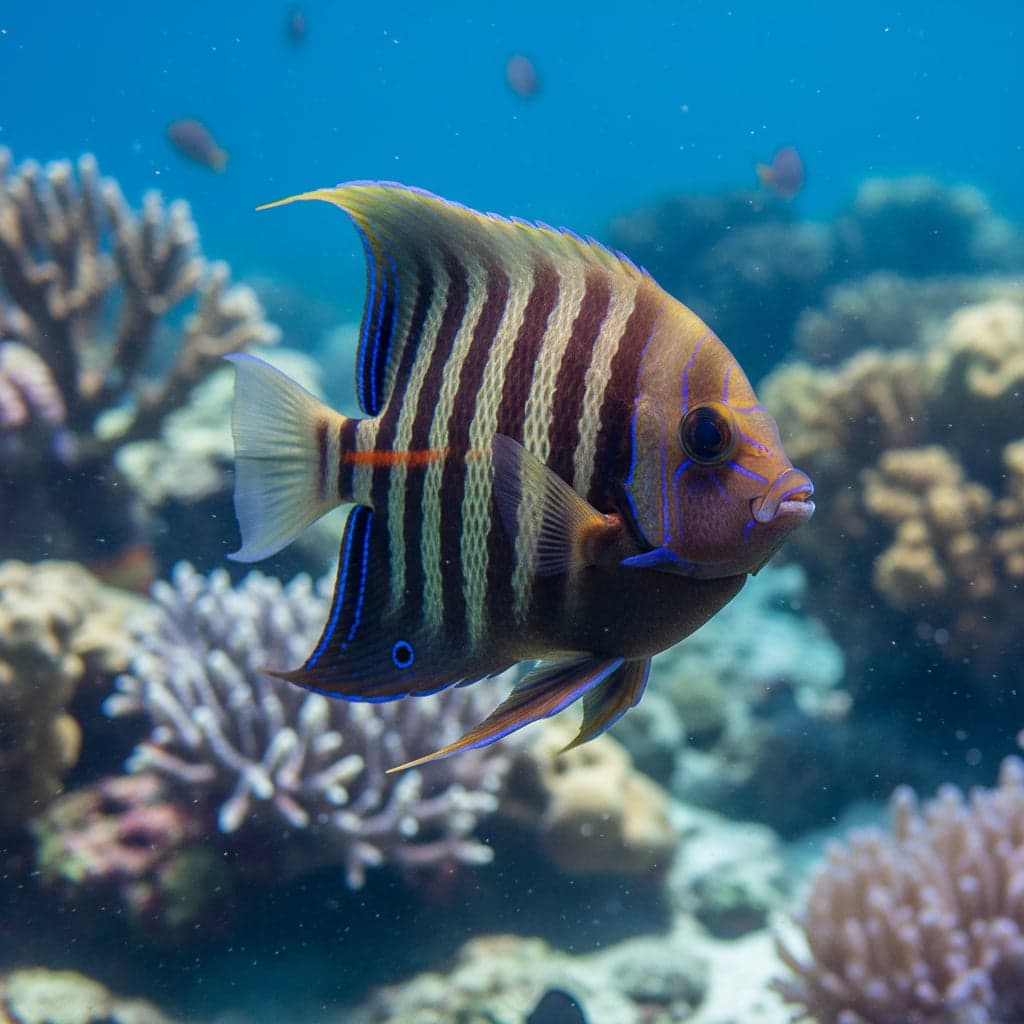
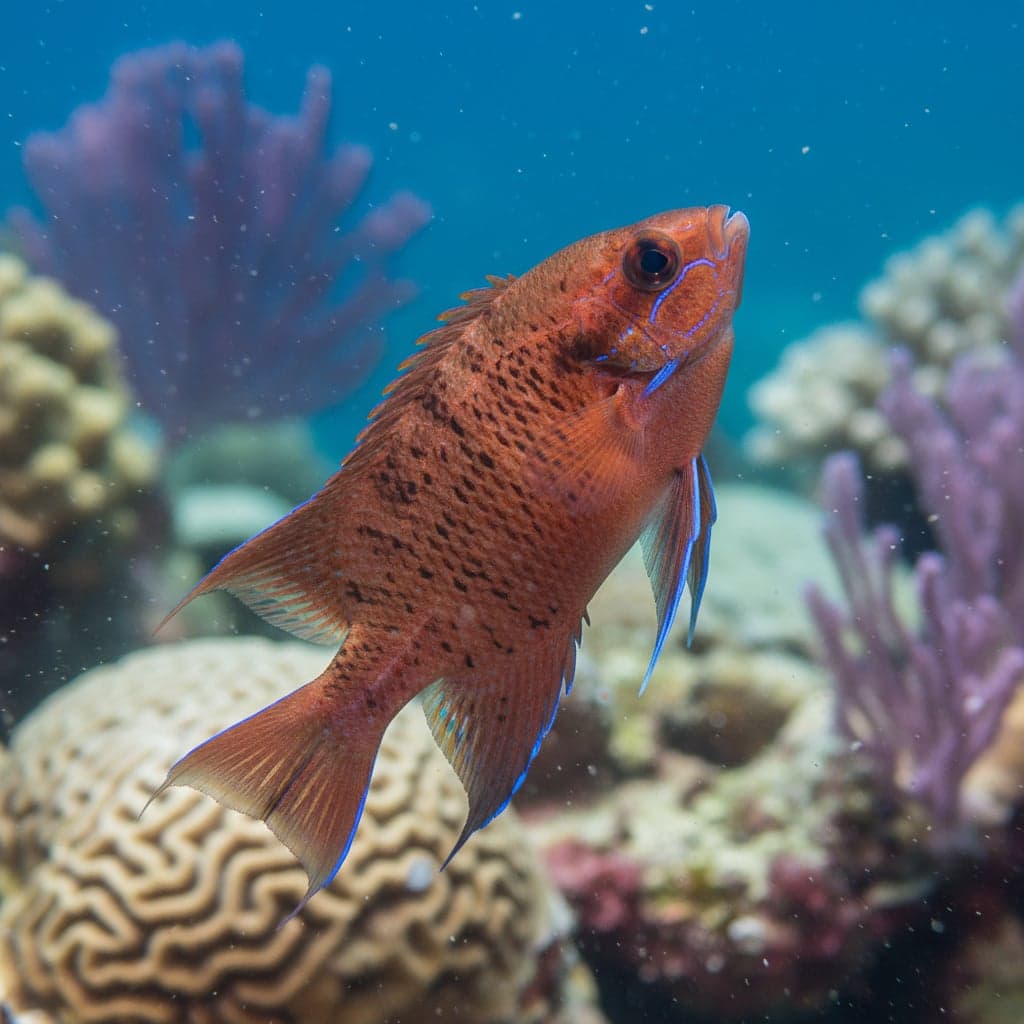
The Japanese Pygmy Angelfish (Centropyge interrupta) is arguably the crown jewel of the dwarf angelfish world. While most Centropyge species are prized for their colors, the "Interruptus" occupies a tier of its own. Its name refers to the intricate, radiant neon-blue spots and "interrupted" lines that cover its face and body, set against a stunning gradient of fiery orange, deep yellow, and royal purple. It is a large and exceptionally intelligent member of its genus, known for its bold personality and its preference for subtropical, deep-water reef environments.
In the aquarium, they are prized for their curiosity and interaction. However, they are not "beginner" fish; they require a high-budget, specialized environment with cooler temperatures and a wealth of high-quality live rock to thrive. For the serious reef connoisseur, the Japanese Pygmy Angelfish is a breathtaking centerpiece of unparalleled prestige.
Natural Habitat & Origin
Centropyge interrupta has a relatively restricted distribution, primarily found around southern Japan (the Ogasawara and Izu Islands) and extending eastward across the Pacific to Midway and the Northwestern Hawaiian Islands. They are deep-water residents, typically inhabiting seaward reef slopes and rocky drop-offs at depths of 15 to 60 meters (and sometimes much deeper). Unlike many tropical dwarf angels, they thrive in the cooler, high-oxygen waters brought by deep-ocean currents.
Care Requirements
The Japanese Pygmy Angelfish is a robust species that requires a substantial amount of space and environmental stability. A minimum tank size of 65 gallons (250L) is recommended for a single adult.
Maintain stable parameters: a pH of 8.1 to 8.4 and a salinity of 1.023 to 1.025. The most critical requirement is temperature control. This is a subtropical species; it thrives best at 68°F to 77°F (20°C to 25°C). Long-term exposure to standard tropical temperatures (above 79°F) can lead to rapid physical decline and a shortened lifespan. The tank should be established with massive amounts of high-quality live rock arranged with complex caves and vertical reef structures to mimic their deep-water rocky habitats. Specialized "chillers" are often necessary to maintain the required cool environment.
Diet & Feeding
They are active omnivores with a high metabolism. In the wild, they graze on a mix of algae, detritus, and various benthic invertebrates.
In captivity, they require a high-quality, varied diet:
- They RELISH prepared foods containing Spirulina and marine sponge.
- Frozen foods: Mysis shrimp, enriched Brine Shrimp, and finely chopped seafood.
- High-quality marine pellets and flakes should be offered multiple times a day.
- Note: They are "reef safe with caution." Like most dwarf angels, they may nip at fleshy LPS corals or clam mantles if they are underfed or bored.
Behavior & Temperament
They are bold and territorial. They are widely considered to be among the more assertive dwarf angelfish. They do not school and are best kept as a single specimen or a mated pair (highly recommended to introduce them simultaneously in a very large tank). They are inquisitive and will spend much of their time darting in and out of the rockwork, "inspecting" their surroundings. They are exceptionally hardy once acclimated to the cooler temperatures and can live for 10-15 years or more.
Tank Mates
Suitable tank mates must be robust and comfortable in cooler reef conditions:
- Tangs (larger species)
- Large Anthias
- Swallowtail Angelfish (Genicanthus species)
- Wrasses (Halichoeres or Cirrhilabrus)
- Blennies and Gobies
Avoid keeping them with other dwarf angelfish unless the tank is massive (150+ gallons), or with very shy, timid species that might be intimidated by their bold personality.
Breeding
Breeding Centropyge interrupta is a major milestone in marine aquaculture. They are protogynous hermaphrodites, meaning they start life as females and the dominant individual in a group will transition to a male. They have been successfully captive-bred by specialized institutes (such as those in Hawaii), where their pelagic spawning and larval rearing have been documented. However, captive-bred specimens remain incredibly rare and expensive in the retail market.
Common Health Issues
The primary health concern is heat-related stress and organ failure if kept at tropical temperatures. They are also susceptible to Marine Ich (Cryptocaryon) during the acclimation period. Providing a cool, chilled environment with pristine water quality and a nutrient-dense, varied diet is the best way to ensure their legendary neon-blue "interruptions" remain radiant and their health robust.