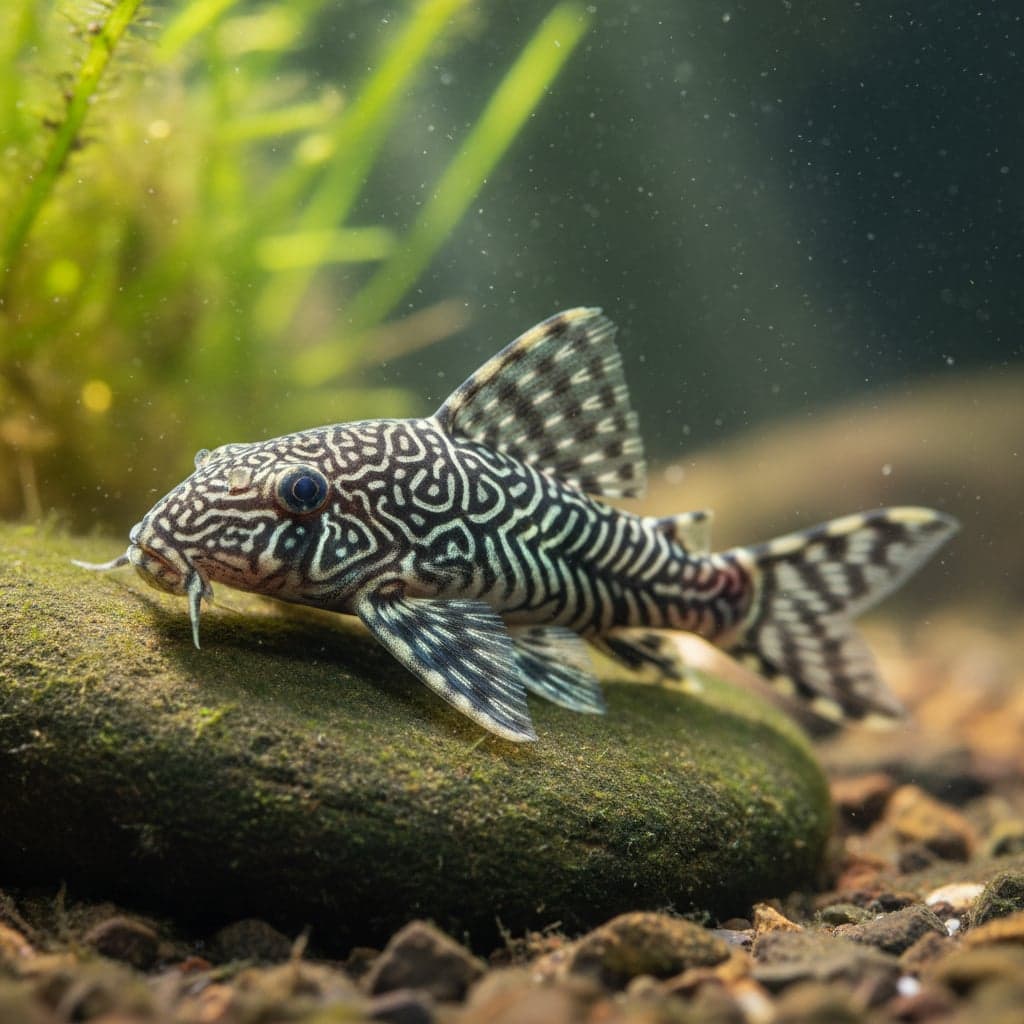
King Tiger Pleco L066: Hypancistrus sp. L066
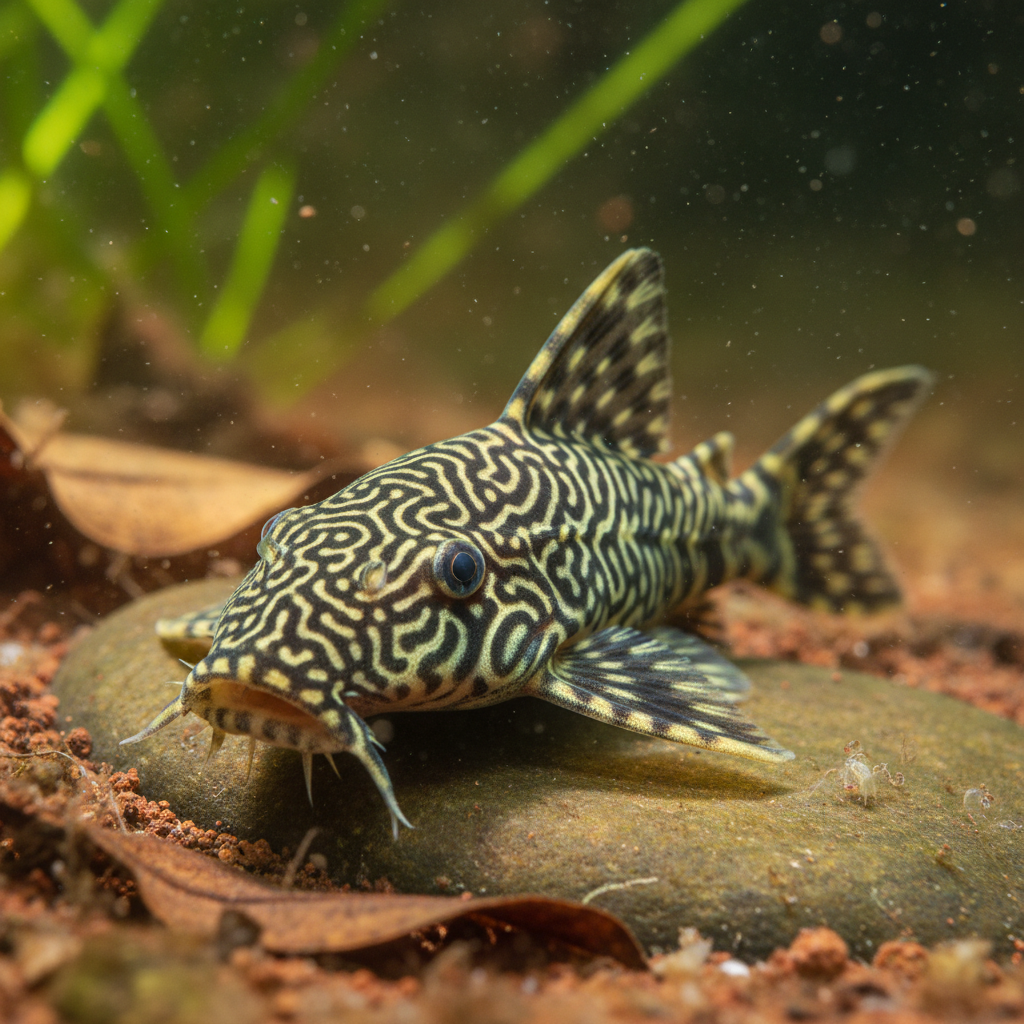
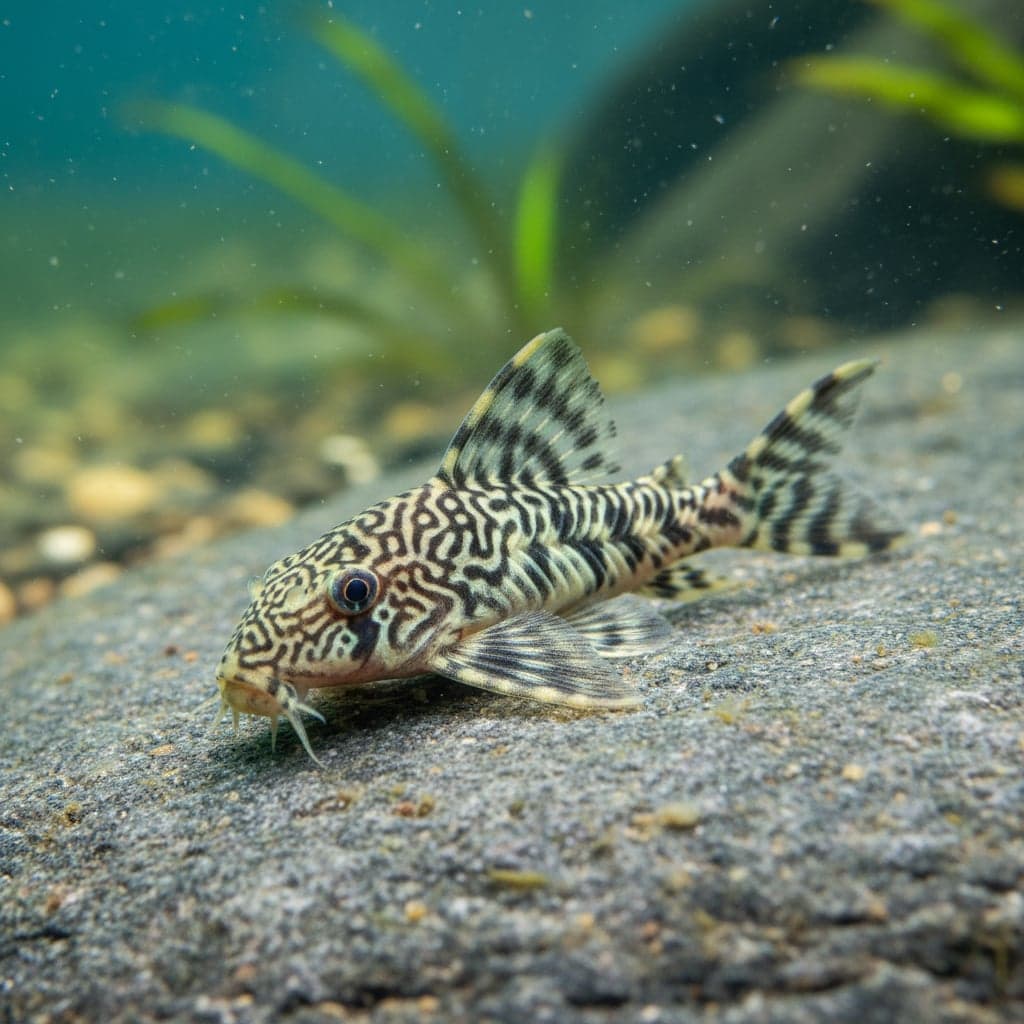
The King Tiger Pleco (L066) is a stunningly patterned Hypancistrus from the Rio Xingu, defined by its intricate maze of cream-and-black maze-like scribbles.
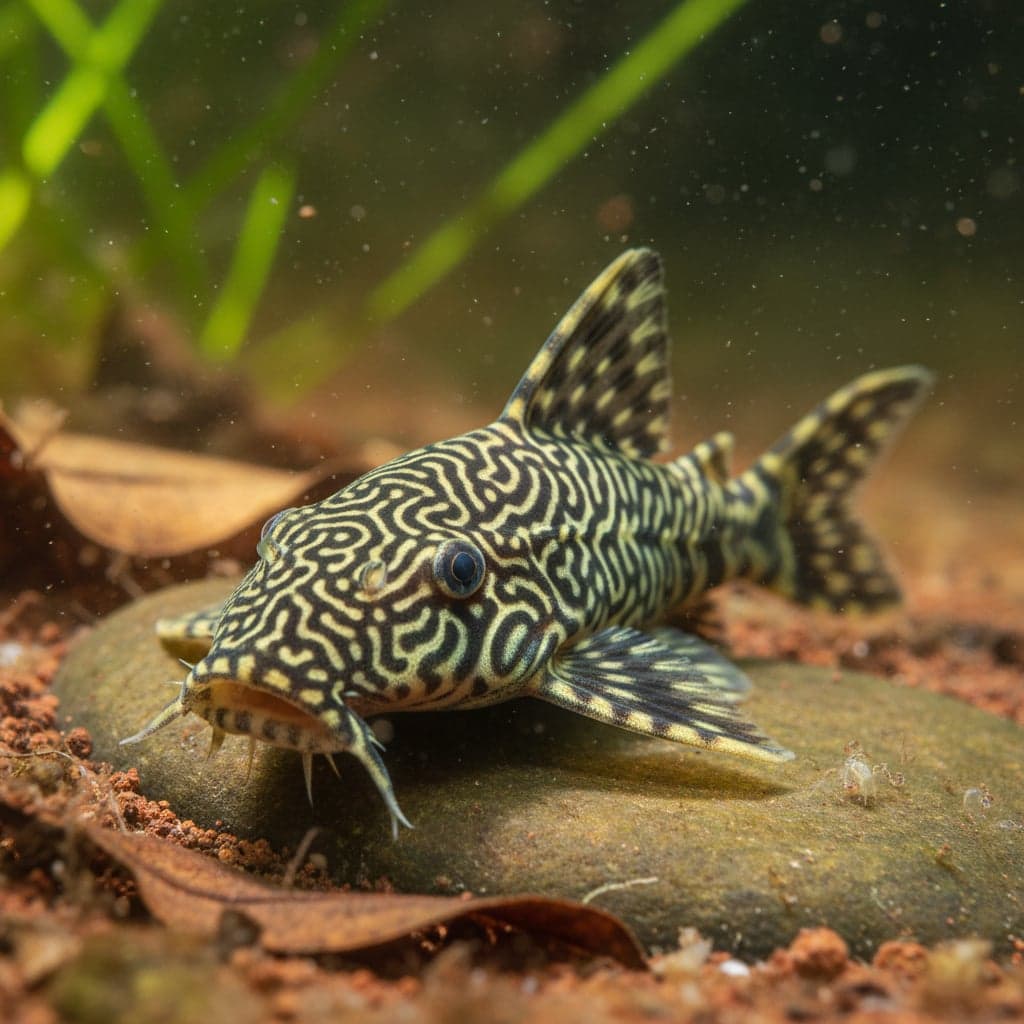
The King Tiger Pleco (Hypancistrus sp. L066) is the "zebra cichlid" of the catfish world. Hailing from the dynamic waters of the Rio Xingu, it is one of the most visually complex and sought-after L-numbers in the hobby. It is defined by its exquisite, maze-like scribble pattern: a creamy off-white or light tan base color covered in fine, overlapping black or dark brown lines that create a mesmerizing labyrinth. Unlike the larger, broad-striped plecos, the L066's pattern is dense and fine, making each individual unique. For the specialized aquarist, the King Tiger Pleco is a premium resident that combines extraordinary beauty with a resilient and industrious personality.
In the aquarium, they are nocturnal and secretive, spending their day wedged into the tightest crevices of the rockwork. However, they are remarkably active once the lights dim, patrolling the substrate for food and defending their favorite cave with a quiet but firm authority.
Natural Habitat & Origin
Hypancistrus sp. L066 is native to the Rio Xingu basin in Pará, Brazil. Specifically, they are found in the lower reaches of the river near Belo Monte. This is a clear-water, high-energy environment characterized by fast-flowing rapids and a bed composed of massive granite boulders and deep, silt-free rock crevices. Unlike the stagnant blackwater streams often associated with Amazonian fish, the Xingu is highly oxygenated and warm. The L066 has evolved a relatively flat, powerful body to resist the current and find shelter in the deep fissures between the stones.
Care Requirements
The King Tiger Pleco is a hardy species, but it is "water quality sensitive" and demands high-flow conditions. A minimum tank size of 30 gallons (120L) is recommended for a pair, but larger is always better to provide stable parameters.
Maintain stable, warm parameters: a pH of 6.0 to 7.5 and a temperature of 78°F to 86°F (26°C to 30°C). They demand exceptionally high oxygen saturation and strong water movement; a powerful manifold or multiple powerheads aimed directly at the rockwork are essential. The aquarium must be decorated with a "pleco stack" of slate, flat stones, or specialized ceramic caves. The more crevices and hiding spots you provide, the more secure the fish will feel. A substrate of fine sand is ideal, as they like to "shuffle" into it occasionally. They are sensitive to high nitrates and ammonia, so frequent, large water changes are mandatory.
Diet & Feeding
Despite their "pleco" name, L066 is primarily a carnivore. They are poor algae eaters and will not survive on waste alone.
In captivity, they require meatier, protein-rich foods:
- High-quality sinking carnivore pellets and wafers should be the staple.
- They relish live or frozen foods: Bloodworms, Mysis shrimp, and chopped seafood.
- They will occasionally graze on biofilm but do not expect them to clean your glass.
- Tip: Feed them just before the lights go out or use a "moonlight" setting to observe them as they emerge to feed.
- Ensure that faster-moving community fish do not consume the food before it reaches the bottom-dwelling plecos.
Behavior & Temperament
They are peaceful and shy but can be territorial with other bottom-dwellers over preferred caves. Males will aggressively defend their chosen "home," especially during breeding. They are not schooling fish but can be kept in groups if enough caves are provided. They are entirely safe with plants, although their high-flow requirements may make keeping delicate plants difficult. They are masters of the "vanishing act" and can disappear into cracks that seem far too small for their bodies.
Tank Mates
Suitable tank mates are other Xingu-native species or those that share their preference for warm, high-flow water:
- Other Hypancistrus species (L260, L174)
- Corydoras (Semicuspis or other warm-water species)
- Tetras (Bleeding Heart, Lemon, or other robust species)
- Discus or Geophagus (in very large tanks)
Avoid keeping them with aggressive or much larger bottom-dwellers that might bully them out of their caves, or with very competitive feeders that leave no food for the nocturnal plecos.
Breeding
Breeding Hypancistrus sp. L066 is a common goal for specialized keepers. They are cave spawners. The male will trap a female in his cave, and after spawning, the male is responsible for "guarding and fanning" the eggs until they hatch (approximately 5 to 7 days). The fry carry a large yolk sac and will remain in the cave for another week. They can be raised on baby brine shrimp and crushed carnivore pellets. A sudden "simulated rainstorm" (large, slightly cooler water change) can often trigger spawning.
Common Health Issues
The primary health concern is starvation caused by a diet of only algae. They are also highly sensitive to low oxygen levels (hypoxia) and to medications containing copper or malachite green. Maintaining a high-protein diet, ensuring a "torrent-like" flow with high oxygenation, and performing frequent water changes is the best way to ensure their exquisite maze-like patterns and active nocturnal lives remain a highlight of the tank.