Koi: Cyprinus rubrofuscus
The Nishikigoi (Koi) is the legendary "swimming jewel" of the water garden, prized for its extraordinary patterns, long life, and status as a living work of art.
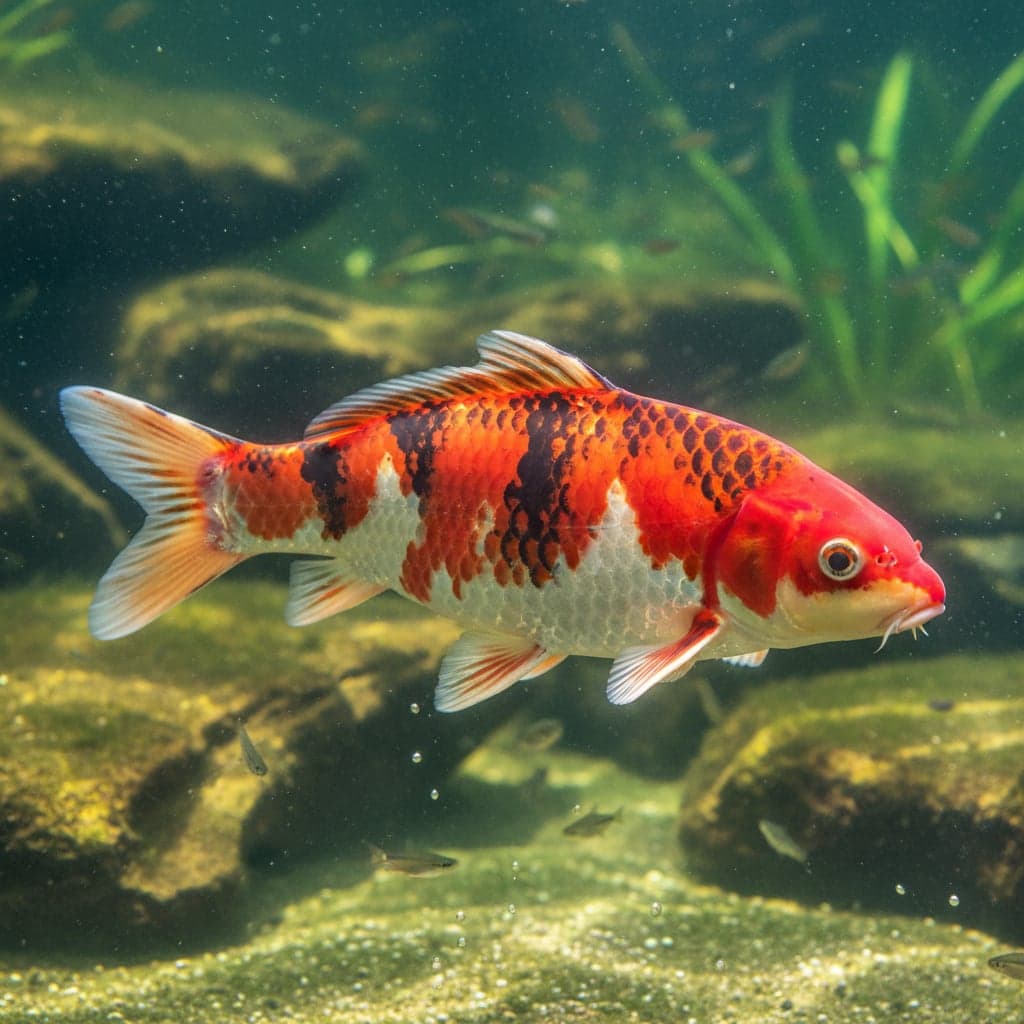
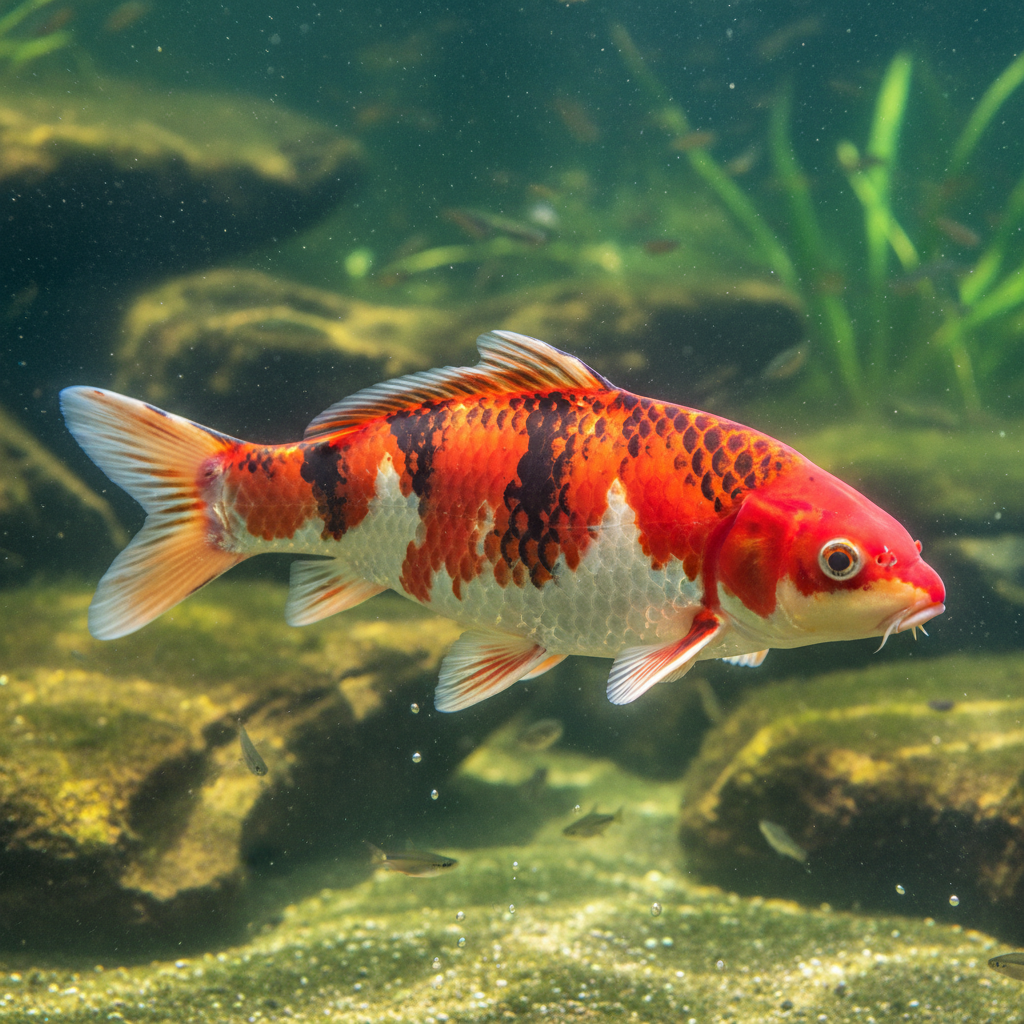
The Koi (Cyprinus rubrofuscus), specifically the ornamental Nishikigoi, is the undisputed monarch of the water garden. Native to the river systems of East Asia and refined over centuries by Japanese masters, the Koi is more than a fish—it is a living, breathing work of art. They are defined by an almost infinite variety of colors and patterns, categorized into prestigious classes such as Kohaku (white with red), Taisho Sanke (white with red and black), and Showa Sanshoku (black with red and white). Beyond their physical beauty, Koi are celebrated for their remarkable longevity and intelligence; they are capable of recognizing their keepers, being trained to hand-feed, and forming social bonds that can last for many decades.
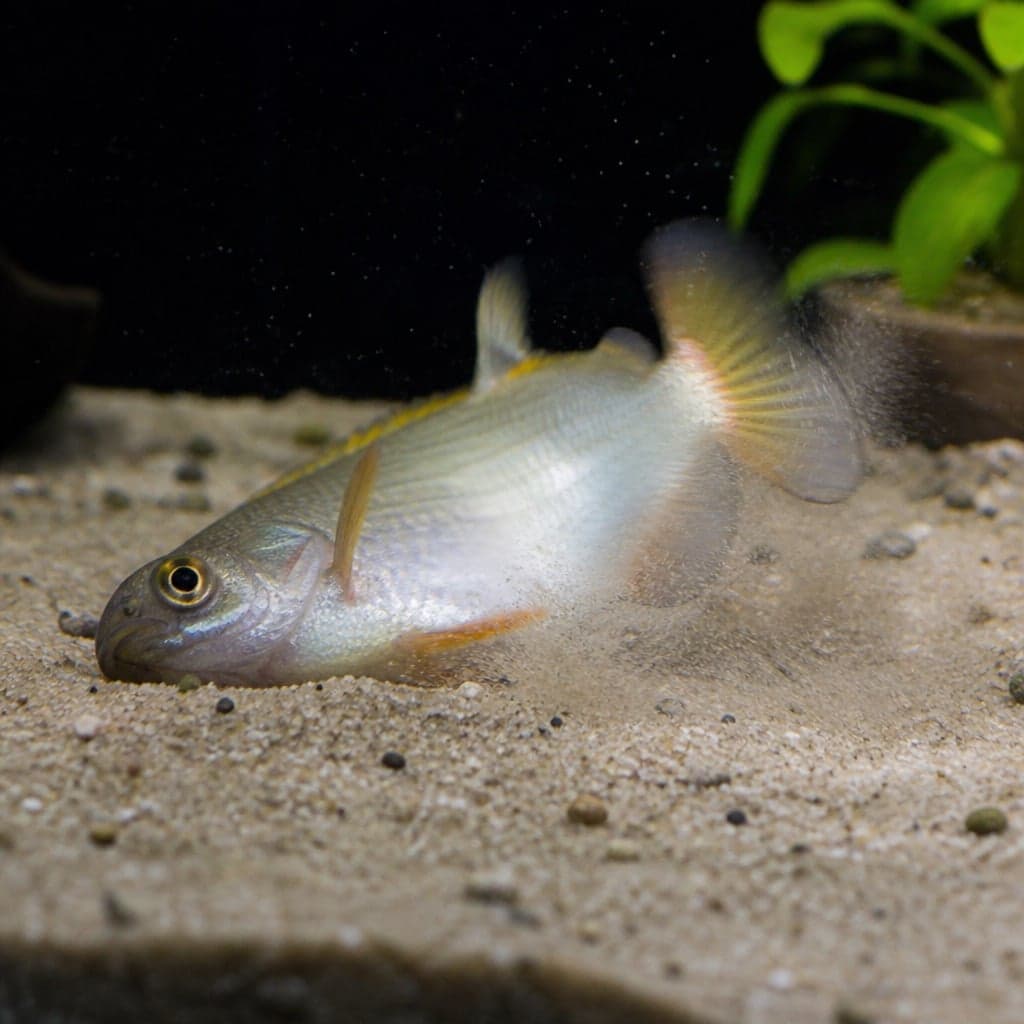
In the pond or large aquarium, they are gentle giants. They are peaceful, prehistoric-looking foragers that spend their day rhythmically sifting through the substrate and interacting in large, graceful shoals.
Natural Habitat & Origin
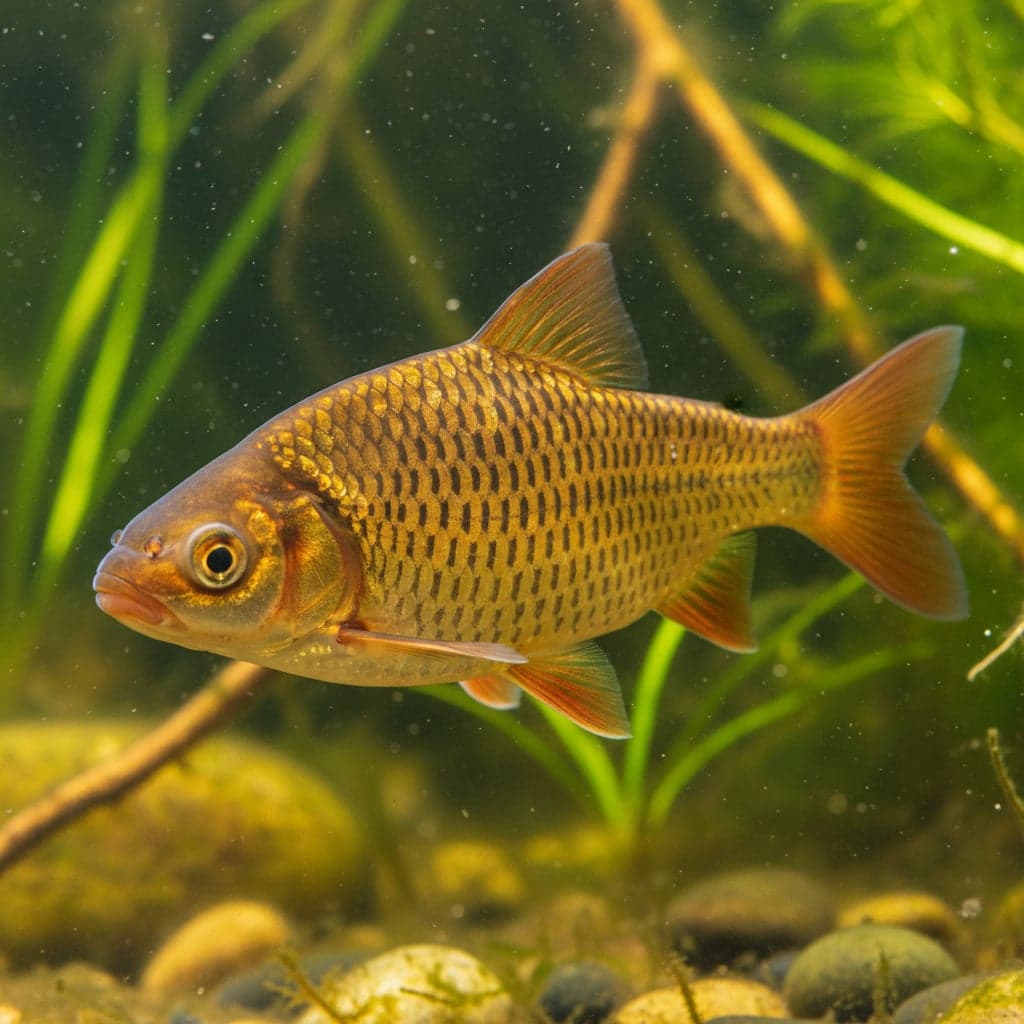
Domesticated Koi originate from the wild Amur Carp (Cyprinus rubrofuscus), native to the rivers and lakes of East Asia, particularly China and Japan. The transition from a drab, brownish-grey food fish to the vibrant "Living Jewel" began in the Niigata Prefecture of Japan during the early 19th century. Their natural ancestors are masters of survival, inhabiting a vast range of environments from the freezing rivers of Siberia to the warm lakes of southern China. This genetic resilience is what allowed the Koi to become the world's most successful and widely-distributed cold-water ornamental fish.
Care Requirements
The Koi is the ultimate "high-volume" resident. Their large size and high waste production mean that keeping them in a standard indoor aquarium is almost never appropriate for their long-term health. They are strictly a pond-scale species: a dedicated outdoor pond of at least 5,000 litres (about 1300 gallons) with a minimum depth of 4 feet is the gold standard for high-quality Nishikigoi.
Maintain stable parameters: a pH of 7.0 to 8.5 and a temperature that can range from 34°F to 85°F (1°C to 30°C), though they thrive best at 60°F to 75°F (15°C to 24°C). Pristine water quality and massive oxygenation are non-negotiable. A high-end filter system (such as a bead filter or drum filter) is required to manage the significant biological load. The pond should be designed with vertical walls to discourage predators and a bottom drain for efficient waste removal. Large, smooth river stones and water lilies define the classic "Koi aesthetic" while providing the fish with cover and natural grazing surfaces.
Diet & Feeding
They are opportunistic omnivores with a prehistoric appetite. In the wild, their ancestors sift through mud for insects, crustaceans, and aquatic vegetation.
In captivity, they require a diet formulated for their metabolism:
- High-quality, floating Koi pellets should be the staple, containing wheat germ and high-grade fish meal.
- They relish seasonal treats: Watermelon, oranges, silkworm pupae, and honey-soaked bread.
- Tip: Their digestion is temperature-dependent. Below 50°F (10°C), their metabolism slows to a crawl, and feeding should stop entirely to prevent food from rotting in their digestive tract.
- High-protein diets should be reserved for the peak of summer to promote massive growth and intense color.
Behavior & Temperament
They are extremely peaceful and social. They are not schooling fish in the strict sense but are highly gregarious and clearly prefer the company of other Koi. They exhibit a distinct "pecking order" during feeding, but actual aggression is extremely rare. They are highly interactive and are often the only fish in the hobby that can be felt "petting" or "nuzzling" their owner's hand. They are powerful swimmers and can be quite destructive in a planted tank, as they will enthusiastically uproot and consume most aquatic vegetation.
Tank/Pond Mates
Suitable pond mates are other robust cold-water species:
- High-quality Goldfish (Comets, Shubunkins, or Wakin)
- Sturgeon (in very large ponds)
- Tench or Orfe
- Large Plecos (in temporary summer housings)
Avoid keeping them with small, delicate tropical fish or with aggressive species that could nip at their valuable fins.
Breeding
Breeding high-grade Koi is a highly specialized craft known as Suteki. They are egg scatterers. In a pond environment, spawning is triggered by the warmth of spring and long daylight hours. The spawning "chase" can be violent, with multiple males driving a female into shallow vegetation to release eggs. Because high-end patterns are genetically complex, only a tiny fraction of the thousands of fry will possess the colors required to be considered a true Nishikigoi.
Common Health Issues
The primary health concern is Koi Herpesvirus (KHV), a highly contagious and lethal viral infection that is the scourge of the industry. They are also prone to Parasitic Flukes and Ulcers if water quality is not maintained at industrial-grade standards. Maintaining massive water volume, ensuring a high-quality seasonal diet, and practicing strict quarantine for all new additions is the only way to ensure the majestic "swimming jewels" remain a legacy for generations to come.