Lambchop Rasbora: Trigonostigma espei
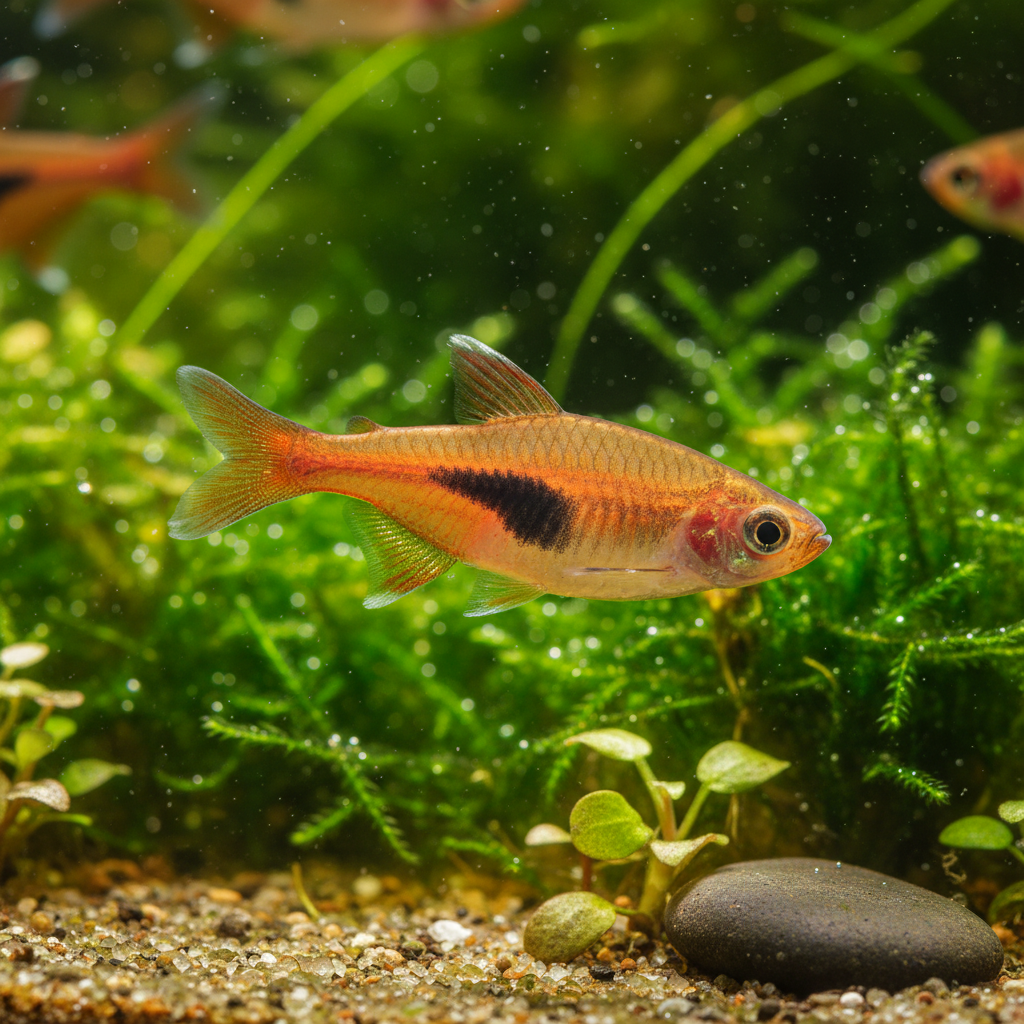
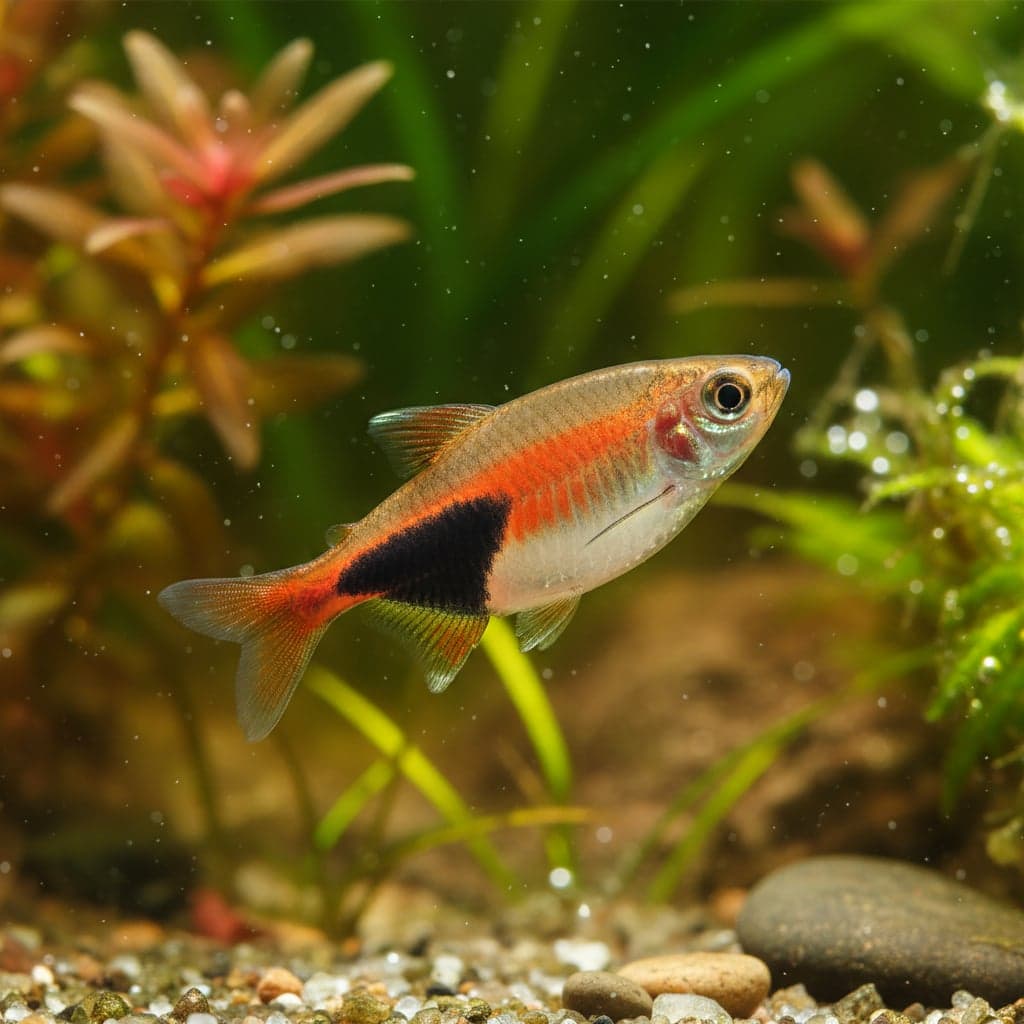
The Lambchop Rasbora (Trigonostigma espei) is a glowing, smaller relative of the Harlequin Rasbora, defined by its intense copper iridescence and distinctive "lambchop" shaped body marking.

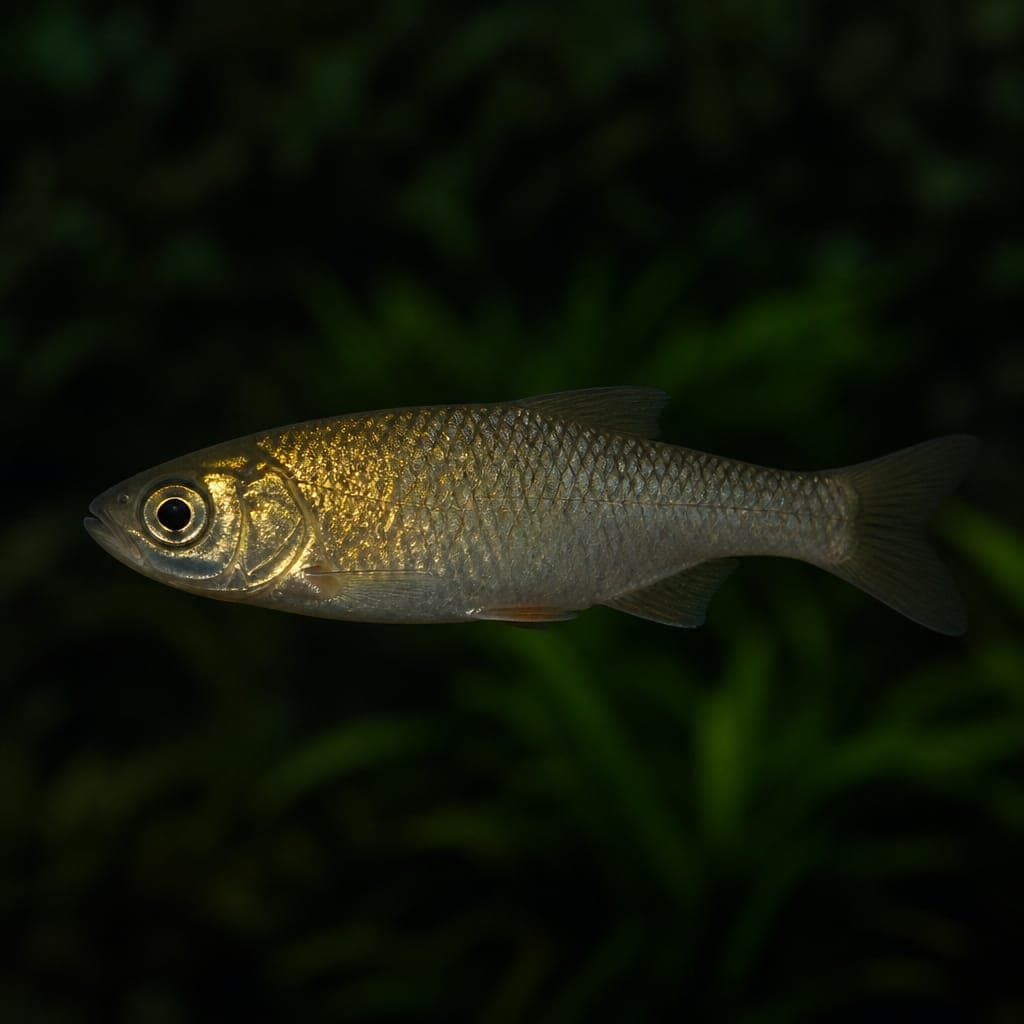
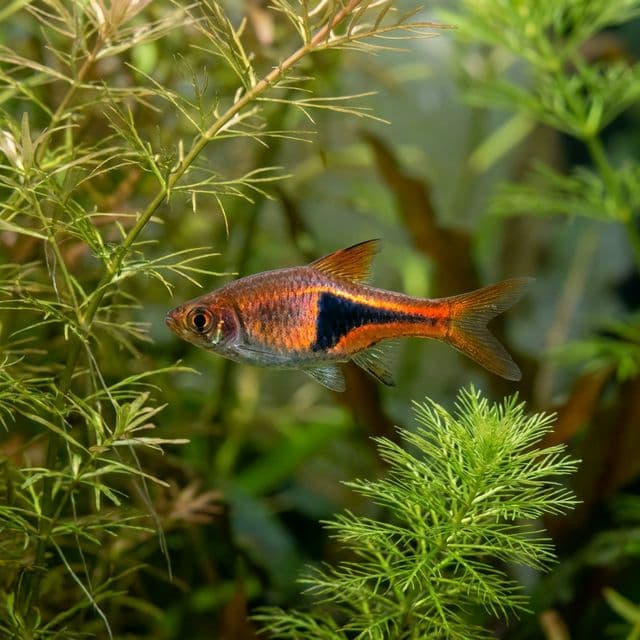
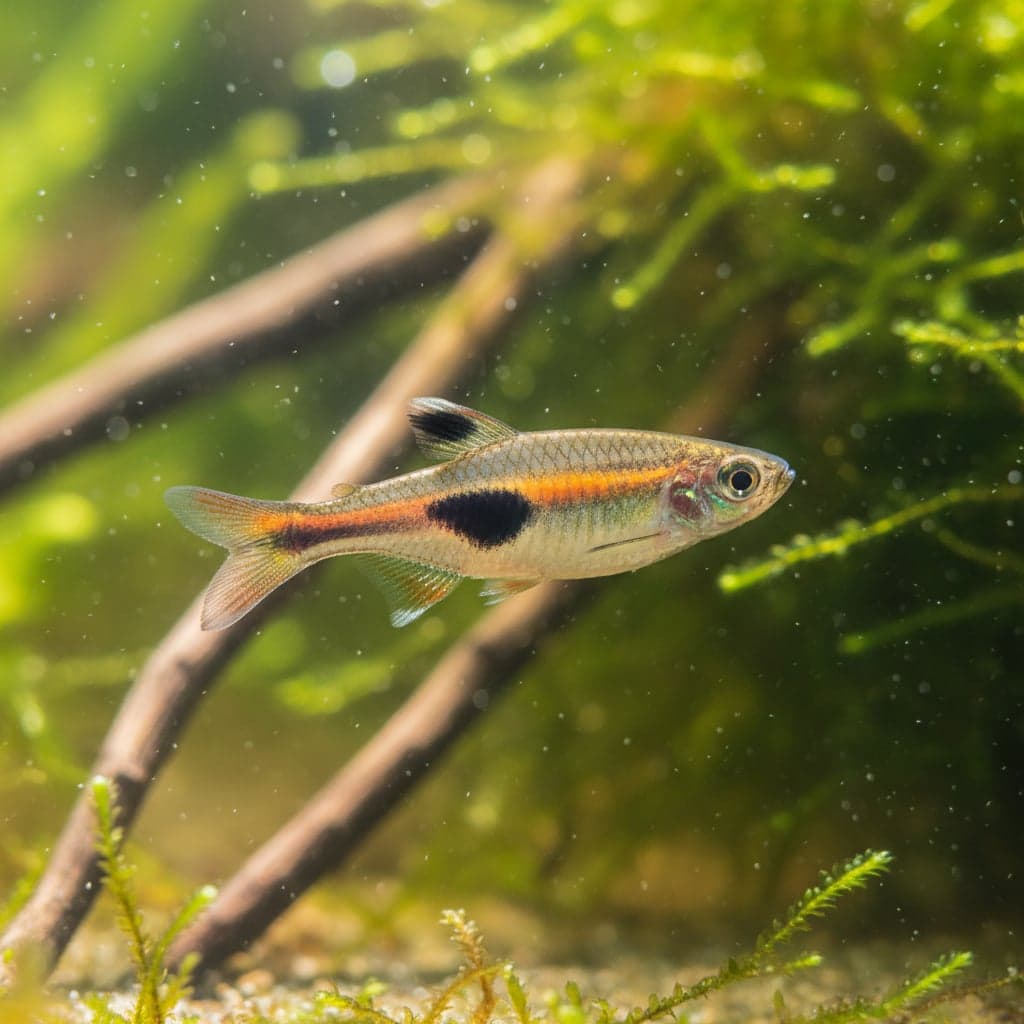
The Lambchop Rasbora (Trigonostigma espei), also known as the Espei Rasbora or False Harlequin, is a jewel of the Southeast Asian blackwater streams. It is defined by its intense, glowing copper or neon-orange body coloration, which is significantly more vibrant than its famous relative, the Harlequin Rasbora (T. heteromorpha). Its namesake comes from the bold, black wedge-shaped marking on the rear half of its body, which is thinner and more hooked at the bottom, resembling a lambchop. For the aquascaper, the Lambchop Rasbora is a perfect choice for nano-tanks and high-contrast planted setups, where its slender profile and radiant color create a mesmerizing "flashing" effect as the school moves.
In the aquarium, they are the epitome of social harmony. They are tight-schooling fish that prefer the mid-water levels, moving with a synchronized grace that adds a layer of kinetic energy to the aquascape.
Natural Habitat & Origin
Trigonostigma espei is native to Thailand, Cambodia, and Vietnam, particularly within the Krabi and Phang Nga provinces. They inhabit ancient, slow-moving blackwater streams and swamps characterized by extreme soft, acidic water and high tannin concentrations from decaying leaf litter. These environments are often shaded by dense rainforest canopy, with subterranean roots and submerged wood providing complex structure. Unlike the more generalist Harlequin, the Lambchop is a true blackwater specialist, evolved for life in the tea-colored, nutrient-poor waters of the Southeast Asian forest.
Care Requirements
The Lambchop Rasbora is a hardy and adaptable species but truly thrives in established, well-planted aquariums. A minimum tank size of 15 gallons (60L) is required for a small school.
Maintain stable parameters: a pH of 5.0 to 7.0 (though they can adapt to slightly alkaline water, they look best in acidic conditions) and a temperature of 73°F to 82°F (23°C to 28°C). They are highly sensitive to high nitrates and ammonia; a well-cycled tank and regular maintenance are non-negotiable. The aquarium should be designed with soft, dark substrate and plenty of aquatic plants (like Cryptocoryne or Microsorum) to replicate the forest shade. The addition of Catappa leaves or botanicals to introduce tannins will enhance their health and intensify their glowing orange colors.
Diet & Feeding
They are micropredators that feed on small insects, zooplankton, and worms in the wild.
In captivity, they require a varied and high-quality diet:
- High-quality micro-pellets and crushed flakes should be the staple.
- They MUST have frequent offerings of small live or frozen foods: Baby Brine Shrimp, Cyclops, Daphnia, and finely chopped Bloodworms.
- Tip: Because they are small and active, they have a high metabolism. Feeding twice a day in small amounts is ideal to keep them healthy and vibrant.
- Their colors will reach peak intensity when their diet is enriched with carotenoids and diverse proteins.
Behavior & Temperament
They are exceptionally peaceful and social. They MUST be kept in groups of at least 8 to 10 individuals; in smaller numbers, they become shy, less active, and their colors may fade due to stress. They are a "background" schooling fish that will not harass or nip at other species. They are compatible with almost any peaceful community fish, including delicate shrimp species, as their tiny mouths make them relatively safe tank mates for adult Dwarf Shrimp.
Tank Mates
Suitable tank mates are other peaceful species from similar environments:
- Other Rasboras and small Tetras
- Corydoras and Otocinclus
- Dwarf Gouramis
- Kuhli Loaches
- Freshwater Shrimp (Cherry or Crystal Shrimp)
Avoid keeping them with large, predatory, or overly boisterous fish (like large Barbs or aggressive Cichlids) that might view the tiny rasboras as food or stress them out.
Breeding
Breeding the Lambchop Rasbora is possible but requires attention to detail. Unlike many egg-scatterers, Trigonostigma species attach their eggs to the underside of broad-leaved plants (like Cryptocoryne). Breeding requires very soft, acidic water (pH 5.5 - 6.0) and high-quality conditioning with live foods. After spawning, the parents should be removed to ensure the safety of the eggs. The fry hatch in about 24 hours and require infusoria or rotifers as their first food before graduating to Baby Brine Shrimp.
Common Health Issues
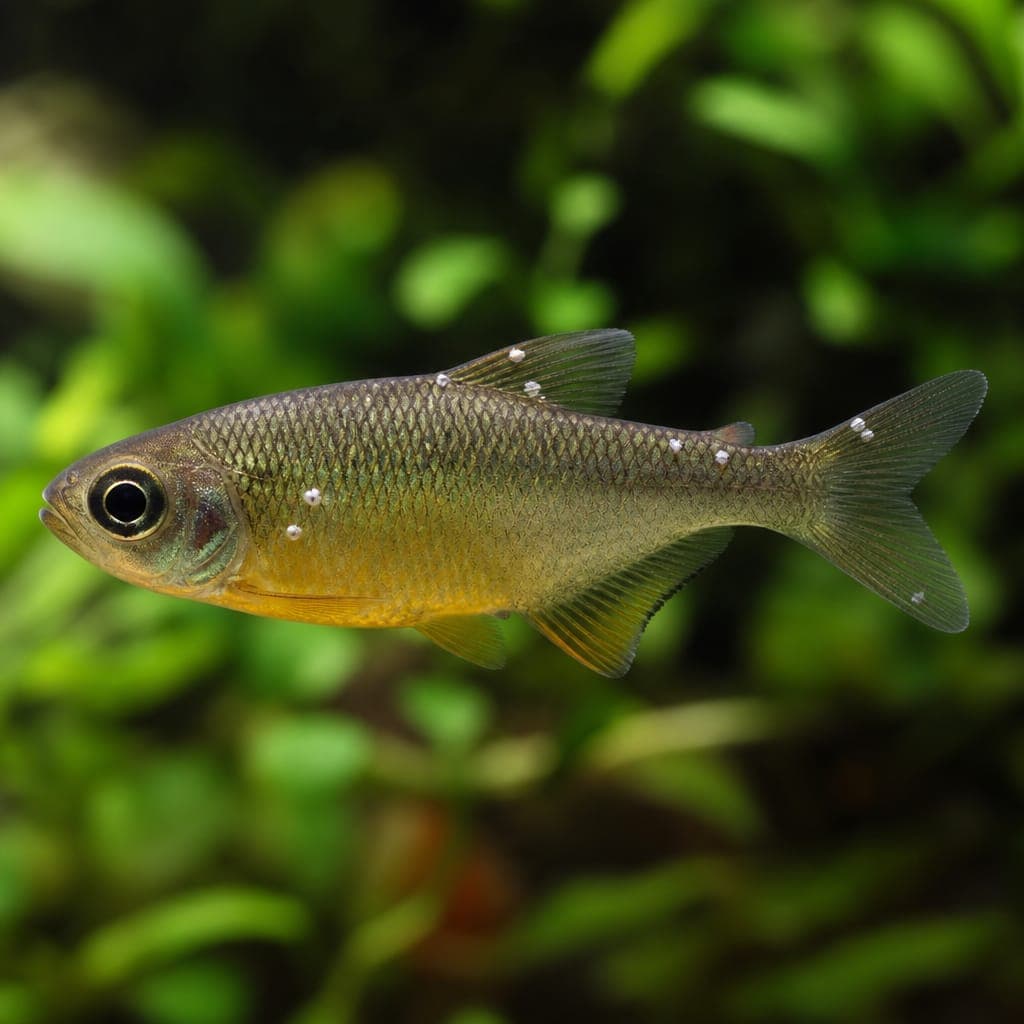
The primary health concern is stress-induced velvet or Ich if water quality drops or if they are kept in unstable conditions. They can also suffer from Neon Tetra Disease (Pleistophora) in rare cases. Maintaining a stable, tannin-rich, and well-oxygenated environment with a large social school is the best way to ensure the glowing Lambchop Rasbora remains a healthy centerpiece of your Southeast Asian biotope.