Leopold’s Angelfish: Pterophyllum dumerilii
Leopold’s Angelfish (Pterophyllum dumerilii), often called the 'Roman-nosed Angelfish', is the rarest and smallest of the Pterophyllum genus, known for its unique horizontal swimming tilt and distinctive snub-nosed profile.
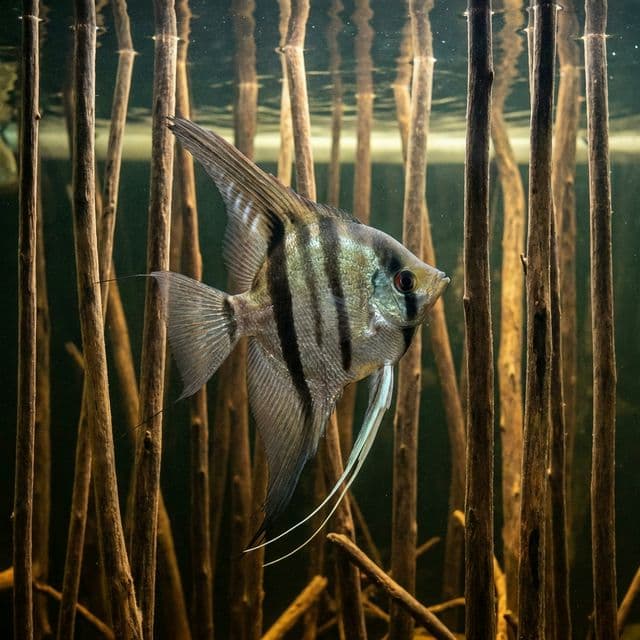
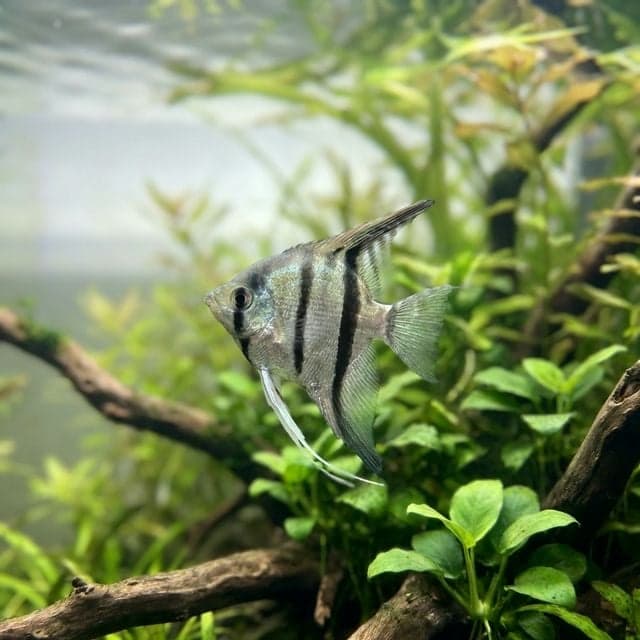
Leopold’s Angelfish (Pterophyllum dumerilii), also frequently appearing under the name Pterophyllum leopoldi, is a hidden gem of the Orinoco. It is defined by its distinctive, upwardly-tilted "snub" or "Roman" nose and a significantly more compact, aggressive profile compared to the common P. scalare. It is the smallest of the three recognized angelfish species and is unique for its prominent black spot just below the dorsal fin and a body that often appears slightly more elongated than it is tall. Unlike its larger cousins, Leopold's Angelfish is known for a slight horizontal tilt in its swimming position, adding to its unique allure in a specialized Amazonian biotope.
In the aquarium, they are highly social but significantly more territorial than other Pterophyllum species. They are best suited for deep, well-planted tanks that replicate the cluttered, wood-rich habitats of their native blackwaters.
Natural Habitat & Origin
Pterophyllum dumerilii is native to the Amazon River basin, specifically in the Solimões and Negro rivers, as well as parts of the Orinoco in Guyana and Brazil. They inhabit still or slow-moving blackwaters characterized by high tannin concentrations, low mineral content, and extremely high acidity (pH as low as 4.5 in the wild). They are typically found in the "flooded forest" (Igapó), where they take cover among submerged tree roots and fallen branches. Their coloration provides perfect camouflage against the complex shadows of the flooded understory.
Care Requirements
Leopold’s Angelfish is an Intermediate-difficulty species due to its requirement for highly stable, acidic water and its sensitivity to nitrate accumulation. A minimum tank size of 30 gallons (110L) is required for a pair, but a larger, taller tank is highly recommended for a group.
Maintain stable parameters: a pH of 5.5 to 6.5 and a temperature of 78°F to 84°F (26°C to 29°C). The aquarium MUST feature soft, tannin-stained water. Use of Indian Almond leaves, peat-enriched substrate, and dense driftwood structures is essential. Unlike common angelfish, they are extremely sensitive to dissolved organic compounds; frequent, small water changes are far superior to large, infrequent ones. TIP: They prefer vertical swimming room; ensure the tank height is at least 18-24 inches to accommodate their fins as they mature.
Diet & Feeding
They are opportunistic omnivores, naturally feeding on aquatic insects, small crustaceans, and organic detritus.
In captivity, they require a varied diet to maintain their subtle iridescent silver and brown hues:
- High-quality cichlid flakes and micro-pellets should be the staple.
- They MUST have frequent offerings of live or frozen foods: Bloodworms, Daphnia, and Vitamin-enriched Brine Shrimp.
- Tip: They are "snpicky" eaters when first introduced. Offer live Daphnia to trigger their natural hunting response.
- Occasional offerings of blanched spinach or spirulina-based wafers provide necessary dietary fiber.
Behavior & Temperament
They are semi-aggressive and assertive. While they are schooling fish by nature, they establish a rigid hierarchy that can involve significant sparring between dominant males. They are more likely to be aggressive towards other angelfish species than they are towards unrelated tank mates. They are "mid-water" experts, spending most of their time hovering near wood or plants. Their predatory instinct is sharp; they will view any fish small enough to fit in their mouth (like Neon Tetras) as food.
Tank Mates
Suitable tank mates are other robust Amazonian species:
- Rummy-nose Tetras or Bleeding Heart Tetras (too large to be eaten)
- Corydoras and smaller Loricariids
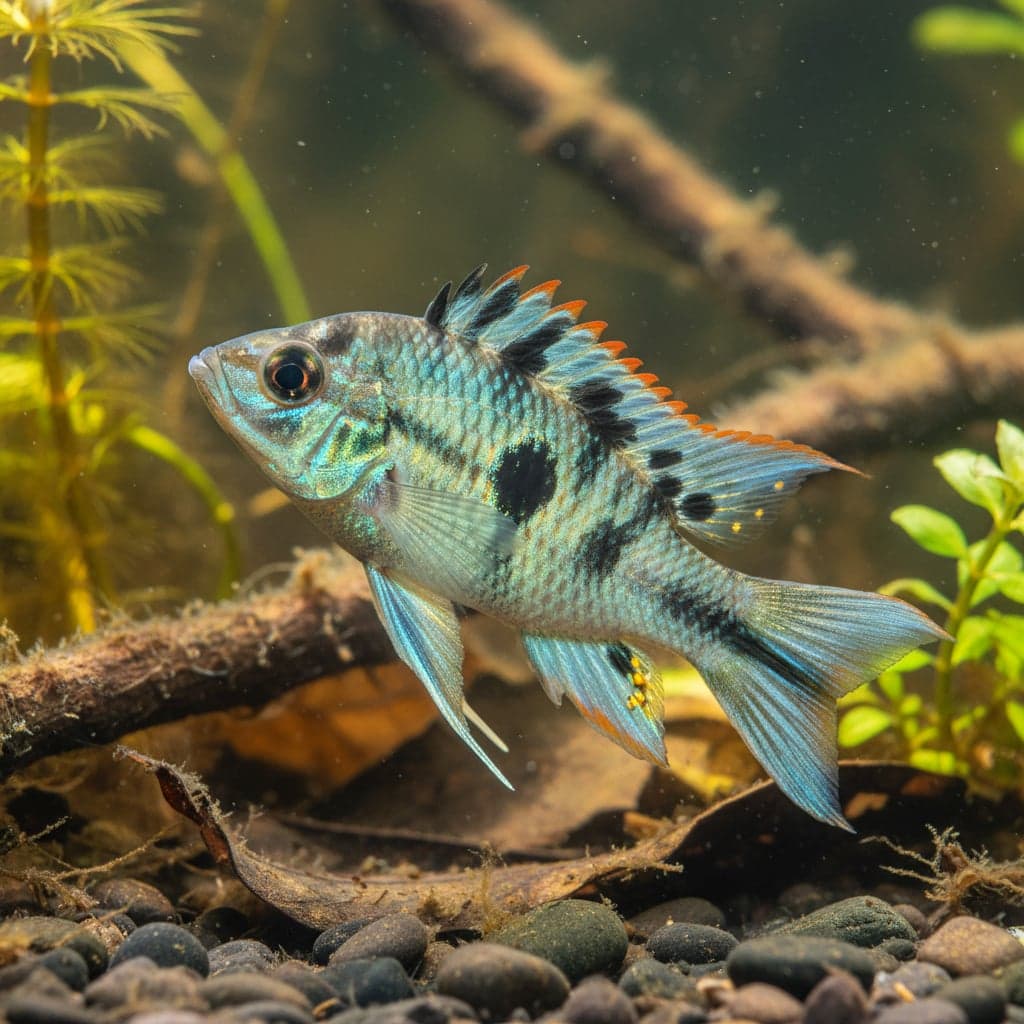
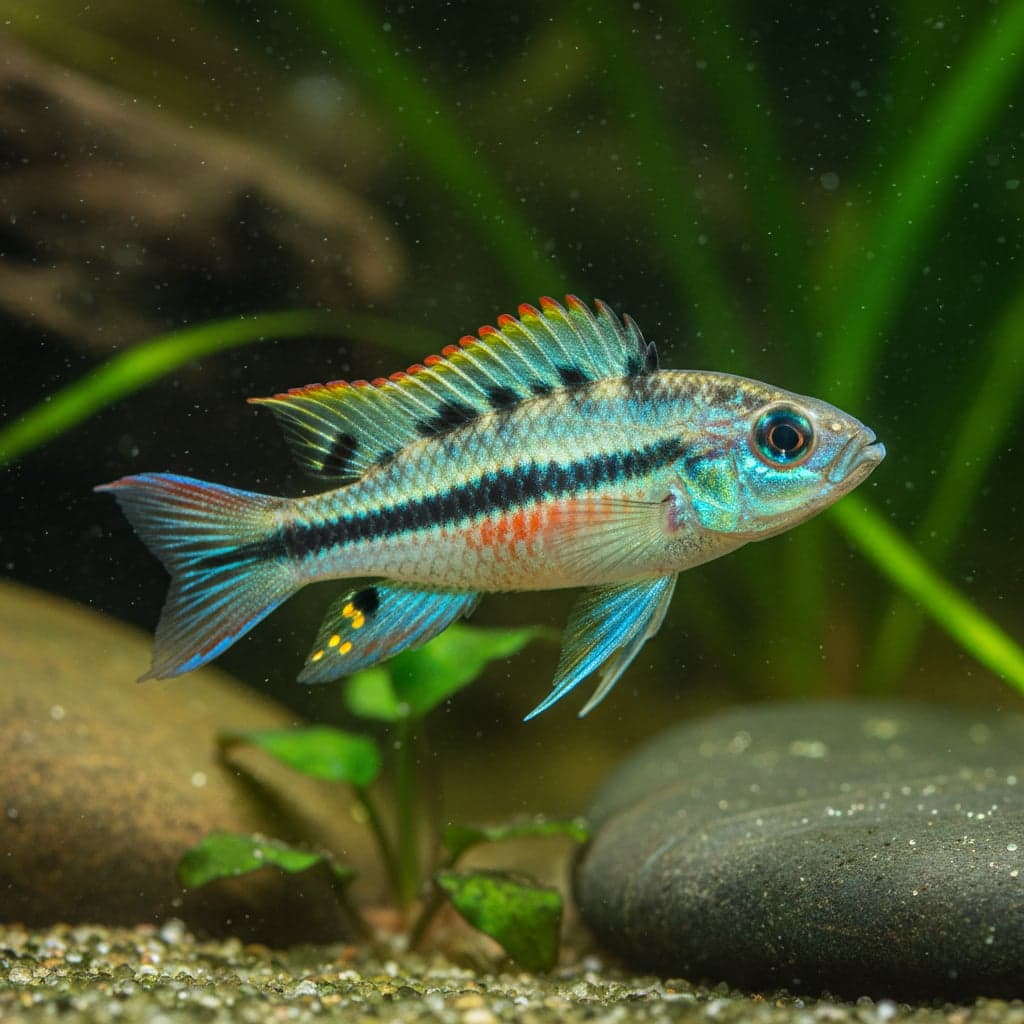
- Dwarf Cichlids (Apistogramma)
- Larger Rasboras or Rainbowfish
- Discus (though Leopold's can sometimes be too boisterous for shy Discus)
Avoid keeping them with very small, slender tetras, slow-moving long-finned fish, or overly aggressive large Cichlids that could bully the smaller Leopold's.
Breeding
Breeding Pterophyllum dumerilii in captivity is more difficult than breeding common Angelfish. They are bi-parental substrate spawners, typically choosing a vertical surface like a broad leaf or a piece of slate. They require extremely soft, acidic water (dH <2, pH 5.5) and high temperatures to trigger spawning. The parents are notoriously dedicated but can be easily spooked into eating their eggs; a calm, low-traffic environment is essential for successful fry rearing.
Common Health Issues
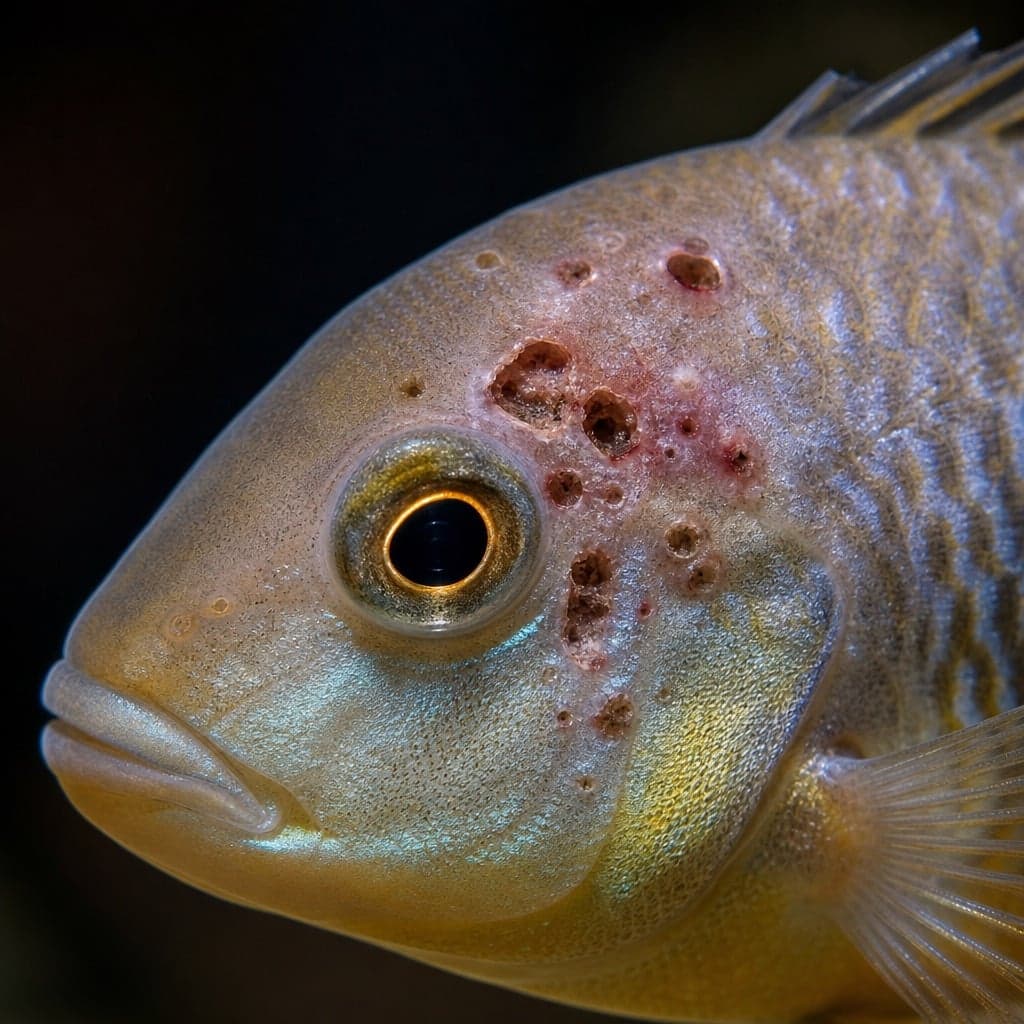
They are particularly susceptible to Hole-in-the-Head (HITH) disease and "Angelfish Plague" if water quality is poor or if they are stressed by improper diet. They are also sensitive to high levels of Nitrate. Maintaining a pristine, tannin-rich blackwater environment with a high-protein diet is the best way to ensure the rare and elegant Leopold's Angelfish remains a healthy, striking centerpiece of your South American display.