Long-nosed Distichodus: Distichodus lusosso
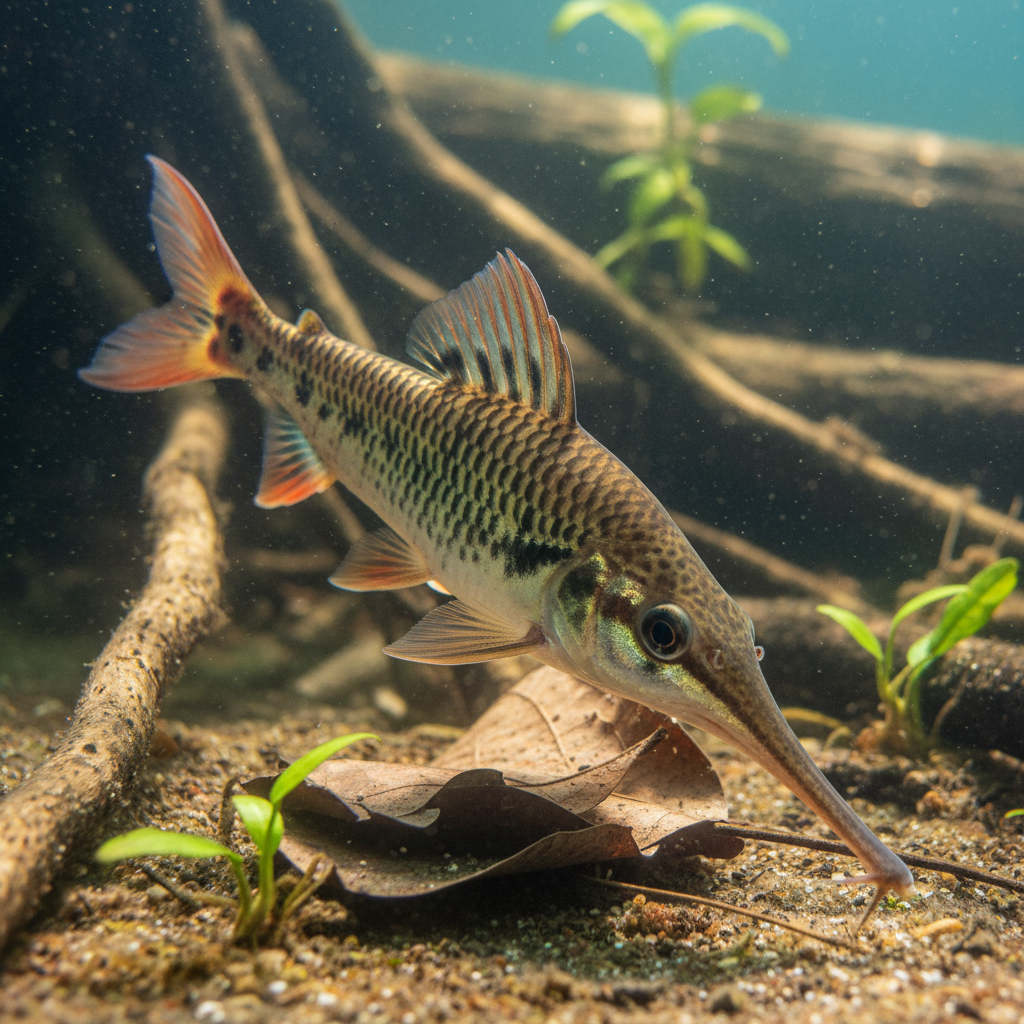
The Long-nosed Distichodus (Distichodus lusosso) is a powerhouse of the Congo Basin, famous for its 'Clown' like orange and black bars and its distinctively elongated, downward-pointing snout.
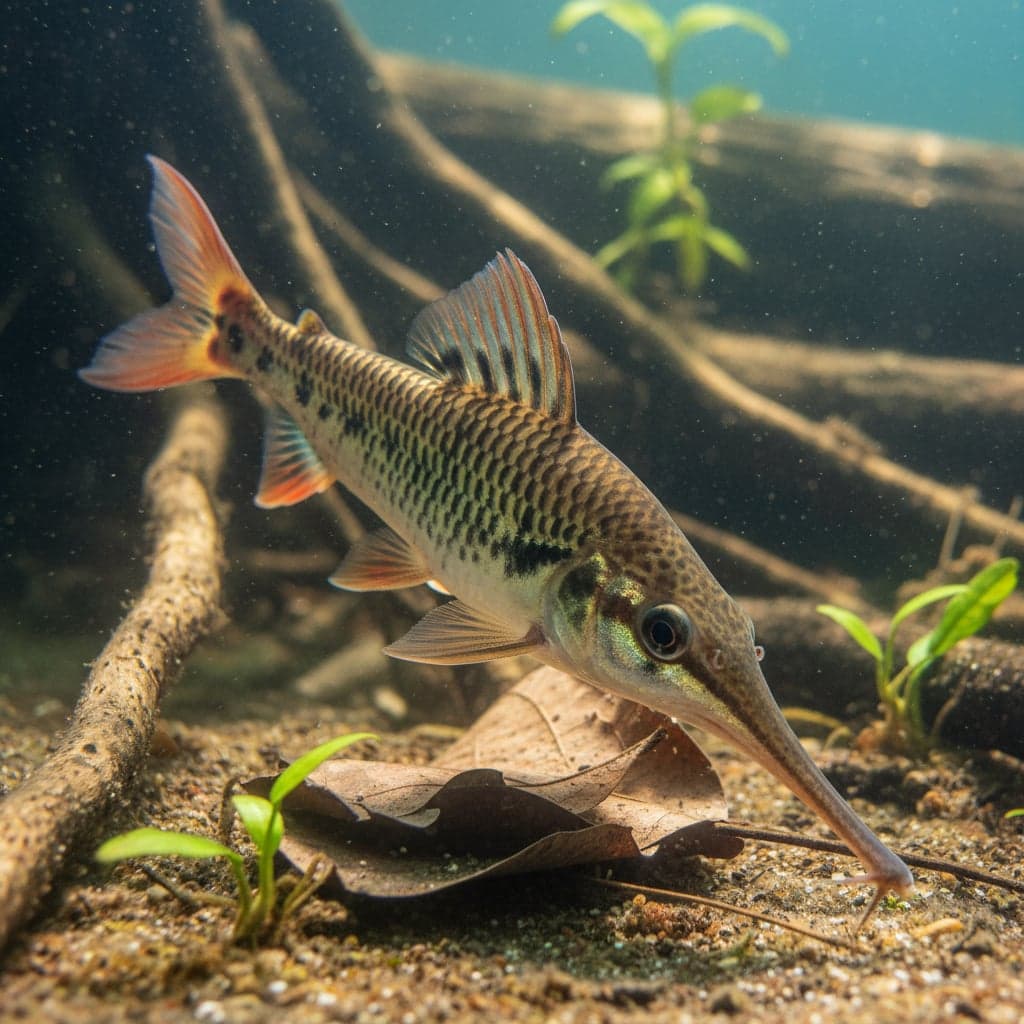
The Long-nosed Distichodus (Distichodus lusosso) is a giant of African freshwater rivers, combining geometric beauty with powerful swimming ability. It is defined by its striking "clown" pattern: a bright orange body adorned with 6-7 bold, vertical black bars and vibrant red fins. Its most signature feature is its exceptionally long, pointed snout, which it uses to forage among rocks and plants in the swiftest sections of river rapids. While they are stunningly beautiful as juveniles, they are large and territorial residents that require significant investment in filtration and tank space to thrive.
In the aquarium, they are the definition of "energetic herbivory." They are constant browsers that will interact heavily with their environment, making them an engaging but high-maintenance choice for large-scale African river biotopes.
Natural Habitat & Origin
Distichodus lusosso is indigenous to the Congo River basin, ranging across the Democratic Republic of Congo and Cameroon. They inhabit large, fast-flowing river channels where the water is saturated with oxygen and clear enough for significant algae growth on submerged rocks. They are typically found in the main river stems, using their hydrodynamic bodies to hover in strong currents. During the rainy season, they move into the flooded forest areas to forage on the abundant plant matter and organic detritus.
Care Requirements
The Long-nosed Distichodus is an Intermediate-difficulty species primarily because of its extreme size and its destructive herbivorous nature. A minimum tank size of 150 gallons (500L-600L) is required for an adult, as they are exceptionally fast and powerful swimmers.
Maintain stable parameters: a pH of 6.0 to 7.5 and a temperature of 75°F to 82°F (24°C to 28°C). The aquarium MUST feature powerful filtration and high oxygen levels. They are active browsers that produce a heavy bio-load. The setup should include large, stable driftwood and smooth river boulders. PLANTING CAUTION: They are voracious herbivores. They will systematically destroy and consume almost any live plant in the aquarium. Only the toughest species like Anubias or Bolbitis (securely attached to wood) stand a chance, and even then, they are likely to be nipped. TIP: Ensure the tank is "loach-safe" and "jump-proof"; their speed can lead to accidental collisions or escapes if they are spooked.
Diet & Feeding
They are primarily herbivorous, naturally feeding on aquatic plants, algae, and organic detritus.
In captivity, they require a diet high in vegetable matter to maintain their brilliant orange coloration:
- High-quality spirulina-based pellets and algae wafers should be the staple.
- They MUST have frequent offerings of fresh vegetables: blanched zucchini, cucumber, peas, and Romaine lettuce.
- Supplemental feedings of high-protein foods (like Mysis shrimp or Bloodworms) should only be offered occasionally to prevent "Malawi Bloat" like conditions.
- Tip: They are competitive feeders. In a community tank, ensure they don't bully slower fish during meal times.
- Providing Nori (dried seaweed) on a clip is an excellent way to keep their grazing instinct satisfied.
Behavior & Temperament
They are semi-aggressive and assertive. While they can be social as juveniles, adults become increasingly territorial, especially towards other Distichodus species or similar-looking fish. They are best kept either as a solitary specimen or in a large group (6+) in a very large tank to disperse aggression. They are not "predators," but their size and speed can be intimidating to smaller tank mates. They are "mid-water" swimmers, needing significant open horizontal space.
Tank Mates
Suitable tank mates are other large, robust African or South American species:
- Large Synodontis Catfish
- African Butterflyfish (in very large setups)
- Robust Cichlids (like Hemichromis or larger Tilapia)
- Large Barbs (Tinfoil Barbs, Filament Barbs)
- Knifefish (Xenomystus nigri)
Avoid keeping them with slow-moving long-finned fish, small community species (they might accidentally swallow small tetras), or any delicate plants you wish to keep intact.
Breeding
Breeding Distichodus lusosso in captivity is exceptionally rare and usually only achieved on commercial fish farms. In the wild, they are migratory egg-scatterers, moving into upstream rapids to spawn. Rearing the fry would require high-intensity vegetable-based micro-foods and massive amounts of highly oxygenated water.
Common Health Issues
The primary concern is Nutritional Deficiencies if they are not provided with enough vegetable matter. They are also prone to Physical Trauma if kept in a tank that is too small for their explosive speed. Maintaining a high-volume, well-oxygenated "river" environment with a focus on fresh greens is the best way to ensure the strikingly patterned Long-nosed Distichodus remains a healthy, vibrant titan of your African display.