Mimic Tang
The Mimic Tang (Acanthurus pyroferus) is a hardy surgeonfish whose juveniles mimic dwarf angelfish — a reef-safe algae and detritus grazer for medium-large tanks.

Mimic Tang
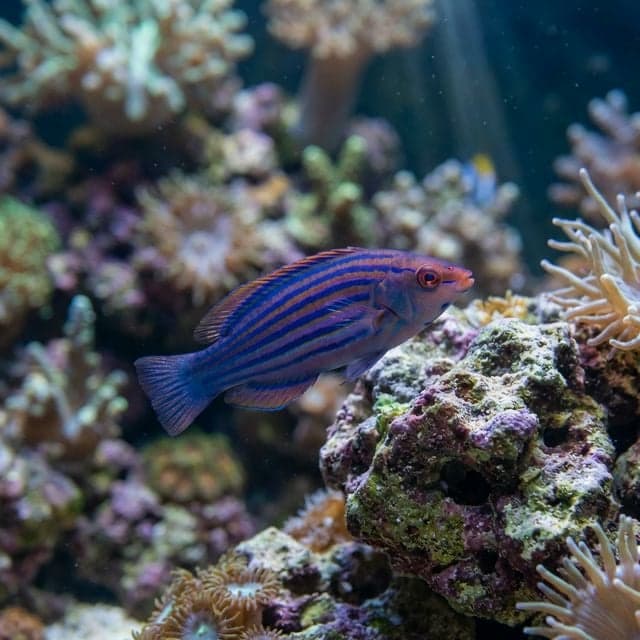
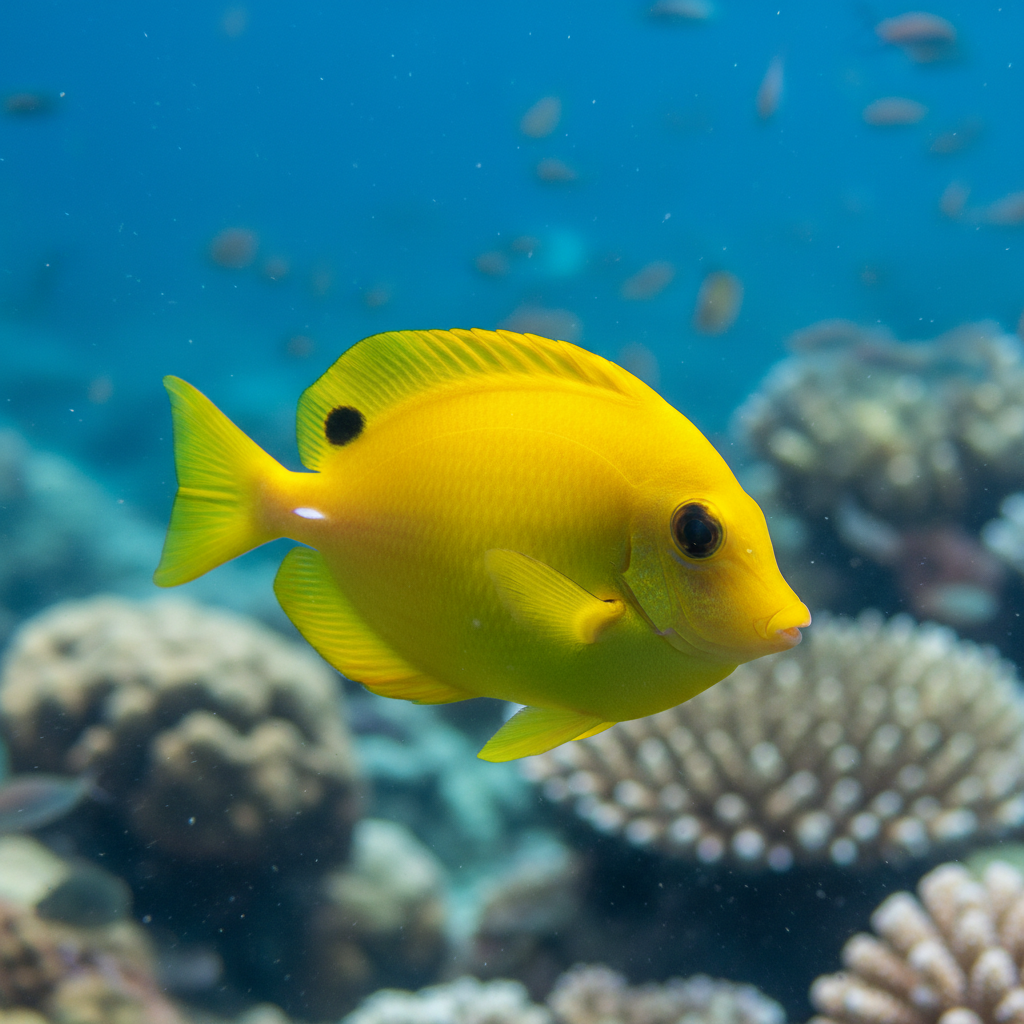
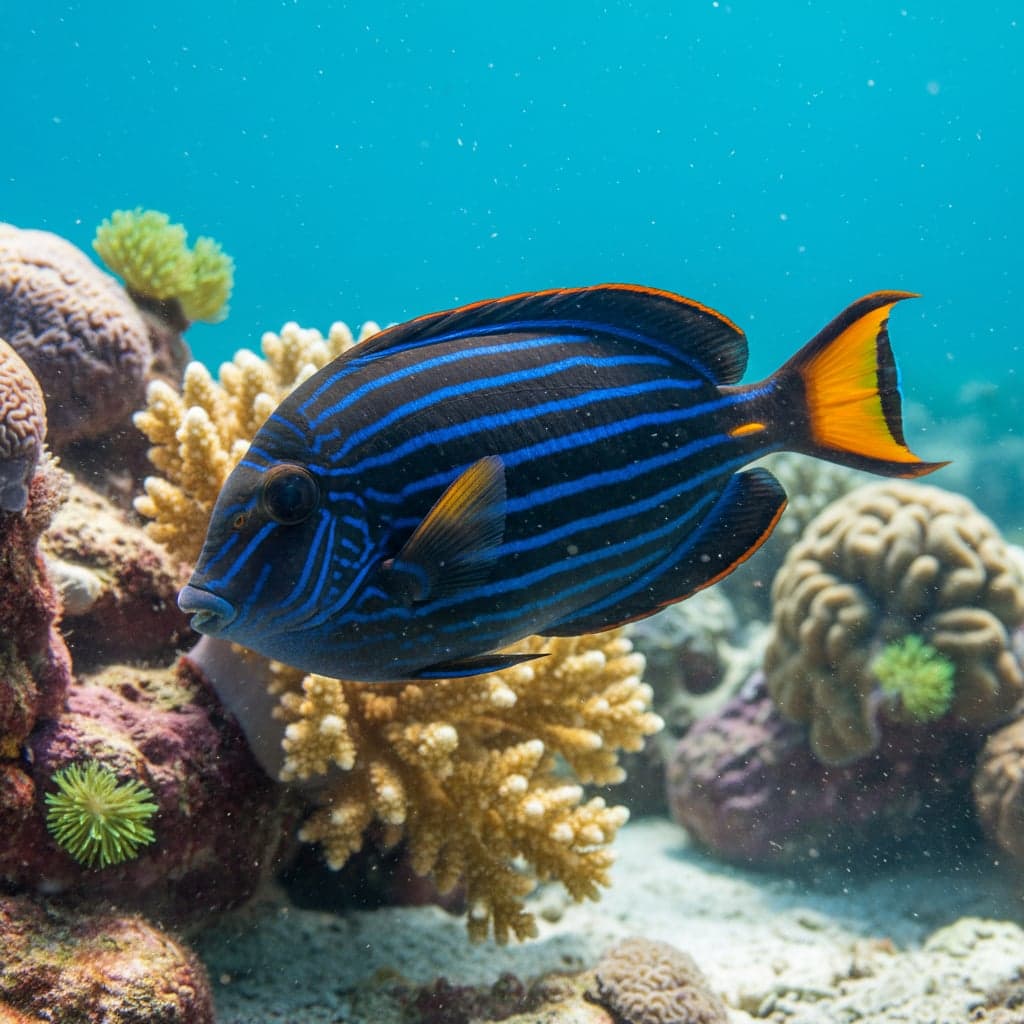
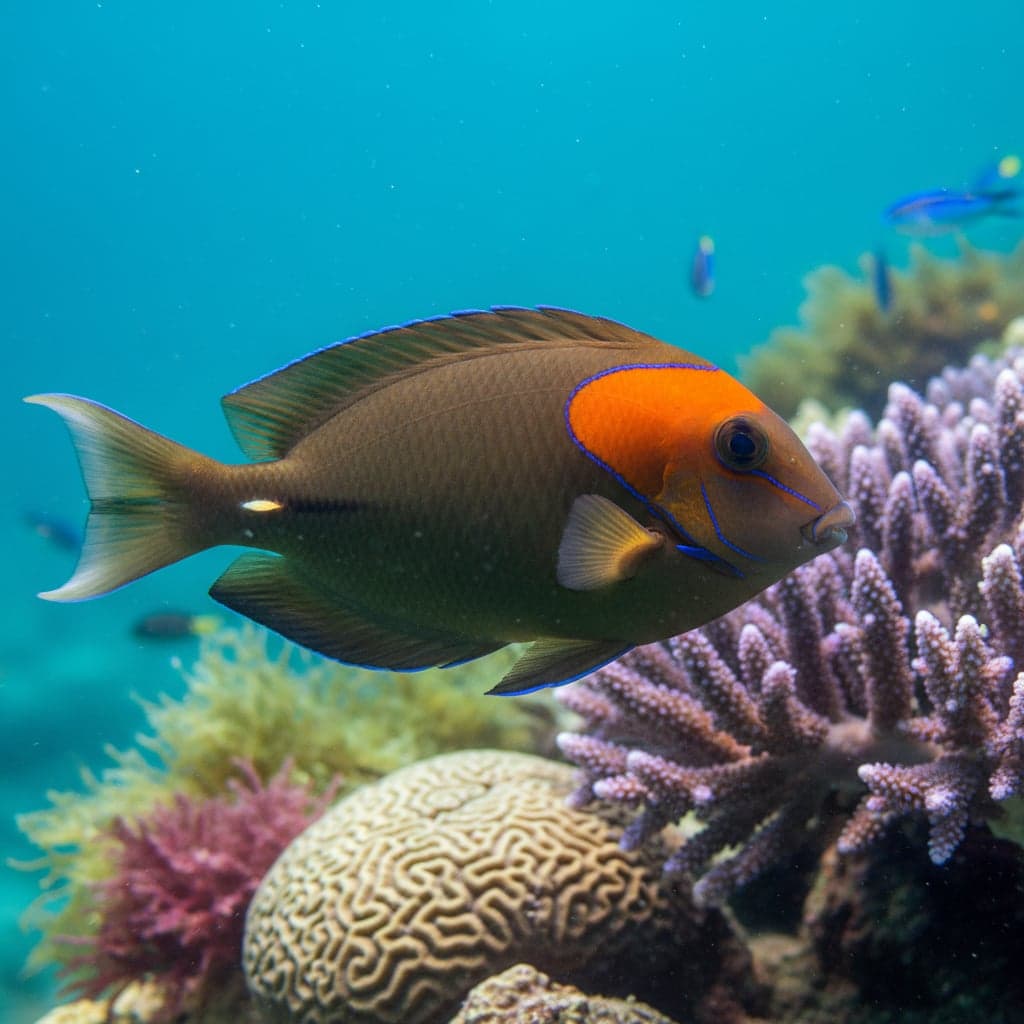
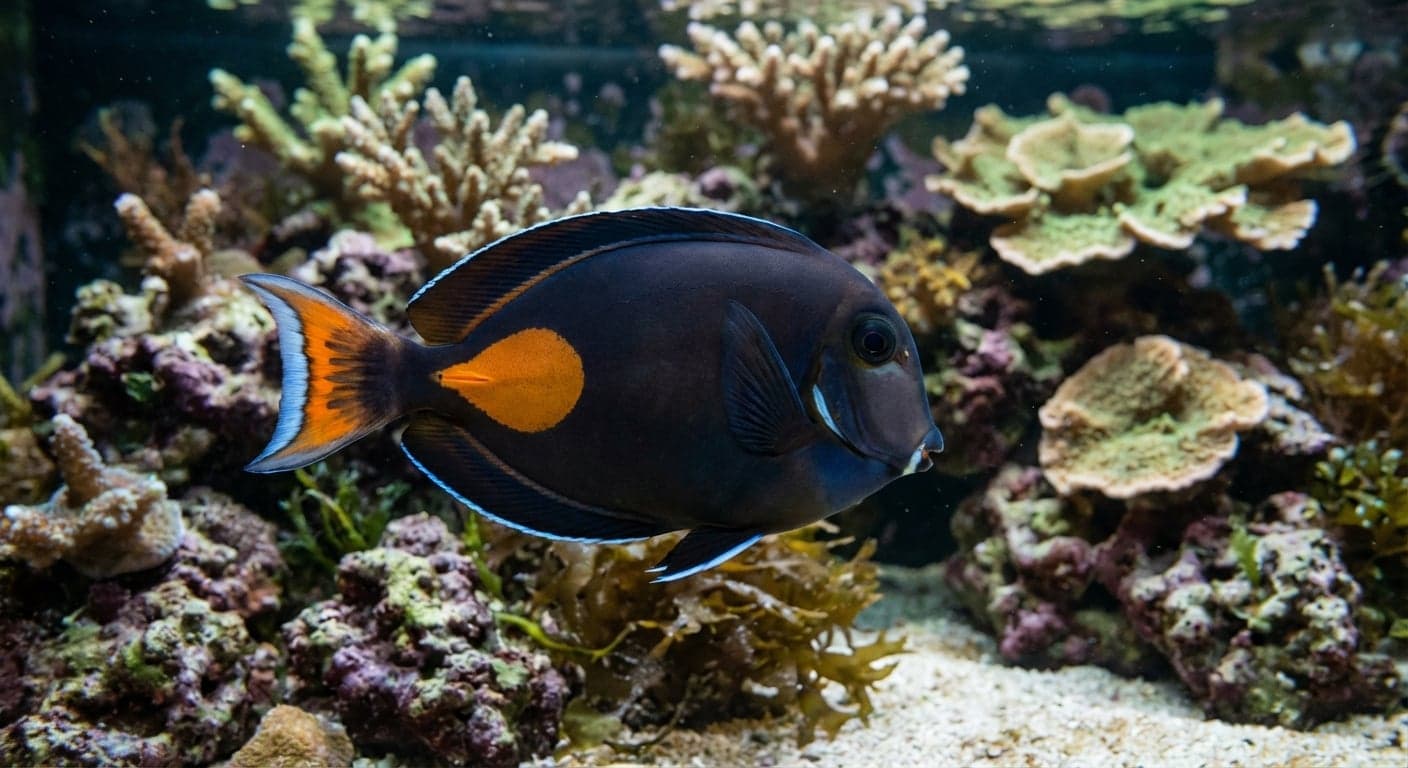
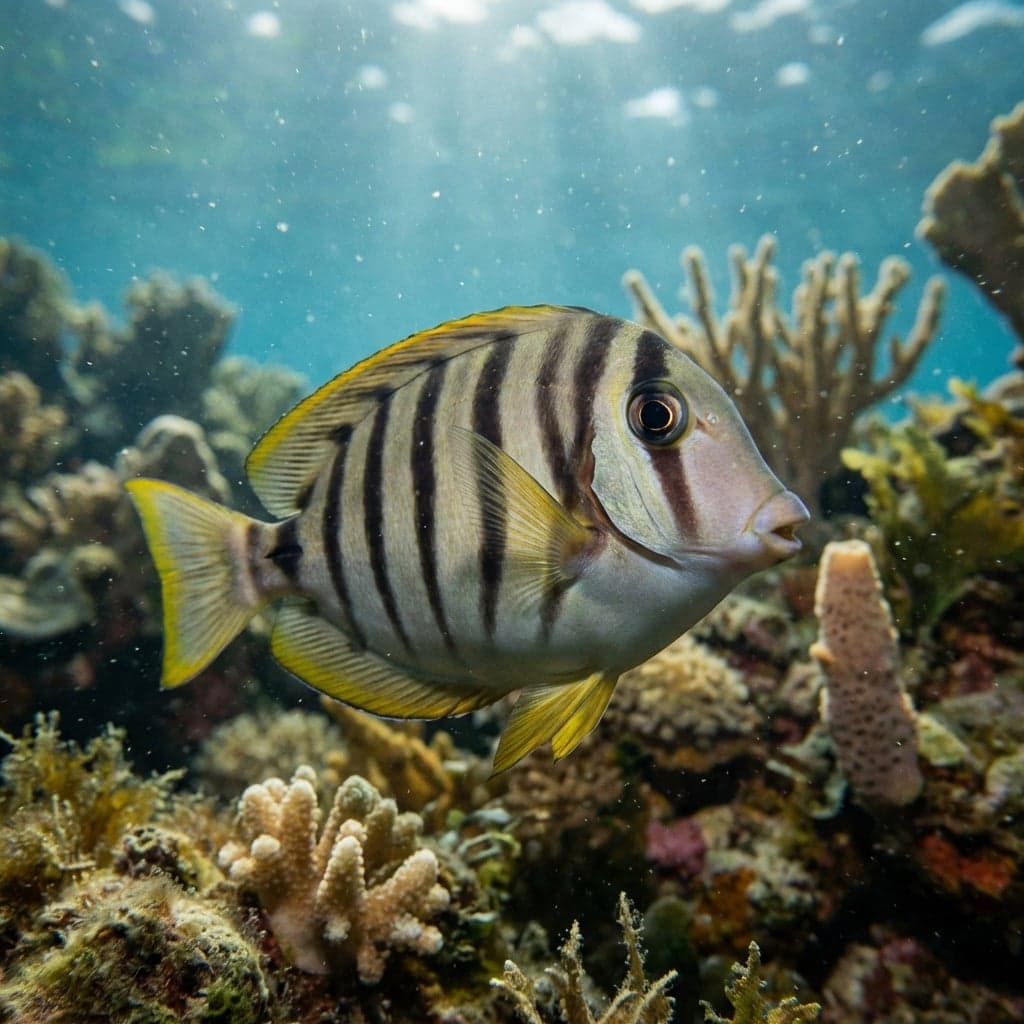
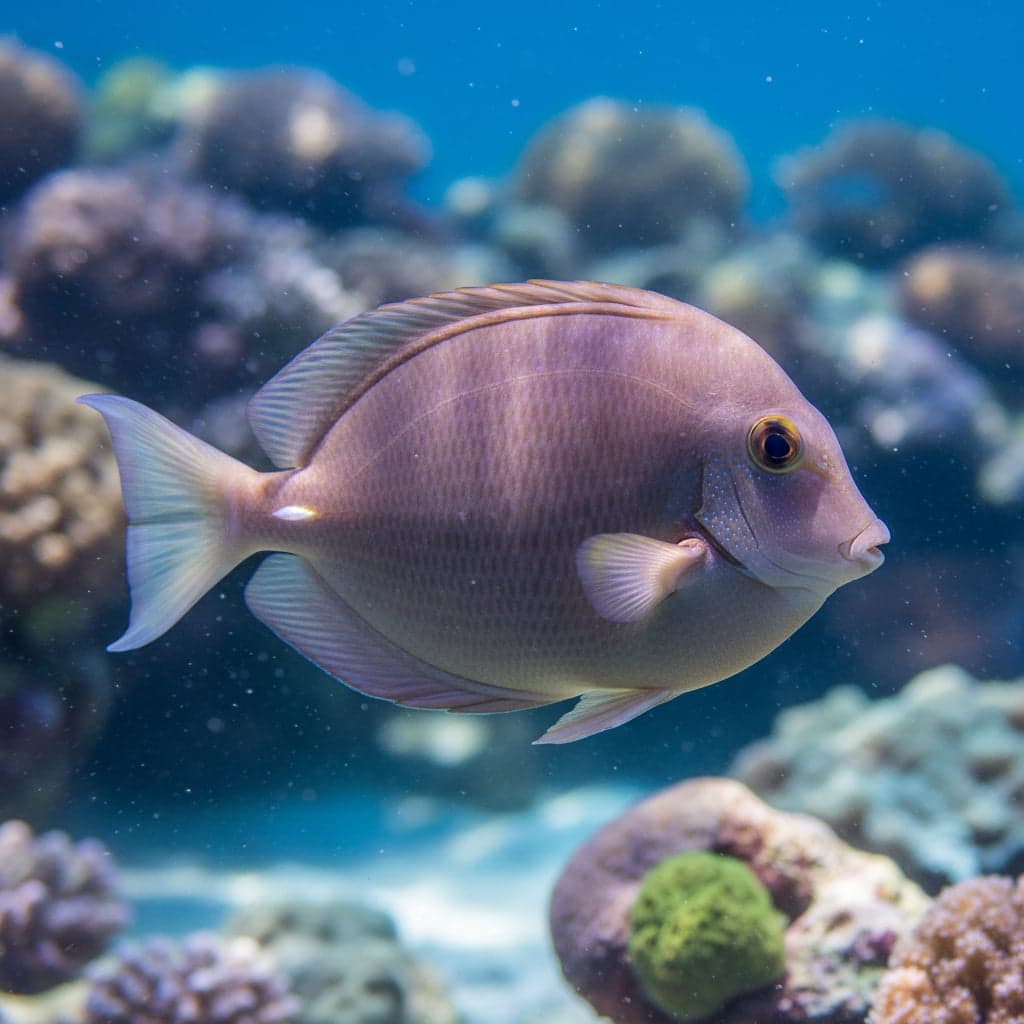
The Mimic Tang (Acanthurus pyroferus), also sold as the chocolate or mimic surgeonfish, is famous for a juvenile trick and then quietly competent as an adult. Young fish copy the colours of local Centropyge dwarf angels — yellow, half-black, or grey-orange forms depending on locality — and gain protection by resembling a fish predators have learned to treat carefully. As it grows, the disguise drops and the adult settles into a chocolate-brown to grey surgeonfish with orange and dark facial markings. The interesting part for keepers is not the costume change itself. It is that this Acanthurus is among the hardier, more adaptable tangs in the trade if you give it swimming room and something to graze.
Adult size is about 25 cm (10 inches). That is not a nano fish wearing a tang label. The 340-litre (about 90 US gallon) minimum exists because a surgeonfish this size swims all day and fights other tangs in anything that feels like a corridor.
Natural Habitat & Origin
Acanthurus pyroferus ranges widely across the Indo-Pacific on coral and rocky reefs and rubble zones. Juveniles stay near the dwarf angels they resemble and near structured cover. Adults range more widely over the reef, grazing film algae, turf and the detritus film that coats rock. They are not specialised bristletooth vacuum cleaners like a kole tang, and they are not obligatory macroalgae browsers exclusively — the wild diet is herbivory plus the organic film and small organisms bound up in it.
In the aquarium that means open swimming lanes and extensive live-rock surface area. A long tank with rock along the back and clear water at the front matches the behaviour better than a cube packed solid with aquascape.
Care Requirements
Marine baseline: specific gravity about 1.024–1.026, pH 8.1–8.4, temperature 24–26°C (75–79°F), with strong flow and high oxygenation. Tangs have high oxygen demand; warm, still, organically loaded water is how a "hardy" fish becomes an ich magnet.
Size versus tank is the decision most people get wrong by buying the pretty juvenile. A mimic in angel colours is still going to become a 25 cm Acanthurus. 340 litres is the floor for a single adult with real swimming length — think footprint and uninterrupted runs, not just litres on a spec sheet. In anything smaller the fish paces, scraps with neighbours and picks up stress-linked parasites. Very large systems can hold more than one tang of different body shapes if added carefully; same-genus lookalikes in a borderline tank is how territorial surgery starts.
Mature rock with established film algae is not decoration. It is continuous feed between the meals you remember to clip. A sterile new tank forces the entire diet onto scheduled foods, which most keepers underestimate for a grazing herbivore.
Diet & Feeding
Wild feeding is near-constant grazing on algae and detrital film. Captivity replaces that with meals, so the captive diet has to be frequent, plant-heavy and available between feedings.
Staple: dried marine algae (nori) on a clip, herbivore and spirulina flakes or pellets, algae-based frozen foods. Occasional meaty items — mysis, enriched blends — are fine as a minority of the diet; they are not a substitute for greens. Feed small amounts multiple times a day. A tang that only sees food at 8pm will still look busy, then slowly lose condition or turn territorial at anyone near the rock it has decided is its pantry.
The wild-versus-captivity gap shows up as HLLE and thin shoulders when keepers treat "herbivore" as "one sheet of nori three times a week." Film on the glass and rock is useful; letting the back pane grow a controlled green film is a deliberate grazing surface, not neglect. If the fish ignores nori but raids pellets, vary the algae type and soak dried sheets briefly — refusal is often texture or freshness, not a conversion to carnivory.
Behavior & Temperament
Semi-aggressive and territorial toward other surgeonfish, especially similarly shaped Acanthurus. One tang per tank is the safe default under several hundred litres. Toward unrelated fish it is generally manageable: active, curious, first to the feeding clip.
The caudal peduncle carries a scalpel-like spine. That is a defensive weapon, not a decoration. Net carefully, never bag two tangs together, and think before putting hands in a corner where a stressed fish is pinned. Aggression toward new tangs is worst when the resident is already established — add the mimic early, or into a much larger system with broken lines of sight.
Juvenile mimic colouration can confuse stocking plans. A yellow "angel" that is actually A. pyroferus will not stay angel-sized or angel-tempered. Confirm the caudal spine before you buy a second dwarf angel to "match" it.
Tank Mates
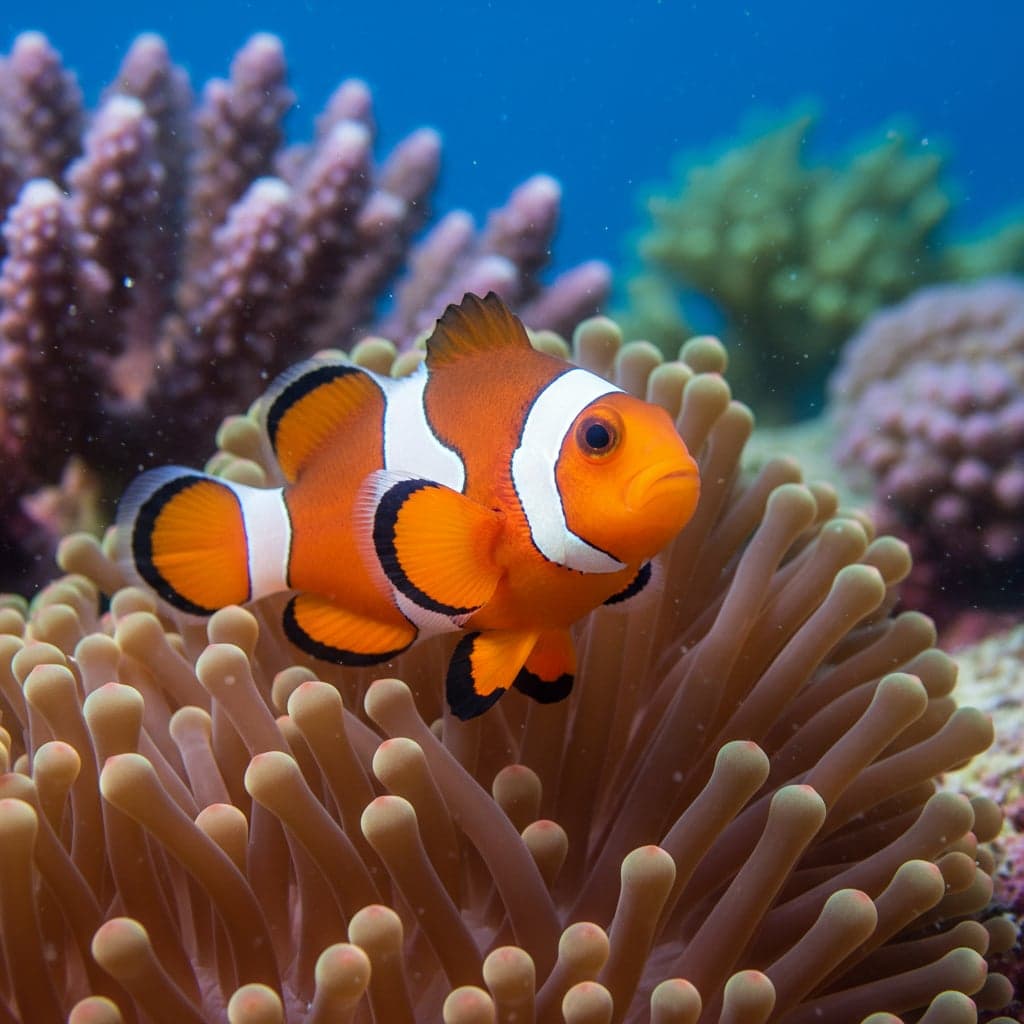
Robust fish in different niches: wrasses, angelfish (with the usual dwarf-angel reef caveats), larger gobies, anthias, clownfish. Avoid other tangs unless the system is very large and the body plans differ. Avoid passive, slow feeders that will be outcompeted at the clip.
Reef safety here has a clear mechanism. A. pyroferus grazes algae and detritus film on rock. It does not systematically eat coral polyps or sessile invertebrates the way many Centropyge and larger angels do. That is why it earns a genuine reef-safe label for coral-focused systems. It may browse desirable macroalgae if you are trying to grow a display Chaetomorpha forest in the show tank — put macros in the refugium if that matters. Ornamental shrimp and snails are typically ignored.
Breeding
Pelagic spawner with planktonic larvae. Not bred in the home aquarium in any practical sense; trade fish are wild-collected. Buy feeding juveniles or adults with clear eyes, intact fins and active grazing behaviour. A skinny mimic that "just needs to settle" often needs quarantine medication and a real feeding response before it ever sees the display.
Common Health Issues
Surgeonfish as a group are disproportionately represented in marine ich and velvet cases. The mechanism is not mystery weakness — it is high metabolism, mucus stress from capture and shipping, and the way Cryptocaryon and Amyloodinium exploit stressed fish in closed systems. A. pyroferus is hardier than powder blues and Achilles tangs, which is a relative statement, not immunity.
Mandatory quarantine for four weeks minimum before the reef. Treat parasites in a hospital tank; copper and many therapeutic doses destroy invertebrates and destabilise display biology. Watch for flashing, heavy breathing, white spots, or a dusty film. Once clean, prevention is boring on purpose: stable salinity and temperature, strong flow, open swimming room, and continuous plant matter so the fish is not chronically hungry.
HLLE (pitting along the head and lateral line) links to poor nutrition, chronic organics and sometimes stray voltage — address diet and water quality before buying specialty additives. Given a 340 L+ mature system, a herbivore- first feeding schedule and a clean quarantine exit, the Mimic Tang is one of the more forgiving reef-safe Acanthurus available — costume change included.