Panther Crab: Parathelphusa pantherina
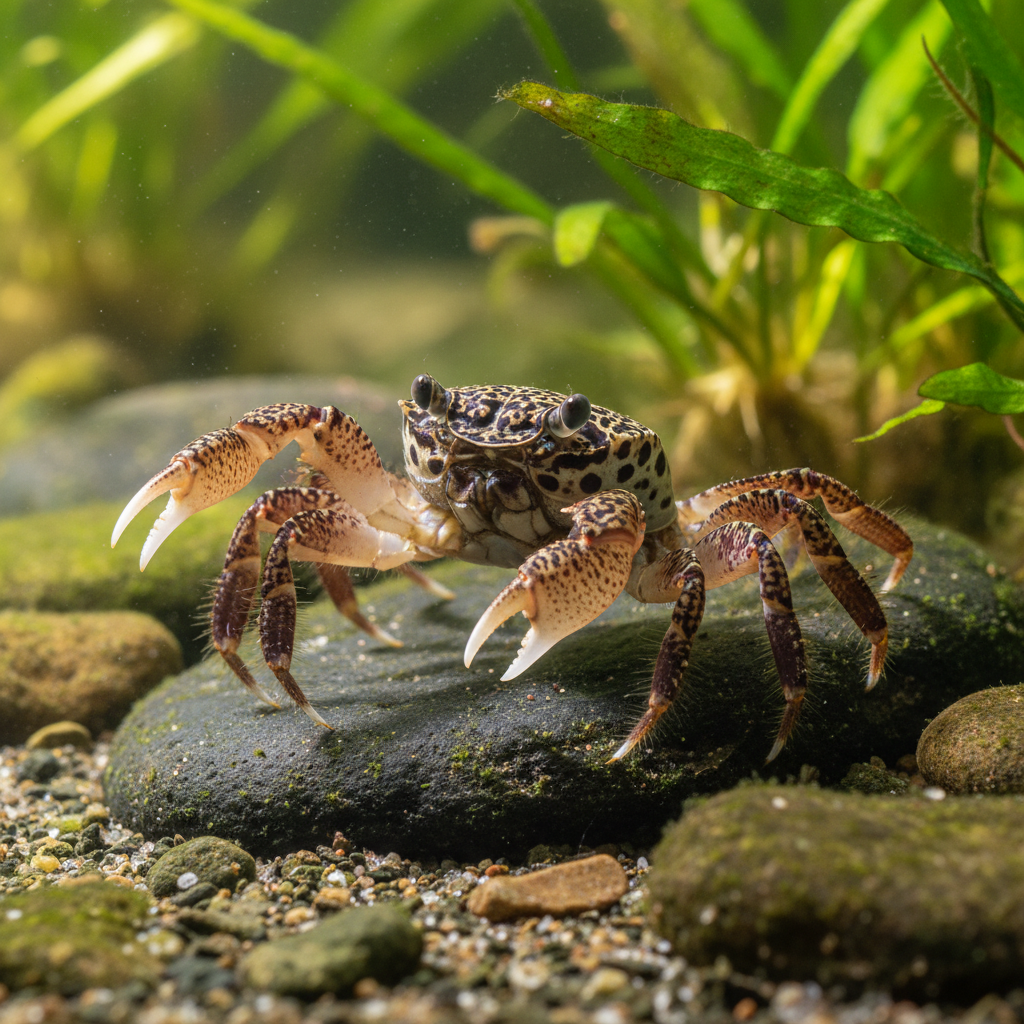
A stunning, fully aquatic freshwater crab covered entirely in stark black leopard-like spots over a pale yellow/orange body.
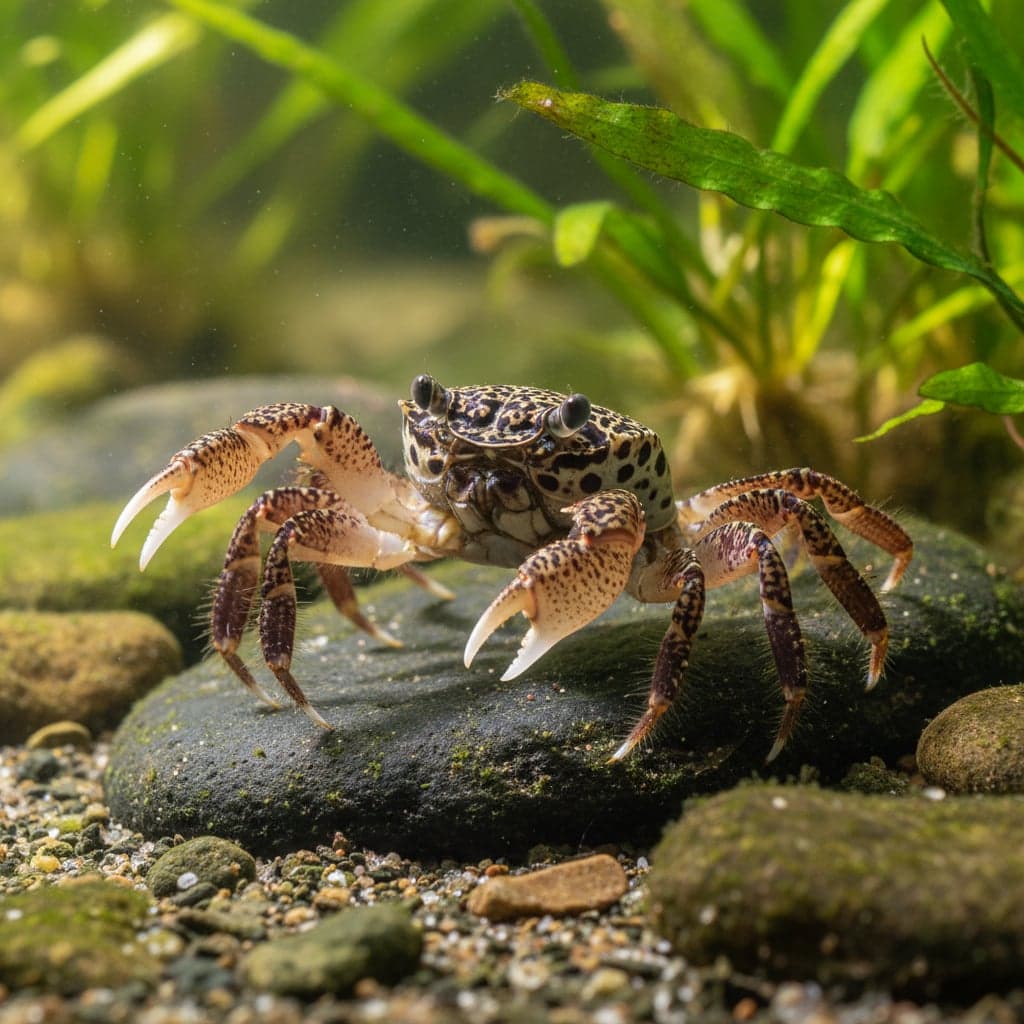
Panther Crab
The Panther Crab, scientifically known as Parathelphusa pantherina, is a fascinating species that has captured the attention of both novice and experienced aquarists alike. With its striking coloration and unique morphological features, this freshwater crab exhibits a variety of hues ranging from shades of green to vibrant patterns reminiscent of a panther's coat, giving it a visually appealing presence in any aquarium setting. Recognized for its distinctive appearance, the Panther Crab is not only an ornamental species but also plays a significant role in the aquatic eco-balance by participating in the detritus-cleaning process within its habitat.
In the aquarium hobby, Panther Crabs have garnered popularity due to their relatively manageable care requirements and engaging behaviors. Their semi-aquatic lifestyle often leads them to explore both the substrate and the surface of the water, which can be quite entertaining for observers. Furthermore, they introduce an element of diversity in tanks that host a mixture of aquatic life, contributing to a more dynamic aquarium ecosystem. Understanding the necessary environmental and social conditions for Panther Crabs is essential for ensuring their well-being and thriving in captivity.
Natural Habitat & Origin
The Panther Crab is native to the freshwater rivers and streams of Southeast Asia, particularly found in countries like Thailand, Malaysia, and Indonesia. These crabs thrive in slow-moving bodies of water that boast a variety of environmental conditions, including both clearwater and slightly turbid habitats. Panther Crabs are commonly found in areas rich in vegetation such as submerged roots and overhanging plants, where they can utilize cover for protection and hunting. The presence of leaf litter and decomposing organic matter is crucial as it provides essential food sources and day-to-day sustenance.
Within their natural environment, the water parameters play a significant role in the life of the Panther Crab. They inhabit waters that range in temperature from 24 to 28 degrees Celsius, with a pH range of around 6.5 to 7.5, and moderate hardness levels. Understanding these natural conditions is vital for aquarists to replicate a similar environment in captive settings, promoting the overall health and behavior of this intriguing species.
Care Requirements
To successfully care for Panther Crabs, aquarists should aim to replicate their natural habitat as closely as possible. The minimum recommended tank size for keeping a Panther Crab is 20 gallons, allowing ample space for it to explore and establish its territory. A sandy or fine gravel substrate is ideal, as it facilitates burrowing behaviors while preventing damage to their delicate body. A well-structured environment with plenty of hiding spaces, such as rocks, caves, and dense plant life, will not only reduce stress but also provide security and stimulation.
Tank lighting should mimic natural conditions; therefore, providing moderate lighting is suggested, which can also promote the growth of live plants. A variety of aquatic plants can thrive in a Panther Crab's habitat—such as Anubias, Java Fern, and Vallisneria—which create a natural ambiance and contribute to the water quality. Maintaining clean water is crucial, so regular filtration and partial water changes should be a part of the weekly tank maintenance routine. Regular testing of water parameters ensures that the level of pH, hardness, and temperature consistently falls within the ideal ranges to promote a healthy and sustainable environment.
Diet & Feeding
The Panther Crab is an omnivorous scavenger, which allows it to thrive on a varied diet. In captivity, they will consume a wide range of foods, including high-quality flakes, specially formulated pellets, and frozen or live foods such as bloodworms, brine shrimp, and small insects. It is essential to include both plant-based and protein-rich options in their diet to mimic their natural foraging habits. While they have a strong tendency to scavenge, providing regular meals and a diversity of food choices will help maintain their health and boost their activity levels.
Feeding should ideally occur several times a week, with a focus on small portions to prevent overfeeding. Any uneaten food should be promptly removed from the tank to prevent water quality deterioration. Incorporating fresh blanched vegetables like zucchini or spinach can also provide additional nutrients and diversify their diet, allowing the Panther Crab to exhibit its natural foraging behavior while remaining healthy and active.
Behavior & Temperament
Panther Crabs showcase an intriguing mix of behavior that can be both captivating and sometimes challenging for aquarists. They exhibit semi-aggressive tendencies, particularly during territorial disputes, especially if kept in confined spaces or amongst overly dominant tank mates. Although they are not naturally schooling creatures, they are generally better kept in groups of three or more to reduce stress, provided that the tank size can accommodate their territorial needs.
In terms of tank placement, Panther Crabs are quite adaptable and can often be found scavenging along the substrate or climbing on surfaces within the tank, navigating both water and land areas if provided. Their natural inclination to climb, explore, and forge for food allows them to fully engage with their environment, making them a delightful choice for interactive aquarists.
Tank Mates
When selecting tank mates for Panther Crabs, compatibility is key to ensuring a harmonious environment. Suitable companions include peaceful fish species like Tetras, Rasboras, and some small Cichlid species, which typically inhabit different levels of the aquarium. Additionally, snails and certain freshwater shrimps can coexist well, as long as they are not small enough to be perceived as prey.
However, certain species should be avoided. It is advisable to steer clear of larger or aggressive fish, such as Cichlids or aggressive barbs, which may harass or compete aggressively for territory and resources. Similarly, smaller fish that dwell on the substrate may be viewed as prey, making them unsuitable companions. Creating a balanced community tank tailored to the specific needs of the Panther Crab will enhance the overall harmony of the aquarium.
Breeding
Breeding Panther Crabs in captivity can be quite challenging, as specific conditions are required to encourage successful spawning behavior. Unlike many freshwater fish, Panther Crabs do not exhibit parental care, making it crucial to provide appropriately secluded spaces and conditions for the female crab during the breeding process. Typically, breeding can be stimulated with appropriate water changes and a slight increase in temperature, mimicking the environmental cues that occur in their natural habitat.
When a male and female reach maturity, the pair may engage in a courtship display, where the male will often exhibit aggressive posturing to solicit the female to mate. Following the successful mating, the female lays eggs, which require care and a stable environment to develop. The larvae will thrive in brackish water before transitioning to freshwater, necessitating specialized care to ensure their development and survival. Since successful breeding in captivity is rare, detailed preparation and monitoring are vital for ambitious aquarists interested in propagating Panther Crabs.
Common Health Issues
Panther Crabs, like many freshwater species, can be prone to various health issues if their environment is not adequately maintained. Common ailments include shell disease, which can arise from poor water quality, and is characterized by soft or pitted shells. Additionally, they may suffer from parasitic infections, such as ich or gill flukes, particularly in stressed or overcrowded conditions.
To prevent these issues, maintaining optimal water parameters, regular cleaning, and providing a high-quality diet are crucial. Routine health checks and quarantine of new tank mates can also help reduce the risk of disease outbreaks. Calcium deficiencies and soft water can severely impair molting, leading to stuck limbs or fatal molt failure. Ensure adequate mineral hardness (GH 8-15) and supplement calcium via specialized crustacean foods. Avoid any exposure to copper or heavy metals, as even trace amounts are lethal to freshwater crabs.