Pinkspot Goby
The Pinkspot Goby (Cryptocentrus leptocephalus) is a peaceful Indo-Pacific shrimp goby that shares a sandy burrow with a pistol shrimp — reef-safe and endlessly watchable.

Pinkspot Goby
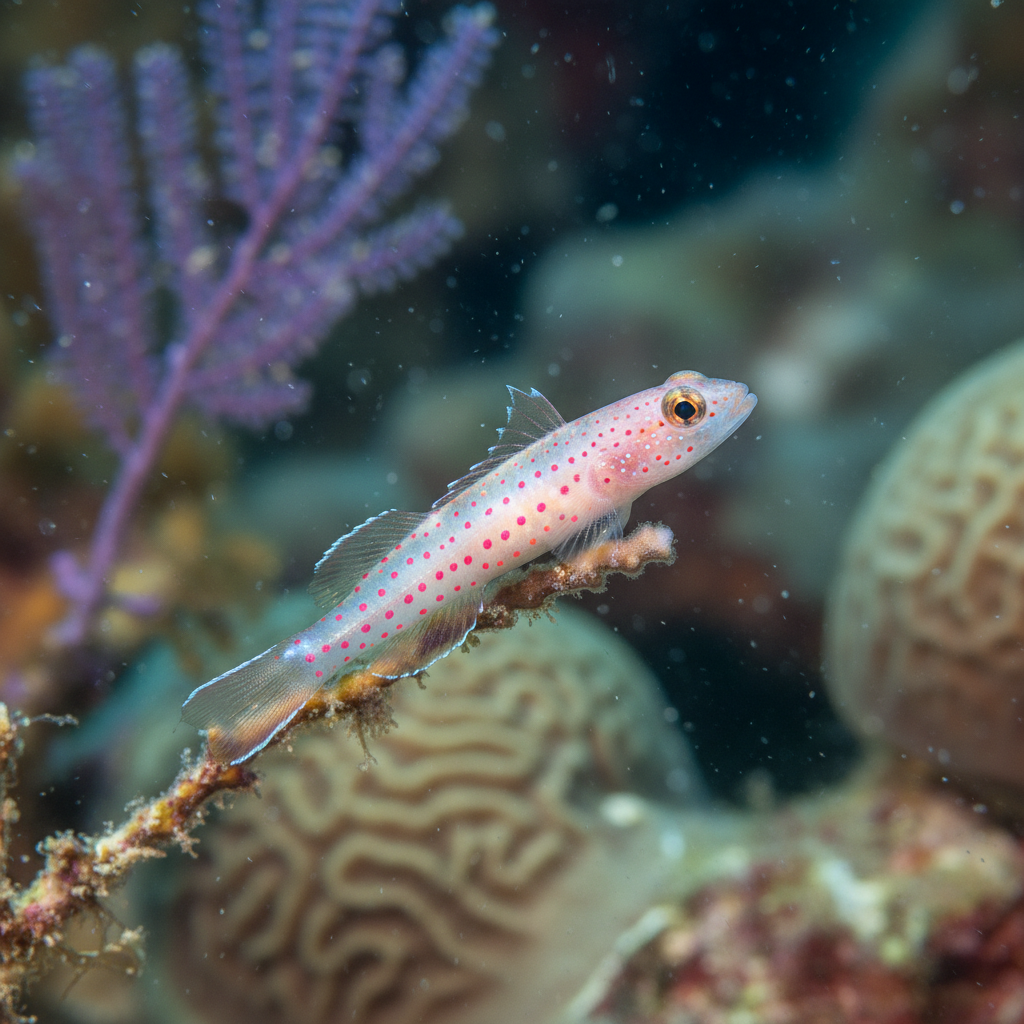
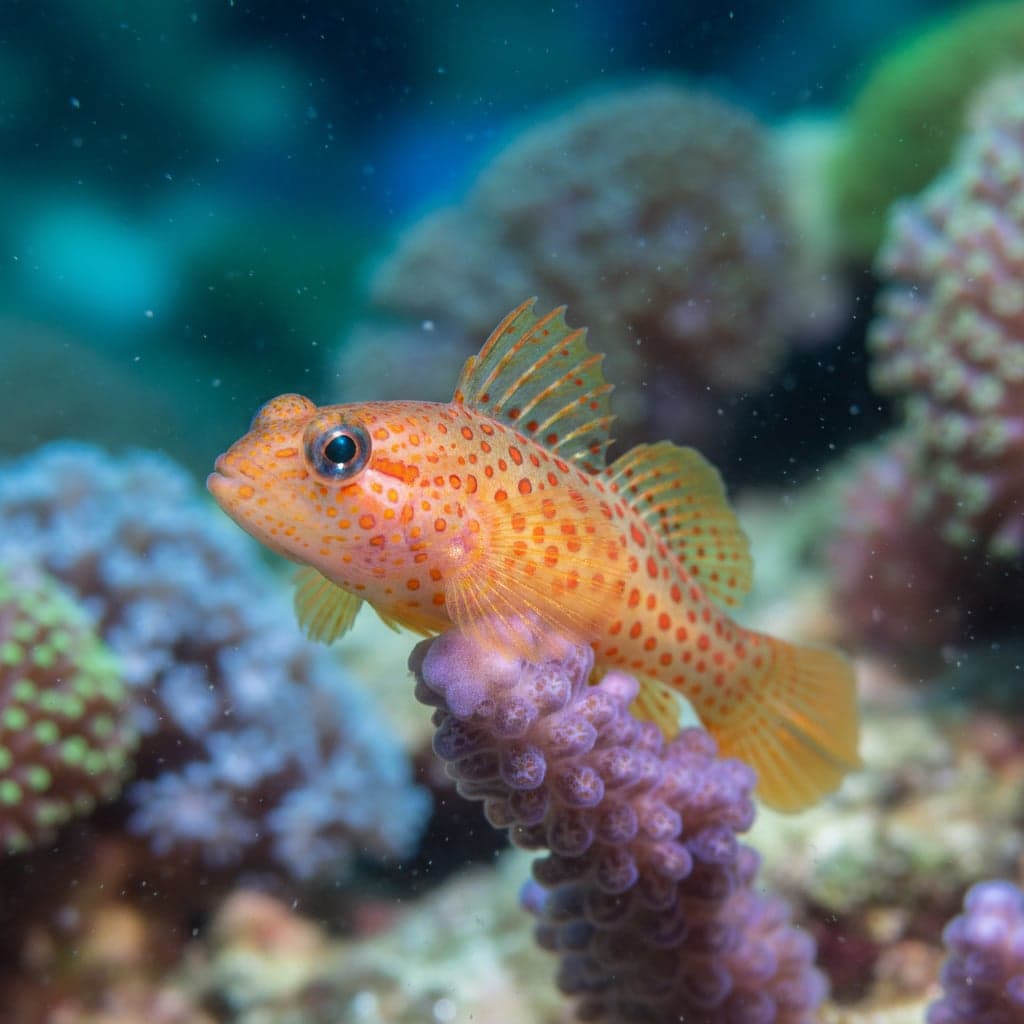
The Pinkspot Goby (Cryptocentrus leptocephalus), also called the pink-spotted or Singapore shrimp goby, is a peaceful shrimp goby washed in pale grey-blue and dotted with delicate pink and blue spots. Its real appeal, like that of other shrimp gobies, is its remarkable symbiosis with a burrowing pistol (alpheid) shrimp: the two share a sandy burrow, the sharp-eyed goby standing guard while the near-blind shrimp does the digging — one of the reef's most engaging partnerships.
Reef-safe, calm and fascinating to watch, it is an excellent fish for a peaceful reef with a sand bed.
Natural Habitat & Origin
Cryptocentrus leptocephalus is found across the Indo-Pacific, where it lives over open sandy and rubble substrates near reefs, occupying a burrow excavated and maintained by its partner shrimp. It hovers near the entrance, retreating inside in a flash when threatened.
To reproduce this in captivity, provide an open sand bed deep enough to burrow in, some rubble for burrow stability, and ideally a partner pistol shrimp.
Care Requirements
Keep it in stable marine conditions: salinity around 1.024–1.026, pH 8.1–8.4, and a temperature of about 24–26°C (75–79°F). Reaching about 10 cm (4 inches), it suits a tank of around 75 litres (20 US gallons) or more with a sand bed and secure rockwork. A tight lid is recommended, as shrimp gobies will jump when startled. A few centimetres of sand and stable rock keep the burrow from collapsing.
Diet & Feeding
The Pinkspot Goby is a carnivore, feeding on small crustaceans and zooplankton near its burrow. It readily takes aquarium foods: offer frequent small meals of frozen mysis and enriched brine shrimp, finely chopped seafood and quality sinking marine pellets. Feed near the burrow entrance where the goby holds station, and feed often enough to keep it in good condition.
Behavior & Temperament
This is a peaceful, somewhat shy fish that spends much of its time at its burrow, darting inside when alarmed. It is no threat to tankmates and is at its best with a pistol shrimp partner, though it can be kept without one. It can be kept singly or as a pair; the partnership with the shrimp is the highlight of keeping the species.
Tank Mates
Pair it with peaceful reef fish — clownfish, firefish, smaller wrasses, cardinalfish and similar — and avoid aggressive species that will keep it hidden and off its food. It is fully reef-safe with corals and ornamental invertebrates. To enjoy the symbiosis, add a compatible Alpheus pistol shrimp and let the pair find each other.
Breeding
Shrimp gobies such as Cryptocentrus leptocephalus form pairs and have spawned in aquaria, depositing eggs within the burrow, but rearing the planktonic larvae is difficult and uncommon in the home aquarium. Trade specimens are wild-collected.
Common Health Issues
The Pinkspot Goby is reasonably hardy, with jumping and underfeeding the main practical risks — address both with a secure lid and regular targeted feeding near the burrow. Like all marine fish it can be affected by marine ich (Cryptocaryon irritans) and marine velvet (Amyloodinium ocellatum) under stress, so quarantine new arrivals and keep water quality stable. Provide a sand bed, stable rockwork and ideally a pistol-shrimp partner, and this engaging little goby will thrive.