Purple Firefish
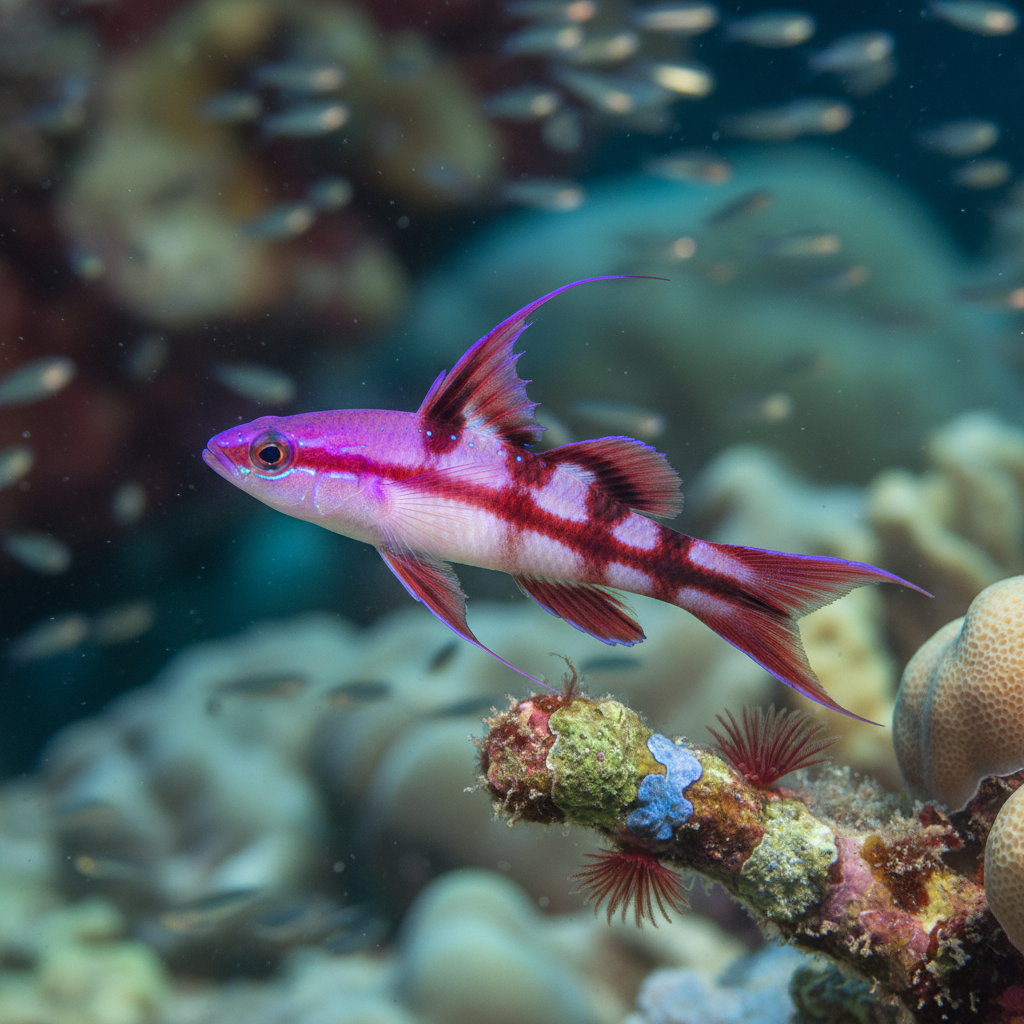
An 8cm firefish that hovers above the rock and bolts into it. Peaceful and reef safe, and it jumps — a sealed lid is not optional.

Purple Firefish
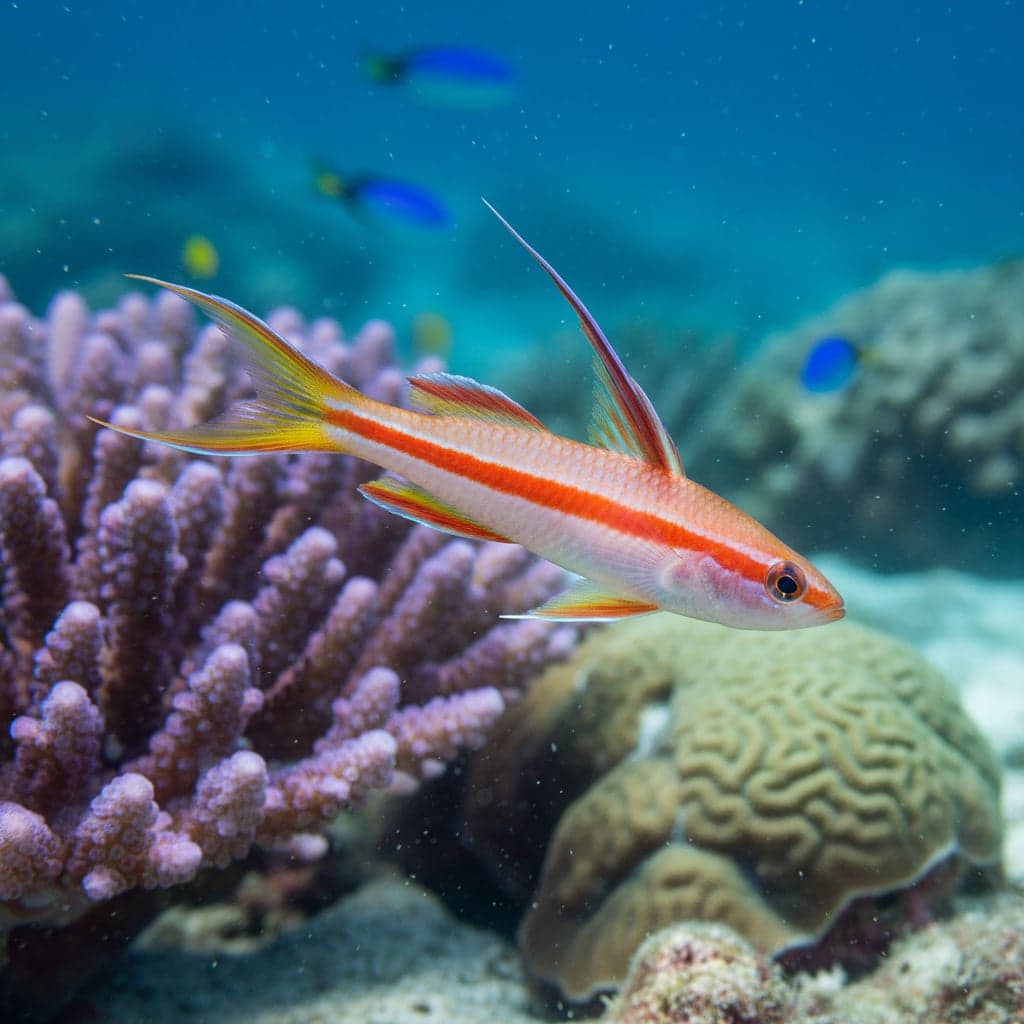
The Purple Firefish, scientifically known as Nemateleotris decora, is a captivating marine fish that belongs to the family Callionymidae. Native to the Indo-Pacific region, this vivid fish is renowned for its striking coloration, featuring a predominantly purple body complemented by orange and yellow accents. This alluring coloration makes the Purple Firefish a popular choice among aquarium enthusiasts and hobbyists alike, adding a vibrant touch to both reef and marine tanks. Its elongated form and elegant fins contribute to its graceful swimming style, captivating viewers and harmonizing beautifully with the surrounding aquatic environment.
In the aquarium hobby, the Purple Firefish holds significant appeal not only for its aesthetic qualities but also for its unique behavior. Often seen darting among the live rock and corals, the fish is known for its shy disposition, preferring to perch and hide in crevices rather than swim freely across open spaces. This behavior, combined with its remarkable colors, makes it a fascinating addition to any skilled aquarist’s collection, as it encourages the creation of an enriched tank environment that mimics its natural habitat.
Natural Habitat & Origin
The Purple Firefish originates from the warm coastal waters of the Indo-Pacific region, with a range that extends from the Red Sea to the Marquesas Islands, as well as warmer areas around Australia. Typically found at depths of 10 to 60 meters, this species inhabits coral reefs and rocky substrate where they can find plenty of hiding spots. The Purple Firefish thrives in clear, well-oxygenated waters, often residing in areas characterized by coral formations that provide shelter and breeding grounds. This species is accustomed to stable environmental conditions, which makes it imperative for aquarists to replicate these parameters to ensure a healthy and thriving individual.
The environmental context of the Purple Firefish involves a well-balanced ecosystem where diverse marine lifecoexists. The water conditions in its natural habitat tend to be stable, with gentle currents that provide nourishment and crucial oxygen for the inhabitants. Aquatic vegetation like soft corals and gorgonians are commonly present, contributing to the overall biodiversity. In capturing the essence of its native waters within a tank environment, aquarists can enhance the wellbeing of the Purple Firefish and promote its characteristic behaviors.
Care Requirements
To successfully keep a Purple Firefish, it is essential to mimic their natural water parameters. Ideal conditions include a pH level between 8.1 and 8.4, a temperature range of 75°F to 82°F (24°C to 28°C), and a specific gravity of 1.020 to 1.025. Water hardness should ideally fall within 8 to 12 dKH. Creating an appropriate tank setup requires a minimum tank size of 75 litres (20 gallons); at 8cm this firefish is compact, but a sealed lid is essential — it is a notorious jumper. Substrate should consist of fine sand or small gravel to closely resemble their native habitats.
Lighting should be moderate to bright, simulating the natural sunlight that reaches the coral reefs. Incorporating live rock, along with hardy corals and macroalgae, will not only provide necessary hiding spots and enrichment but also maintain water quality and aid in filtration. Additionally, utilizing an efficient filtration system is crucial to maintain clean water and balanced parameters for the well-being of the fish.
Diet & Feeding
The Purple Firefish is classified as an omnivore, feeding primarily on small crustaceans, zooplankton, and organic debris in the wild. In captivity, it is crucial to provide a varied diet to keep the fish healthy and vibrant. Offer high-quality marine flakes and pellets designed for carnivorous fish, along with supplementary frozen or live foods such as brine shrimp, mysis shrimp, and daphnia. Feeding should occur multiple times a day in small quantities to mimic their natural feeding behavior and prevent overfeeding or waste accumulation.
Incorporating a diverse diet will not only enhance color but also boost overall health. Some aquarists elect to use vitamin-enriched foods or dietary supplements that can further improve the fish's vitality and color. Remember to monitor feeding habits, as the Purple Firefish can be cautious and may require time to learn where and when to feed.
Behavior & Temperament
The Purple Firefish is generally known for its shy demeanor and tranquil behavior. It tends to establish territories within the aquarium and displays an interesting form of social interaction when it feels secure in its environment. Although not inherently aggressive, these fish can exhibit territoriality, especially when kept with other fish of similar shape or size. It is important for aquarists to provide ample hiding spots to allow the Purple Firefish to retreat into whenever it feels threatened.
In terms of tank placement, the Purple Firefish primarily occupies the upper levels of the aquarium, often hovering near the water's surface or perched on rock formations. Being a relatively peaceful species, they can coexist with other docile fish but should be monitored to ensure that they do not become stressed, particularly during feeding times or when other fish encroach on their territory.
Tank Mates
When selecting tank mates for the Purple Firefish, it is vital to choose peaceful species that will not pose a threat. Ideal companions include small gobies, blennies, and clownfish, as well as peaceful wrasse and damselfish. In reef setups, many small coral-friendly fish can also coexist harmoniously. This fish avoids aggressive or larger fish that might intimidate or bully it, making it crucial to avoid species such as dottybacks, large tangs, or any territorial fish that could threaten its well-being.
Always consider the tank's overall dynamics and ensure that each species can thrive in a community setting. Maintaining a balanced and harmonious environment will encourage natural behaviors and minimize stress for the Purple Firefish.
Breeding
Breeding Purple Firefish in captivity can be a challenge, as it requires specific conditions to stimulate spawning. In the wild, they exhibit a unique courtship display characterized by synchronized swimming and changes in coloration. To encourage breeding, ensure a mature pair is established in an adequately sized aquarium with abundant hiding spots and suitable nesting sites, such as flat surfaces where the female can lay eggs.
Optimal breeding conditions involve maintaining stable water parameters, including temperature and salinity, while providing high-quality food to promote rigorous conditioning. Once breeding occurs—typically at dawn—the female will lay eggs on a flat surface, which the male will fertilize shortly thereafter. Remove adult fish after spawning to prevent them from consuming the eggs, which usually hatch within a few days if conditions are favorable.
Common Health Issues
The Purple Firefish, like many marine species, can be susceptible to certain health issues. Common diseases include ich (Cryptocaryon irritans), marine velvet (Amyloodinium ocellatum), and bacterial infections. Prevention is critical, and establishing a quarantine procedure for newly introduced fish can significantly reduce disease transmission.
Ensure optimal water quality and regular maintenance to ward off stress-induced issues. Maintaining proper diet and enriching the fish's environment will bolster its immune system and overall health. Regular observations of the Purple Firefish can help identify early signs of distress or illness, allowing prompt action to be taken and ensuring a long and healthy life in captivity.