Ruby Red Dragonet
The Ruby Red Dragonet (Synchiropus sycorax) is a stunning crimson dragonet — peaceful and reef-safe, but a delicate copepod feeder for mature tanks.
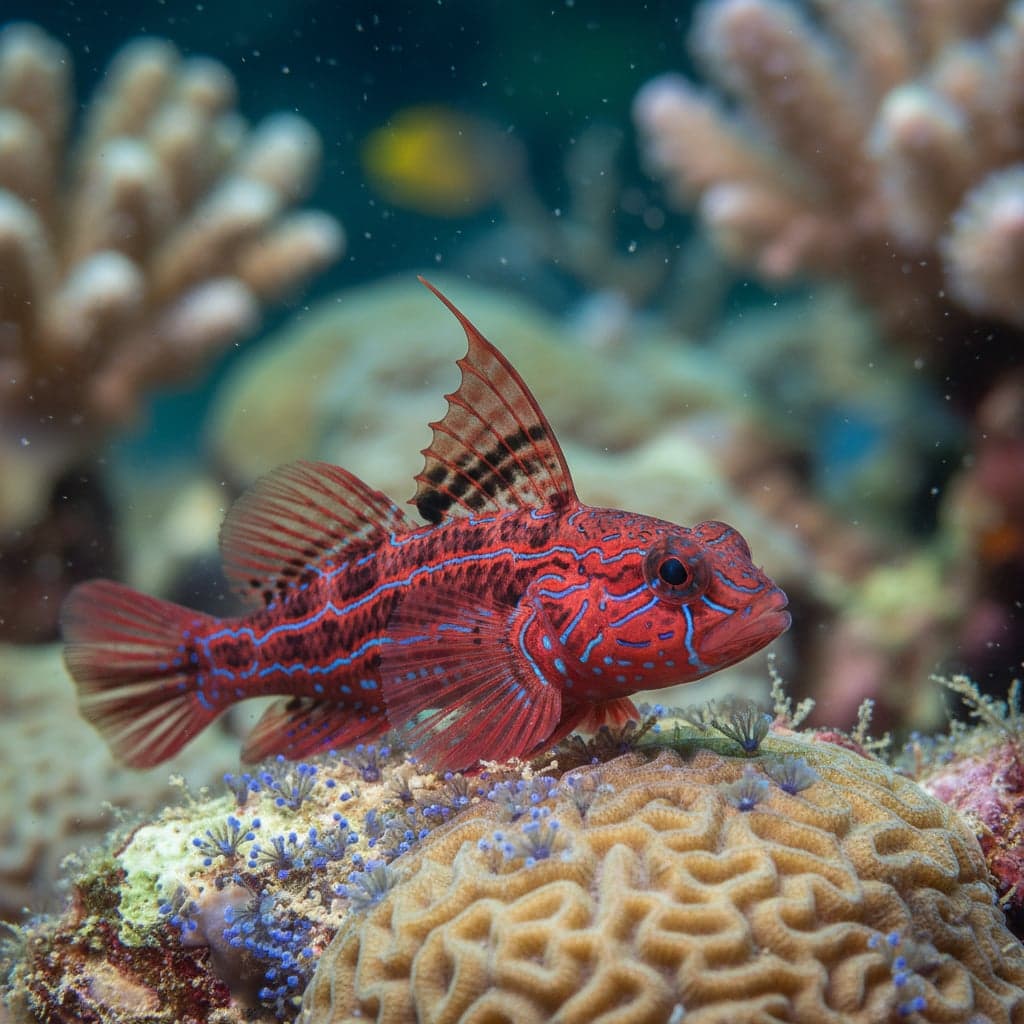
Ruby Red Dragonet
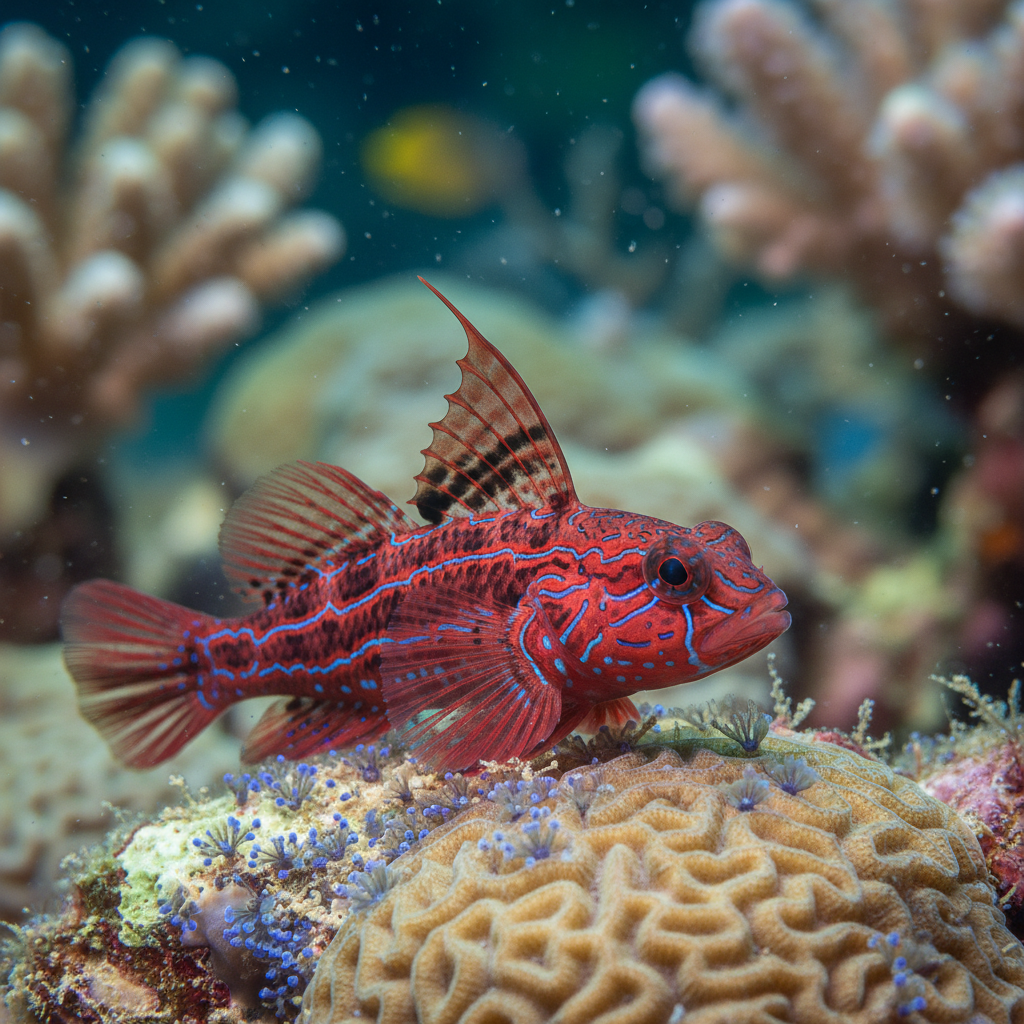
The Ruby Red Dragonet (Synchiropus sycorax) is a jewel of a fish — a small, slender dragonet in deep ruby-red, the males carrying a tall, flag-like first dorsal fin they raise in display. A relatively recent and prized addition to the hobby, it shares the charm of its famous cousins the mandarinfish, along with their key challenge: it is a delicate, specialised feeder whose success depends almost entirely on a mature, copepod-rich tank.
Reef-safe and peaceful, it is a beautiful fish for the experienced keeper able to provide a steady supply of live foods.
Natural Habitat & Origin
Synchiropus sycorax is found on Indo-Pacific reefs, where it lives close to the bottom among rock and rubble, foraging slowly over surfaces for tiny crustaceans. Its small size and cryptic habits keep it near cover.
In the aquarium it wants plenty of live rock and an established system teeming with microfauna, in calm surroundings where slow tankmates do not outcompete it.
Care Requirements
Maintain stable marine conditions: salinity around 1.024–1.026, pH 8.1–8.4, and a temperature of about 24–26°C (75–79°F). Reaching only about 6 cm (2.5 inches), it can live in tanks of around 115 litres (30 US gallons) or more, but the tank's biological maturity matters far more than its size: an established system, ideally with a refugium producing copepods and amphipods, is the single most important requirement.
Diet & Feeding
The Ruby Red Dragonet is a micro-carnivore that feeds continuously on tiny crustaceans — copepods and amphipods — picked from rock and sand. This is the defining challenge: many specimens will not take prepared foods and slowly starve in tanks lacking live microfauna. Maintain a steady supply of live copepods, ideally with a refugium, and patiently encourage acceptance of small frozen foods such as enriched baby brine shrimp. Watch its body condition closely; a thin, hollow-bellied dragonet needs immediate live feeding.
Behavior & Temperament
This is a peaceful, retiring fish that bothers no one and is easily out-competed for food. It is best kept singly (males may quarrel) in a tank where slow, gentle feeding suits its pace. It spends its day hopping across the rocks in search of tiny prey.
Tank Mates
Keep it only with peaceful, non-competitive fish — gobies, firefish, small calm wrasses and similar — and avoid anything fast or greedy that will strip the tank of the microfauna it depends on. It is fully reef-safe, leaving corals and ornamental invertebrates alone, and is well suited to a calm, mature reef.
Breeding
Synchiropus sycorax, like other dragonets, performs a graceful rising courtship dance and is a pelagic spawner. Aquarium spawning is possible in a peaceful tank, but rearing the tiny larvae is very difficult and rarely achieved by hobbyists.
Common Health Issues
The dominant risk for this species is starvation in a tank lacking sufficient copepods — prevent it with a mature, microfauna-rich system and patient feeding. Dragonets have a tough, mucus-coated skin that gives them some resistance to ich, but they remain sensitive to poor water quality and competition. Choose a plump, feeding specimen, provide a mature, peaceful reef with a refugium, and this stunning little dragonet can do well in the right hands.