Sargassum Triggerfish
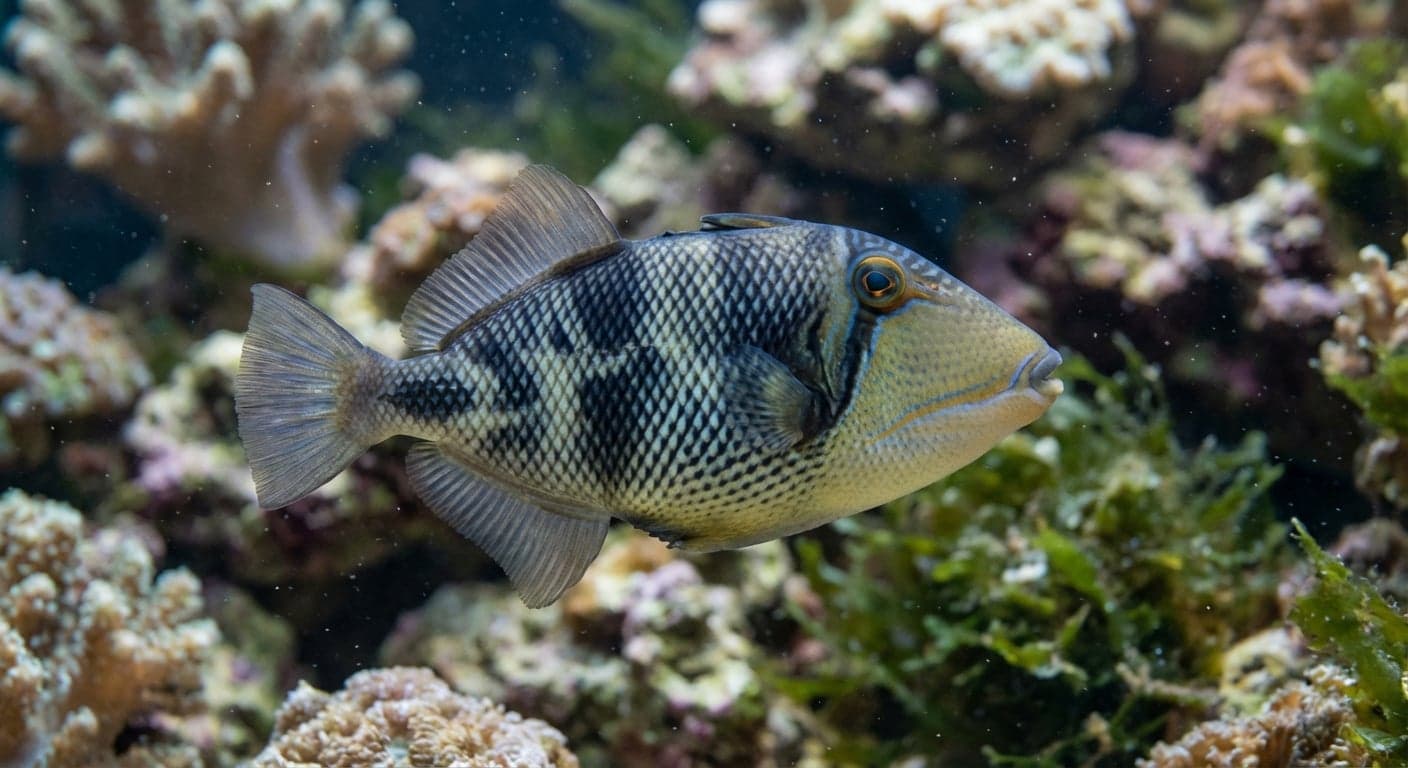
The Sargassum Triggerfish (Xanthichthys ringens) is a peaceful, plankton-feeding Atlantic trigger — one of the few reef-suitable triggerfish.
Sargassum Triggerfish
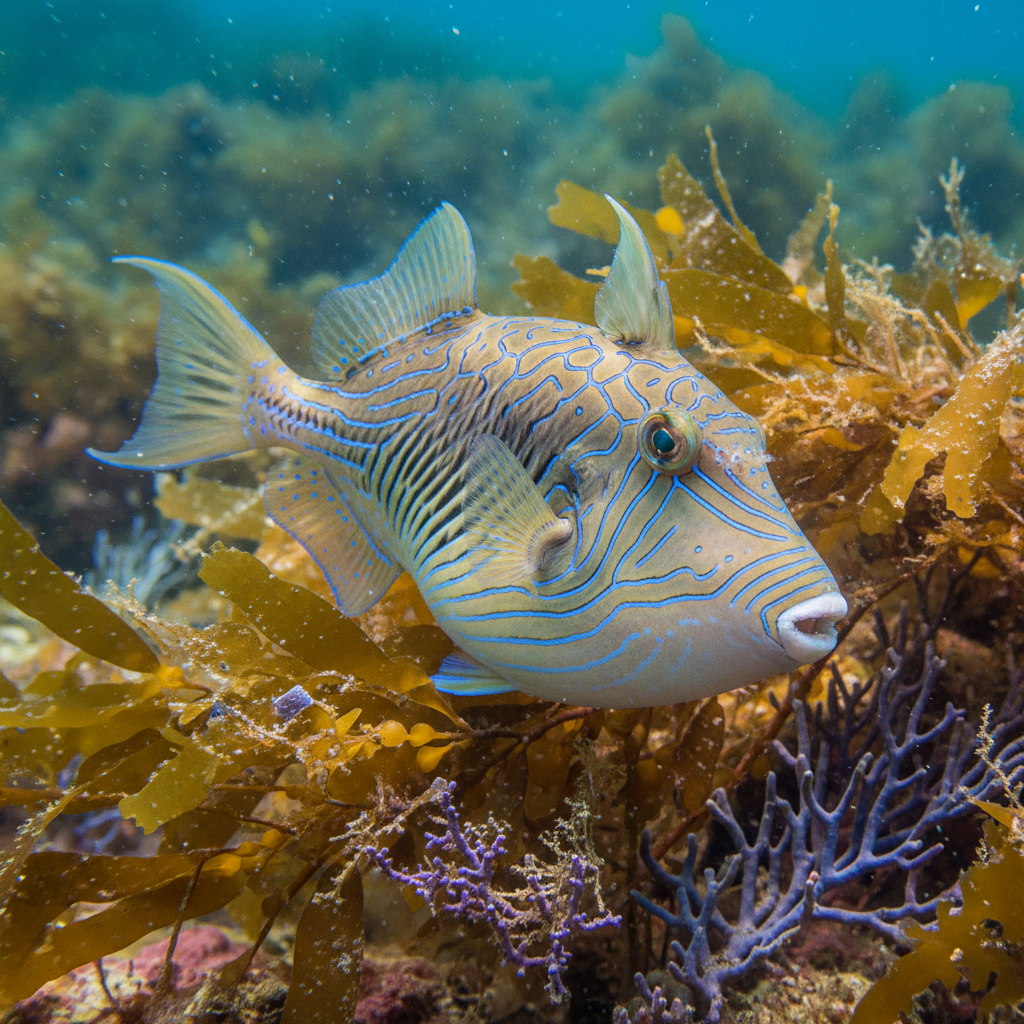
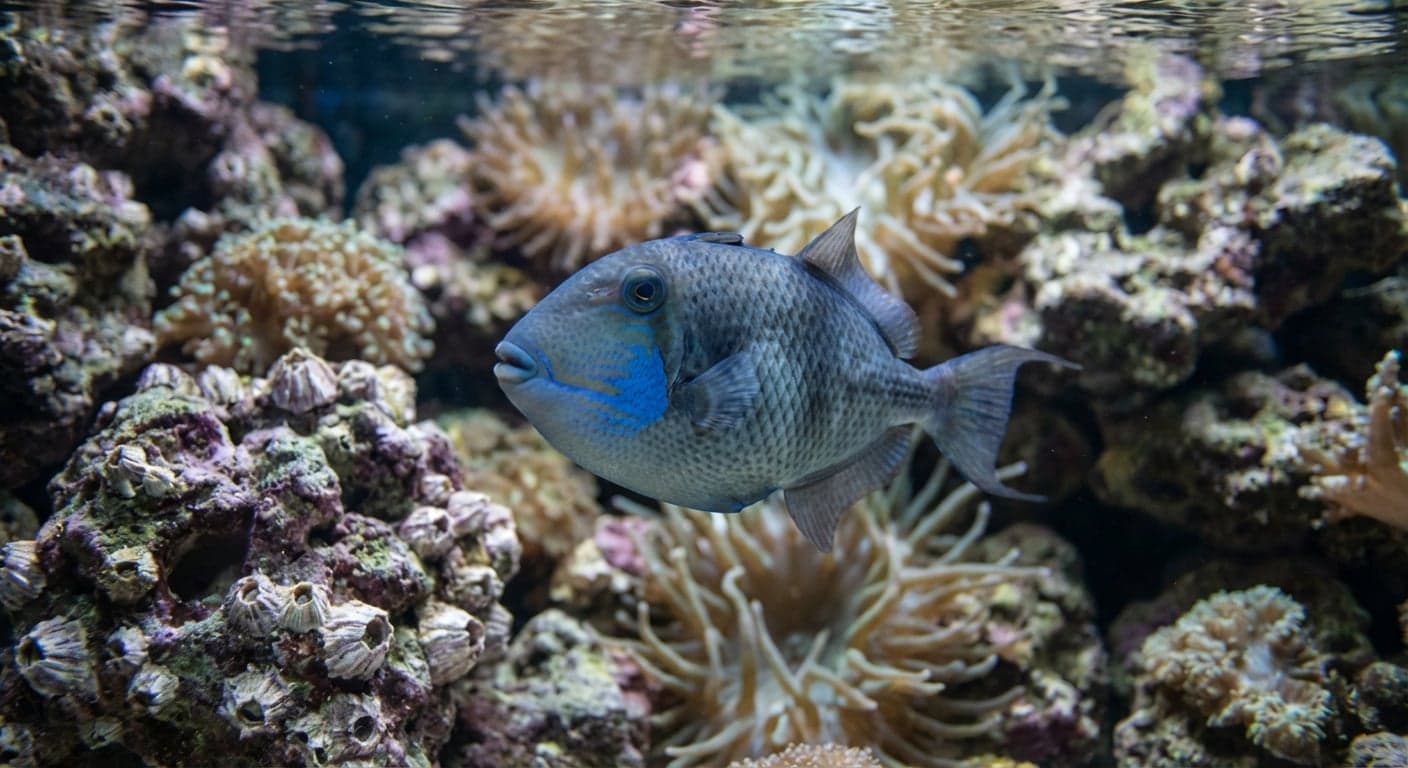
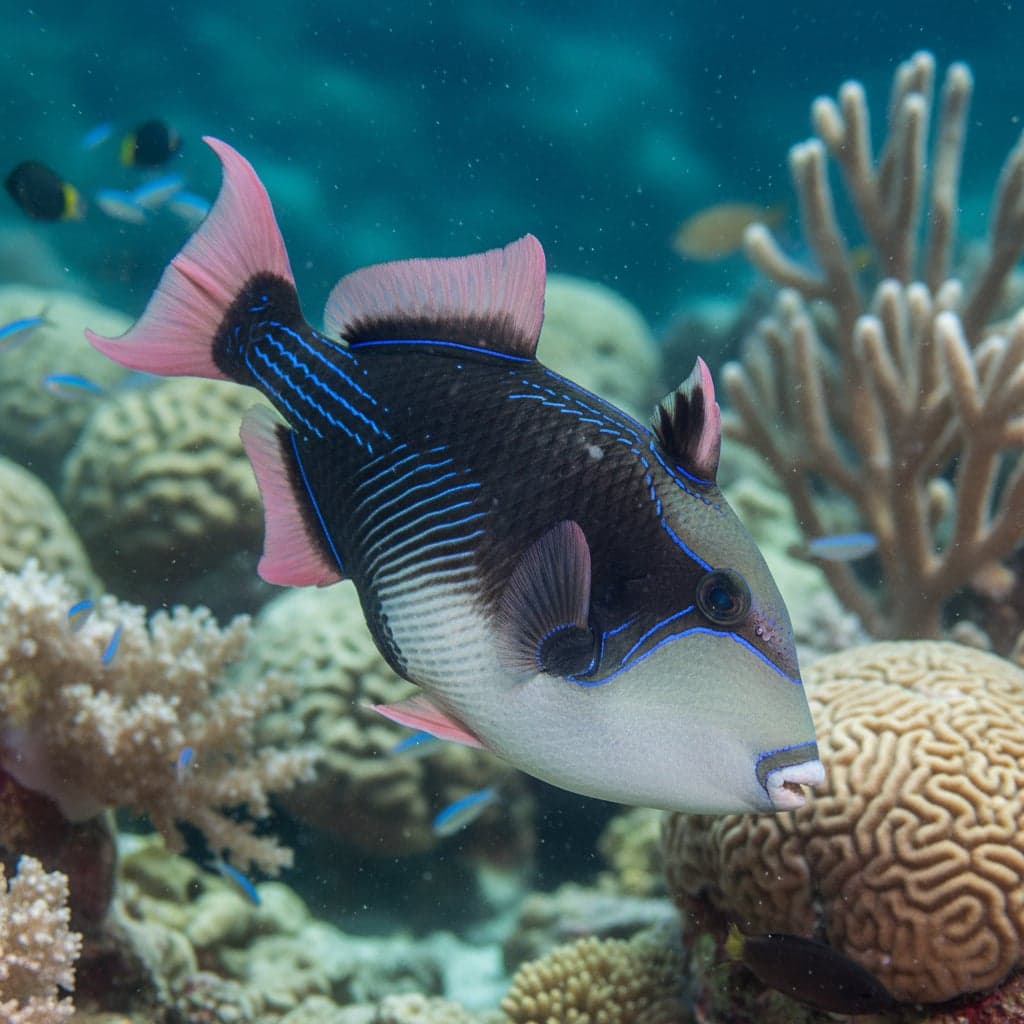
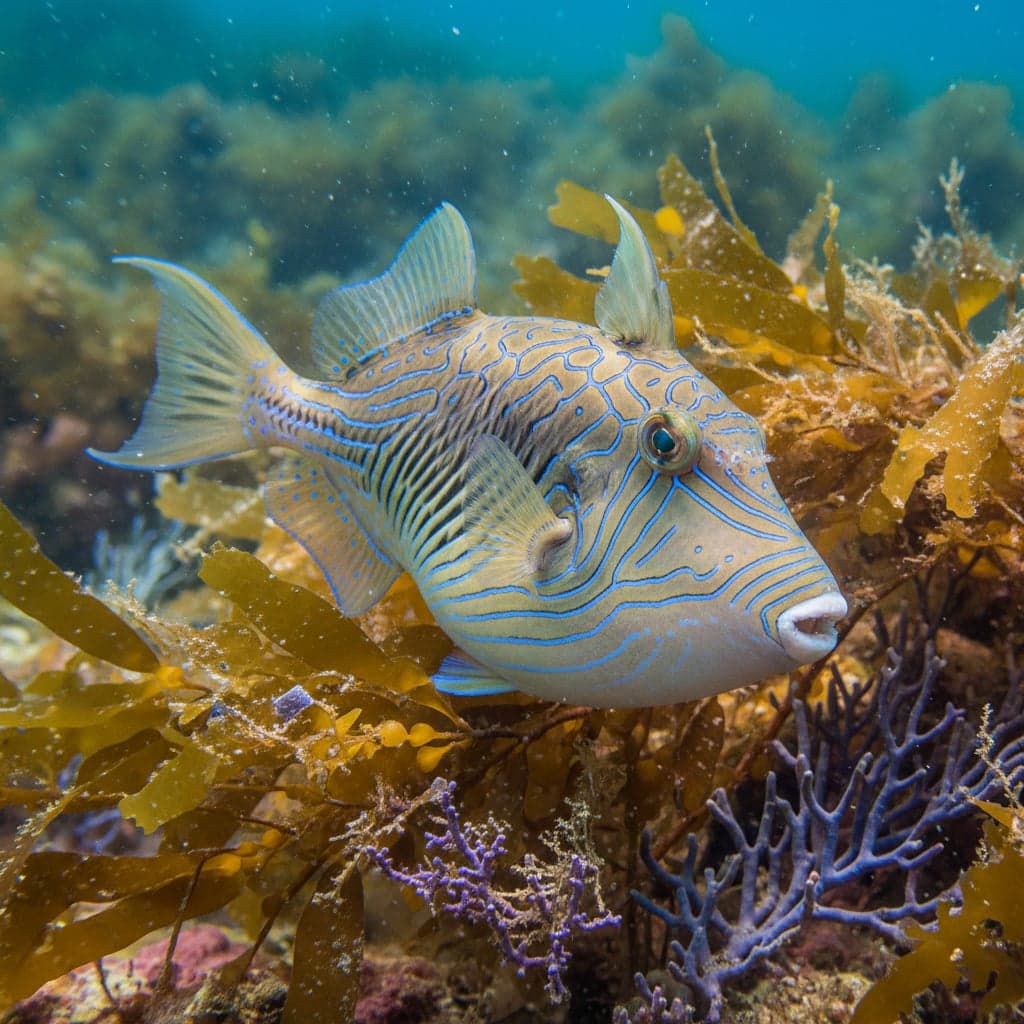
The Sargassum Triggerfish (Xanthichthys ringens), also called the redtail triggerfish, is what people mean when they say they want a trigger without the demolition. Soft grey body, neat blue facial lines, a patterned flanks and a habit of hovering in open water rather than excavating the sand bed — it is an Atlantic planktivore in a family famous for crushing crabs. That feeding mode is the whole care guide in one mechanism. Triggers that eat hard-shelled benthos rearrange rock and delete invertebrates. Xanthichthys that eat drifting plankton largely leave corals and, often, ornamental shrimp alone.
The common name misleads slightly. This is not primarily a Sargassum-mat drifter like some juvenile filefish; adults work open water above western Atlantic and Caribbean outer reef slopes. The "sargassum" label stuck in the trade anyway. What matters in the tank is the mid-water lifestyle: swimming room first, a bolt-hole in the rock second.
Adult size reaches about 25 cm (10 inches). Frontmatter lists temperament as semi-aggressive and behaviour as pair — both are fair. Juveniles and well-fed adults are among the gentler triggers; mature fish can still assert themselves, and a male–female pair is a realistic stocking pattern in a large enough system. "Peaceful" in the description is relative to Balistoides and Rhinecanthus, not a promise it will ignore a tiny goby forever.
Natural Habitat & Origin
Xanthichthys ringens occurs in the western Atlantic and Caribbean, typically hovering above outer reef slopes and walls, often in loose groups, picking zooplankton from the water column. It retreats to holes and crevices in the reef to rest and to escape. That split — open water for feeding, rock cavity for security — is what you are recreating.
In the aquarium, give a clear swimming path along the length of the tank and rockwork with at least one cave the fish can fully enter. An aquascape jammed to the glass with no open water frustrates a planktivore; a barren box with no hole leaves it exposed and jumpy. Match both halves of the habitat.
Care Requirements
Stable marine conditions: specific gravity about 1.024–1.026, pH 8.1–8.4, temperature 24–26°C (75–79°F). It is a hardy Atlantic species once eating, not a delicate deep-water specialist, but wild-caught triggers still arrive with the usual parasite lottery.
Size versus tank: 25 cm of active mid-water fish wants about 340 litres (roughly 90 US gallons) or more, with emphasis on horizontal swimming length. A pair needs more space than a single — use the pair behaviour flag as a stocking hint, not as permission to drop two adults into a borderline 340 L box. Provide a secure lid; triggers can jump when startled, and a lid also stops the occasional rock-spit or substrate-tossing some individuals invent even when they are not dedicated excavators.
Water quality should stay clean. Mid-water feeders produce waste proportional to how enthusiastically you feed them, and overfeeding "to keep it peaceful" is a common way to foul a reef while trying to be kind.
Diet & Feeding
Wild diet is zooplankton and other small suspended prey — the fish hovers and picks, it does not crush urchins. That is why reef suitability is even on the table for this genus while it is off the table for most large triggers.
Captive diet should stay small, meaty and frequent: frozen mysis, enriched brine shrimp, copepod products, finely chopped seafood, quality marine pellets and occasional marine algae content for variety. Feed two or more times a day. An easy, enthusiastic feeder is normal; a Xanthichthys that refuses food for days is stressed or ill, not "being a trigger."
Wild-versus-captivity gap: you cannot literally replicate a plankton soup in most home reefs, so you approximate with multiple small offerings and, if possible, a refugium that exports pods into the display. Do not switch it to a heavy crab-and-clam diet just because other triggers eat that way — you would be training the wrong feeding behaviour and inviting the invertebrate predation you bought this genus to avoid. Omnivore on the label means it will accept a mixed prepared diet, not that it needs shellfish dinners.
Behavior & Temperament
Comparatively peaceful for a trigger, especially when young, but still best filed as semi-aggressive. It mixes with robust tankmates and spends much of the day in open water rather than rearranging the scape. Assertiveness rises with age, hunger and undersized tanks — the same three levers as most semi-aggressive marine fish.
Pairs: male–female pairs are kept successfully in large systems, which is why behaviour is listed as pair rather than strictly solitary. Sexing is not trivial for beginners; if you are not sure, keep one. Two unsettled adults in too little space will not invent harmony because the genus is "the nice trigger."
Toward tiny, shy fish it can be a risk as it matures — mid-water prey drive does not always stop at mysis. Toward corals it is typically indifferent.
Tank Mates
Robust, non-timid marine fish: tangs, larger wrasses, angelfish, similarly sized triggers of compatible temperament in very large systems. Avoid delicate darting gobies and nano fish you cannot bear to lose. Avoid the famous wrecking triggers in the same tank if you are trying to keep a reef — they will do the damage X. ringens was chosen to avoid.
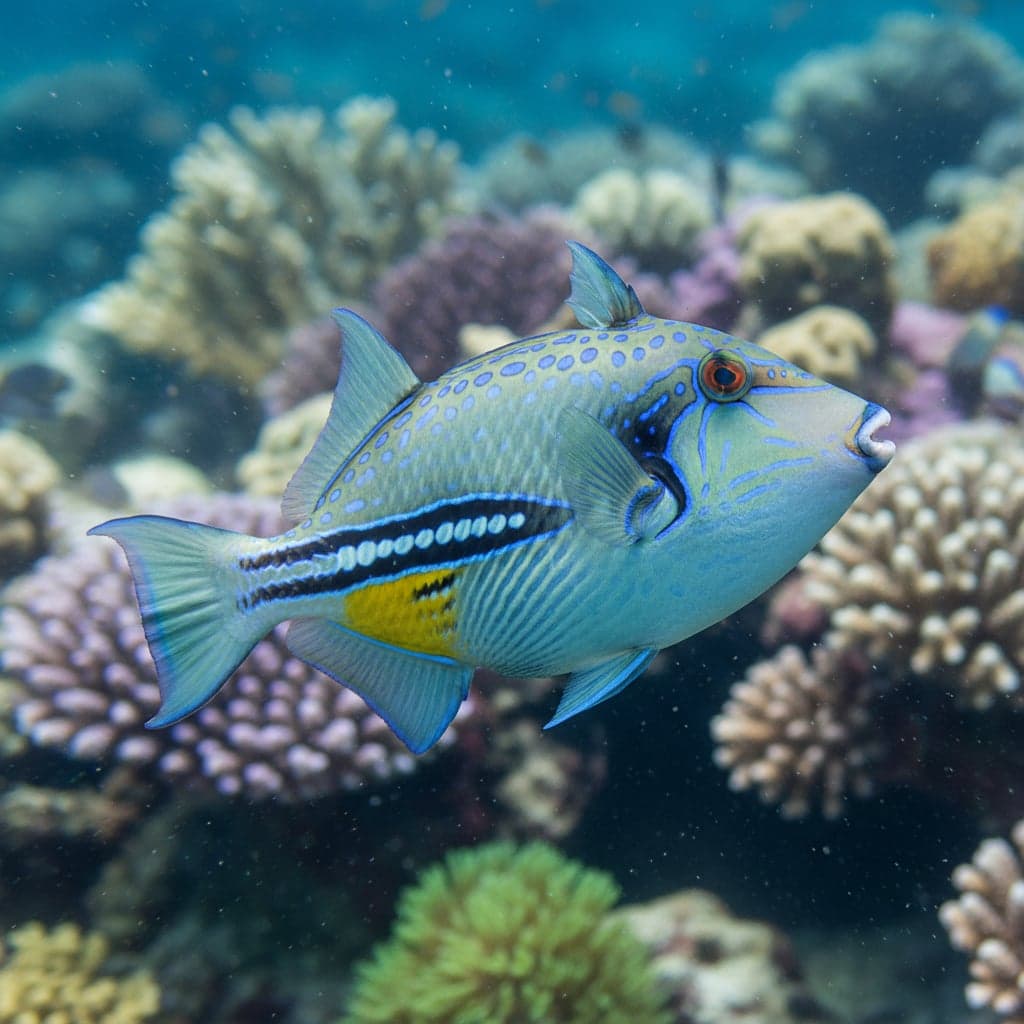
Reef suitability is real but qualified, and the qualification is the diet mechanism again. Because it is a planktivore, it usually leaves coral polyps alone and is far less likely than Picasso or clown triggers to systematically hunt snails, crabs and shrimp. "Far less likely" is not "never." Small ornamental shrimp and tiny crustaceans can still disappear, especially if the fish is underfed or the shrimp is juvenile-sized. Caution with prized mobile invertebrates remains sensible; coral-focused reefs are the natural fit. Compare the more reef-oriented blue-throat and crosshatch Xanthichthys if you are choosing among the genus — same feeding logic, different ocean and pattern.
Breeding
Pelagic spawner. Not bred in the home aquarium as a practical project; trade specimens are wild-collected. Pairs may show courtship behaviour in large systems without any realistic expectation of rearing larvae. Buy feeding, alert fish; Atlantic triggers that have already declined in the shop rarely turn around on hope alone.
Common Health Issues
Hardy, but not exempt from marine ich (Cryptocaryon irritans) or velvet (Amyloodinium ocellatum). Wild collection plus shipping stress is the usual entry point. Run quarantine for a full observation and treatment window before the display. Triggers have tough mouths and personalities; they still die of Amyloodinium on the same schedule as anything else if you skip hospital procedure and dose a reef with wishful thinking.
Once in the show tank, keep water quality high, feed often enough that hunting pressure on ornamental invertebrates stays low, and give open water plus a cave. Lateral line and skin issues track back to water quality and stress more often than to exotic pathogens. A quarantined X. ringens in 340 L+ with a plankton-style feeding schedule is one of the few triggers that honestly belongs in a cautious reef — not because it is magic, but because it eats the water column instead of the rock.