Snowflake Moray Eel
A 60-90cm moray that eats crustaceans rather than fish, so it suits a fish-only tank. An accomplished escape artist — the lid must actually seal.
Snowflake Moray Eel
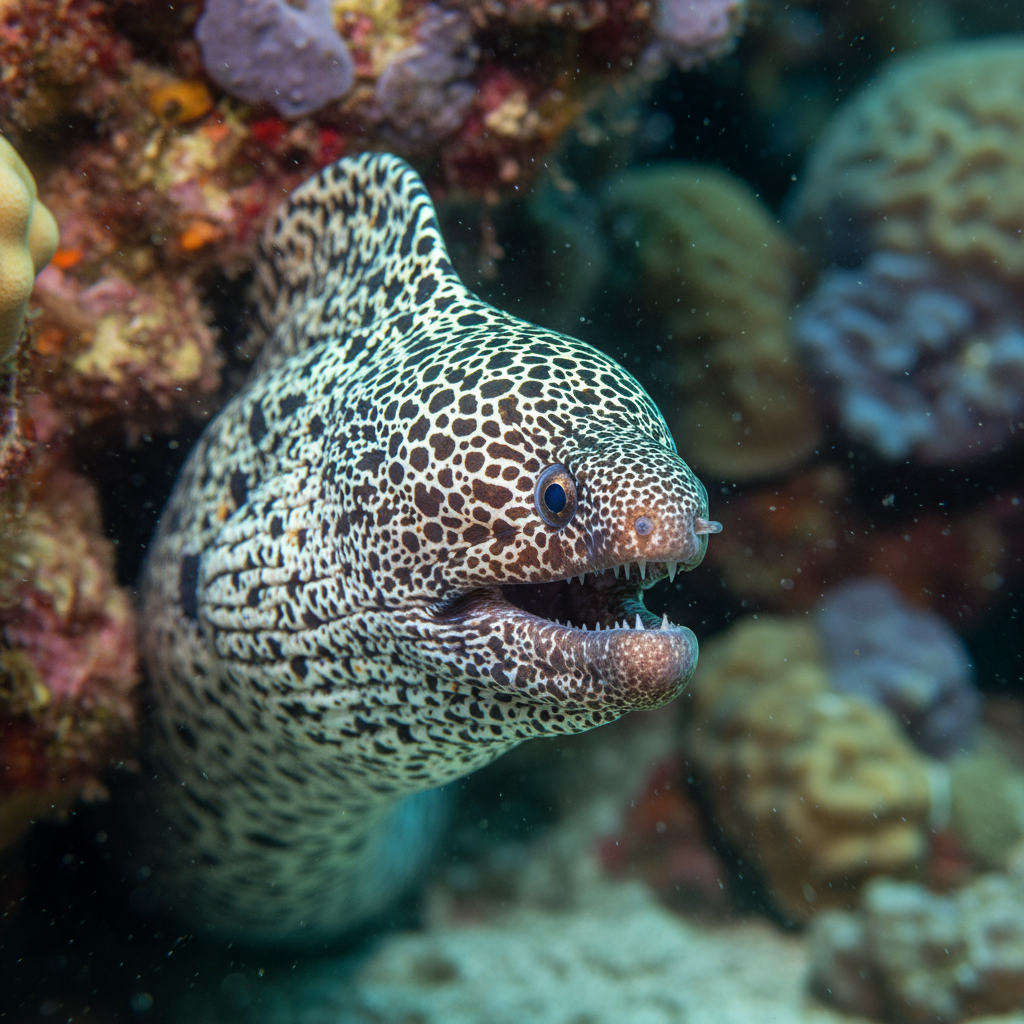
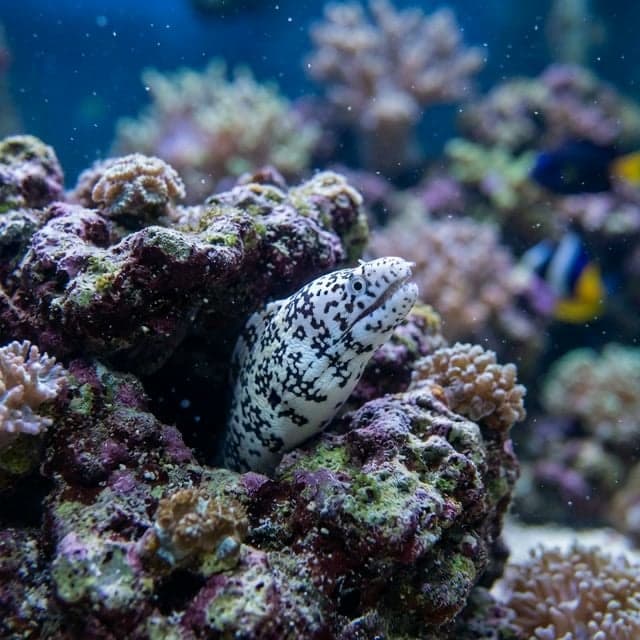
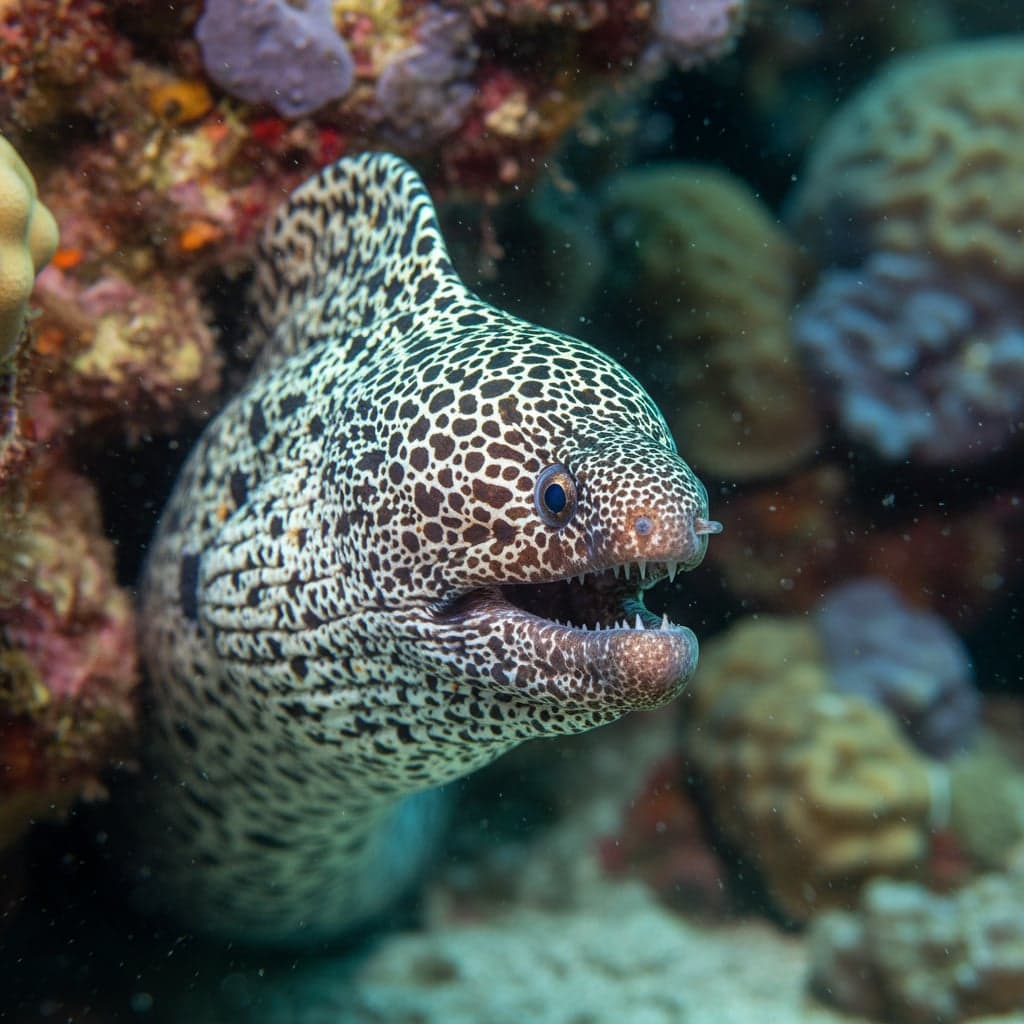
The Snowflake Moray Eel is a visually stunning marine creature known for its unique white body adorned with black or dark brown spots, resembling a snowflake pattern. This coloration not only adds aesthetic appeal to any aquarium setting but also provides a perfect camouflaging mechanism in its natural habitat among coral reefs. As one of the more popular choices among aquarists, the Snowflake Moray Eel has established itself as a must-have species for enthusiasts seeking to create dynamic and engaging reef tanks. With its striking appearance and fascinating behaviors, it contributes significantly to the biodiversity and interest level in marine aquariums.
In terms of significance within the aquarium hobby, the Snowflake Moray Eel offers both challenges and rewards. While these eels are relatively hardy and adaptable, maintaining their health and wellbeing requires a solid understanding of their specific needs. Their intriguing behaviors such as hiding and emerging in response to environmental stimuli make them captivating inhabitants of a reef tank, enhancing the viewer's experience. Additionally, possessing a Snowflake Moray Eel not only brings a visually appealing element to the aquarium but also serves as an introduction to the more complex aspects of marine care, paving the way for future explorations into the diverse world of aquatic life.
Natural Habitat & Origin
The Snowflake Moray Eel (Echidna nebulosa) is native to the warm waters of the Indo-Pacific region, specifically thriving in areas like the Red Sea, the eastern coast of Africa, and various islands in the central and western Pacific Ocean. Preferring shallow coastal waters, these eels are commonly found among reefs, rocky crevices, and in sandy environments. They favor habitats with plenty of hiding spots, which provide protection from predators and create ideal hunting grounds as they ambush small fish and invertebrates.
In terms of water type, the Snowflake Moray Eel inhabits clear tropical waters and is less likely to be found in blackwater systems. Their environment is typically characterized by stable temperatures ranging from 75°F to 82°F (24°C to 28°C), with moderate water movement that provides them with necessary oxygenation while allowing them to navigate effectively. These conditions are essential for replicating their natural habitat in a home aquarium, and understanding this context is crucial for keeping this species healthy and thriving.
Care Requirements
To successfully maintain a Snowflake Moray Eel in captivity, precise water parameters are critical. Ideal pH levels range from 8.1 to 8.4, reflecting the conditions of their natural habitat. When it comes to temperature, the recommended range is between 75°F to 82°F (24°C to 28°C), and the water hardness should be maintained at around 8-12 dGH to ensure that they thrive. Moreover, it is crucial to ensure that the water is well-filtered to maintain good water quality, as Snowflake Moray Eels are sensitive to poor water conditions.
For tank setup, a minimum aquarium size of 380 litres (100 gallons) is advisable, as these eels grow to around 60-90cm (24 to 36 inches). The tank should include various hiding spots created with driftwood, rocks, and coral structures to provide a sense of security. A sandy substrate is preferable as it mimics their natural environment and allows for burrowing behavior. Lighting should be kept moderate; bright light can cause stress, so dimmable LED lights or incandescent bulbs with a slight cover are ideal. Given their natural inclination towards hiding, it is best to avoid heavy vegetation as it may obstruct their movement and comfort zones.
Diet & Feeding
The Snowflake Moray Eel is primarily a carnivore, feeding on a diet consisting of fish and other marine creatures. In captivity, it is crucial to provide a varied diet to promote optimal health. High-quality marine pellets and frozen foods such as shrimp, squid, and fish should be staples of their diet. While they might not readily accept flake foods, some may adapt over time to include them in their diet.
When feeding, it's best to offer appropriate portions several times a week, allowing them to eat within a few minutes before removing any uneaten food to avoid water quality deterioration. Additionally, introducing occasional live foods can stimulate their natural hunting instincts, making the feeding process more engaging. However, care should be taken to source live food from reputable sources to prevent potential health risks.
Behavior & Temperament
The Snowflake Moray Eel has a unique behavior that adds a dynamic element to any aquarium. They are generally solitary creatures and tend to be territorial. In the tank, they spend much of their time hiding within rocks or crevices, emerging primarily for feeding during the evenings or when they feel secure. While not overtly aggressive towards larger fish, they may exhibit predatory behavior toward smaller tank mates. Thus, it's essential to carefully select companions for these eels to ensure a peaceful aquarium environment.
Vertical placement is vital for the Snowflake Moray Eel; they naturally inhabit caves and overhangs in the wild. Aquarists should create a three-dimensional environment where the eel can explore both horizontally and vertically, enhancing its physical and mental wellbeing. Observing their patterns and behaviors can be highly rewarding, as each eel has its own personality that unfolds over time.
Tank Mates
When considering tank mates for a Snowflake Moray Eel, it is crucial to select compatible species that can withstand their potentially aggressive feeding habits. Ideal companions include larger fish like clownfish, angelfish, and certain types of wrasses that can hold their own without becoming prey. Additionally, larger invertebrates such as hermit crabs and certain snails can coexist peacefully in the same environment.
Conversely, caution should be taken to avoid smaller fish, especially those known for their slow movements, as they may be viewed as easy targets for the Snowflake Moray Eel. Smaller reef species like gobies or any fish suitable for community tanks should generally be avoided. Moreover, aggressive species such as lionfish or triggerfish can also lead to tension or conflict within the aquarium.
Breeding
Breeding the Snowflake Moray Eel in captivity is a complex task that remains largely undocumented. These eels typically participate in external fertilization, spawning in open water as part of their natural reproductive behavior. They require specific conditions in terms of water quality, temperature, and diet to encourage spawning; however, replicating these conditions in a home aquarium can prove to be exceptionally challenging.
To foster a conducive breeding environment, maintaining optimal water conditions along with a high-protein diet is recommended to promote health and readiness for breeding. Specialized tanks that mimic their natural shallow reef environment may also be a consideration for breeding attempts. Despite the rarity of successful breeding in captivity, understanding their natural behaviors can offer insight into their reproduction and further enrich an aquarist's knowledge of these magnificent creatures.
Common Health Issues
Snowflake Moray Eels can be prone to several health issues, stemming primarily from poor water quality or stress. Common ailments include skin parasites, such as marine ich (Cryptocaryon irritans), and bacterial infections due to injuries sustained within the tank environment. Additionally, they can suffer from stress-related illnesses stemming from incompatible tank mates or inadequate hiding places.
Preventive measures include regular water quality testing, maintaining stable tank parameters, and ensuring proper feeding practices. Regular monitoring for signs of illness and stress can enable aquarists to intervene early, ensuring a long and healthy lifespan for their snowflake moray eel. Providing a tight-fitting lid is also essential, as these eels are notorious escape artists and can easily injure themselves attempting to jump out.