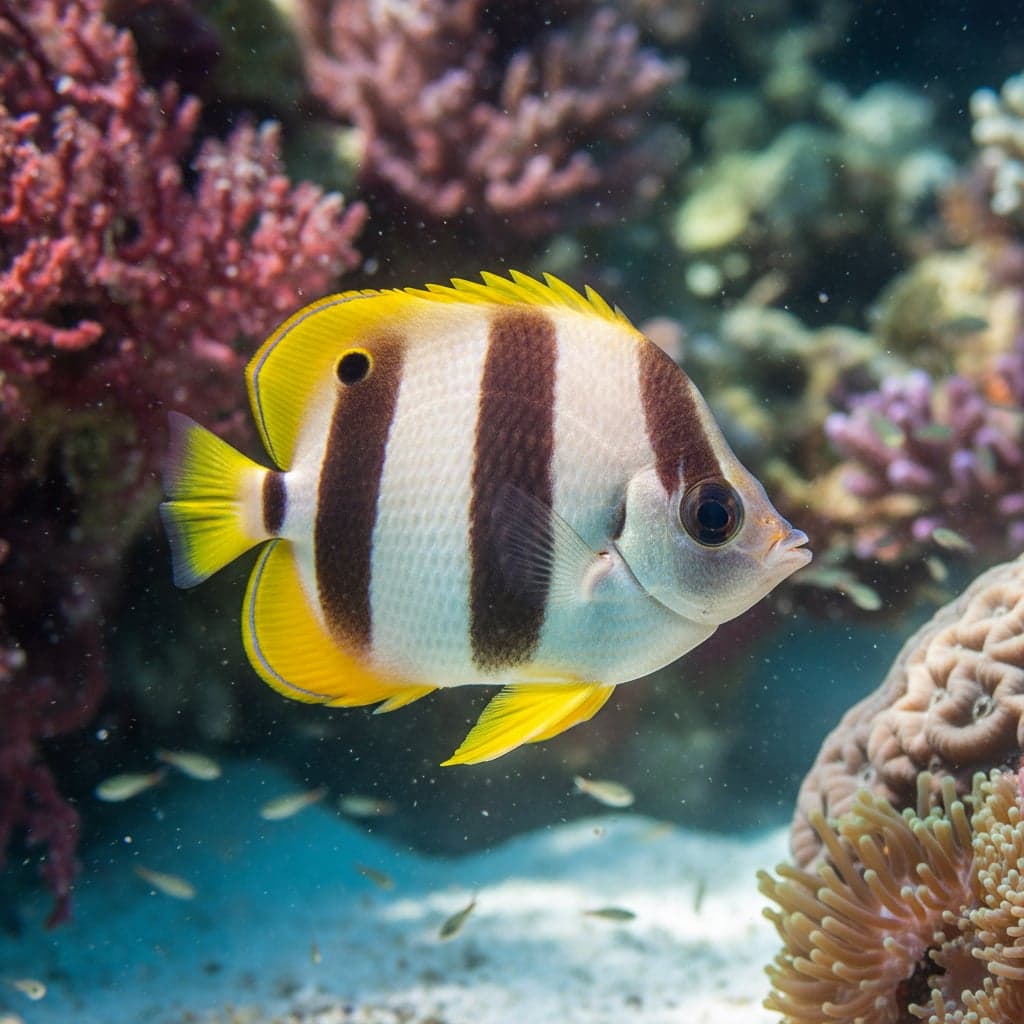
Spot-tail Butterflyfish
The Spot-tail Butterflyfish (Chaetodon ocellicaudus) is an elegant black-and-yellow Indo-Pacific butterflyfish — a coral-feeding species best kept with reef caution by experienced keepers.
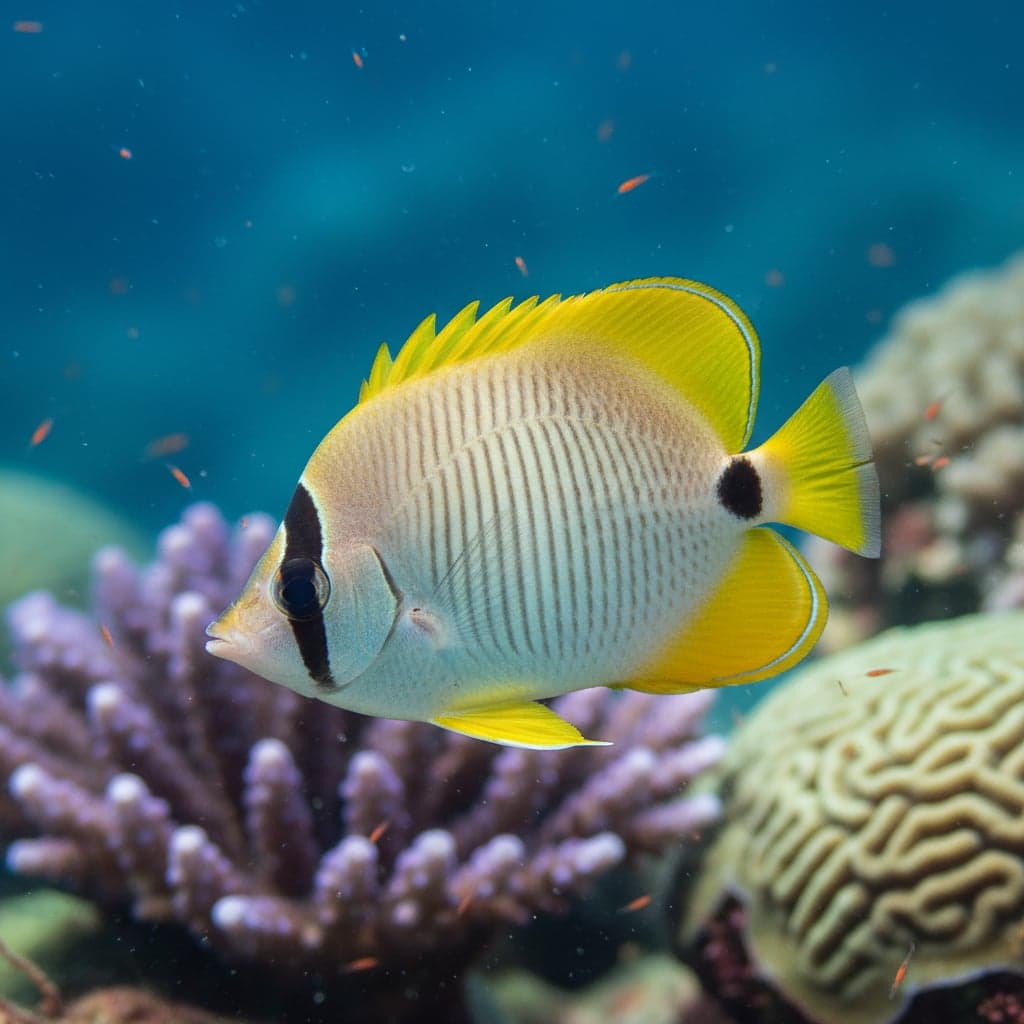
Spot-tail Butterflyfish
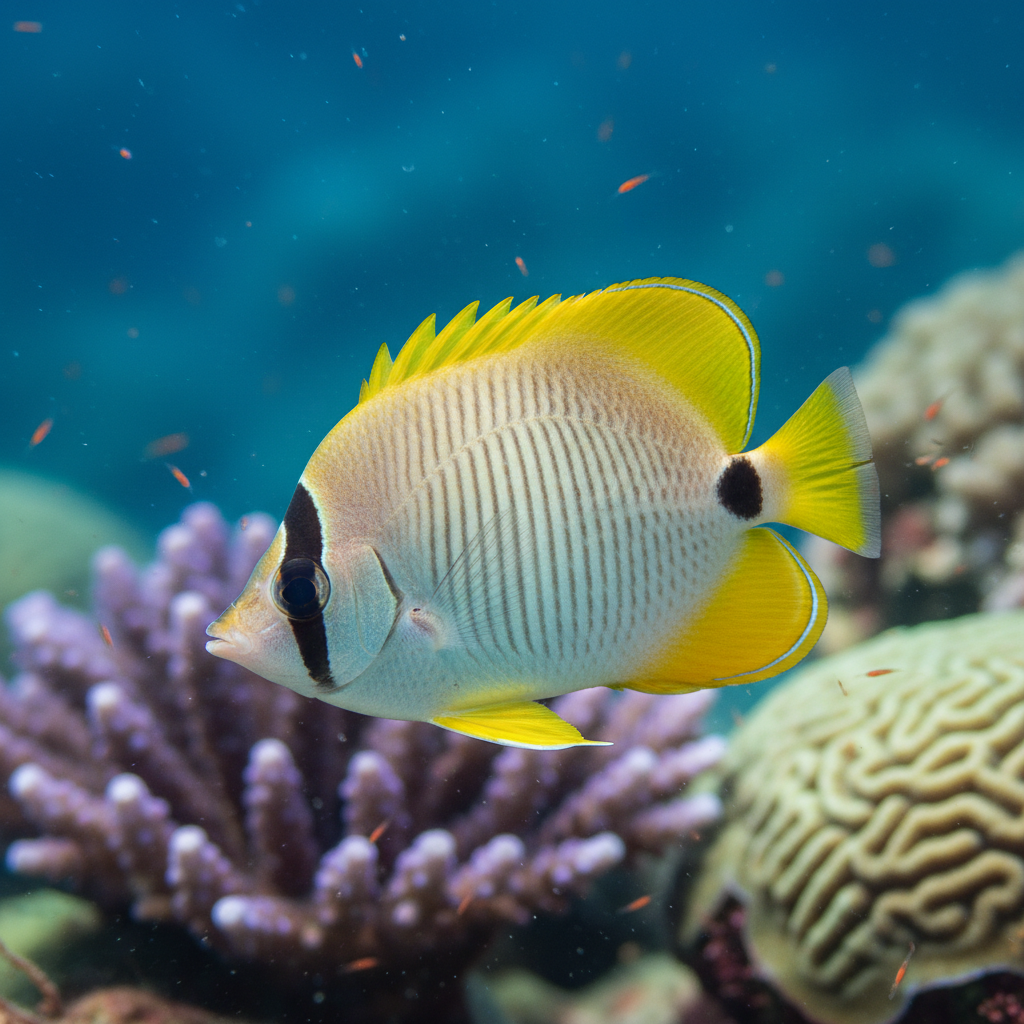
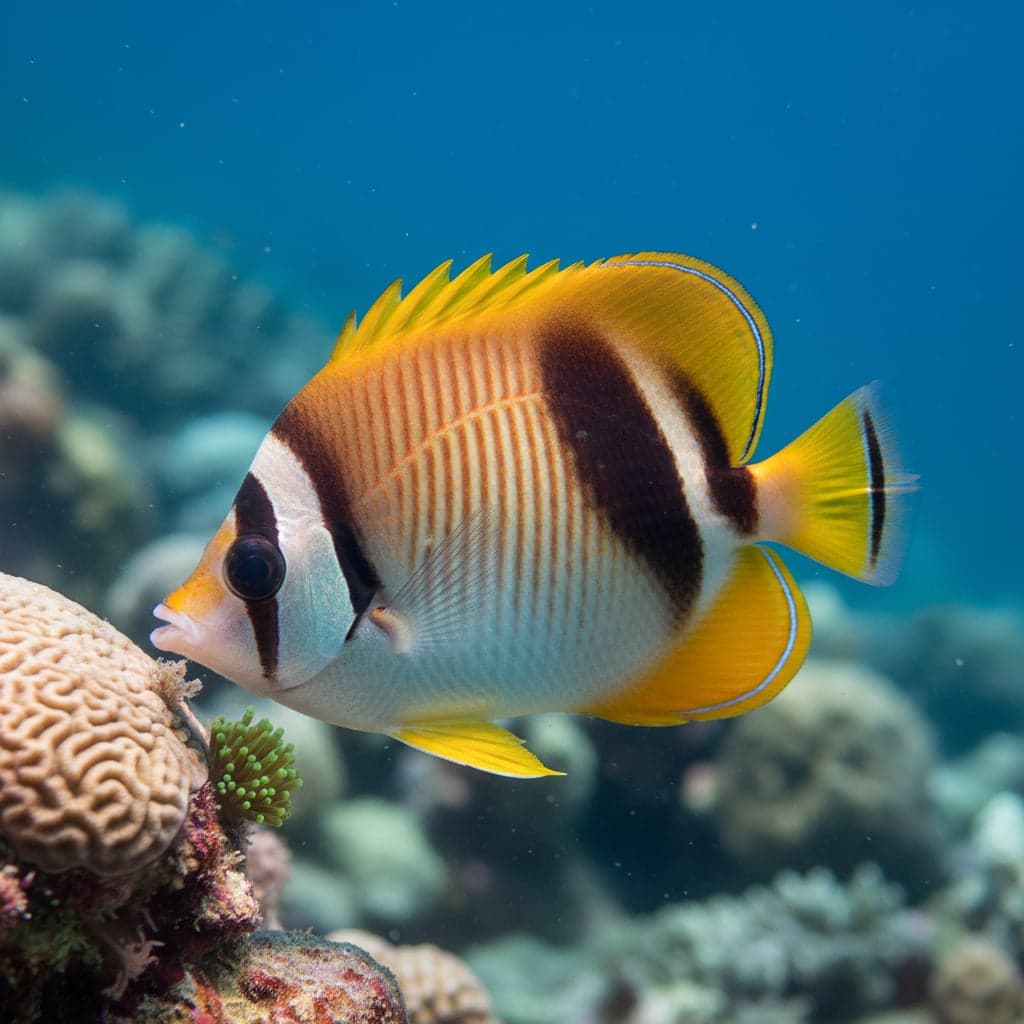
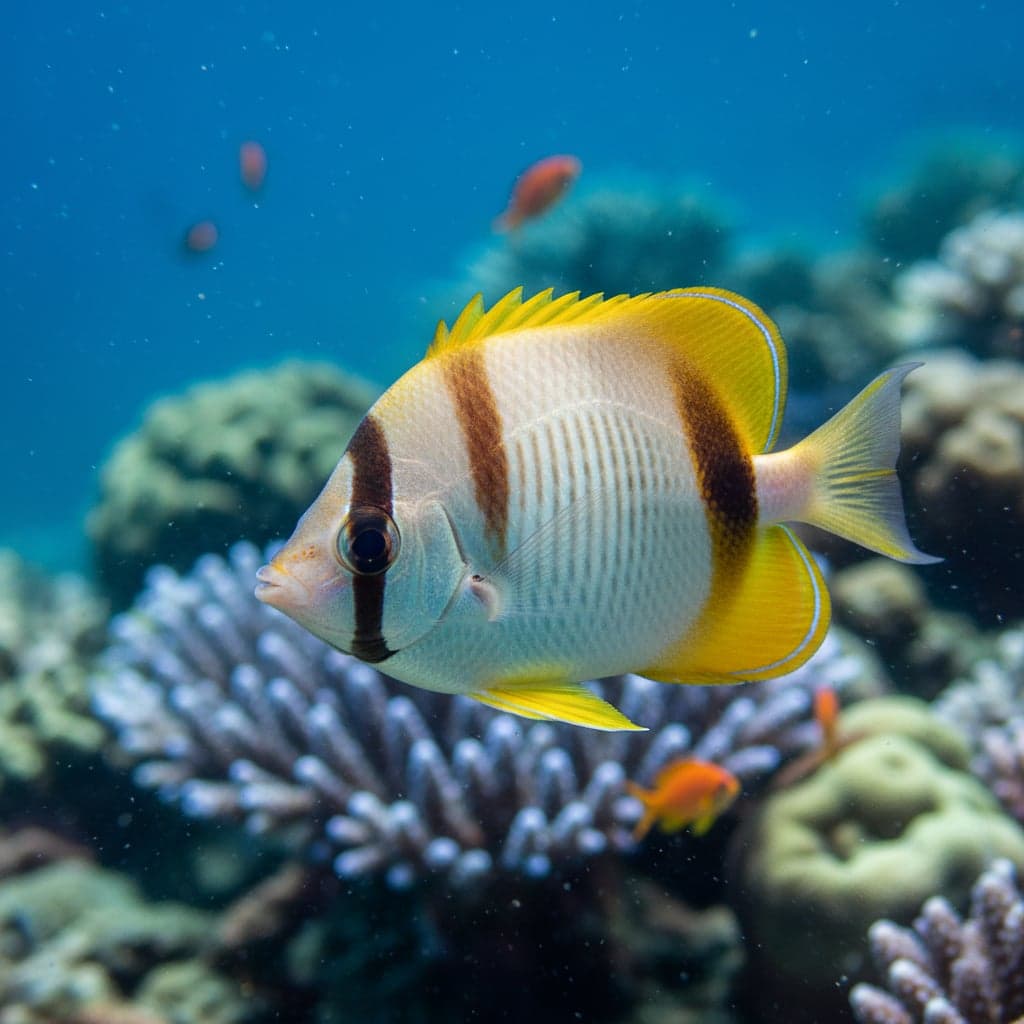
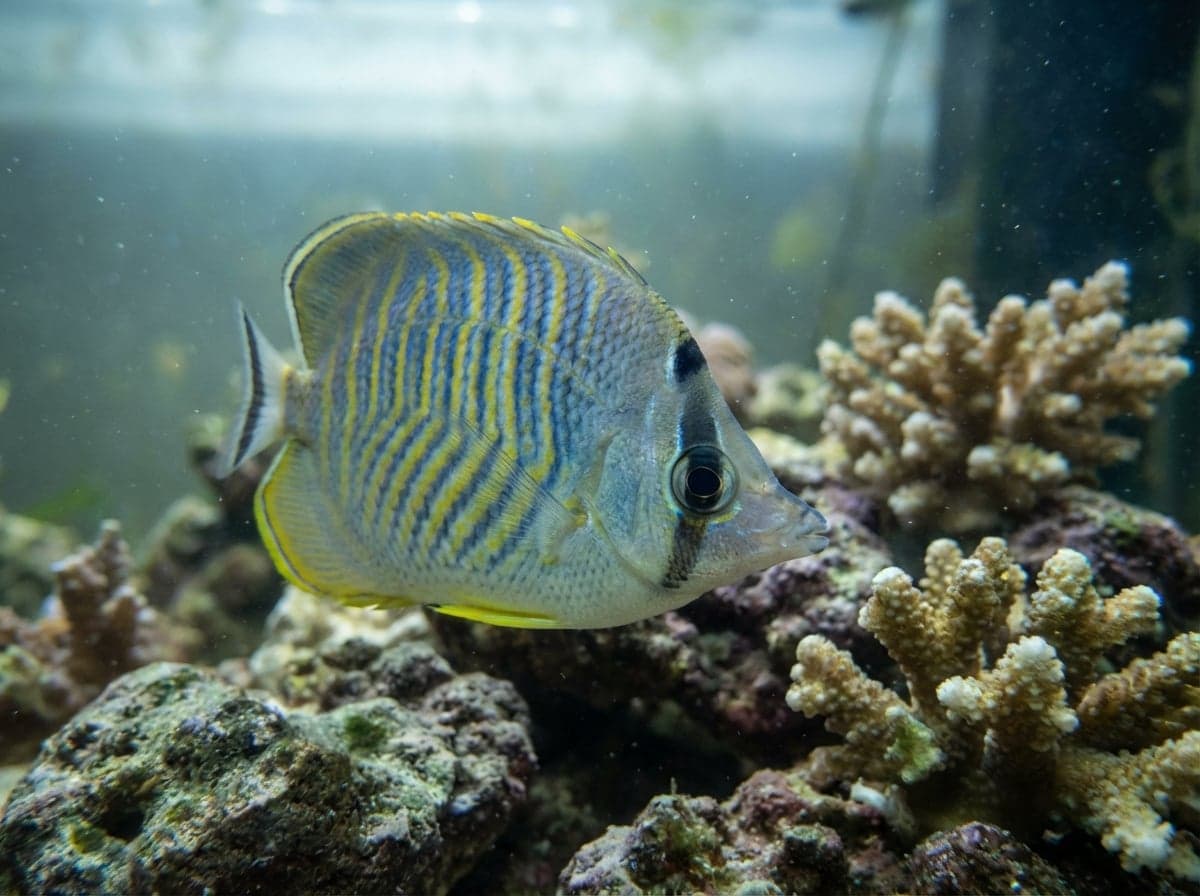
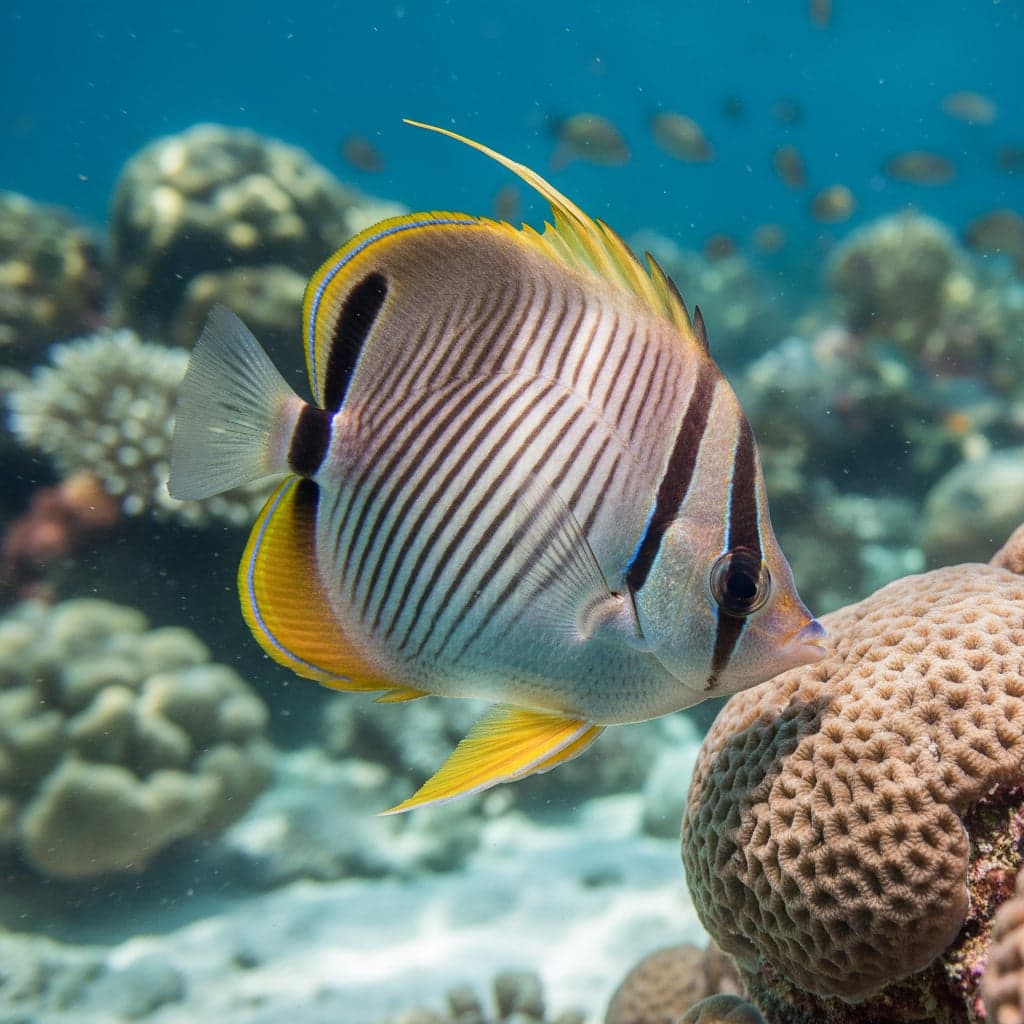
The Spot-tail Butterflyfish (Chaetodon ocellicaudus) is a laterally compressed Indo-Pacific chaetodontid: bright yellow over much of the body with fine chevron lines, a dark eye-band and saddle, and a distinctive dark spot near the caudal base that gives the fish its name. Adults reach about 14 cm (5.5 inches). It is elegant in the shop and demanding in the home — Expert difficulty tracks a coral-leaning diet and the usual butterfly quarantine and feeding risks, not a mean temperament.
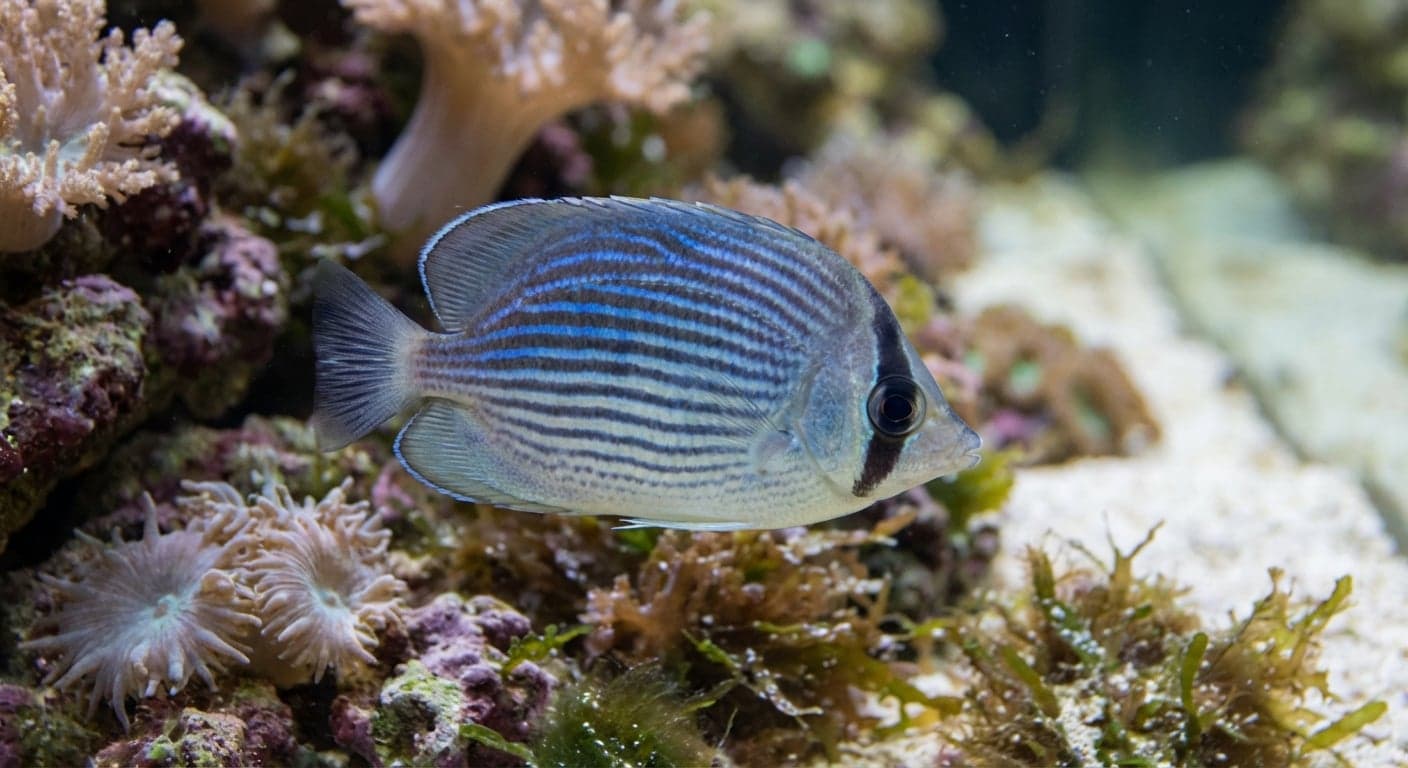
It is often confused with the similar spot-banded / dot-dash butterflyfish (Chaetodon pelewensis). Spot location and pattern details separate them; do not buy on common name alone. Frontmatter lists Omnivore because intake is not a single food type, but that label understates how much wild feeding leans on coral polyps — treat diet as the central husbandry problem, not a casual mixed flake.
Natural Habitat & Origin
Chaetodon ocellicaudus occurs in the western Pacific on coral-rich reefs, often in pairs, working live coral heads for polyps and picking small invertebrates. It stays close to the structure it feeds on; a barren rubble field is not its niche.
In the aquarium that biology becomes the constraint. A mature system with abundant live rock, calm tankmates and time to settle is the minimum. A brand-new sterile tank with no microfauna and competitive feeders is a poor place to establish a coral-dependent butterfly.
Care Requirements
Stable marine parameters: salinity about 1.024–1.026, pH 8.1–8.4, temperature 24–26°C (75–79°F). Around 280 litres (about 75 US gallons) or more suits an adult or a bonded pair, with rock arranged so the fish can patrol without being trapped in dead ends by more aggressive species. Longer swimming lanes help; butterflies are continuous movers.
Water quality must stay excellent. Butterflies show stress early when ammonia, nitrite or wild salinity swings appear. Keep nitrogen compounds in check — ammonia, nitrite and nitrate — and avoid sudden specific-gravity changes during water changes.
Quarantine is non-negotiable. Chaetodontids are classic carriers and victims of marine ich (Cryptocaryon irritans) and marine velvet (Amyloodinium ocellatum). Observe and prove feeding in QT before any display introduction; copper and many therapeutics destroy invertebrates — see medications and a quarantine protocol. Skipping QT because the fish “looks clean” is how reefs get Cryptocaryon.
Use the Aquarium Tracker to keep a history of salinity and temperature so small drifts are visible before the fish clamps and hides.
Diet & Feeding
The central challenge. Wild fish take substantial coral-polyp tissue plus small invertebrates. In captivity, establishing prepared foods is the make-or-break step: frozen mysis and enriched brine shrimp, finely chopped seafood, specialised butterflyfish preparations, and sponge- or coral-based mixes used for difficult feeders. Feed frequently — several small meals — and lean on a mature, microfauna-rich tank between offerings.
Confirm the individual is eating before purchase whenever possible. A spot-tail that already takes frozen food in the seller’s system is worth more than a prettier fish that only picks live rock. Refusal after introduction is an emergency for this family: reduce competition, offer foods at lights-on, and do not wait a week hoping rock fauna will carry an adult.
Marine diets and feeding schedules cover routine structure. Body thickness behind the head tells the truth long before the fish stops swimming.
Behavior & Temperament
Peaceful toward other fish. It rarely bullies clowns or gobies; the risk runs the other way — aggressive or fast tankmates keep it hidden and outcompeted at mealtime. Often kept as a pair; frontmatter “Pair” describes the natural social unit, not a licence to force two unpaired strangers together in a tight box.
It forages constantly over rock. Chronic shyness usually means aggression or insufficient cover, not a “shy species” personality that never settles. Avoid damsels that police the entire rock pile, large predators, and food-hogging triggers.
Tank Mates
Good companions are peaceful to moderately assertive fish that leave food on the table: peaceful wrasses, anthias, cardinalfish, and tangs only in systems large enough for both. Add the butterfly when the community already eats on a schedule so you can see whether it competes successfully.
Reef safety needs an honest sentence: it is not reef-safe. As a coral feeder it will nip stony and soft coral polyps. Best in fish-only or fish-with-live-rock systems, or accepted as a deliberate coral risk by keepers who prioritise the fish over SPS/LPS. Do not confuse it with more flexible species like the sunburst / Klein's butterflyfish (Chaetodon kleinii), which is reef-tolerant by comparison — still not harmless, but a different risk class.
Ornamental shrimp are generally lower on the worry list than live coral; the coral question is the one that defines this species.
Breeding
Pelagic spawner with planktonic larvae. Not a home-breeding project. Trade fish are wild-collected. Pair bonding and courtship in a large display can be rewarding; rearing fry is not on offer.
Common Health Issues
Starvation and parasite stress dominate losses. Many deaths are non-feeding fish on a coral-free diet, not mysterious “sensitivity.” Marine ich and velvet hit hard after shipping — quarantine carefully, keep water pristine, and choose a specimen you have seen feeding.
Given a mature tank, proven prepared-food acceptance, frequent varied meals and honest coral expectations (fish-only or accepted coral risk), C. ocellicaudus is an elegant Expert-level butterfly — beautiful, pair-oriented and peaceful toward fish, but never a casual reef addition.