Spotted Yellow-eyed Tang
The Spotted Yellow-eyed Tang (Ctenochaetus truncatus) is a hardy Indian Ocean bristletooth surgeonfish — a peaceful, reef-safe detritus and film-algae grazer.

Spotted Yellow-eyed Tang
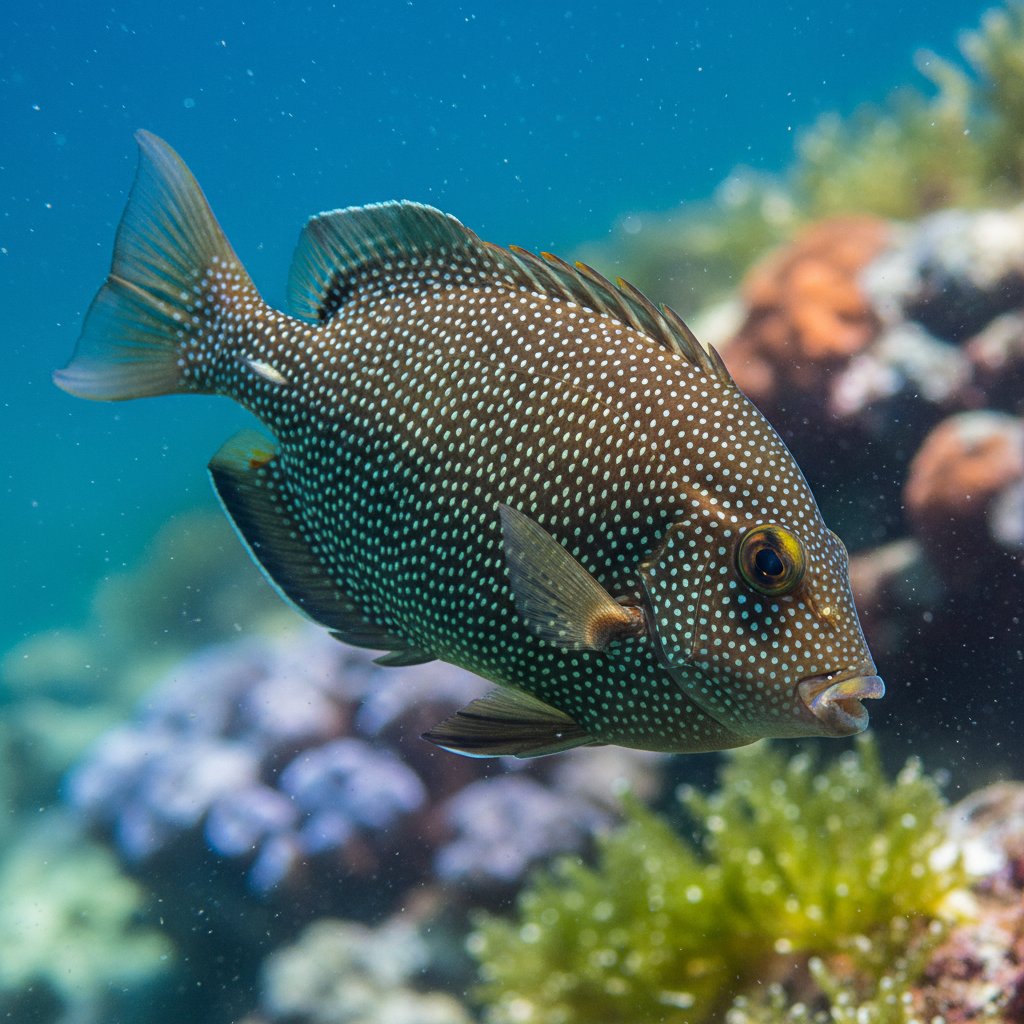
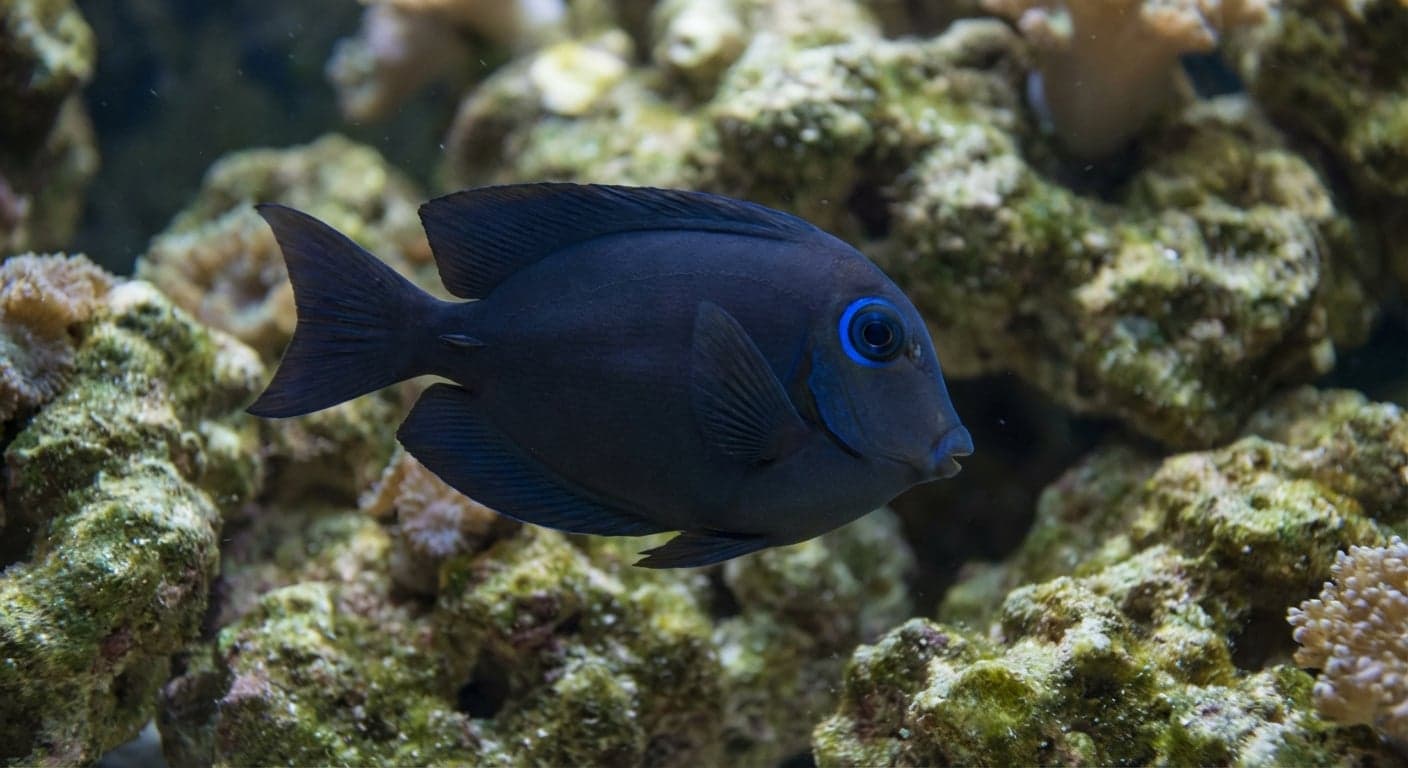
The Spotted Yellow-eyed Tang (Ctenochaetus truncatus), also called the Indian gold-spot or yellow-eye bristletooth, is a hard-working member of the surgeonfish family. A dark brown body covered in fine pale-blue and gold spotting, set off by a bright yellow ring around the eye, makes it more subtly attractive than the showy sailfin tangs — but its real value lies in its mouth. As a bristletooth, it has comb-like teeth adapted to scoop the film of detritus and microalgae coating reef surfaces, making it one of the best natural clean-up grazers in a reef tank.
Peaceful by tang standards and genuinely useful, it is a popular working fish for established reef aquariums — not a nano mascot, and not a substitute for quarantine.
Grazing surface and swimming room are the price of admission. Temperament toward other bristletooths is the second price. Frontmatter lists solitary because in a typical home reef that is the honest plan: one Ctenochaetus, mature rock, and greens on a schedule.
Natural Habitat & Origin
Ctenochaetus truncatus is found in the Indian Ocean, grazing constantly over coral and rocky reefs and scooping detritus and microalgae from surfaces. It ranges over the reef as it feeds rather than hovering in open blue water like a planktivore. That lifestyle translates directly to captive needs: film on rock, not just a nori clip in an otherwise sterile box.
In the aquarium recreate grazing acreage and open lanes: abundant live rock, good flow, high oxygenation and uninterrupted swimming space. A maze with no straight run still stresses a surgeonfish, even a comparatively peaceful one.
Care Requirements
Stable marine water with solid turnover: salinity about 1.024–1.026, pH 8.1–8.4, temperature 24–26°C (75–79°F). Adults reach about 16 cm (6 inches). Plan on around 280 litres (about 75 US gallons) or more for swimming and grazing. Prefer length over height. It settles well into a mature reef that already produces film algae and detritus — dropping a hungry bristletooth into a brand-new, bone-clean tank is a feeding problem waiting to happen.
Quarantine is mandatory for this family. Surgeonfish are among the most reliable importers of marine ich (Cryptocaryon irritans) and marine velvet (Amyloodinium ocellatum). A proper QT period with observation or prophylactic treatment before the display saves reefs from copper emergencies later — medications belong in hospital tanks, not on sessile inverts. Hypersalinity, hyposalinity and copper each have a place in QT design; none belong as panic doses on a mixed reef after spots appear. Prove that the fish is eating film and nori in QT before it becomes the “working tang” on a display you cannot treat.
Use the Aquarium Tracker to log salinity, temperature and change schedule; chronic nitrate and oxygen neglect show up as dull colour and HLLE risk long before grazing stops.
Diet & Feeding
Bristletooth first. Wild fish scoop film and detritus rather than rasping long filamentous algae the way some Acanthurus and Zebrasoma do. Support that with a plant-based diet: dried marine algae (nori) on a clip, herbivore and spirulina preparations, and algae-based frozen foods. Occasional meaty items can supplement; greens and film remain the core.
Mature live rock is not optional decoration — it is where this mouth earns its keep. Leave some surfaces lightly filmed. A sterile scrape-every-Sunday reef forces the fish onto prepared foods alone and raises weight-loss and lateral line risk. If the rock is bare and the nori is ignored, solve feeding in QT or hospital before display life gets harder. Body shape tells the truth: a pinched dorsal profile is an emergency diet problem, not a “sleek bristletooth look.”
Behavior & Temperament
Relatively peaceful by surgeonfish standards, though still territorial toward others of its kind — especially other Ctenochaetus. Keep it as the only bristletooth in most tanks. Toward unrelated species it is generally well behaved, spending the day methodically working rock faces. The caudal spine is still a real defensive weapon; net and handle with awareness.
Hunger and crowding turn mild pacing into chasing. Do not read “peaceful tang” as license to stack herbivores on every rock face. Space and food keep this species the useful worker the hobby expects.
Tank Mates
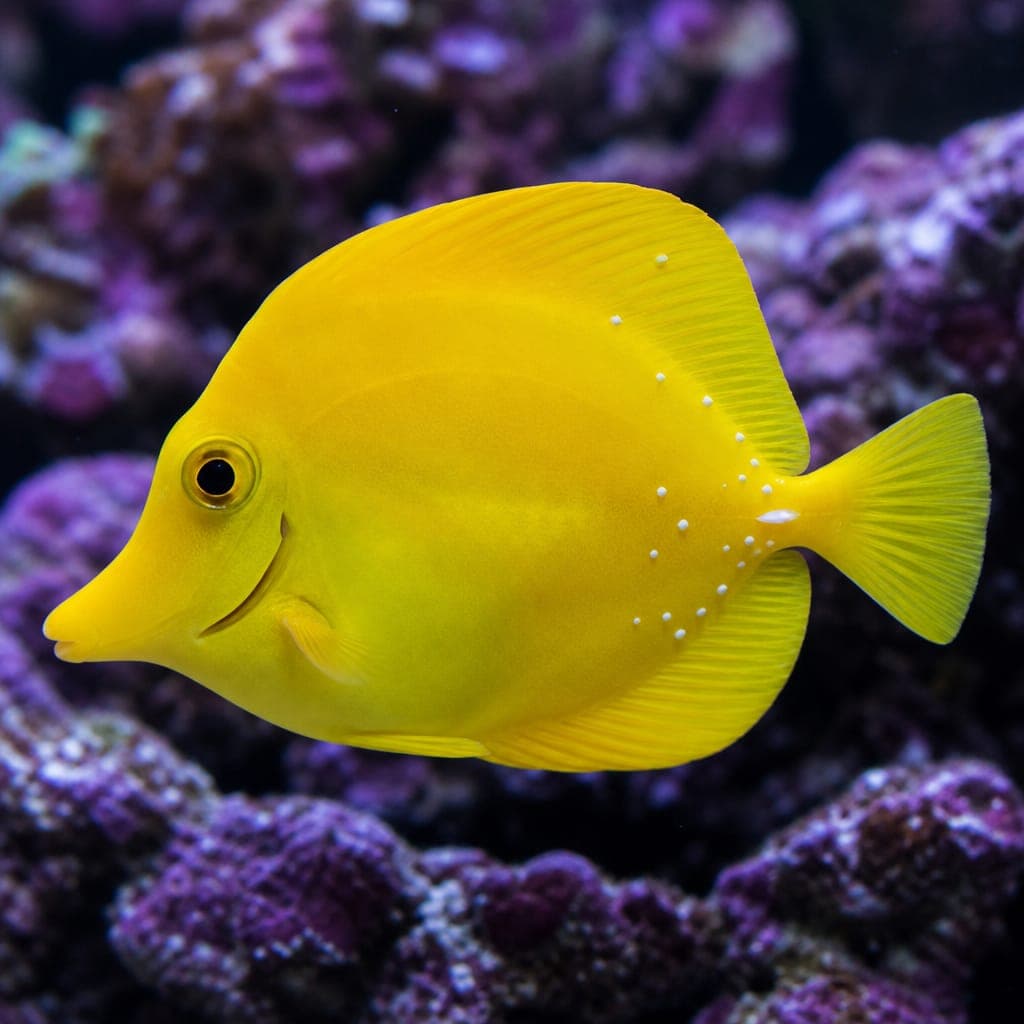
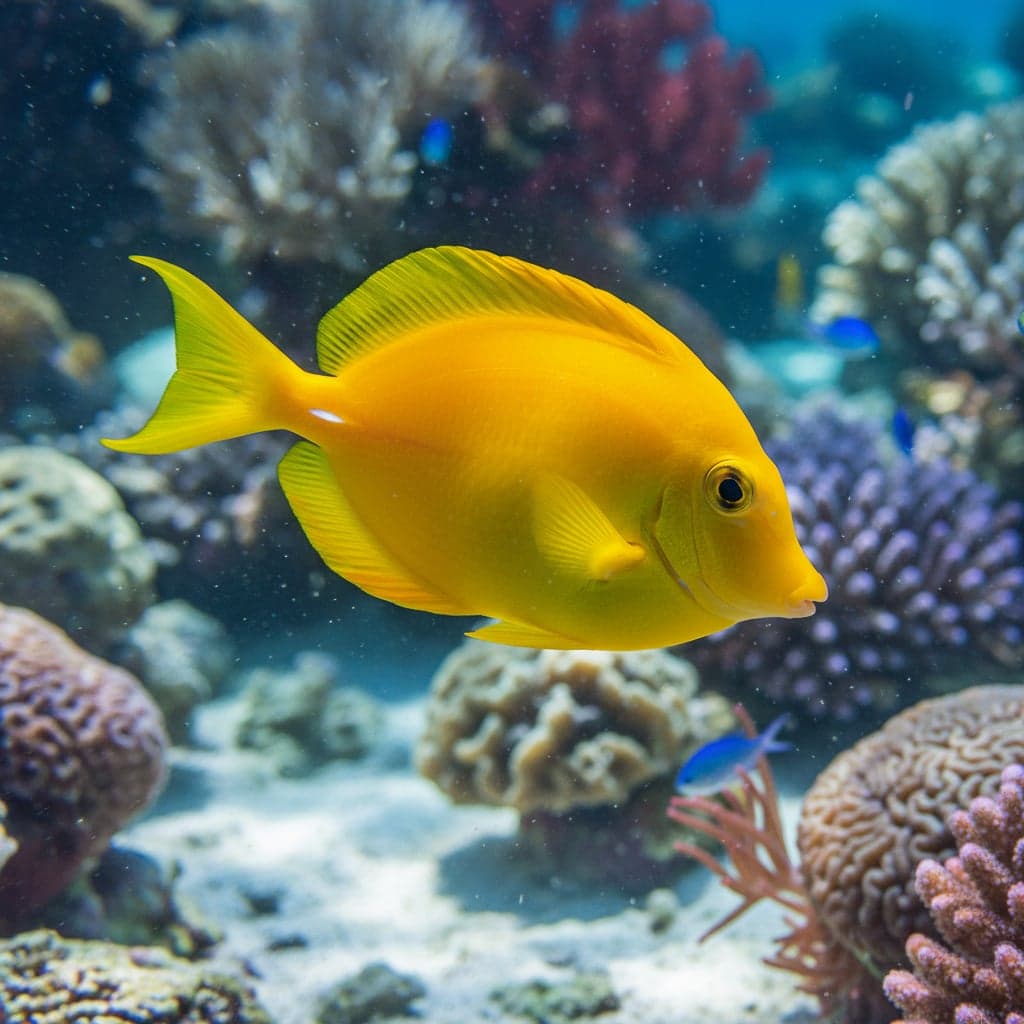
House with a wide range of peaceful to semi-aggressive reef fish — wrasses, angelfish, anthias, clownfish and, given honest volume, dissimilar tangs such as a yellow tang or kole. Avoid pairing it with another bristletooth in a small system. It is reef-safe: it grazes surfaces rather than polyps or sessile inverts, which makes it an excellent clean-up addition when the tank is mature and the quarantine was real.
Avoid housing it with a large, genuinely aggressive acanthurid such as a sohal tang unless the system is enormous and grazing territory is clearly split — the yellow-eye will lose that contest.
Breeding
Ctenochaetus truncatus is a pelagic spawner with planktonic larvae and is not bred in the home aquarium. Trade specimens are wild-collected. Captive-breeding breakthroughs in surgeonfish remain specialist territory for this species.
Common Health Issues
Like other surgeonfish, highly prone to marine ich and marine velvet when stressed by capture, shipping or poor oxygen. Head and lateral line erosion (HLLE) tracks vitamin-poor diets, stray voltage and chronic dirty water. Quarantine every fish. Keep flow high, film and greens available, and nitrates in check.
A spotted yellow-eyed tang that refuses to graze is not “still settling” — it is a fish at risk. Prove feeding in QT, give it mature rock and the swimming room a 16 cm acanthurid needs, and this Indian Ocean bristletooth is a hardy, peaceful and genuinely useful reef worker for intermediate keepers. Skip quarantine or starve the rock, and it becomes another thin, spot-covered tang story.