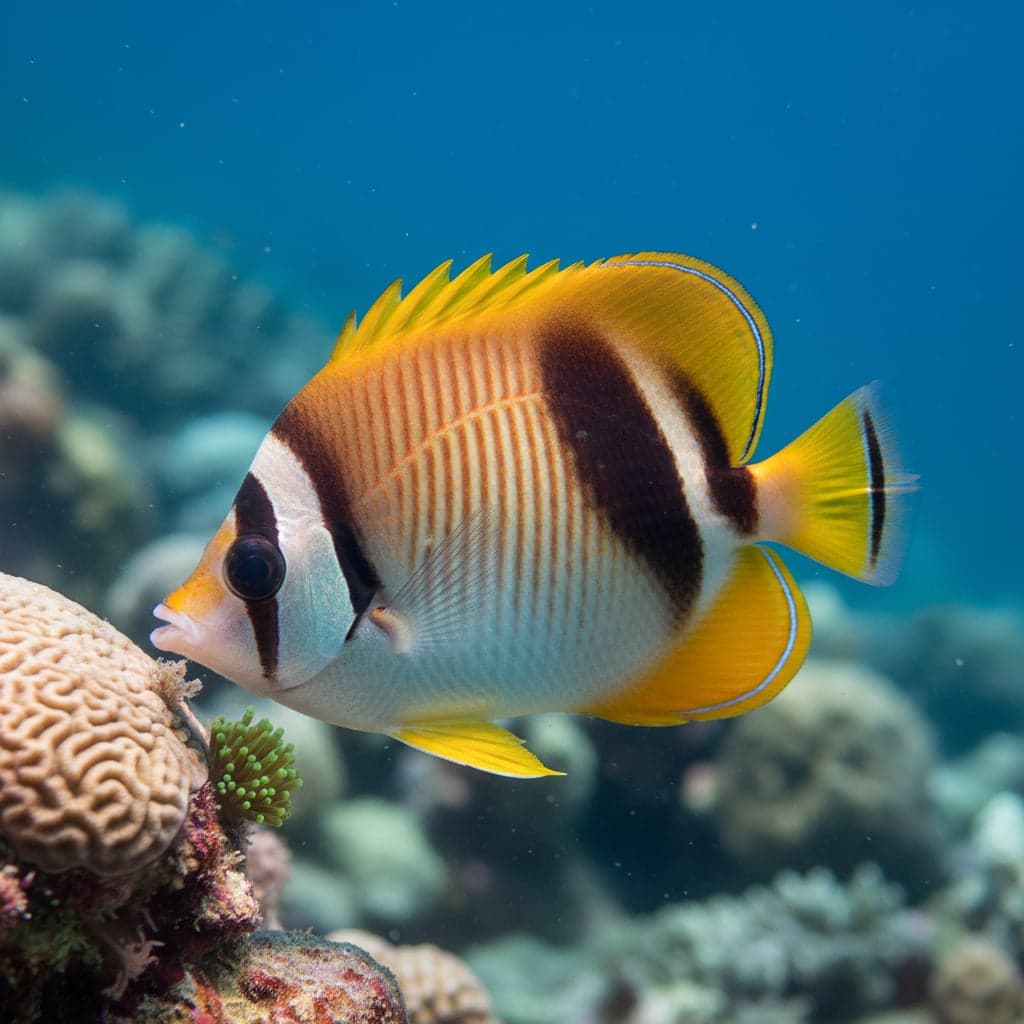
Threebanded Butterflyfish
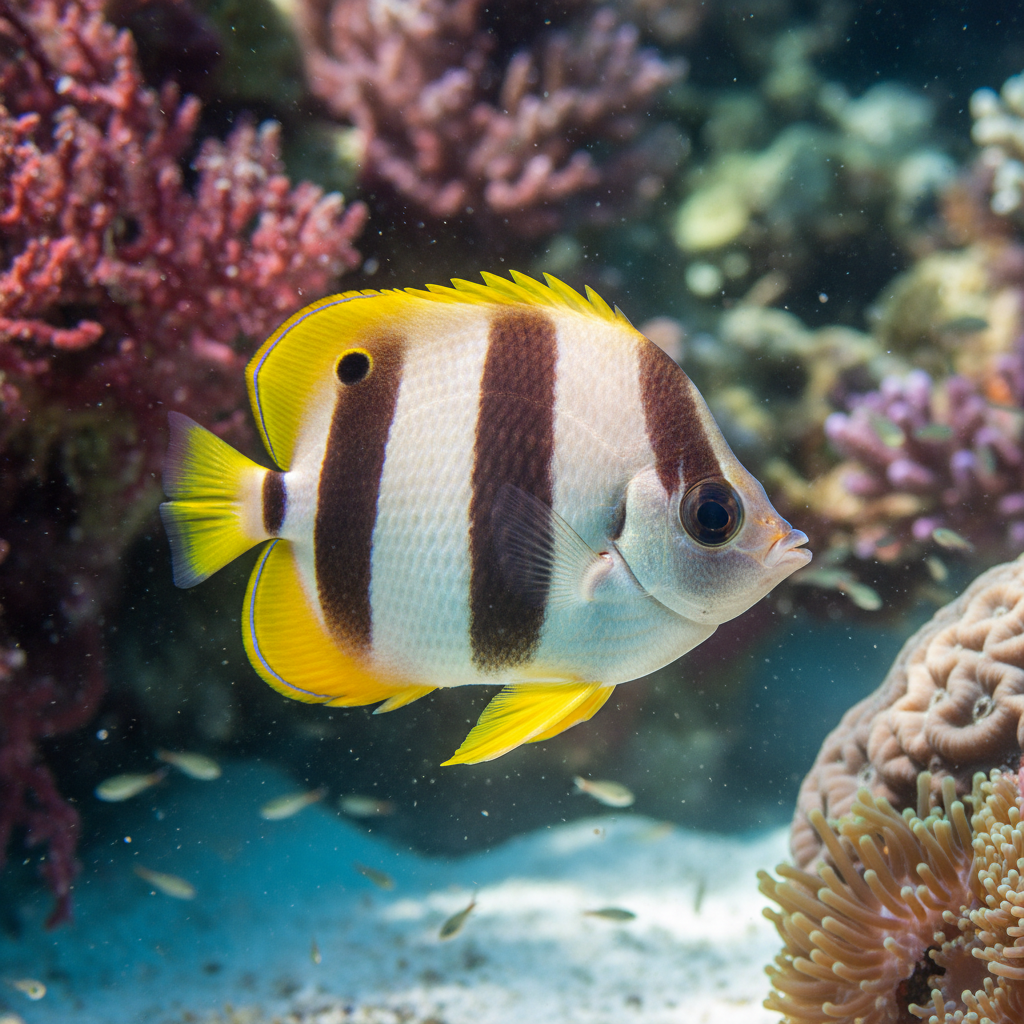
The Threebanded Butterflyfish (Chaetodon humeralis) is a hardy Eastern Pacific butterflyfish — an adaptable, invertebrate-feeding species, best kept with reef caution.
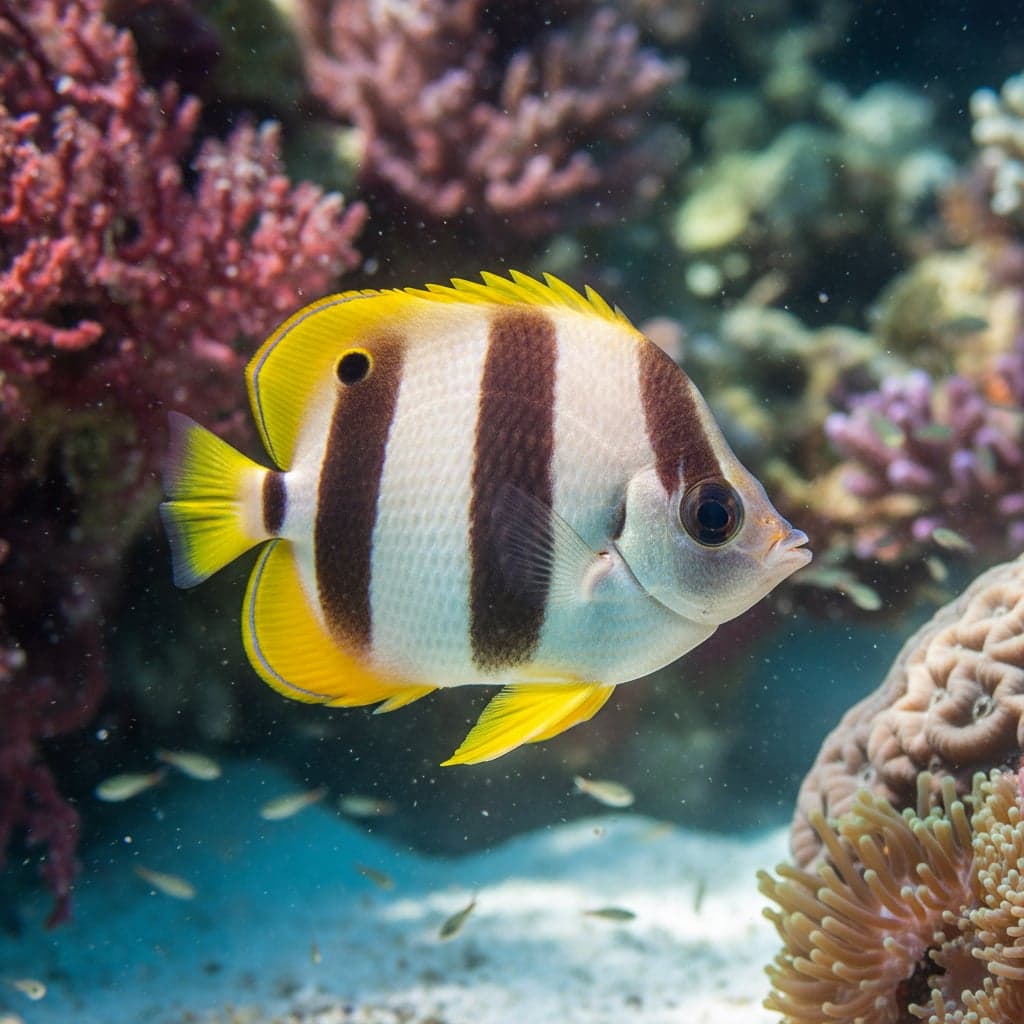
Threebanded Butterflyfish
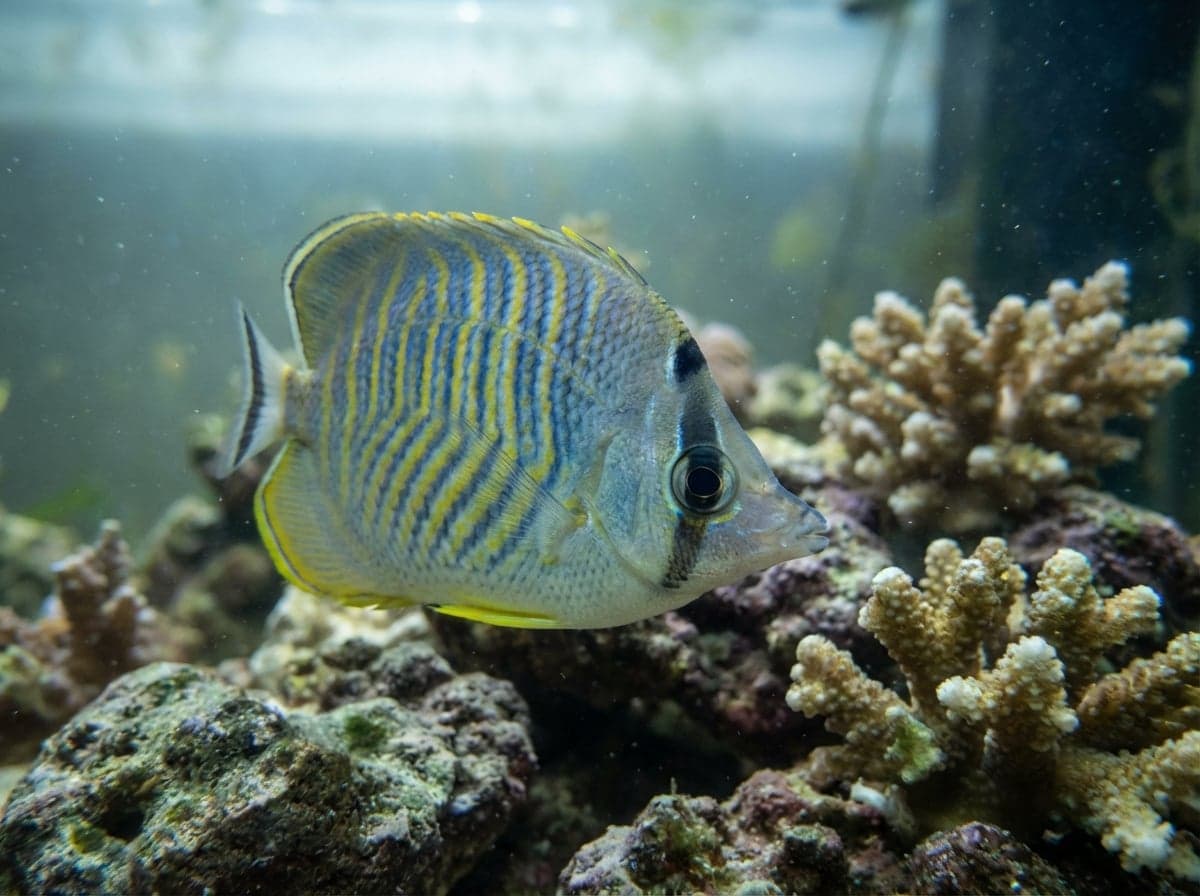
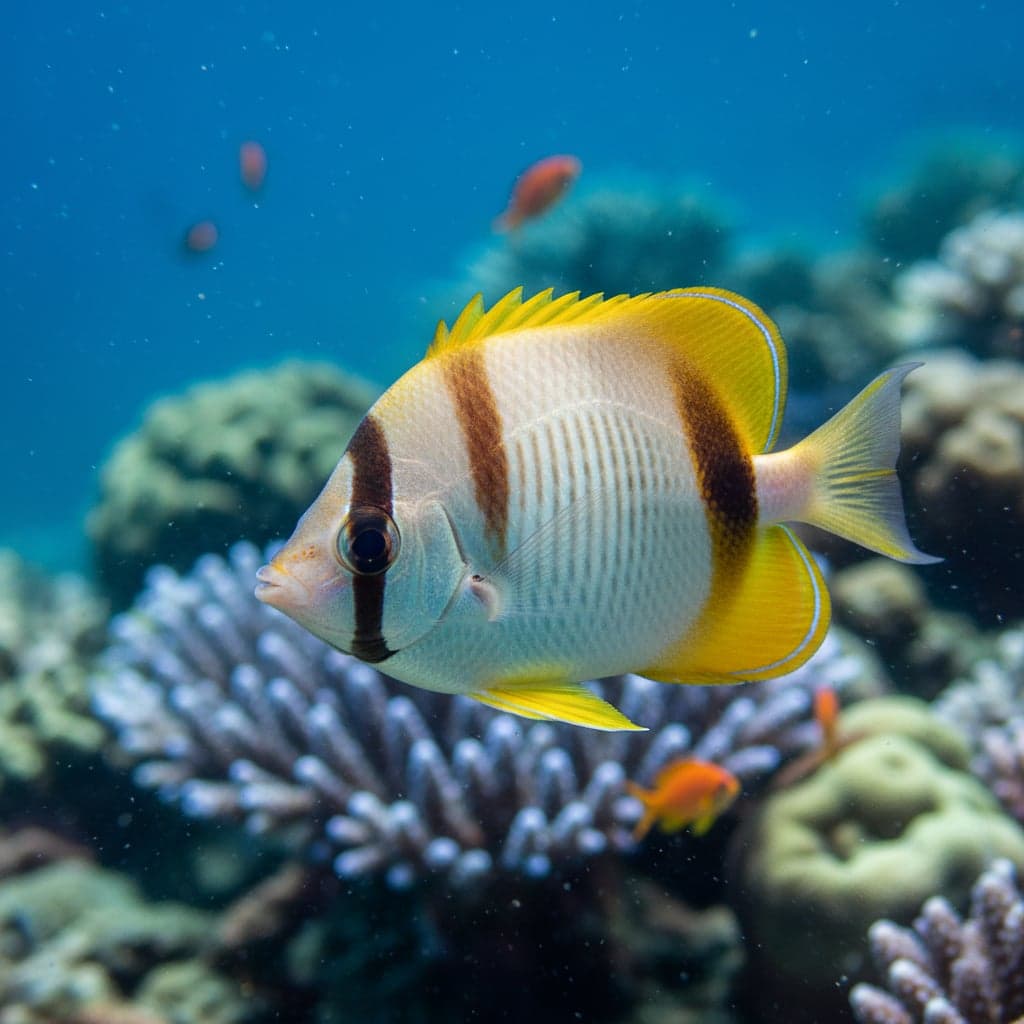
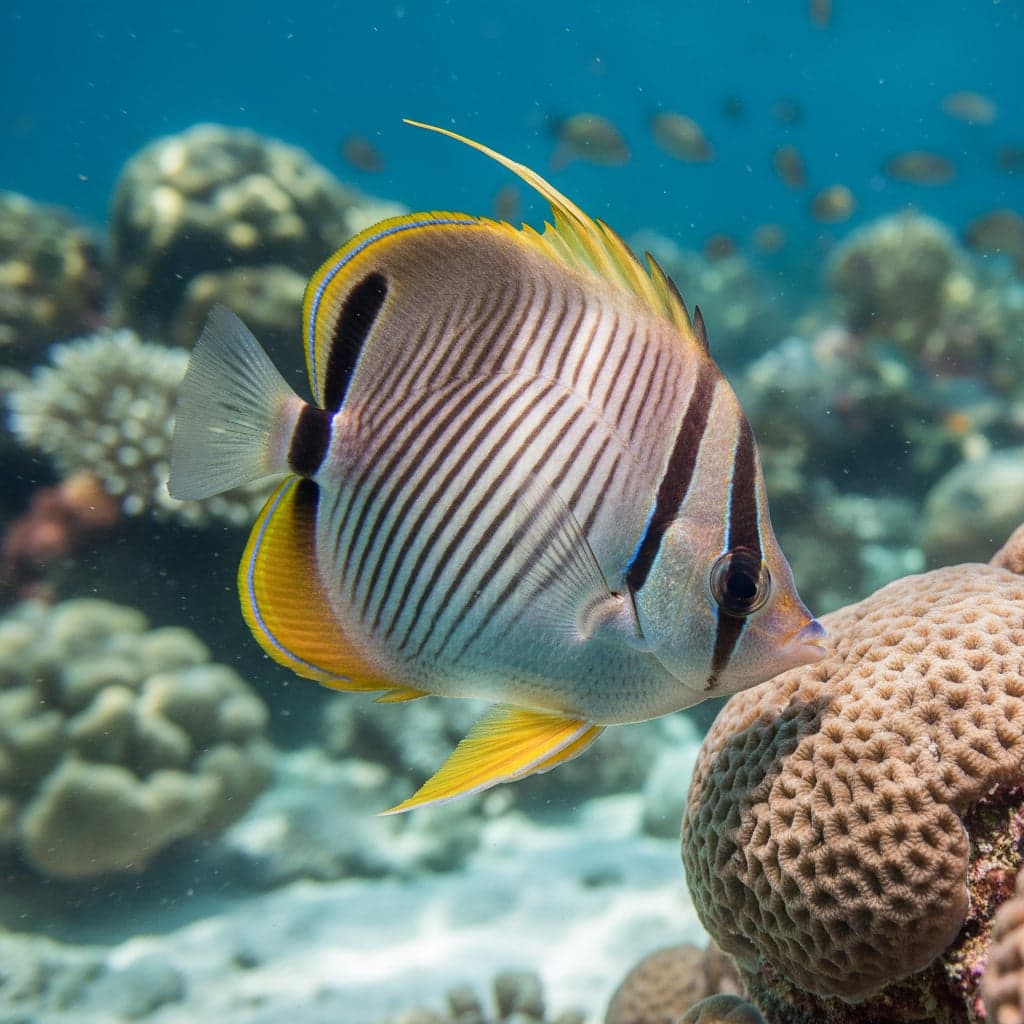
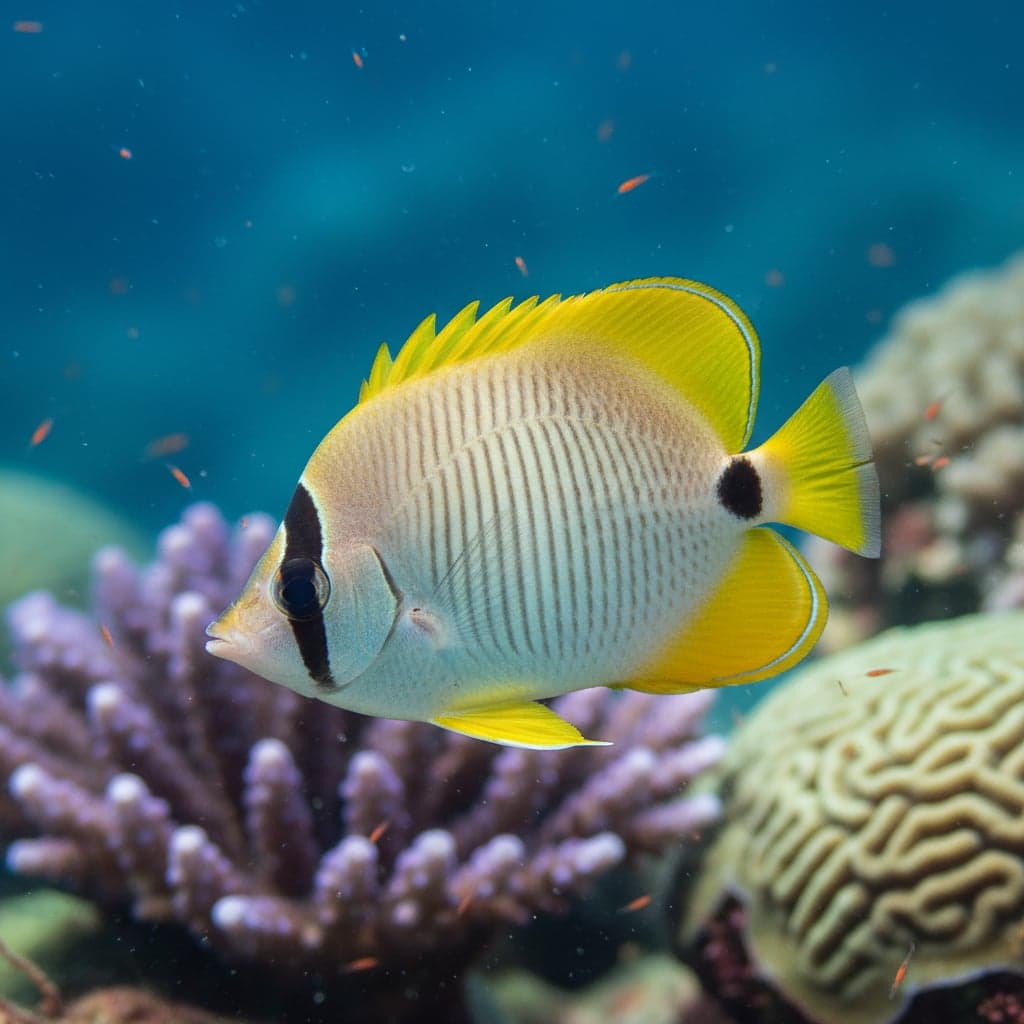
The Threebanded Butterflyfish (Chaetodon humeralis) is the Eastern Pacific’s practical answer to the familiar Atlantic banded butterflies — a clean silvery-white disc crossed by dark vertical bands, including the eye-stripe and a broad bar across the rear body. Adults reach about 17 cm (6.5 inches). It is not a neon showpiece; it is a foraging machine with the look of a classic chaetodontid and, unusually for the family, a diet that does not lock it to living coral polyps.
That dietary flexibility is why intermediate keepers can succeed with it when obligate coral-feeders starve in the same tank. It still nips sessile inverts opportunistically, so “hardy butterfly” does not mean “blindly reef-safe.” Cooler Eastern Pacific origins also matter: run it toward 22–25°C (72–77°F), not a tropical reef held at the warm end of the scale.
Natural Habitat & Origin
Chaetodon humeralis ranges the Eastern Pacific from the Gulf of California south along Central and South American coasts. It works rocky reefs, boulder fields and sandy margins, often in pairs or small groups, picking small invertebrates, worms and incidental algae rather than cropping Acropora tips all day. Cooler, productive upwelling waters shape both metabolism and preferred aquarium temperature.
In the aquarium recreate that foraging landscape: mature live rock with film and cryptic fauna, open patrol lanes, and a calm community that does not chase it off every meal. A sterile, newly set rock pile with aggressive mid-water fish is a poor debut for any butterflyfish.
Care Requirements
Stable marine water with a cooler bias: salinity about 1.024–1.026, pH 8.1–8.4, temperature 22–25°C (72–77°F). Plan on about 280 litres (around 75 US gallons) or more for an adult or bonded pair — length helps more than height. Disc-shaped continuous swimmers need unbroken lanes along the front glass, not a maze of dead ends.
Water quality must stay excellent. Butterflies advertise ammonia spikes, salinity swings and dirty water early with clamped fins, hiding and refused food. Keep nitrogen compounds under control — ammonia, nitrite and nitrate — and make water changes gradual so specific gravity does not jump. Prefer a mature system; this is not a fish for cycling a bare tank.
Flow should be moderate to strong but broken. A single laminar blast that pins the fish to rock is wasted current. Lighting can be reef-bright if shaded retreats exist. Quarantine is non-negotiable: chaetodontids arrive stressed and are reliable carriers of marine ich (Cryptocaryon irritans) and marine velvet (Amyloodinium ocellatum). Treat in a hospital tank — medications belong there, not dumped onto a mixed reef after white spots appear.
Use the Aquarium Tracker to log salinity and temperature. A slow warm drift above this species’ comfort band shows up as pacing and dull colour before appetite collapses.
Diet & Feeding
Omnivore with a small-invertebrate bias, not an obligate coralvore. Wild intake is worms, crustaceans, other benthic invertebrates and some algae. In captivity the staple is variety: frozen mysis and enriched brine shrimp, mixed marine frozen blends, quality pellets or flakes, and foods with marine algae content. Chopped seafood and sponge-leaning angel preparations add useful texture for some individuals.
Feed several small meals a day. Butterflies have high metabolisms and lose condition fast when faster fish monopolise a single evening dump of food. Confirm the specimen is already taking frozen or prepared food before purchase whenever possible — a C. humeralis that ignores rock and prepared offerings in QT is not “settling”; it is a feeding failure to solve before display. Marine diets and feeding schedules cover routine structure.
Body condition tells the truth: a pinched dorsal profile or hollow belly means increase meal frequency and reduce competition, not wait for “adjustment.”
Behavior & Temperament
Peaceful toward fish that do not compete for the same foraging path. It spends most of the day working rock faces and open water in short patrols. Frontmatter lists pair behaviour because wild fish often travel as couples; in the aquarium that means a single specimen or a known male–female pair in adequate volume — not a random group of three in 280 litres.
Avoid housing it with aggressive or highly territorial fish that will keep it hidden at meal times. Hunger and harassment, not innate meanness, are what turn a calm butterfly into a stressed, disease-prone fish. It rarely starts fights with unrelated tankmates when space and food are honest.
Tank Mates
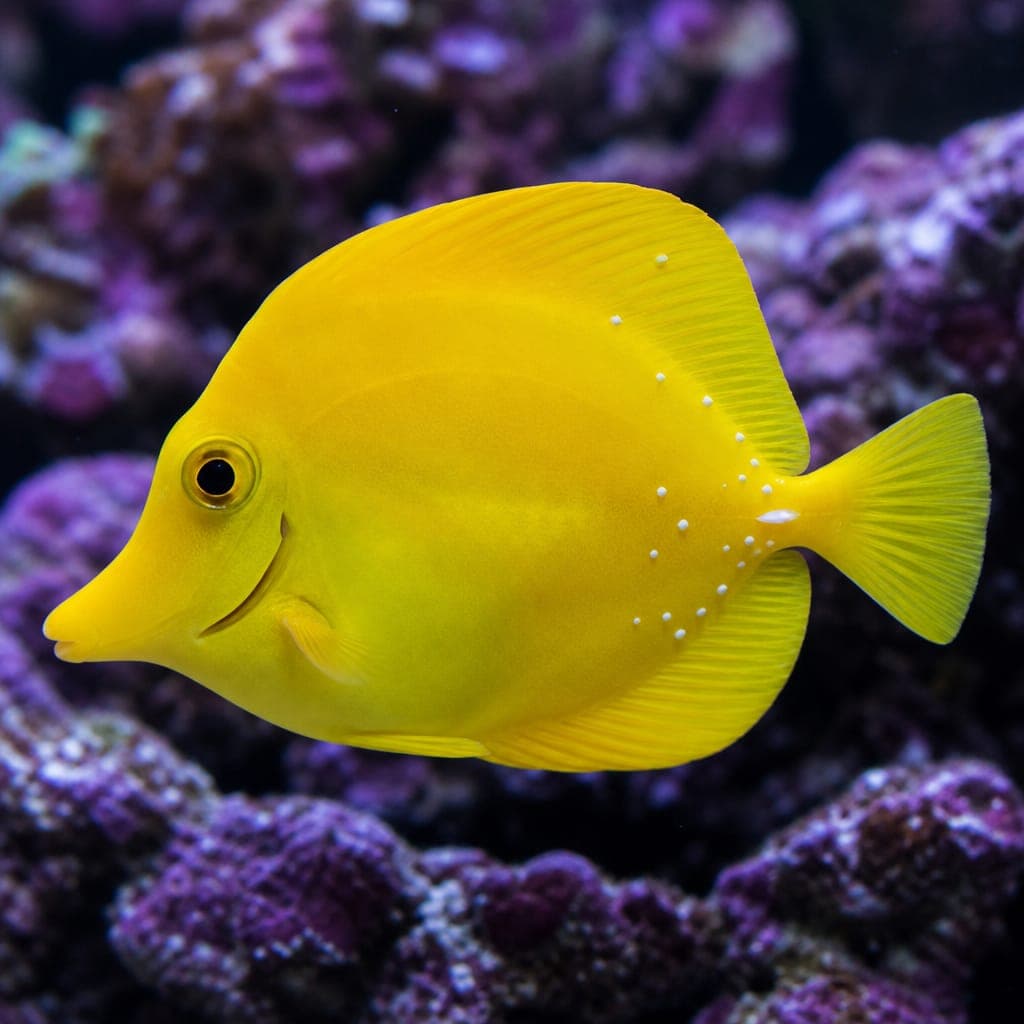
House with peaceful to moderately assertive marine fish that tolerate cooler water: tangs that share the temperature band, peaceful wrasses, anthias, cardinalfish, larger gobies and similar. Skip species that need tropical heat at the upper end of reef ranges if you are holding this tank cool for the butterfly.
Reef status is caution, not clearance. It does not depend on living coral the way some chaetodontids do, but it may nip polyps, soft corals, zoanthids and ornamental invertebrates while foraging. Safest homes are fish-focused systems or reefs stocked with hardy, less-tempting corals and watched closely. Do not treat “adaptable butterfly” charts as a licence to add it over a delicate SPS garden.
Breeding
Chaetodon humeralis is a pelagic spawner with a long planktonic larval stage and is not bred in the home aquarium. Trade specimens are wild-collected. Captive breeding of butterflyfish remains specialist work, not shop-floor normal for this Eastern Pacific species.
Common Health Issues
Hardier than many butterflies, still vulnerable to ich and velvet after collection, shipping and temperature mismatch. Quarantine every arrival. Prove feeding in QT. Keep greens and invertebrate foods in rotation, nitrates in check and temperature honestly cool.
A threebanded that hides all day or refuses prepared food is not a “shy phase” to ignore — it is a husbandry problem. Give it foraging rock, cooler stable water, peaceful neighbours and frequent meals, and C. humeralis is one of the more dependable chaetodontids for an intermediate keeper who wants the look without obligate coral-feeding drama. Warm it like a Red Sea reef and crowd it with bullies, and it becomes another thin, spot-covered butterfly story.