Twobanded Soapfish
The Twobanded Soapfish (Diploprion bifasciatum) is a hardy yellow predatory reef fish — coral-safe, but it eats small fish and can release a toxin when stressed.
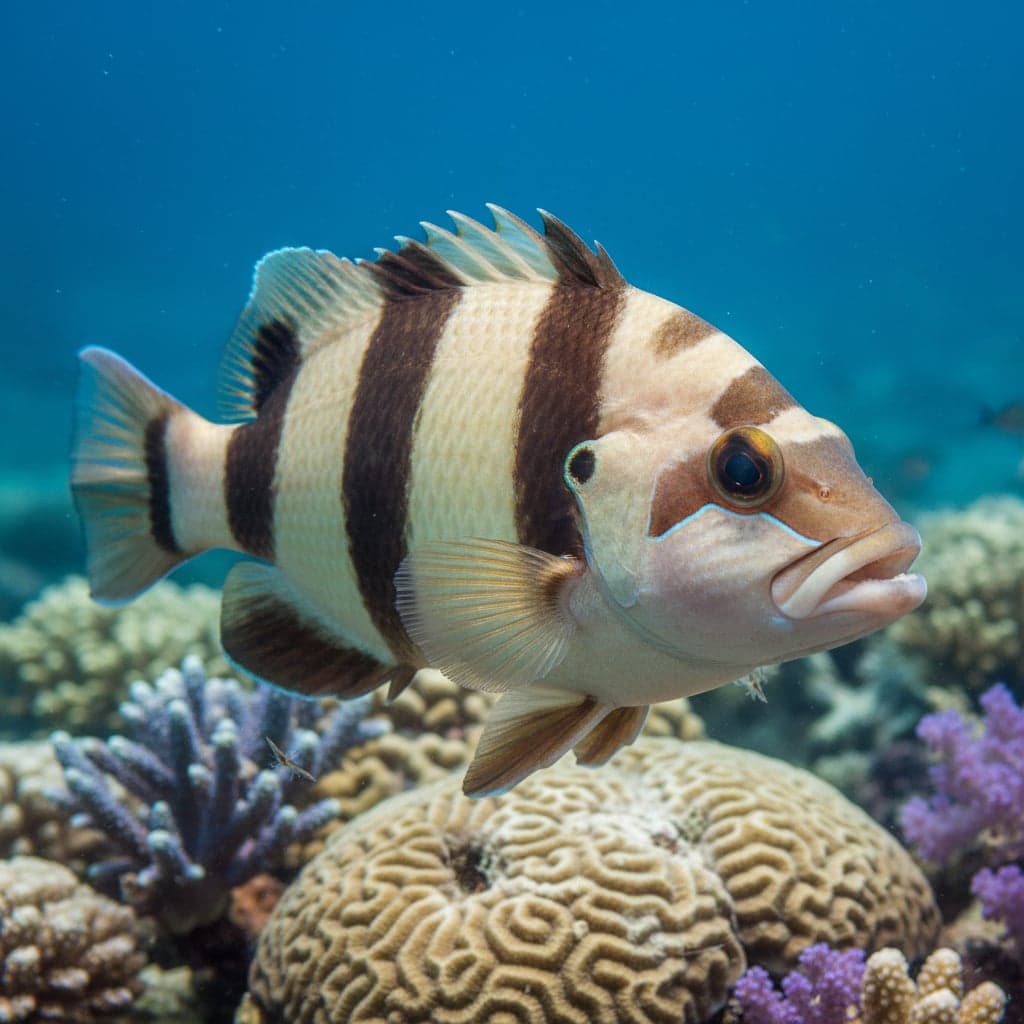
Twobanded Soapfish
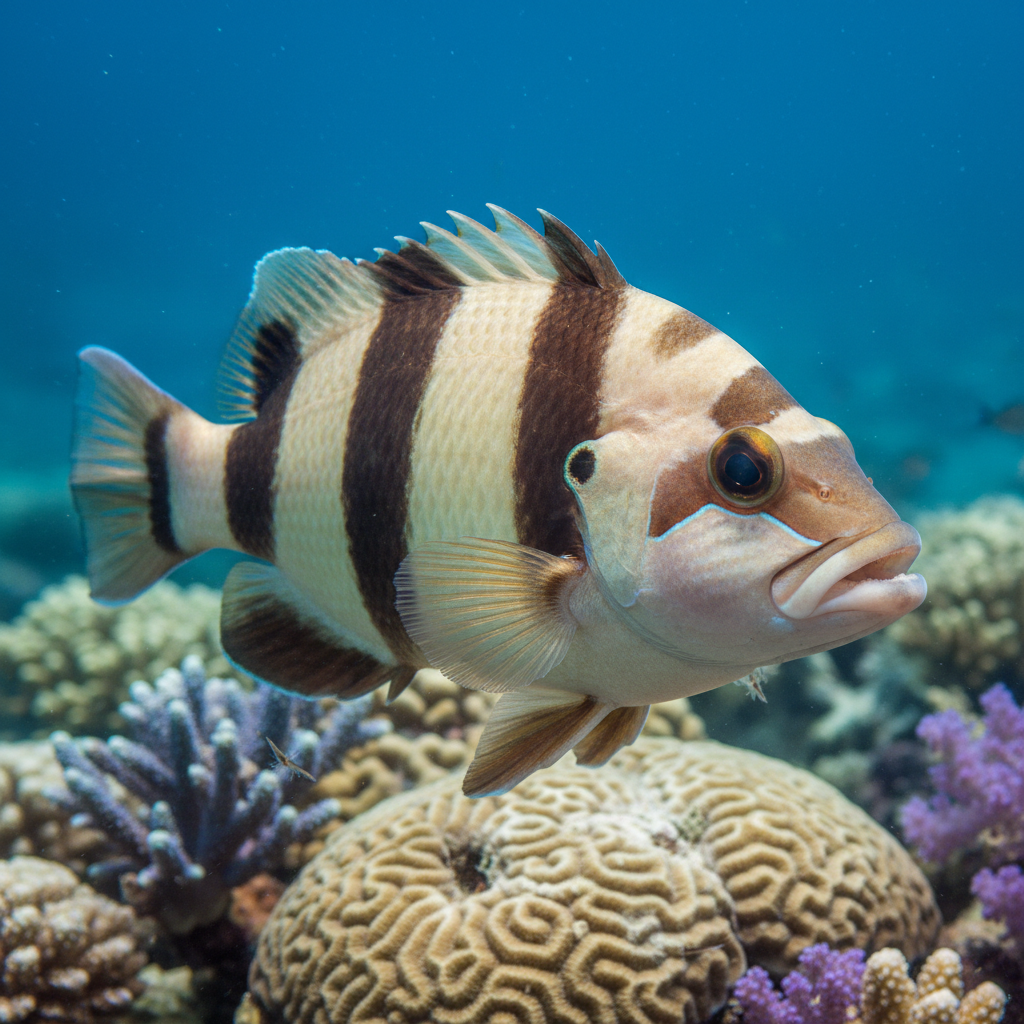
The Twobanded Soapfish (Diploprion bifasciatum), also called the barred or yellow soapfish, is a bright-yellow Indo-Pacific predator crossed by two dark bands. Slow, deliberate and oddly charismatic, it suits fish-focused marine systems — with two non-negotiable caveats. It will eat small fish and shrimp that fit in its mouth, and like other soapfishes (Grammistidae) it can release a soap-like skin toxin (grammistin) when severely stressed, which can foul water and harm tankmates.
Toughness and unusual looks sell the fish. Awareness of predation and toxin risk is what keeps it from becoming a community disaster.
Frontmatter behaviour is Solitary: one soapfish per typical tank. It is not a shoaling species in captivity, and “semi-aggressive” here means predatory opportunity more than constant chasing of fish too large to swallow.
Natural Habitat & Origin
Diploprion bifasciatum ranges widely across the tropical Indo-Pacific, sheltering around coral heads, rock ledges and caves by day and hunting small fishes and crustaceans, often more actively toward dusk. Toxic skin mucus deters predators and lets the fish move with apparent unconcern — useful on the reef, a hazard in a closed glass box if the fish is mauled in a bag, dropped, or chased to exhaustion during acclimation.
In the aquarium provide caves and overhangs for daytime shelter plus open water to patrol at feeding time. A bare open tank with nowhere to hide elevates stress exactly when you least want a grammistin release. Stable, low-drama husbandry beats “tough fish, so anything goes.”
Care Requirements
Salinity about 1.024–1.026, pH 8.1–8.4, temperature 24–26°C (75–79°F), ammonia and nitrite at zero. Adults reach about 25 cm (10 inches). Frontmatter minimum is around 280 litres (about 75 US gallons) — enough for one adult and appropriately large tankmates, not a community of nano gobies. Longer footprints give a patrol lane; a short tall tank forces the fish to share every cave with whatever else you stocked.
Acclimate gently and avoid rough netting or prolonged air exposure. Never leave a thrashing soapfish in a tiny bag of fouled shipping water longer than you must — that is a classic setup for mucus release before the fish even hits QT. If a soapfish releases toxin in a small transport container or display, treat it as an emergency water-quality event: large water change, carbon or other organic removal as appropriate, and remove the stressed fish to a recovery container if needed. Prevention — calm QT, dim introduction, no bullying tankmates — is far better than cleanup. Do not dose random “remedies” into a reef while guessing; fix water and isolate first.
Quarantine every specimen. Predators still import marine ich and velvet. Follow a quarantine protocol; keep medications off coral displays. Log salinity and temperature in the Aquarium Tracker so chronic drift does not compound shipping stress.
Diet & Feeding
Carnivore. Wild diet is small fishes and crustaceans. In captivity offer frozen mysis, chunks of marine fish, shrimp and squid, and wean fully onto dead foods rather than maintaining a live-feeder habit. Feed every couple of days; like many ambush predators it is easy to overfeed into obesity and foul water.
A soapfish that only accepts live feeders is a training project for QT, not a reason to dump feeder fish into the display forever. Watch for regurgitation and uneaten chunks — both spike nutrients and invite disease. Body condition should look solid without a grossly distended belly after every meal.
Behavior & Temperament
Slow-moving, semi-aggressive predator: generally peaceful toward fish clearly too large to eat, and a serious threat to anything that fits. Mouth gape is the compatibility chart — if a fish or shrimp can physically enter that mouth, assume it will eventually try. Best kept singly or with robust, similarly sized or larger companions. Daytime sheltering is normal; increased activity at feed time is normal. Constant frantic swimming or locked-in hiding after weeks can mean water quality, bullying or unresolved parasites — investigate before assuming “that’s just soapfish personality.”
Do not house it with known fin-nippers or hyper-aggressive fish that will hound it into a toxin event. The danger is bidirectional: the soapfish eats small neighbours, and stressed soapfish can poison the box. Add it to a settled system of large fish rather than as the first resident of an empty reef you plan to fill with nano livestock later.
Tank Mates
Only fish too large to be prey — tangs in properly sized systems, large angelfish, larger wrasses, and similar robust community fish. Never keep it with small gobies, cardinals, shrimp, or ornamental crustaceans you care about. It is coral-safe: it does not graze polyps the way large angels or butterflyfish might. Reef-compatible for corals is not the same as reef-compatible for a nano community.
If the tank’s identity is mixed reef with clean-up shrimp and small peaceful fish, choose a different predator — or accept that this yellow banded fish will edit the stocking list permanently.
Breeding
Pelagic spawner; not bred in the home aquarium. Trade specimens are wild-collected. Captive breeding of soapfishes remains outside normal hobby practice.
Common Health Issues
Beyond toxin risk under severe stress, the species is hardy when water quality is stable and diet is varied. Ich and velvet remain shipping risks. Jumping is less famous than in wrasses but a secure lid still prevents rare escape losses. Overfeeding and dirty substrate under a messy carnivore are the chronic failures.
Minimise stress at every handling step, feed dead marine foods on a spare schedule, stock only oversized tankmates, and treat grammistin as a real closed- system hazard rather than trivia. Then the Twobanded Soapfish is a hardy, characterful predator for intermediate keepers with fish-forward systems. Ignore the mouth size or the toxin and it becomes an expensive yellow lesson in why soapfish care sheets keep repeating the same two warnings.