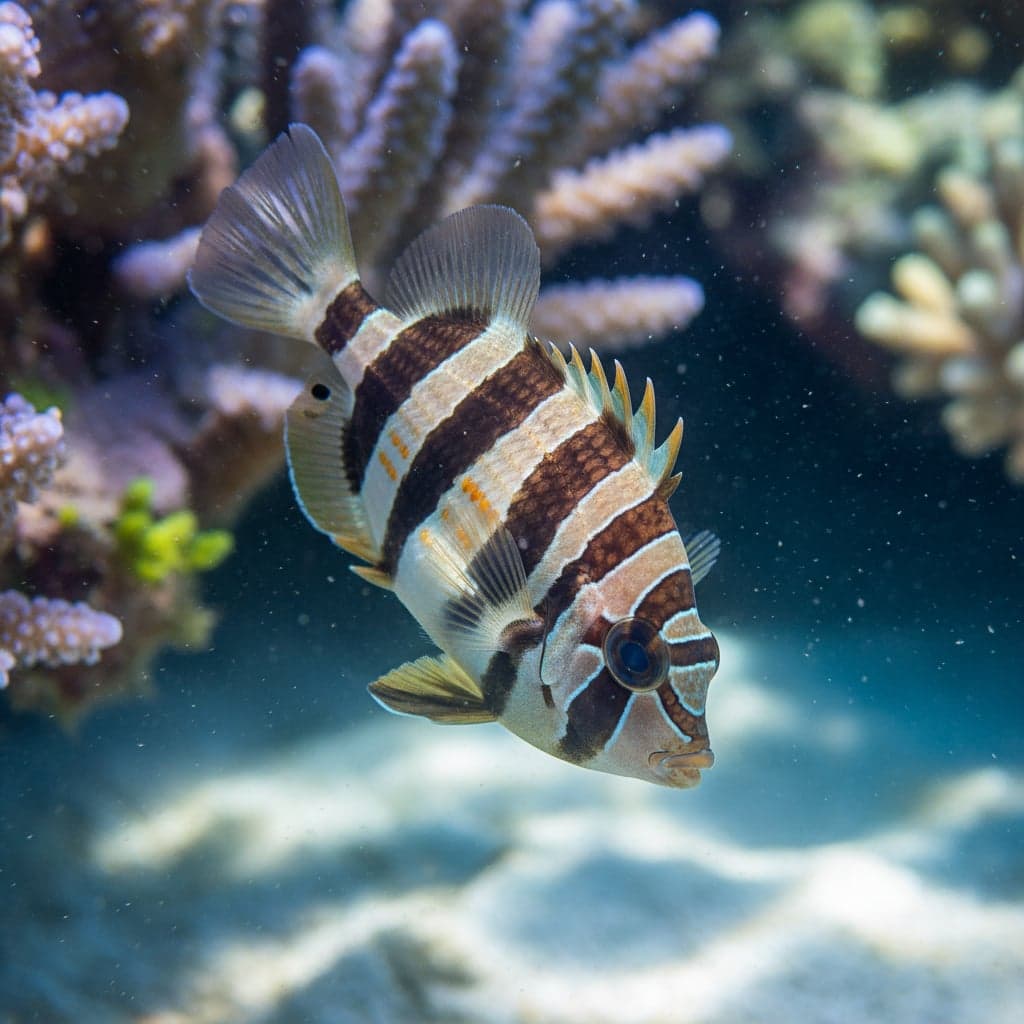
Watanabe's Angelfish
Watanabe's Angelfish (Genicanthus watanabei) is a deep-water, planktivorous swallowtail angel — peaceful and genuinely reef-safe, with striking sexual dimorphism.
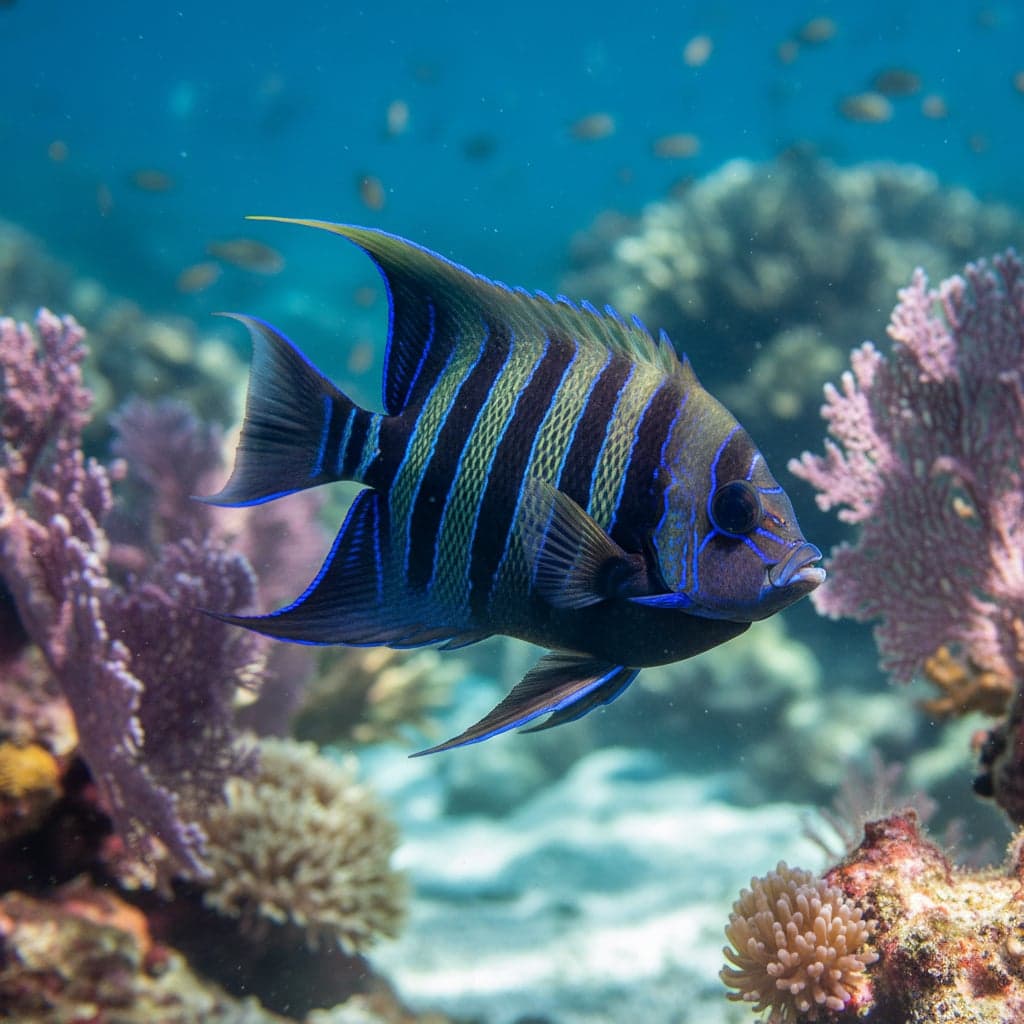
Watanabe's Angelfish
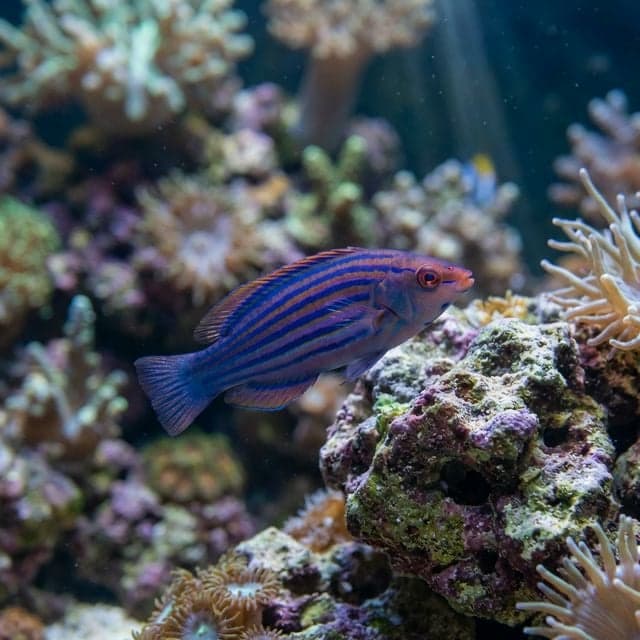
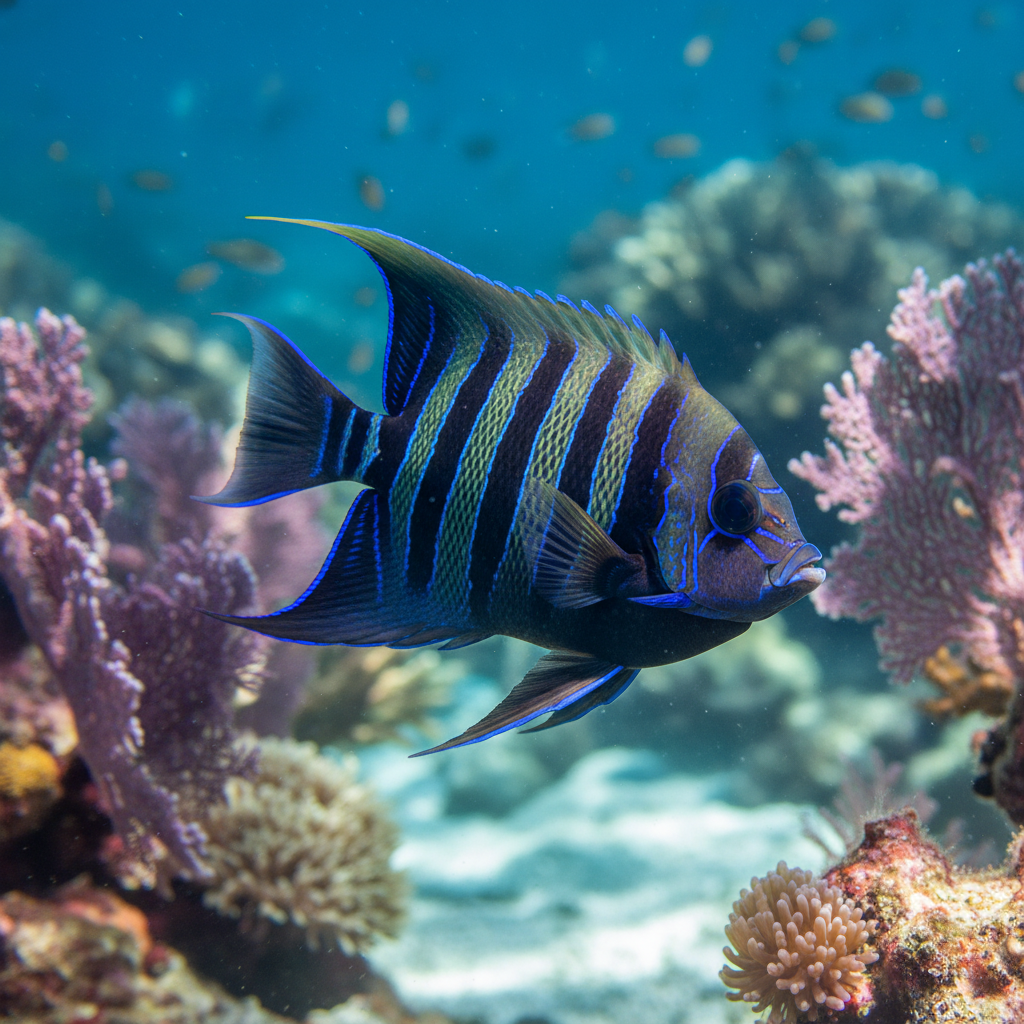
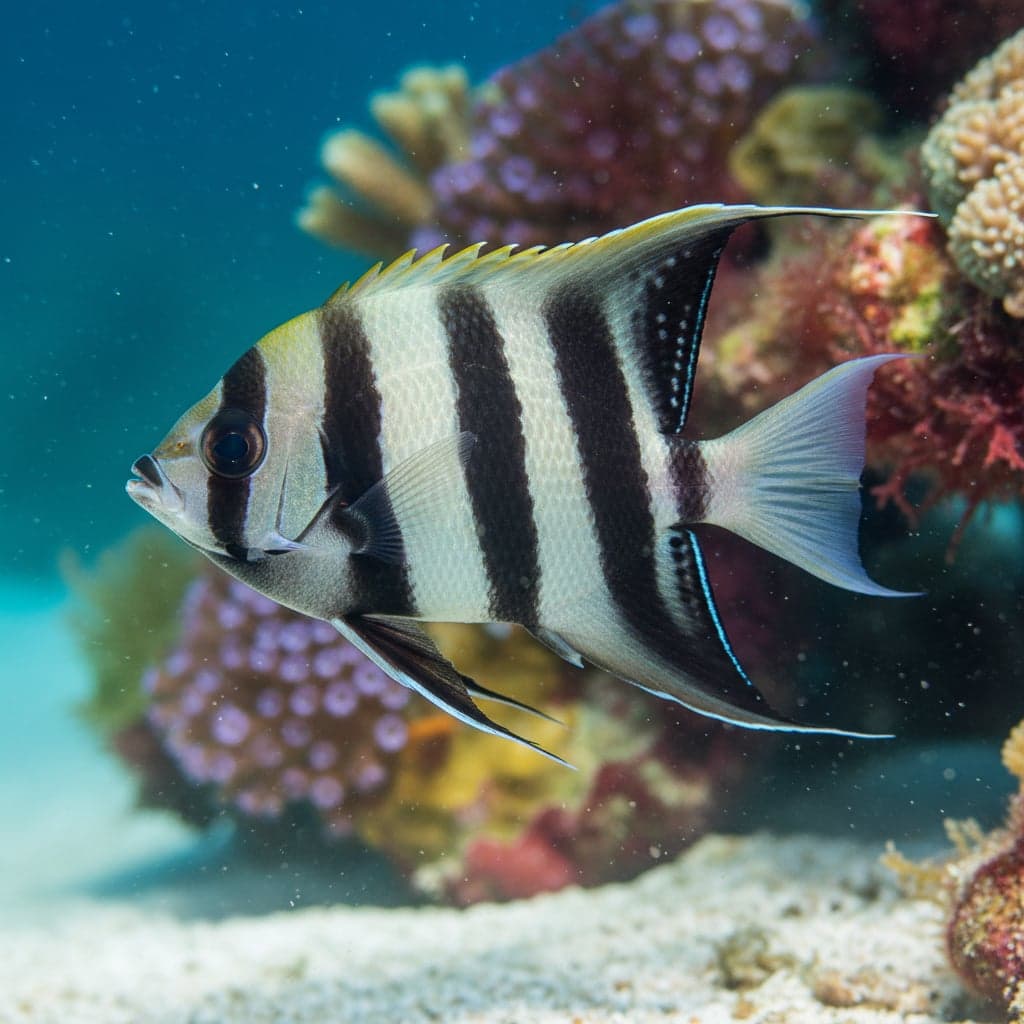
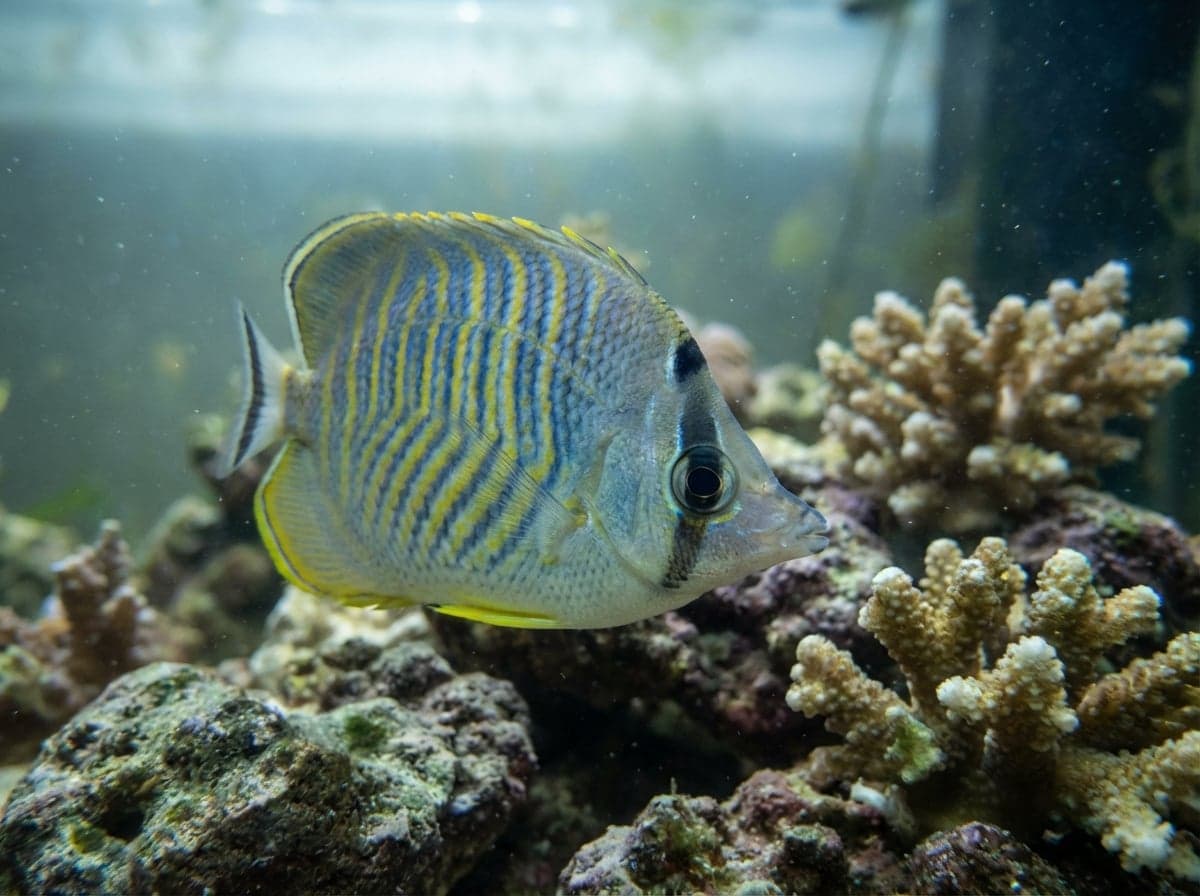
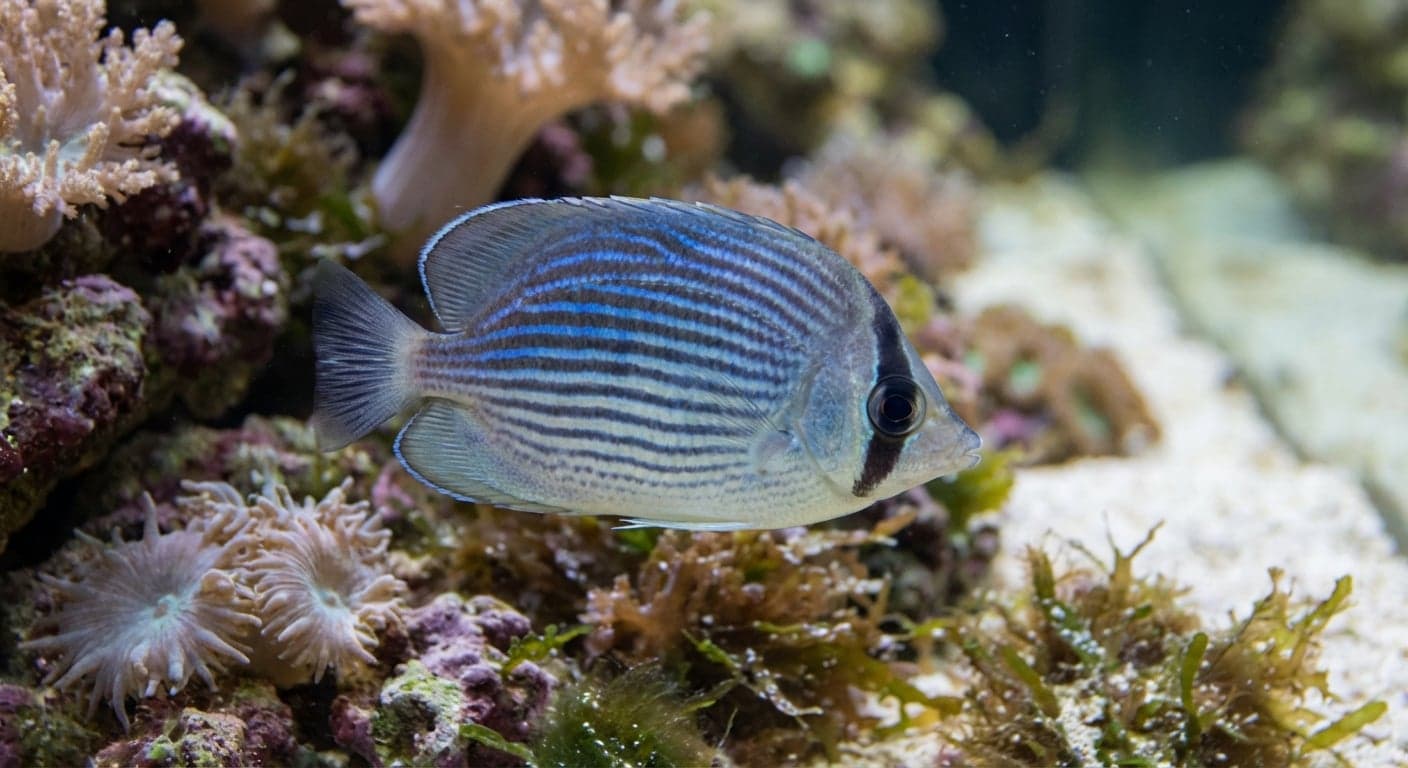
Watanabe's Angelfish (Genicanthus watanabei) is one of the few marine angels you can honestly call reef-safe: a mid-water plankton feeder with a swallowtail outline, not a sponge-and-coral picker. Sexual dimorphism is the shop-floor hook — males are pale blue with fine black horizontal stripes along the lower flank; females are a cleaner powder blue with black-edged fins. It sits in the same genus as the swallowtail angelfish (Genicanthus melanospilos) and other Genicanthus planktivores, and shares their calm midwater habit rather than the rock-working aggression of many Centropyge and large Pomacanthus angels.
Deeper, current-swept slopes are home turf. Slightly cooler, well-oxygenated water and open swimming space matter more than ornate rock mazes.
Frontmatter behaviour is Pair because that is the practical stocking unit for most home tanks. Wild fish form midwater schools and harems (one male with several females); in captivity a proven male–female pair or a carefully sexed small harem in a large system is realistic — stuffing a school into 280 litres is not.
Natural Habitat & Origin
Genicanthus watanabei occurs in the western and central Pacific on deeper reef slopes and drop-offs where current delivers plankton. It spends daylight cruising open water in aggregations or harems, picking zooplankton from the water column rather than browsing coral tissue. Collection depth and cooler ambient temperatures explain why rushed acclimation under bright metal-halide or LED blasts stresses new arrivals.
In the aquarium prioritise open midwater lanes, steady laminar-to-turbulent flow without dead spots, and rockwork used as shelter rather than as a solid wall that blocks swimming. Recreate the feeding style — frequent small offerings in the water column — more than a particular depth number on a dive computer.
Care Requirements
Salinity about 1.024–1.026, pH 8.1–8.4, temperature toward the cooler reef band at 23–26°C (73–79°F). Pushing a deep-slope Genicanthus to a constant 28°C “SPS default” is unnecessary heat stress. Adults reach about 15 cm (6 inches). Frontmatter minimum is around 280 litres (about 75 US gallons) with real open water; tall nano columns fail fish that want horizontal cruise room.
Subdued lighting for the first days after introduction helps deep-water fish settle. Quarantine remains non-negotiable — deep collection and long transport raise marine ich and velvet risk even in “hardy once settled” angels. Follow a quarantine protocol; keep medications off the reef display.
Log salinity and temperature in the Aquarium Tracker. Slow warm-creep and oxygen neglect show up as clamped fins and refusal to leave cover before spots appear.
Diet & Feeding
Functionally planktivorous; frontmatter Omnivore reflects occasional benthic invertebrates and algae in the wild diet, not a licence to skip water-column feeds. Staple captive foods: frozen mysis, enriched brine, copepod and plankton-style preparations, quality marine angel foods, and some marine algae content. Offer frequent small meals rather than one dump that sinks past a midwater feeder.
Individuals that only get heavy sinking pellets in a sparse tank often thin out while still “looking busy.” Watch the belly and nape line. Mature live rock helps microfauna, but this species will not replace plankton feeds by grazing rock the way a dwarf angel does — if you stop feeding the column, the fish declines.
Behavior & Temperament
Peaceful for an angelfish. It cruises rather than claims a cave and bullies neighbours. Compatible as a single specimen, a pair, or a male with multiple females when the system is large enough to dilute minor squabbles. It is not the territorial rock bully many keepers expect from “angelfish.” Aggression usually appears only toward other Genicanthus of the same sex in tight quarters, or when food is scarce.
Spend daylight in open water; overnight it uses rock crevices. Sudden hiding after weeks of bold swimming often means a new tankmate, lighting change or water-quality drift — investigate before assuming the fish “went shy by nature.”
Tank Mates
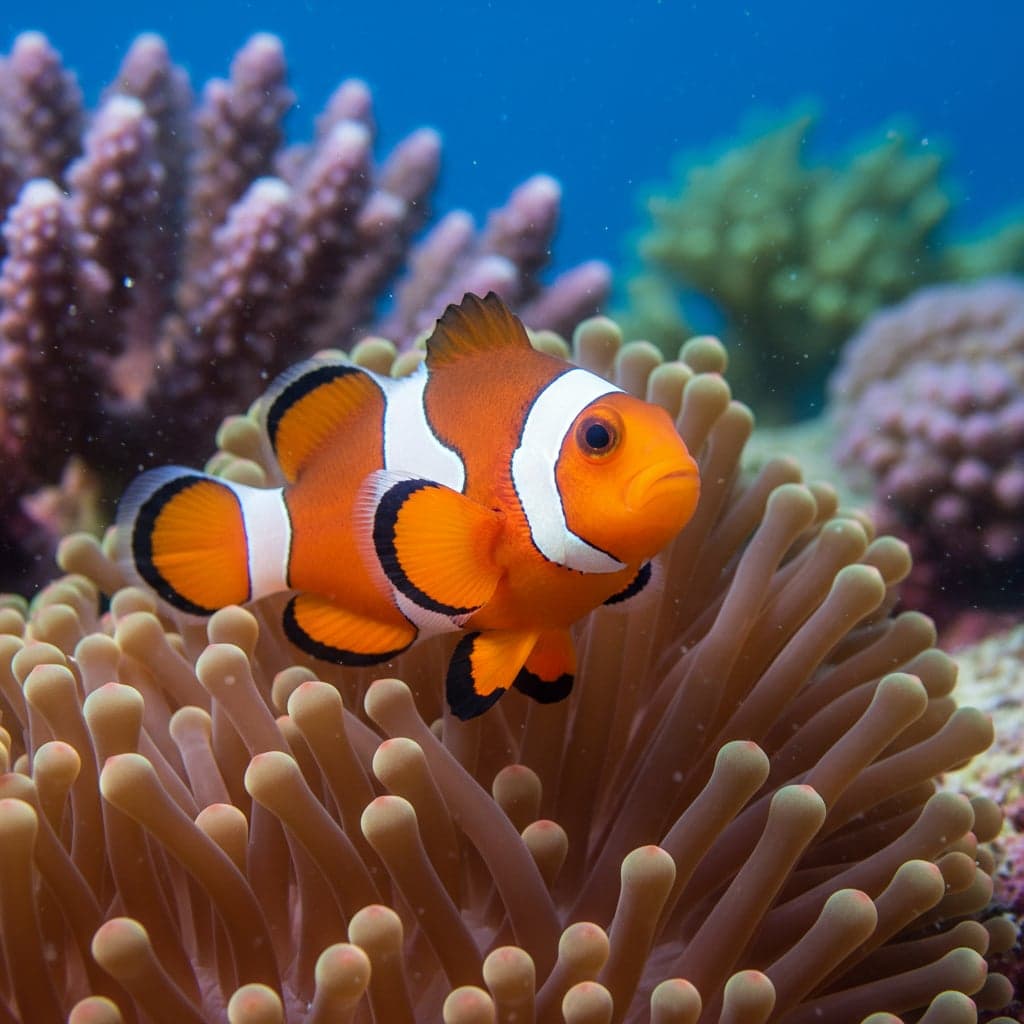
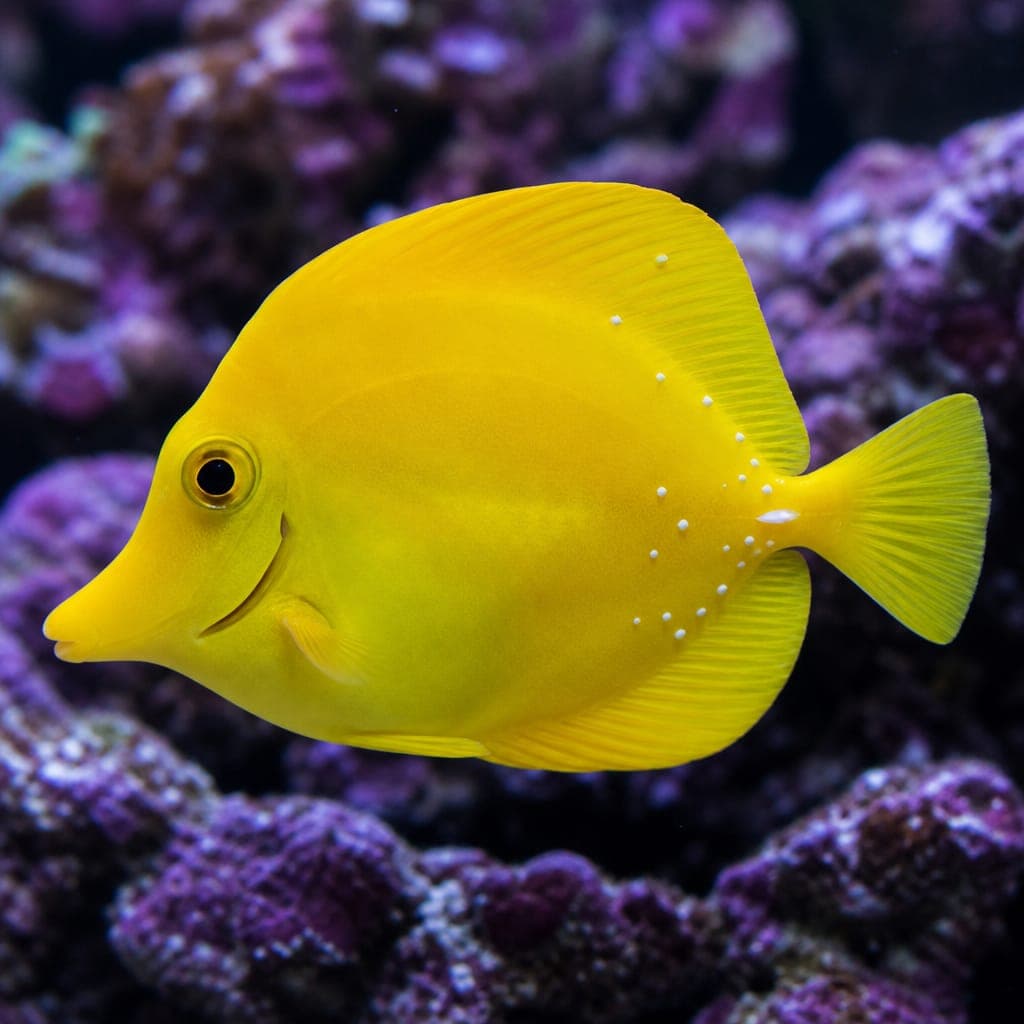
Excellent with other peaceful reef fish: anthias, chromis, gobies, clownfish, dissimilar wrasses, and tangs in tanks sized for the tang. Other peaceful swallowtails can work with space; do not force rival males into a small box. Crucially, G. watanabei leaves corals and ornamental sessile invertebrates alone when well fed — that is the point of choosing Genicanthus over large Atlantic or Indo Holacanthus / Pomacanthus angels.
Avoid housing it with aggressive rock-dwellers that pin it in corners, or with relentless food hogs that steal every midwater bite. A reef-safe angel still starves if it never wins a meal.
Breeding
Protogynous hermaphrodite: the dominant female in a group can change sex to male. Pelagic spawner; larval rearing is beyond home aquaria. Trade fish are wild-collected from deeper reefs. Buying “a pair” only works if sexes are correctly identified — two females may look peaceful until social dynamics shift; two males in a small tank usually do not.
Common Health Issues
Reasonably hardy after gentle acclimation; vulnerable during and after deep- water collection and shipping. Ich, velvet and bacterial issues follow stress, bright sudden lighting and foul transport water. Quarantine, dim the display for introduction, keep oxygen high and temperature honest to the cooler range.
Feed the water column, give open cruise space, prefer a pair over a forced crowd, and Watanabe's Angelfish rewards intermediate reef keepers with genuine coral safety and elegant dimorphism. Treat it like a shallow-water dwarf angel that “will pick at rock for dinner” and you lose the fish that made Genicanthus worth hunting down.