Black Velvet Angelfish
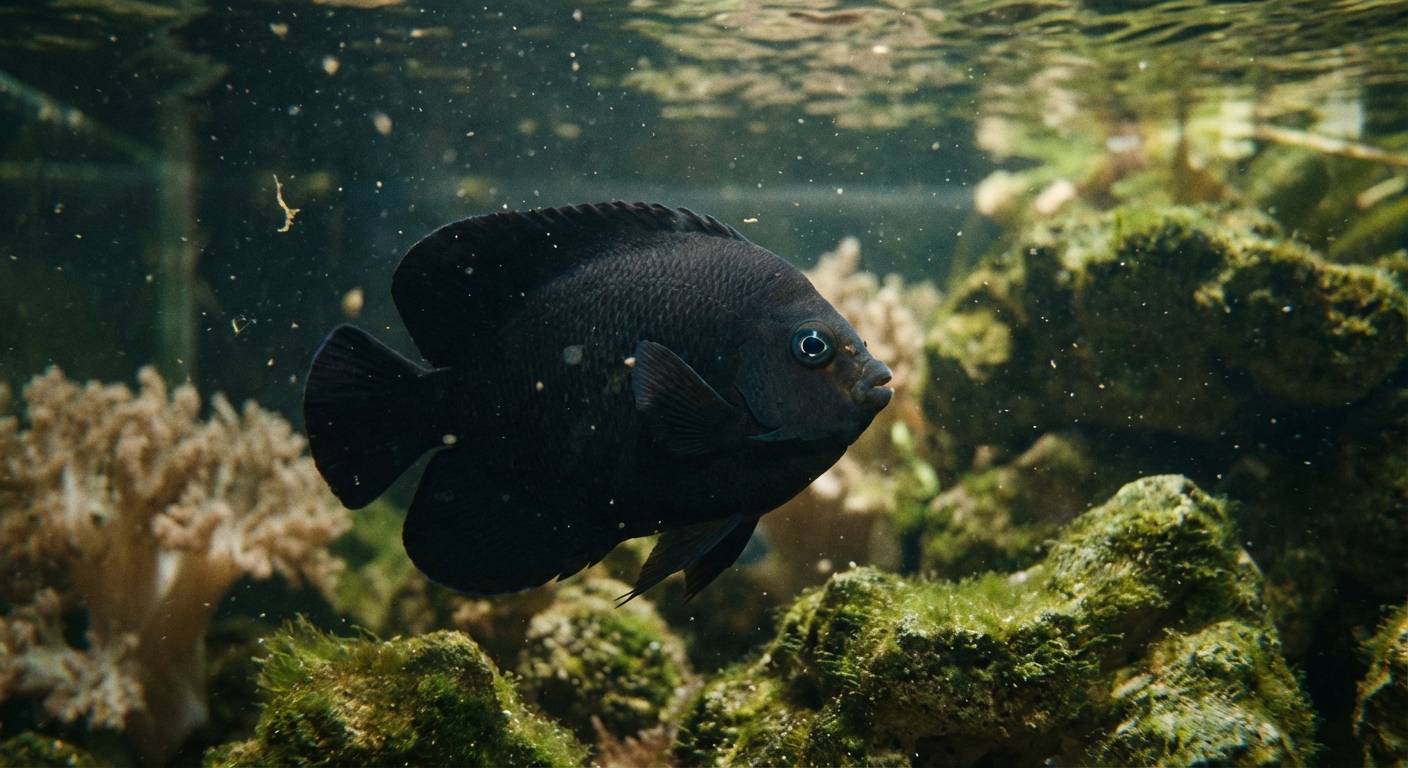
The Black Velvet Angelfish (Chaetodontoplus melanosoma) is a smoky-grey Western Pacific marine angelfish — an omnivore that is not reef-safe and best suited to experienced keepers.
Black Velvet Angelfish
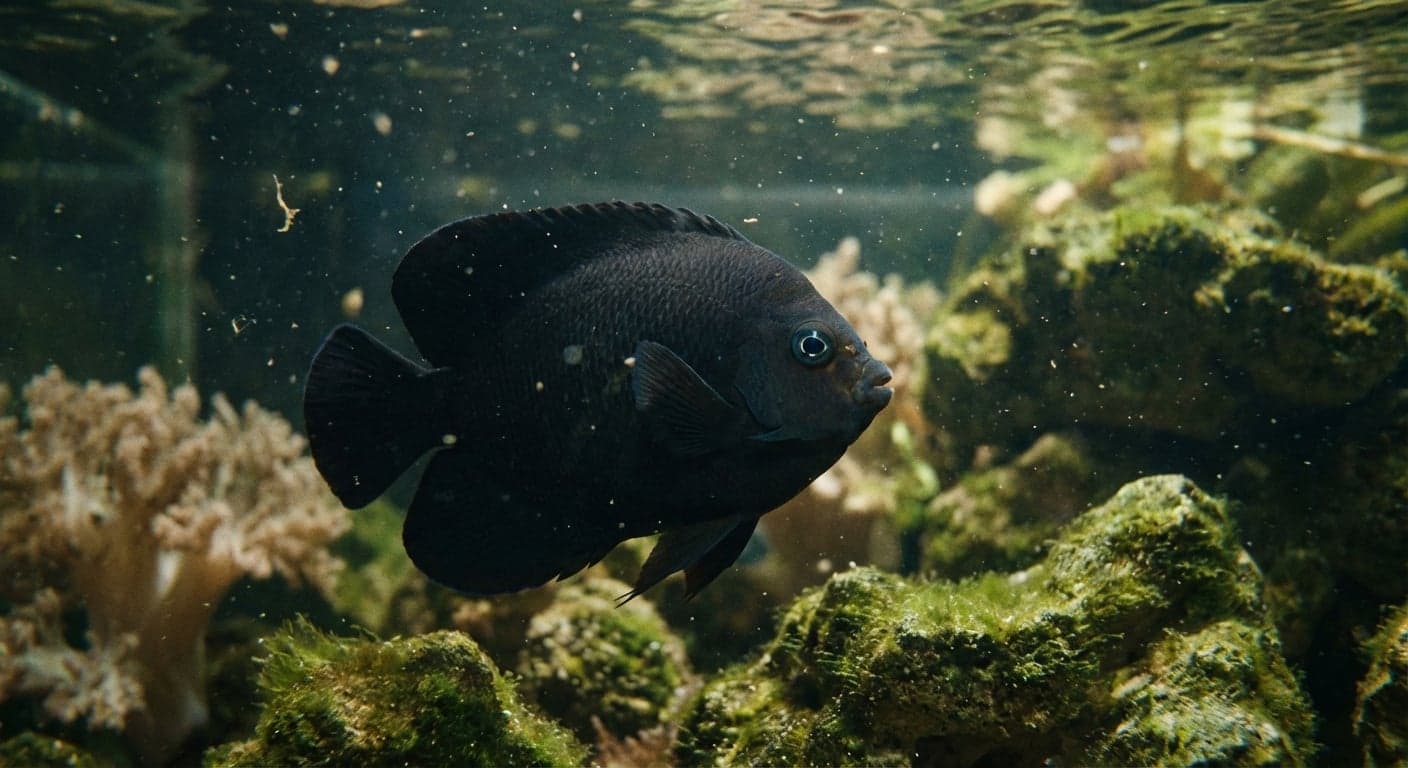
The Black Velvet Angelfish (Chaetodontoplus melanosoma), sometimes called the smoky angelfish, is an understated beauty — a medium-sized Western Pacific angel cloaked in smoky grey to black, softened by paler shading on the face and subtle yellow along the fins and tail. It lacks the loud colours of many marine angels, but its velvety, graphic appearance makes it a sophisticated centrepiece for a larger fish-only or fish-only-with-live-rock system.
Like most of its relatives, it is a sponge- and tunicate-feeder by nature, which makes both its diet and its reef compatibility important considerations. It is a rewarding fish for an experienced keeper who can meet those needs.
Natural Habitat & Origin
Chaetodontoplus melanosoma is found in the Western Pacific, centred on central Indonesia (Java, Bali, Komodo, Flores, Sulawesi, Kalimantan) and extending to Malaysian Sabah and the Philippines. It inhabits outer rocky and coastal reefs at depths of roughly 5 to 30 metres (16–98 feet), where it is seen alone or in pairs.
In captivity it wants a mature aquarium with abundant live rock for grazing, retreat sites, and the security a structured reef environment provides.
Care Requirements
Maintain stable marine conditions: salinity around 1.022–1.025, pH 8.1–8.4, and a temperature of about 24–26°C (75–79°F), with low nitrate and phosphate. Reaching around 20 cm (8 inches), it needs a sizeable tank — on the order of 340 litres (around 90 US gallons) or more — to provide swimming room, territory and grazing surface.
A well-established system with plenty of live rock greatly improves the odds of acclimating this species and keeping it well fed.
Diet & Feeding
The Black Velvet Angelfish is an omnivore that feeds on sponges and tunicates in the wild. As with other sponge-eating angels, replicating this diet is the central challenge: base its feeding on quality marine angelfish preparations that contain sponge, supplemented with herbivore foods, spirulina, frozen mysis and enriched blends. Offer small amounts several times a day and encourage natural grazing on mature live rock.
Behavior & Temperament
This species is generally peaceful toward unrelated fish but can be territorial with other angels and similar competitors. Keep only one angelfish of this type per tank unless the system is very large. It is a hermaphroditic species, and individuals are usually seen alone or in pairs. Introduce it thoughtfully and provide ample rockwork so it can establish a territory without conflict.
Tank Mates
Suitable companions are robust, peaceful to semi-aggressive marine fish that occupy different niches: tangs, larger wrasses, anthias and similarly sized community fish. Avoid other angels in smaller systems and overly aggressive tankmates.
Crucially, the Black Velvet Angelfish is not reef-safe — it will sample coral polyps, soft corals, clam mantles and other sessile invertebrates. It is best kept in fish-only or fish-only-with-live-rock setups rather than mixed reefs.
Breeding
Chaetodontoplus melanosoma rarely if ever breeds in home aquaria. Like other marine angels it is a pelagic spawner with demanding larval requirements, so captive breeding is impractical for hobbyists and trade specimens are wild-collected.
Common Health Issues
Provided its diet and space are met, the Black Velvet Angelfish is reasonably durable, but it is susceptible to marine ich (Cryptocaryon irritans) and marine velvet (Amyloodinium ocellatum), especially when stressed or freshly imported. The most common pitfall is a specimen that fails to take prepared foods, so choose a feeding fish and offer a sponge-inclusive diet. Quarantine new arrivals and maintain pristine, stable water quality for the best long-term results.