Bluestripe Pipefish
The Bluestripe Pipefish (Doryrhamphus excisus) is a tiny, peaceful reef pipefish — reef-safe and a part-time cleaner, but a delicate feeder for mature, copepod-rich tanks.
Bluestripe Pipefish
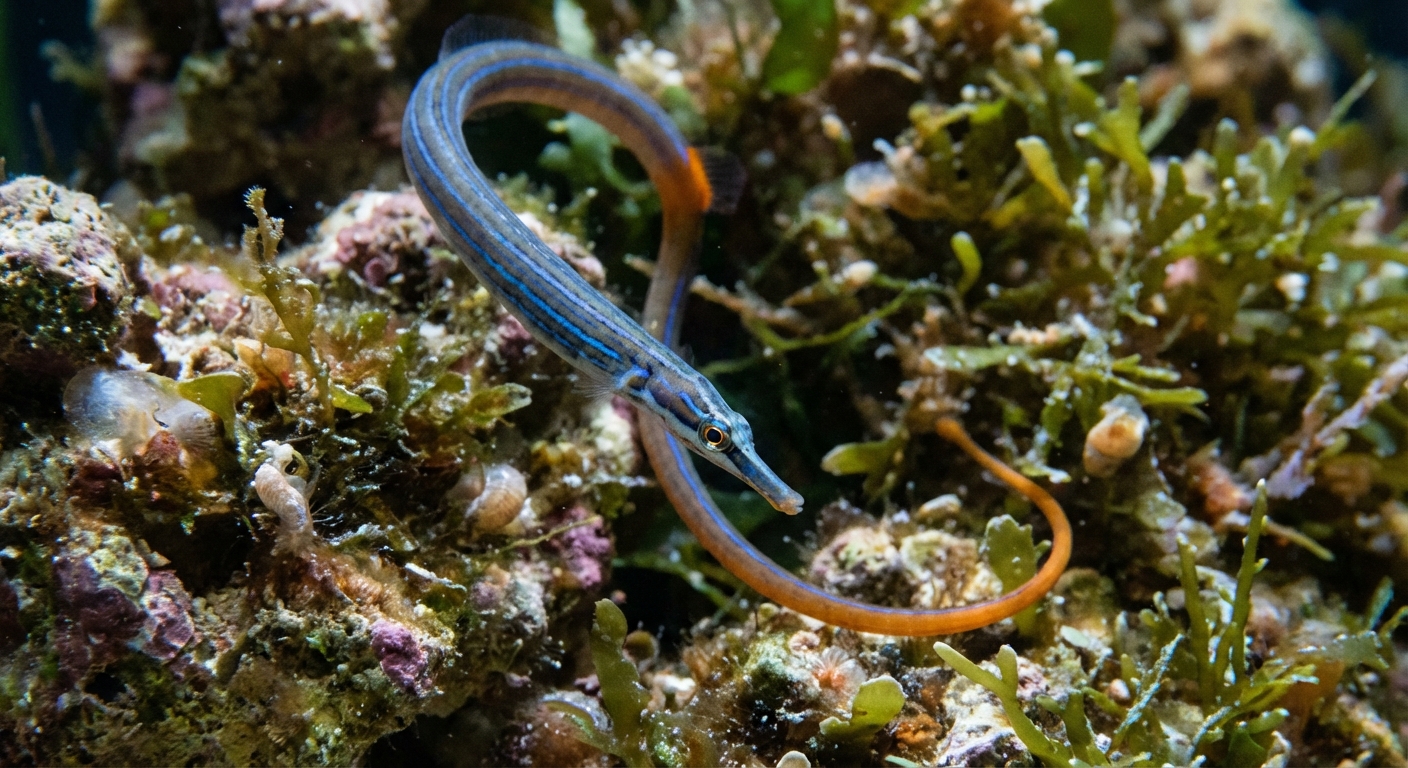
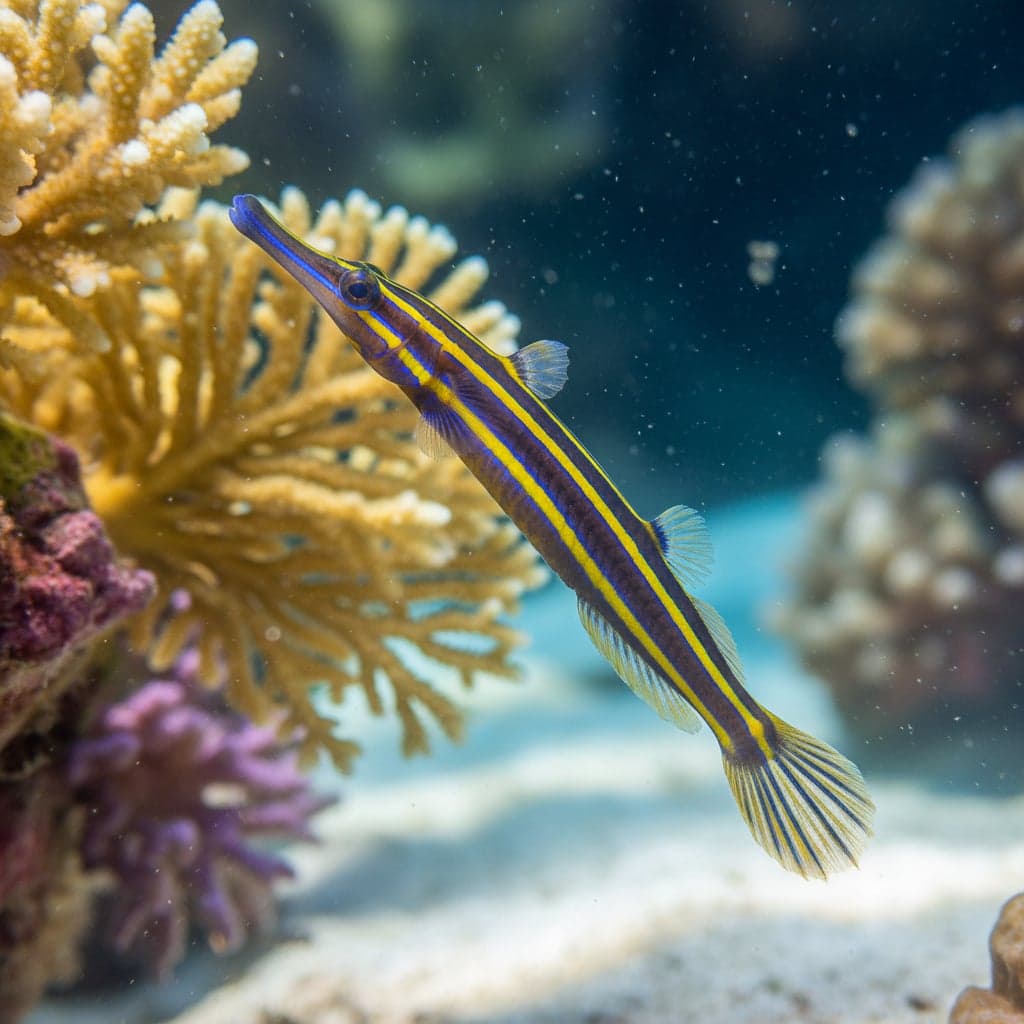
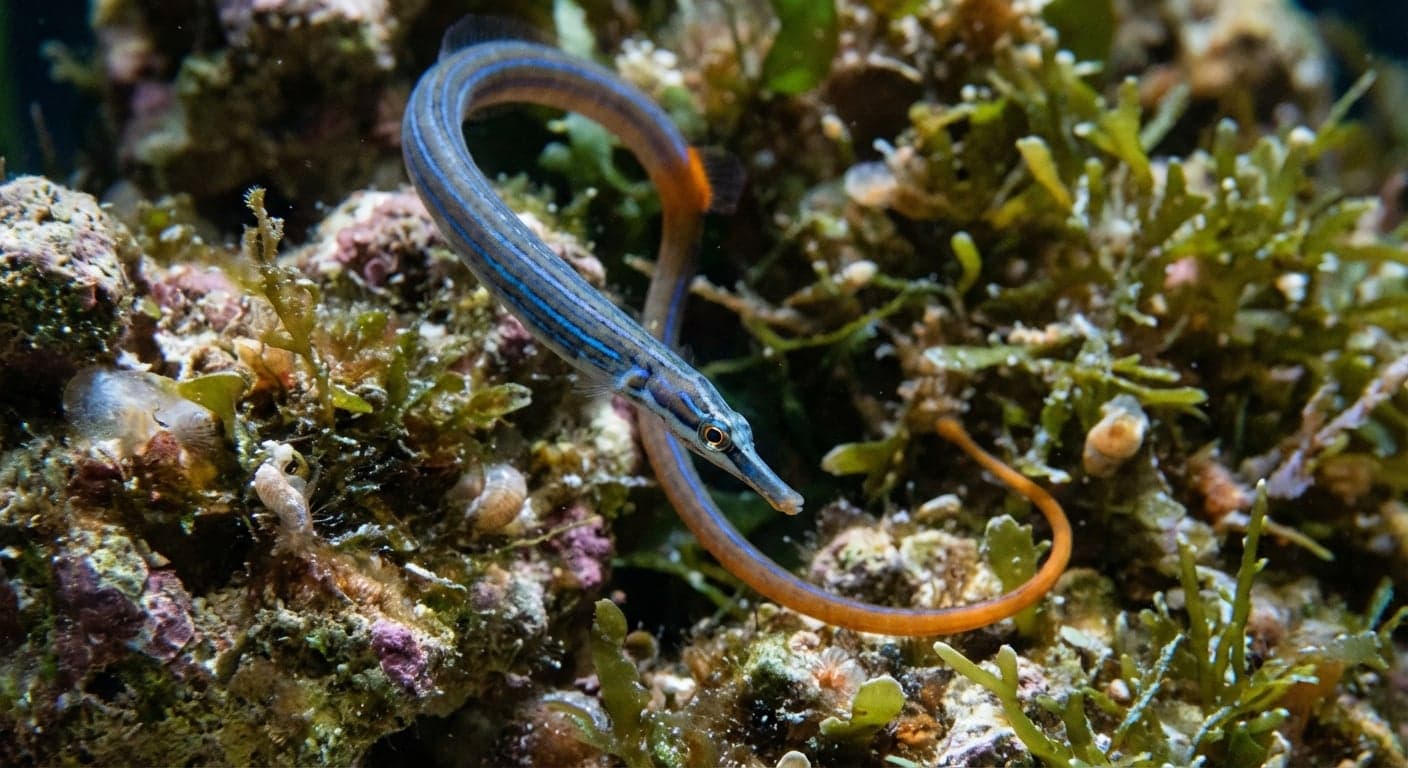
The Bluestripe Pipefish (Doryrhamphus excisus) is a slender, brilliantly marked little relative of the seahorses — an orange-red body bisected by an electric blue stripe, tipped with a small paddle-shaped tail. Charming and peaceful, it even acts as a part-time cleaner, picking parasites from larger fish. It is, however, a delicate, specialised feeder, which makes it a fish for mature, food-rich reef systems and patient, experienced keepers.
Its appeal is undeniable, but success hinges almost entirely on its diet of tiny live foods.
Natural Habitat & Origin
Doryrhamphus excisus is widespread across tropical reefs, where it shelters in caves, overhangs and crevices — often hovering upside-down beneath ledges — and ventures out to pick minute crustaceans from the water and surfaces. It is frequently seen in pairs occupying a particular sheltered spot.
In the aquarium it wants plenty of live rock with caves and crevices, calm conditions, and — crucially — a mature system teeming with microfauna.
Care Requirements
Maintain stable marine conditions: salinity around 1.024–1.026, pH 8.1–8.4, and a temperature of about 24–26°C (75–79°F). Reaching only about 7 cm (3 inches), it can live in tanks of around 75 litres (20 US gallons) or more, but the tank's biological maturity matters far more than its size: an established system, ideally with a refugium producing copepods and amphipods, is the single most important requirement. Keep it only with calm, slow tankmates.
Diet & Feeding
The Bluestripe Pipefish is a micro-carnivore that feeds continuously on tiny crustaceans — copepods, amphipods and similar — picked from the water and rock. This is the defining challenge: it cannot compete with fast fish for food and often will not take large prepared items. Maintain a steady supply of live copepods and amphipods, and supplement with small frozen foods such as enriched baby brine shrimp and tiny mysis. Watch its body condition closely; a thin pipefish needs immediate live feeding.
Behavior & Temperament
This is a peaceful, retiring fish that bothers no one and is easily out-competed or bullied. It is best kept singly or as a pair, ideally in a tank dedicated to small, gentle species. It spends its time hovering near its chosen shelter, emerging to forage and, occasionally, to clean tankmates.
Tank Mates
Keep it only with peaceful, slow-moving fish — other pipefish, small gobies, firefish, dragonets and similar — and avoid anything fast, greedy or aggressive that will out-compete it for food or harass it. It is fully reef-safe, leaving corals and ornamental invertebrates alone (though, like many small reef fish, it may be at risk from large hermit crabs or anemones).
Breeding
Like other pipefish, in Doryrhamphus excisus the male broods the eggs, carried on his underside until the young hatch. It will pair and breed in a suitable, food-rich tank, but rearing the fry requires abundant tiny live foods and dedicated effort.
Common Health Issues
The dominant risk for this species is starvation in a tank lacking sufficient microfauna — prevent it with a mature, copepod-rich system and diligent feeding. Pipefish are also sensitive to poor water quality and to stress from aggressive tankmates. Like all marine fish they can be affected by marine ich (Cryptocaryon irritans) and marine velvet (Amyloodinium ocellatum). Choose a feeding specimen, provide a mature, peaceful reef, and this exquisite little pipefish can do well in the right hands.