Caribbean Blue Bass
The Caribbean Blue Bass (Serranus tortugarum), or chalk bass, is a small, hardy, peaceful reef fish that can be kept in groups — an easy, reef-safe beginner marine fish.
Caribbean Blue Bass
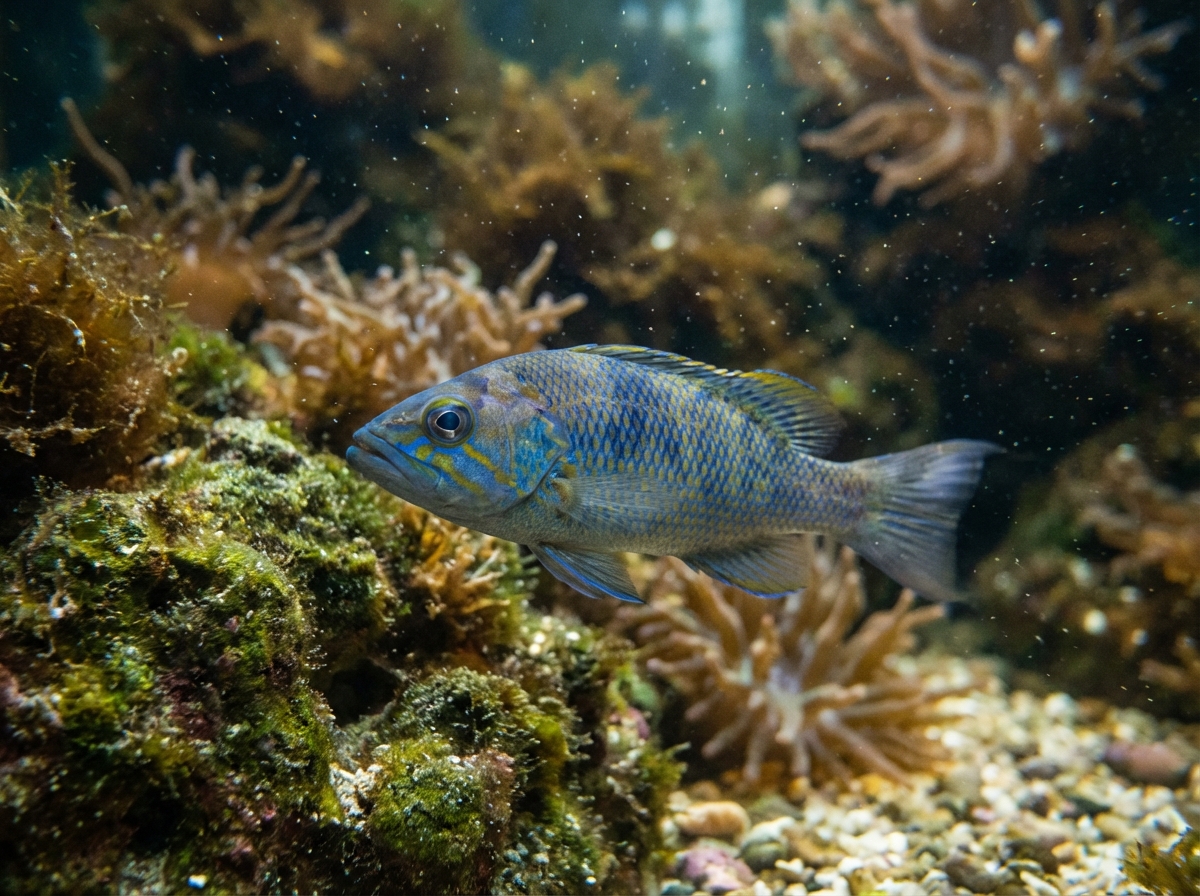
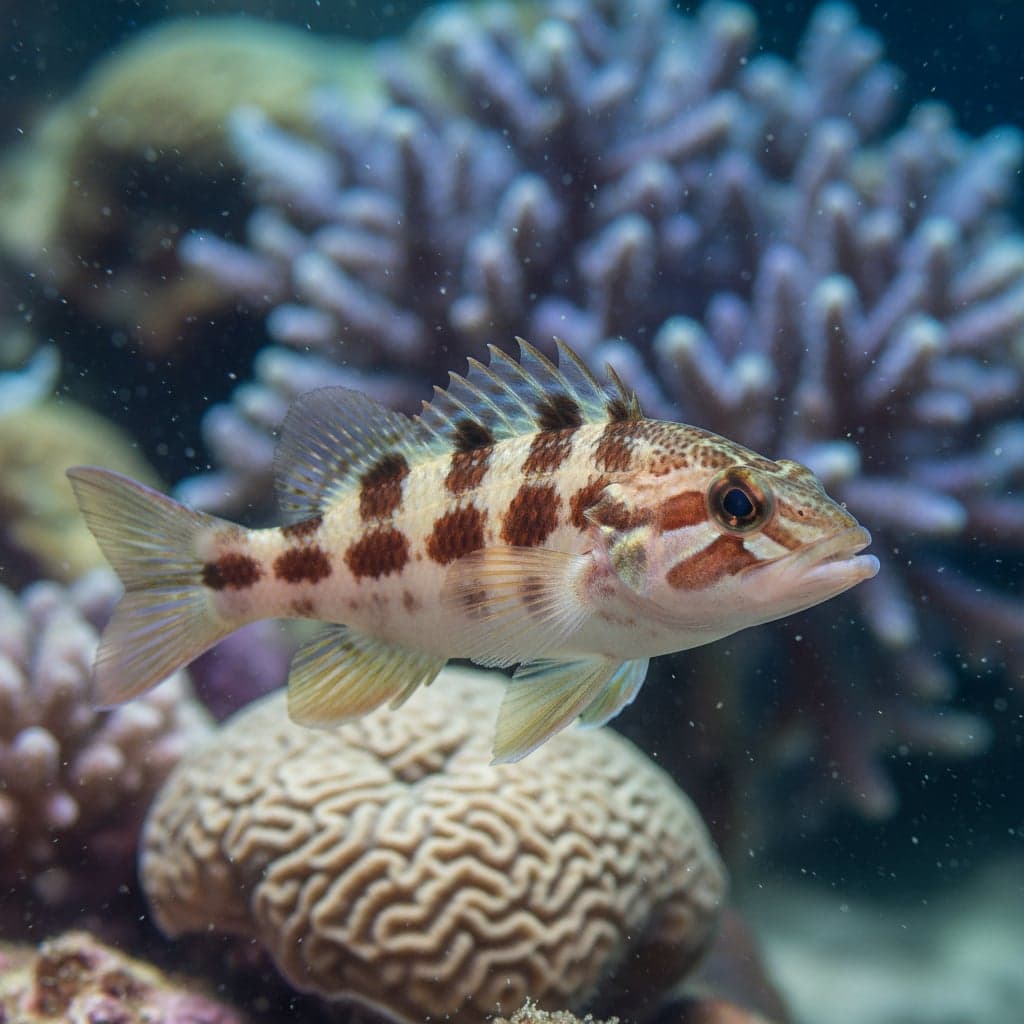
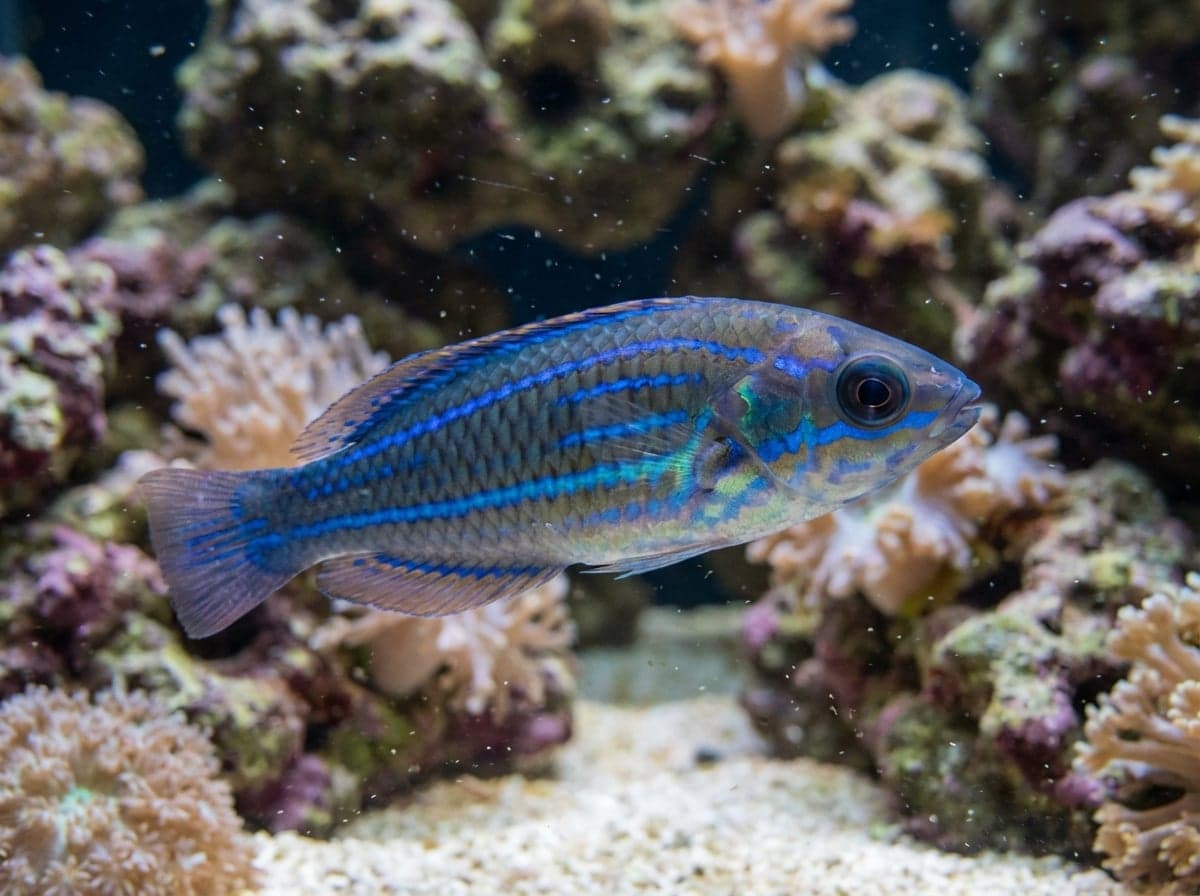
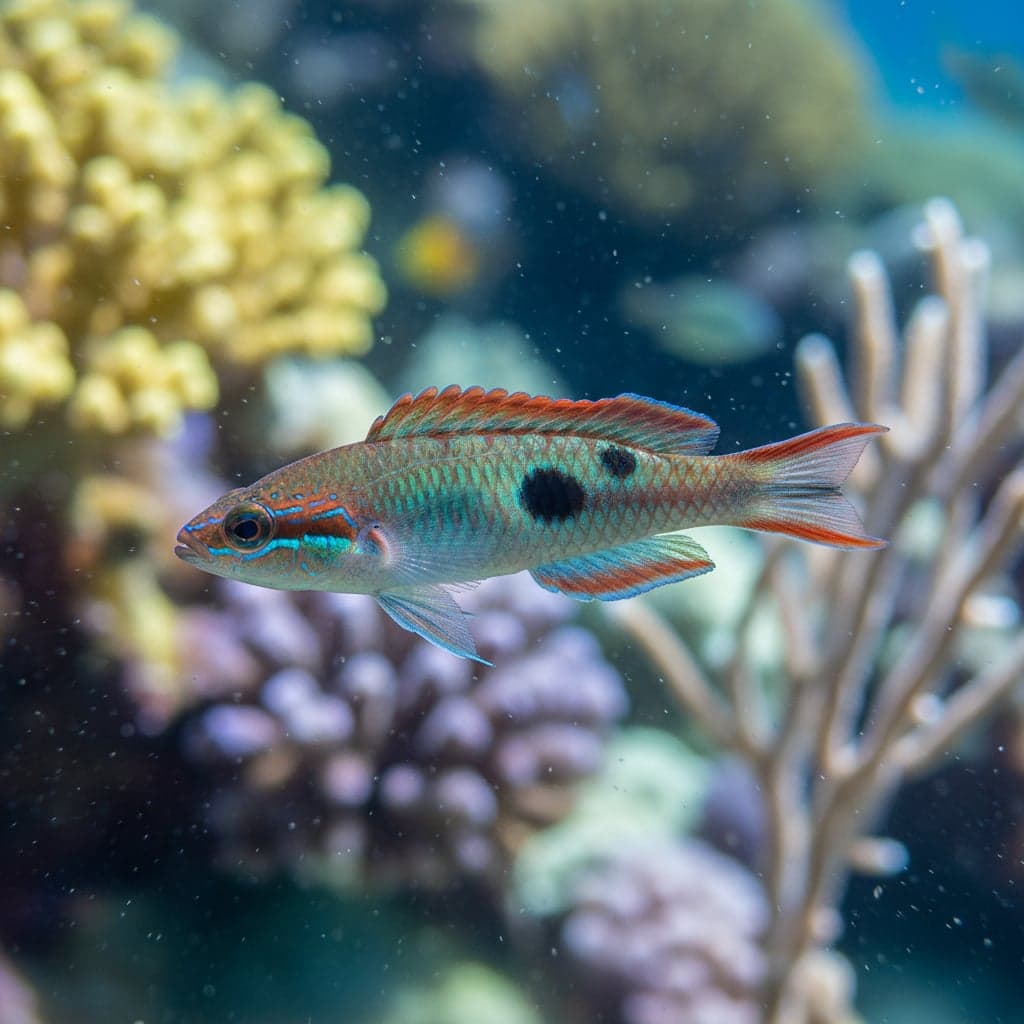
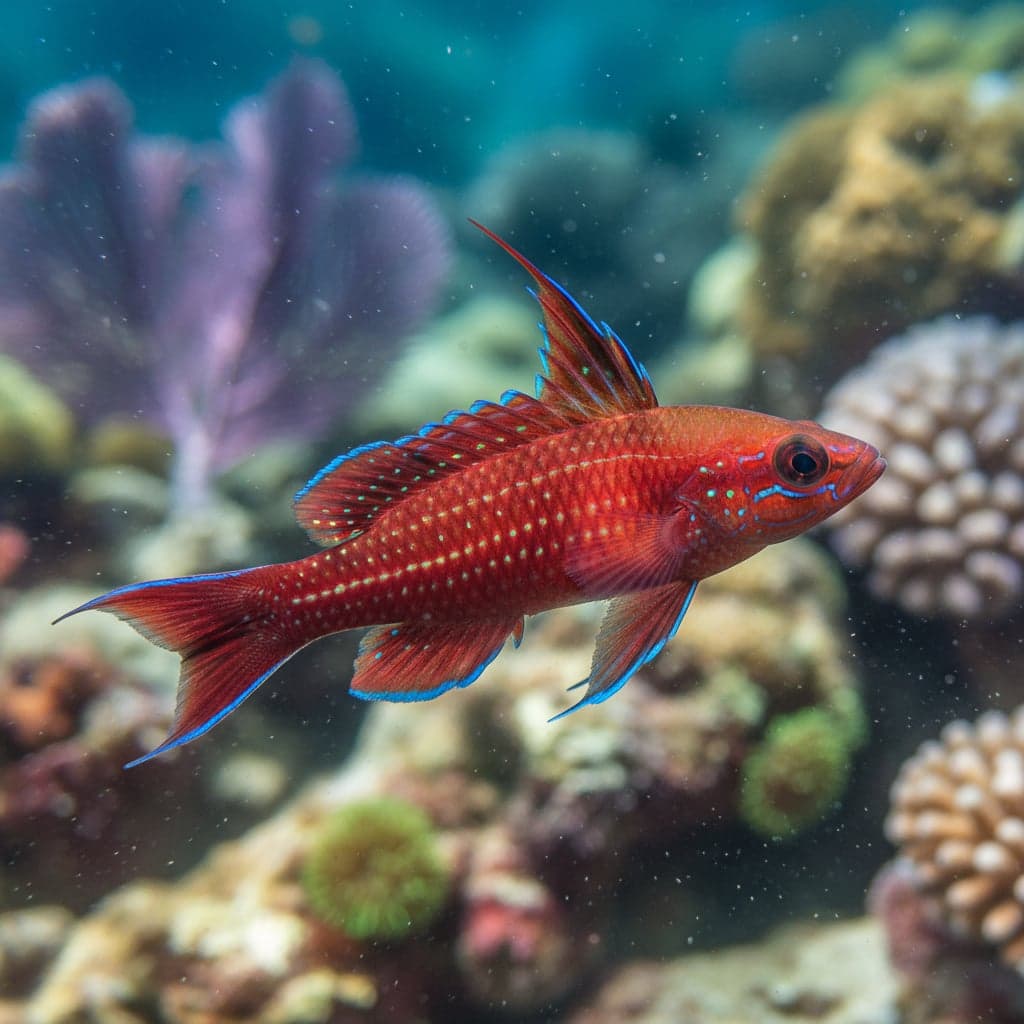
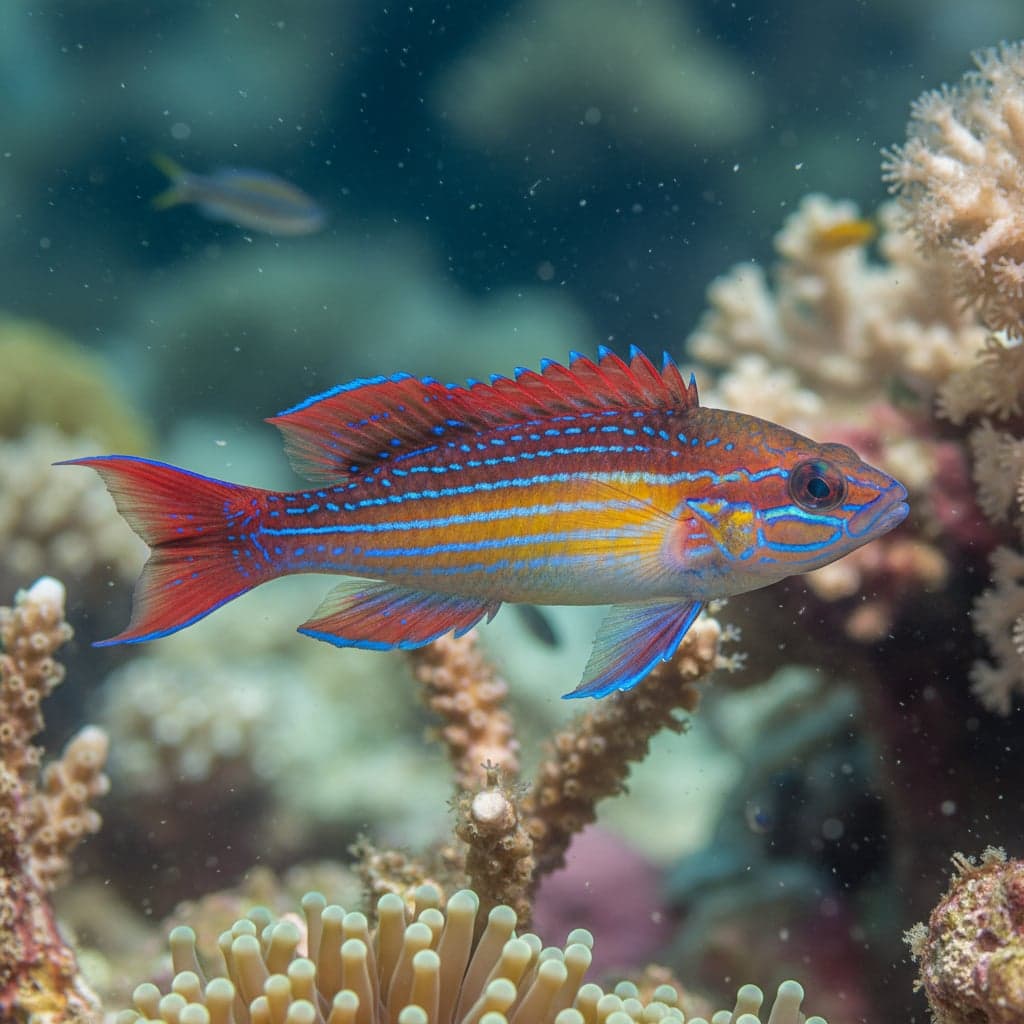
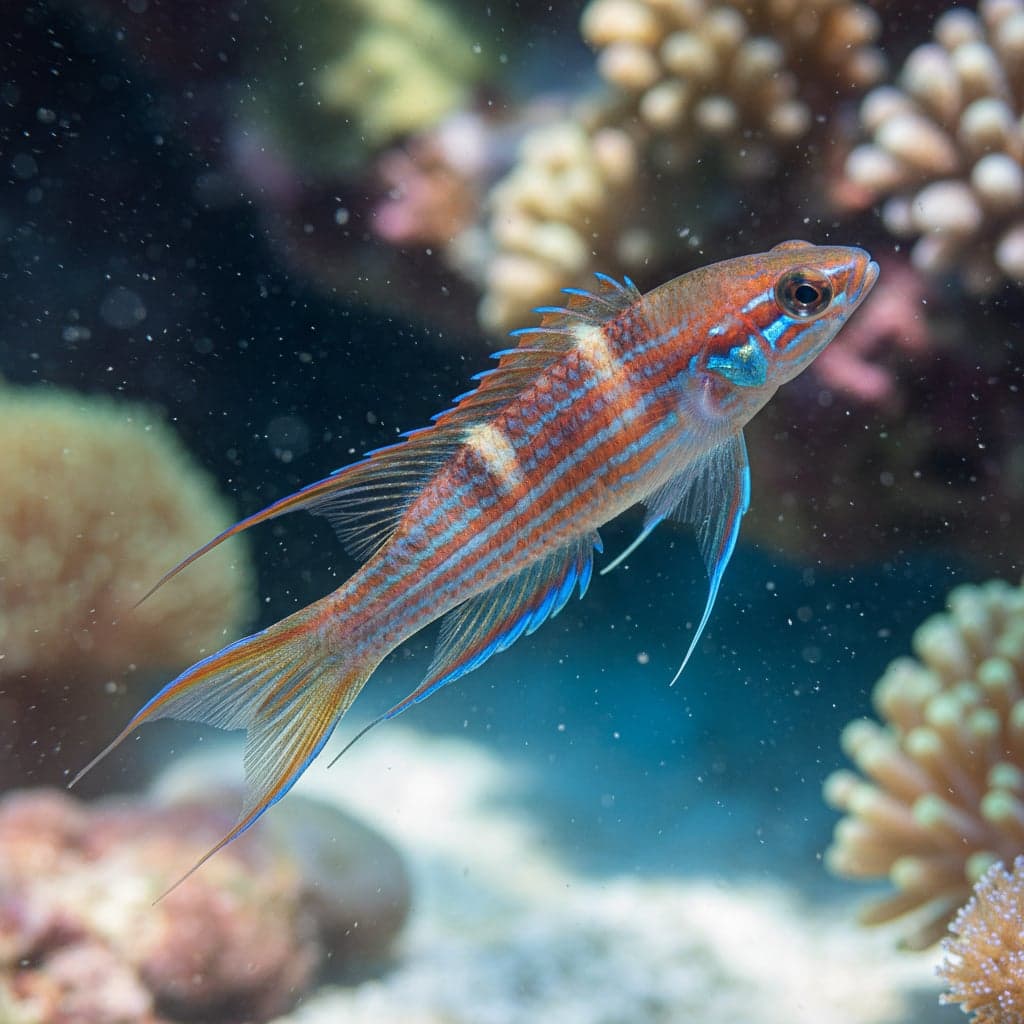
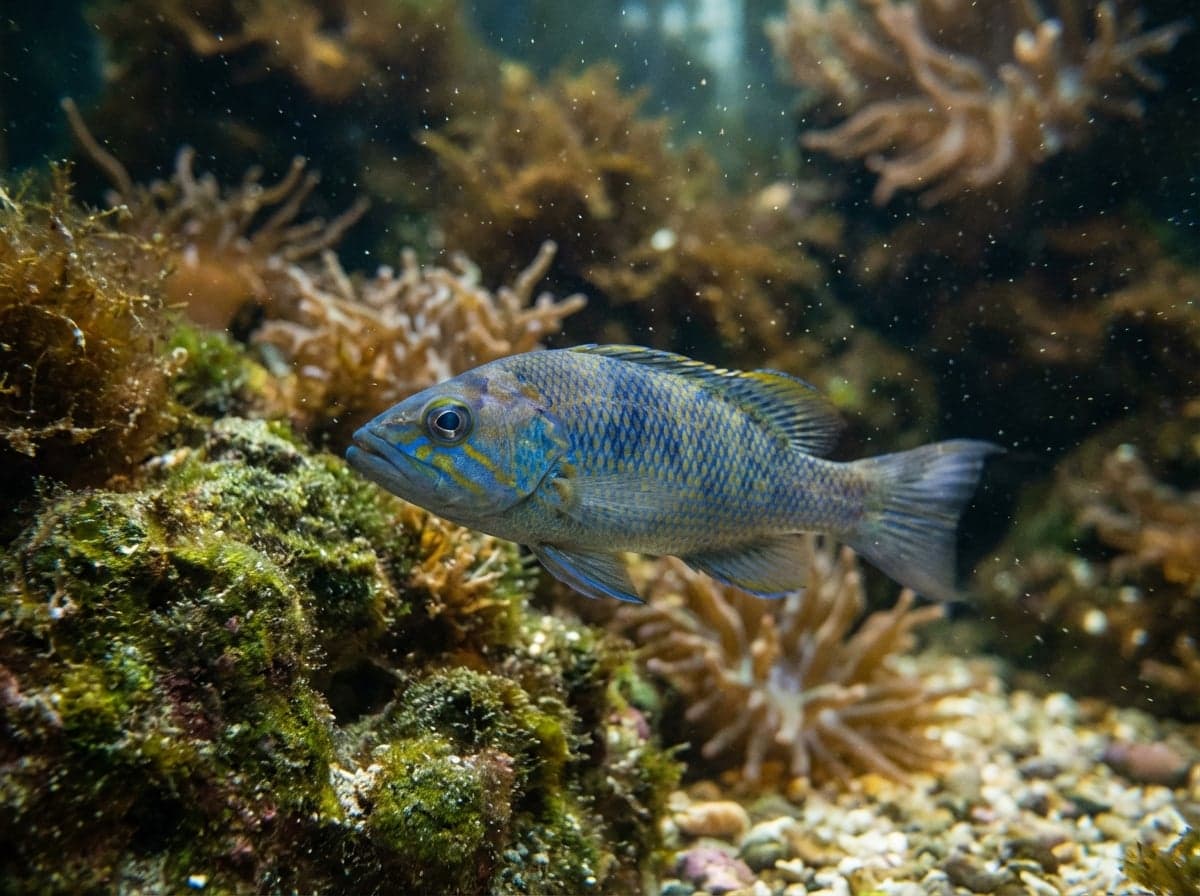
The Caribbean Blue Bass (Serranus tortugarum), almost always sold as the chalk bass, is a small Atlantic sea bass that breaks the family’s usual rules: it stays modest, stays peaceful and can be kept in a group. The slender body shifts between soft blue and tan with neat orange-edged saddles, hovering in open water above rubble and rock. Inexpensive, hardy and sociable, it is an underrated community reef fish — not a grouper in miniature waiting to eat the tank.
Frontmatter lists Shoaling because that is how they behave in captivity when several are kept together. One chalk bass is fine; a small group is when the species earns its reputation for constant, gentle movement.
As with other small mid-water predators, frequent meaty feeds and a secure lid are the real price of admission. Tiny ornamental shrimp are the second honesty check. This is a beginner marine fish when the system is stable — not when it is used as decoration in a neglected nano.
Natural Habitat & Origin
Serranus tortugarum ranges the Caribbean and western Atlantic over rubble and sand near reef structure, hovering just above the bottom to pick zooplankton and small crustaceans, then darting into cover when threatened. Loose groups are common in the wild; that social tolerance is unusual among serranids and is why the hobby can stock more than one.
In the aquarium recreate open water above rock and rubble for hovering, plus caves and ledges for shelter. A solid aquascape with no mid-water column turns an active chalk bass into a fish that only appears at feeding time. They are not demanding aquascapers — they are demanding of calm, open swimming space.
Care Requirements
Stable marine water: salinity about 1.024–1.026, pH 8.1–8.4, temperature 24–26°C (75–79°F). Adults reach only about 8 cm (3 inches). A single fish suits around 75 litres (20 US gallons); a small group wants a larger footprint so the shoal can spread without constant collision. Prefer length over a tall bottle of the same volume.
A secure lid is sensible — small basses can jump when startled. Quarantine still applies. “Hardy beginner fish” is not immunity to marine ich (Cryptocaryon irritans) or marine velvet (Amyloodinium ocellatum). Observe or treat in QT before the reef; medications belong in hospital tanks, not on corals after an outbreak.
Use the Aquarium Tracker to log salinity, temperature and your change schedule. These fish are forgiving of minor keeper mistakes compared with delicate wild angels, but chronic dirty water and skipped feeds still show as dull saddles and skinny bellies.
Diet & Feeding
Carnivore / micro-predator. Wild fish take zooplankton and small crustaceans. In captivity they are enthusiastic, easy feeders: frozen mysis, enriched brine, finely chopped seafood and quality marine pellets. Feed once or twice daily — more often in a busy reef where faster fish reach the food first.
Diet difficulty is low, which is part of why the species suits beginners. Do not confuse that with neglect. A group of chalk bass in a competitive tank can lose weight if anthias and wrasses monopolise every feeding. Target-feed or spread food so subordinates eat. Very tiny ornamental shrimp may still disappear; “reef safe” here means corals and most sessile inverts, not a guarantee for the smallest mobile cleanup crew.
Behavior & Temperament
Peaceful and sociable — one of the rare basses that tolerates its own kind. Several form a loose shoal, hovering and shifting together without the pairwise warfare many serranids show. Toward similarly sized peaceful fish it is harmless. Toward mysid-sized shrimp it is a small predator doing its job.
Keep groups odd-numbered or simply several strong; avoid mixing one tiny chalk bass with large aggressive damsels that will pin it in a hole. Daytime is open-water hovering and feeding; night is shelter in the rock. They are not shy forever like some deep-water imports — once eating, they are out and visible, which is half their appeal.
Tank Mates
Good companions are other peaceful reef fish: clownfish, chromis, gobies, smaller wrasses, cardinalfish and similar. Avoid large aggressive predators and fish that will outcompete them at every meal. Reef-safe with corals; only the smallest ornamental shrimp are a realistic risk from a hungry chalk bass. A small group makes a lively, easy-care mid-water display in a peaceful reef.
Do not confuse this Atlantic dwarf bass with larger Caribbean groupers or soapfish on compatibility charts. Shared family names hide completely different adult sizes and appetites. S. tortugarum stays small; plan tankmates for an 8 cm community fish, not a future grouper.
Breeding
Serranus tortugarum is a simultaneous hermaphrodite that pairs to spawn, releasing pelagic eggs. Spawning is observed in aquaria when pairs are well fed and settled, but rearing larvae is difficult and rarely accomplished at home. Trade specimens are wild-collected. Enjoy occasional spawning behaviour as a sign of good condition, not as a fry-production plan.
Common Health Issues
Among the hardier small marine fish, but still susceptible to marine ich and marine velvet under stress, and to jump injuries when lids are sloppy. Quarantine new arrivals. Keep water stable, meaty foods regular and the top sealed.
A chalk bass that hides constantly and refuses food is not “being mysterious” — prove feeding in QT, then give open water and peaceful neighbours. Kept that way, S. tortugarum is one of the easiest, most sociable beginner reef fish in the Atlantic catalogue. Starve a group in a chaotic, aggressive tank and even this forgiving bass becomes another thin, spot-covered disappointment.