Chalk Goby
The Chalk Goby (Valenciennea sexguttata) is a peaceful Indo-Pacific sand-sifting sleeper goby — reef-safe and substrate-cleaning, but needs a mature sand bed and regular feeding.
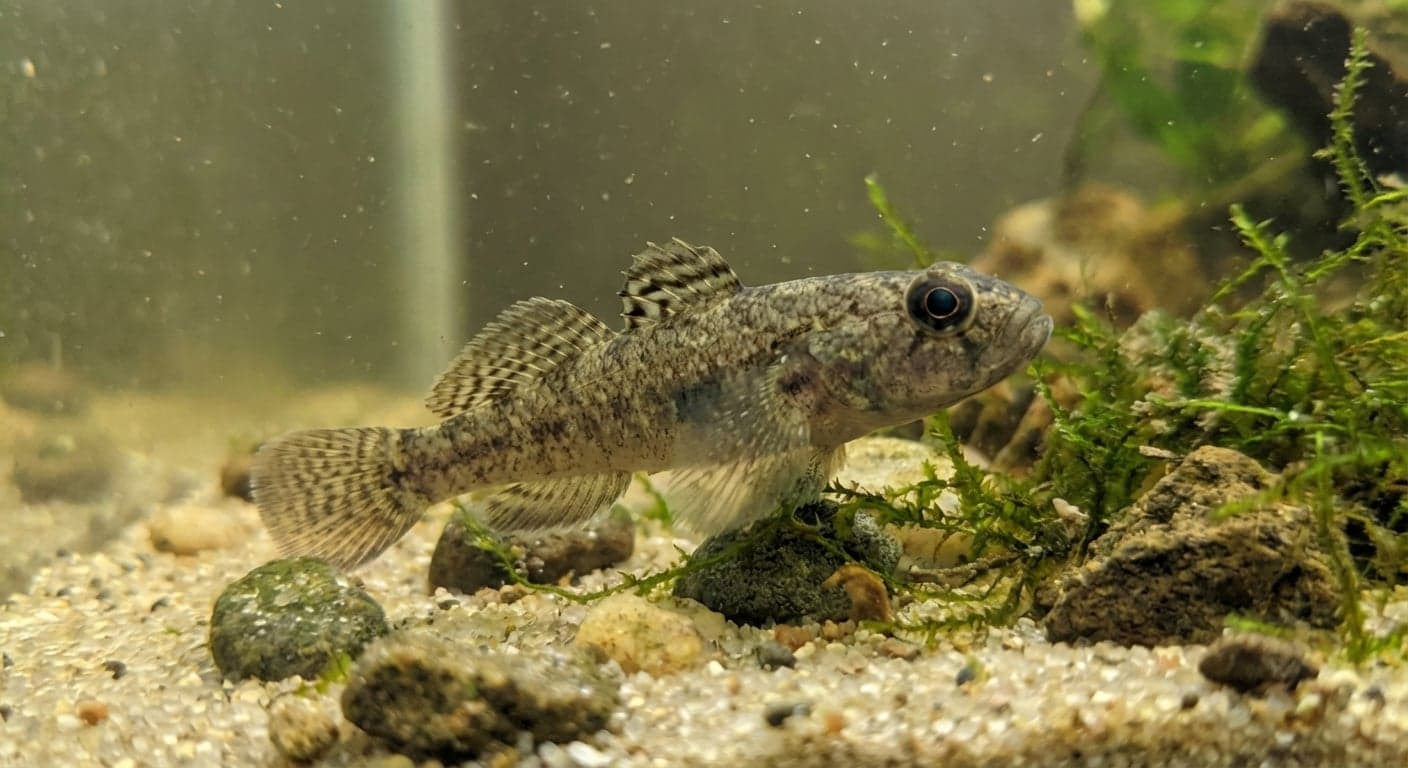
Chalk Goby
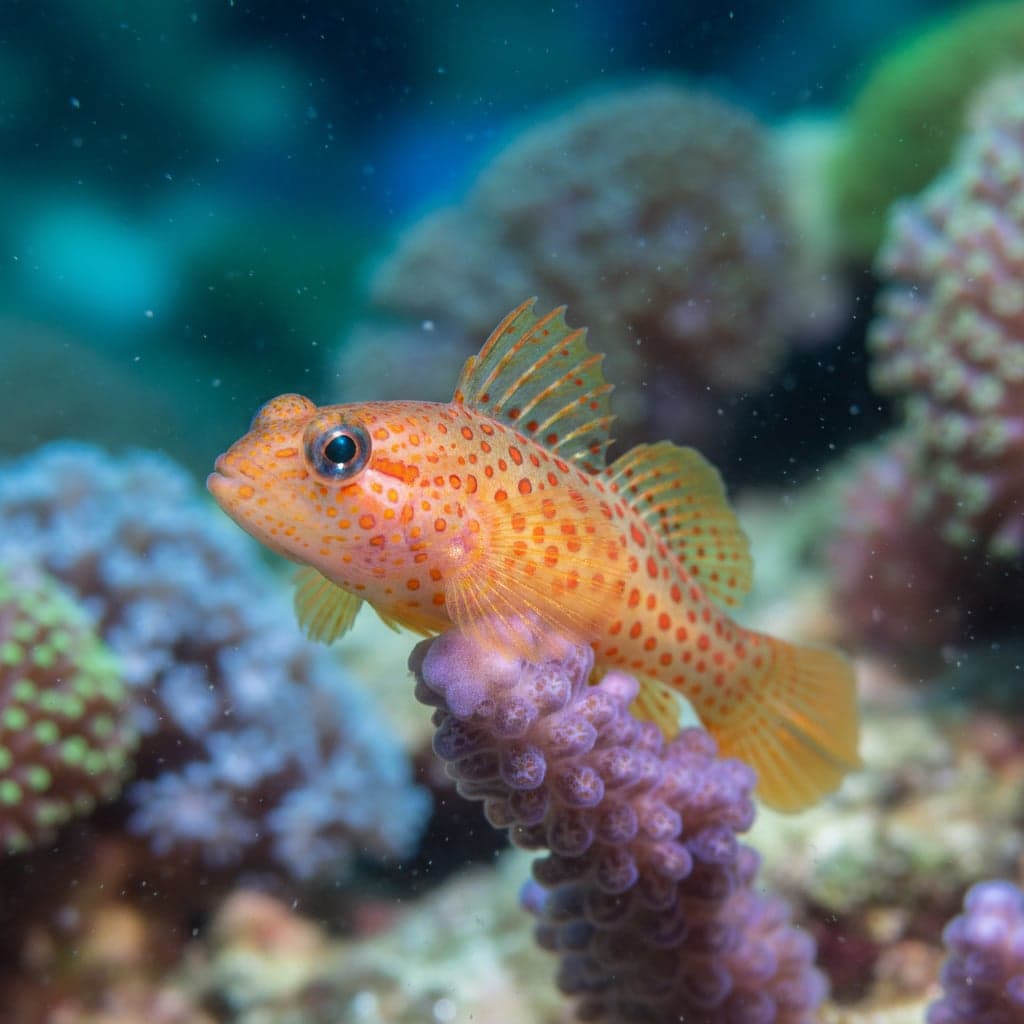
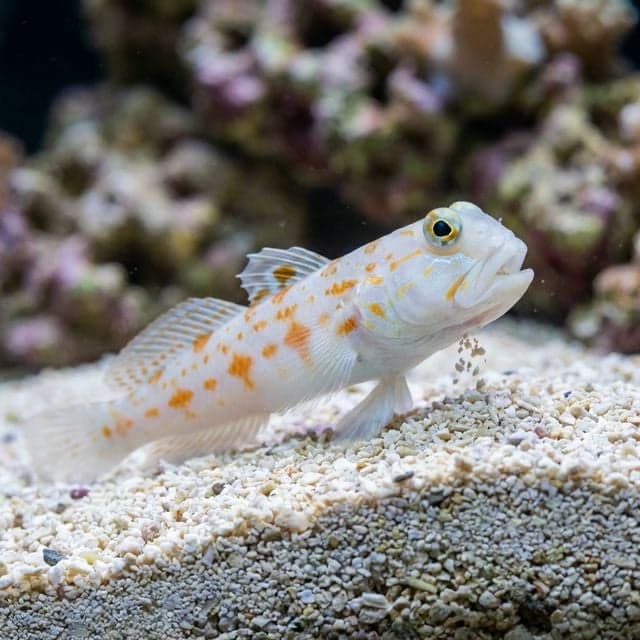
The Chalk Goby (Valenciennea sexguttata), also called the sixspot sleeper goby, is a clean, pearly-white sand-sifter dotted with small bright blue spots around the head. Like its relatives, it spends its day taking mouthfuls of sand, straining out edible morsels and depositing the cleaned grains back down — keeping the substrate turned over and tidy. Peaceful, reef-safe and useful, it is a popular choice for reef aquariums with a sand bed.
As with all sleeper gobies, the same sand-sifting habit that makes it valuable also makes feeding the central care challenge.
Natural Habitat & Origin
Valenciennea sexguttata is found across the Indo-Pacific, where it inhabits lagoons and sheltered reef flats over sandy substrates, sharing a burrow excavated beneath rock or rubble with a mate. Pairs retreat to the burrow when threatened and at night.
In captivity this means a need for an open, fine-to-medium sand bed several centimetres deep, with some rock or rubble providing burrow sites. A secure lid is essential, as sleeper gobies are accomplished jumpers.
Care Requirements
Maintain stable marine conditions: salinity around 1.024–1.026, pH 8.1–8.4, and a temperature of about 24–26°C (75–79°F). Reaching around 14 cm (5.5 inches), it is best given a tank of around 113 litres (30 US gallons) or more with a mature, well-populated sand bed; the established microfauna of an older system is a major advantage. Avoid bare-bottom tanks and very coarse substrate, which it cannot sift.
Diet & Feeding
The Chalk Goby is a carnivorous sand-sifter, feeding on the small crustaceans, worms and other microfauna it strains from mouthfuls of sand, plus scavenged matter. In a new or sparsely populated tank the natural food supply is quickly exhausted — the most common cause of decline — so supplemental feeding is essential. Offer frequent small meals of frozen mysis, enriched brine shrimp, finely chopped seafood and sinking marine pellets, and watch body condition; a pinched, hollow belly signals a goby that needs more food.
Behavior & Temperament
This is a peaceful, well-mannered fish that ignores most tankmates and is often kept as a bonded pair. It is not aggressive toward other species, though two unpaired sleeper gobies may quarrel, so keep a single specimen or a known pair. Most of its time is spent foraging across the sand and tending its burrow.
Tank Mates
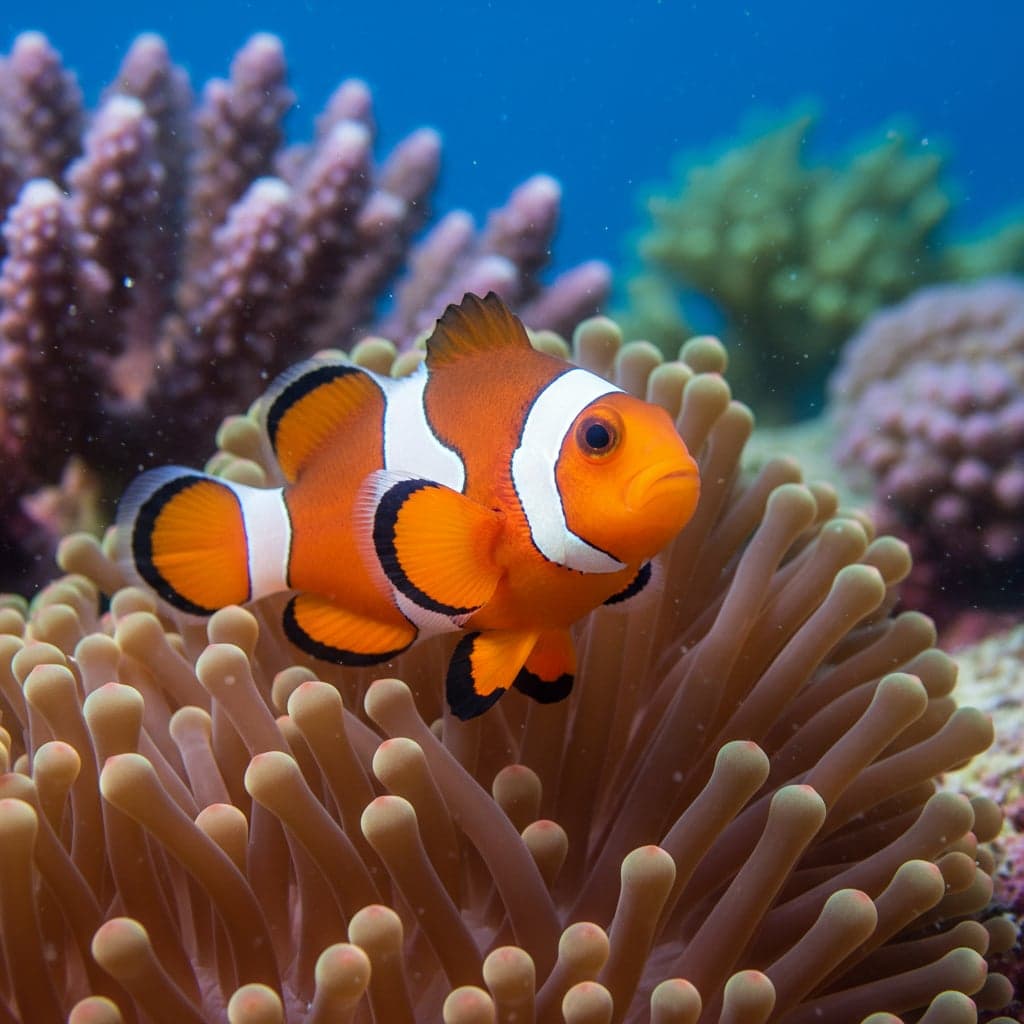
Pair it with other peaceful reef fish — clownfish, firefish, smaller wrasses, cardinalfish, anthias and similar. Avoid aggressive or boisterous tankmates that may outcompete it for food. It is reef-safe — it won't harm corals or invertebrates — though its constant sand-shifting can occasionally dust low-lying corals or undermine unsecured rockwork, so aquascape with that in mind.
Breeding
Valenciennea sexguttata forms monogamous pairs and has spawned in aquaria, laying eggs within the burrow which the male tends. Raising the planktonic larvae is difficult and rarely accomplished outside dedicated setups, so trade specimens are wild-collected.
Common Health Issues
The dominant risk for this species is slow starvation in an under-matured tank, signalled by weight loss despite activity — prevent it with an established sand bed and consistent supplemental feeding. Like all marine fish it can also be affected by marine ich (Cryptocaryon irritans) and marine velvet (Amyloodinium ocellatum), so quarantine new arrivals and keep water quality stable. Secure the lid to prevent jumping, keep it well fed, and the Chalk Goby is a rewarding, hard-working member of a peaceful reef.