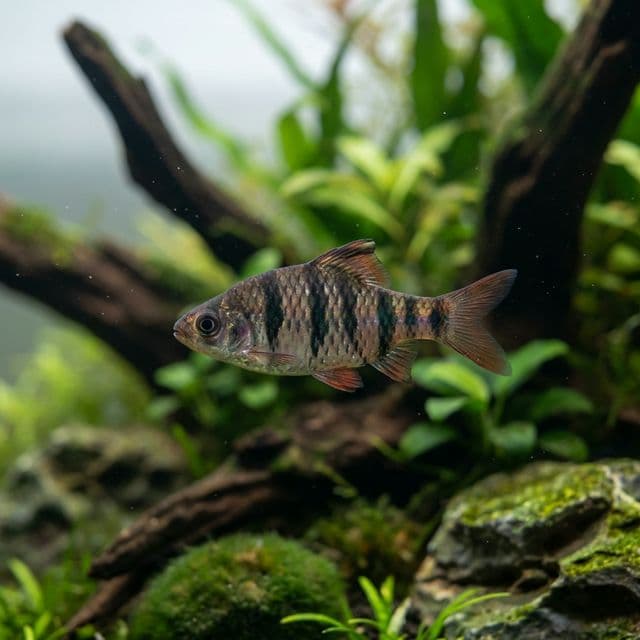
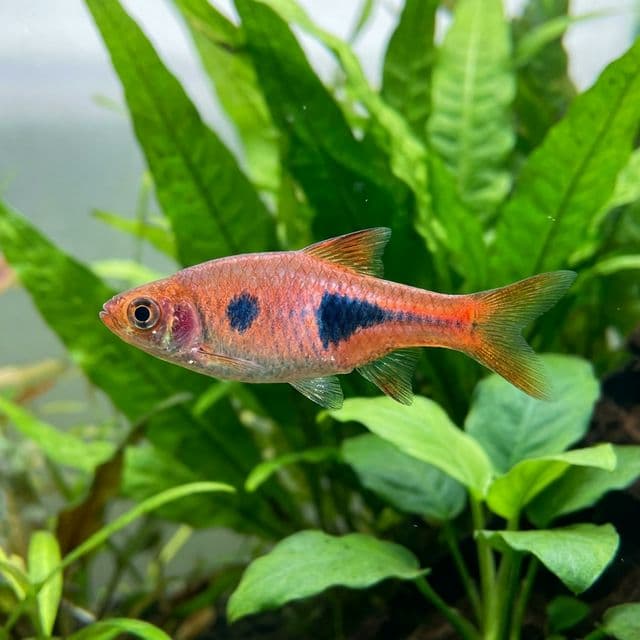
Chilli Rasbora: Boraras brigittae
One of the smallest and reddest nano fish available. Perfect for shrimp tanks.

Chilli Rasbora
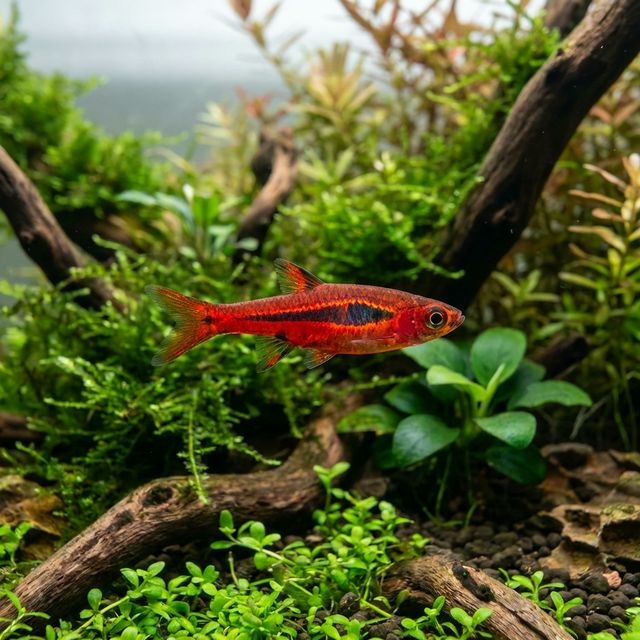
The Chilli Rasbora, scientifically known as Boraras brigittae, is a captivating species of fish that enchants aquarists with its vibrant colors and lively behavior. Often referred to as the "red rasbora," this small fish showcases a stunning mix of iridescent blue and bright red hues, especially striking in males, which display a vivid crimson stripe along their bodies. These exquisite colors are not only visually appealing but also contribute to their popularity in the aquarium hobby. Typically reaching just around 1 inch (2.5 cm) in length, their small size makes them an ideal choice for nano tanks, and their playful nature adds a dynamic element to any aquatic setting.
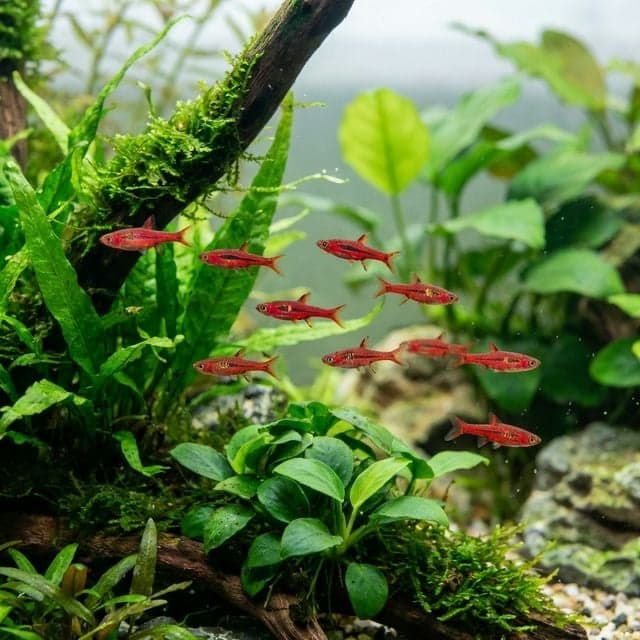
Beyond aesthetics, the Chilli Rasbora holds significant value in the aquarium community for its peaceful demeanor and suitability for community tanks. As a schooling fish, it thrives when kept in groups of six or more, providing a delightful display of their natural social structures. Their hardy nature also makes them a suitable choice for beginners and advanced aquarists alike, as they adapt well to a range of conditions. Thus, this charming little fish not only elevates the visual allure of aquariums but also enhances the hobbyist experience through its engaging behavior.
Natural Habitat & Origin
The Chilli Rasbora is native to the slow-moving streams and swamps of Southeast Asia, primarily found in regions such as Borneo, Sumatra, and Malaysia. In their natural habitats, these fish inhabit blackwater environments, characterized by low light levels and high concentrations of tannins and organic material, which impart a distinct dark coloration to the water. These conditions create a unique ecosystem with submerged leaf litter, roots, and aquatic plants, offering ample hiding spots and foraging opportunities for the fish. The chemical composition of these waters typically reveals soft, acidic conditions that are crucial for their overall well-being.
In the wild, the Chilli Rasbora often swim amidst dense vegetation, where they seek cover from predators while foraging for small invertebrates and plant matter. Their adaptation to these environments has influenced their behavior and care requirements in captivity, making it essential for aquarists to replicate such conditions to ensure their health and tranquility.
Care Requirements
To thrive in captivity, Chilli Rasboras require specific water parameters that closely mimic their natural habitat. The ideal pH level ranges between 5.0 and 7.0, with temperatures maintained between 72°F and 78°F (22°C to 26°C). These gentle fish prefer soft water, with hardness levels ideally below 10 dGH. Maintaining stable water conditions is critical, as fluctuations can lead to stress and health issues.
When setting up a tank for Chilli Rasboras, a minimum size of 10 gallons is recommended, especially for a small school of at least six individuals. The substrate should be dark and soft, mimicking their natural habitat, while plants such as Java moss, floating ferns, and other dense vegetation are crucial for providing hiding spots and promoting a sense of security. Low to moderate lighting is beneficial, as it replicates the dimly lit environments of their native waters. Incorporating driftwood and leaf litter can enhance the tank's aesthetic appeal while also contributing to the beneficial biofilm that these fish thrive on.
Diet & Feeding
Chilli Rasboras are omnivorous, feeding primarily on small invertebrates, plant detritus, and algae in their natural habitats. In captivity, a varied diet is crucial for their health and coloration. High-quality flake foods specifically designed for small fish can be a staple in their diet; however, it is best to supplement their feeding with finely crushed pellets, frozen foods like daphnia, brine shrimp, or live foods such as microworms. This enriches their diet and promotes healthy growth and vibrant color development.
Feeding should occur multiple times a day in small quantities to mimic their natural foraging behavior, ensuring that all fish receive their share of food and minimizing waste that could impact water quality.
Behavior & Temperament
Chilli Rasboras are noted for their peaceful and sociable nature, making them excellent community fish. They exhibit schooling behavior, preferring to swim in groups, which enhances their sense of security and reduces stress levels. When kept in adequate numbers, their natural behaviors emerge, allowing aquarists to observe playful interactions and coordinated swimming patterns.
In terms of aquarium hierarchy, Chilli Rasboras tend to occupy the middle levels of the tank, often darting through vegetation and exploring various regions. They are not aggressive and can coexist harmoniously with other small, community-friendly species, provided that their tank mates are also non-aggressive and not large enough to see them as potential prey.
Tank Mates
When it comes to selecting tank mates for the Chilli Rasbora, there are numerous suitable options that share similar environmental needs. Ideal companions include small, peaceful fish such as Neon Tetras, Guppies, Endler's Livebearers, and other small Rasboras. Additionally, invertebrates like shrimp (e.g., Cherry Shrimp or Amano Shrimp) can coexist without issues, as these fish are not a threat to them.
However, it is crucial to avoid larger, aggressive species that may perceive the Chilli Rasbora as food or exhibit territorial behavior. Species such as Cichlids, large Barbs, and most Catfish can pose significant threats due to their size and temperament, which could result in stress or harm to the Chilli Rasboras.
Breeding
Breeding Chilli Rasboras in captivity can be a rewarding endeavor, though it requires specific conditions to be successful. These fish are egg layers and will typically spawn in a well-planted tank, where females can lay their eggs, which are adhesive. For breeding, it is advisable to maintain a separate breeding tank with slightly softer and more acidic water than their usual habitat, ideally working with a pH of around 5.5.
During the spawning process, males will display courtship behaviors, and once the female is ready, she will deposit eggs among the plant fibers. After spawning, it is crucial to remove the parents, as they may eat the eggs or fry. The eggs will generally hatch within 24 to 36 hours, with fry becoming free-swimming a few days later, after which they can be fed on infusoria, finely crushed flakes, or specialized fry food.
Common Health Issues
Chilli Rasboras are generally hardy fish; however, they can be prone to certain health issues, especially if kept in suboptimal conditions. Common ailments include Fin Rot, Ich (white spot disease), and various forms of parasitic infections. Maintaining pristine water quality through regular changes and ensuring stable parameters can significantly reduce the risk of these issues.
Preventative measures are crucial; it is advisable to quarantine new arrivals before introducing them to the main tank, monitor tank mates for aggressive behavior, and maintain a balanced diet to bolster their immune systems. If any signs of illness are observed, prompt treatment is essential to ensure the well-being of these charming little fish.