False Rummynose: Petitella georgiae
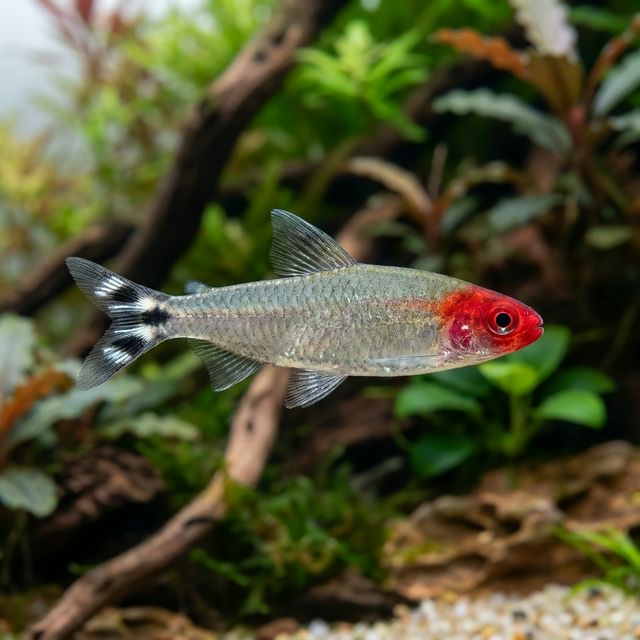
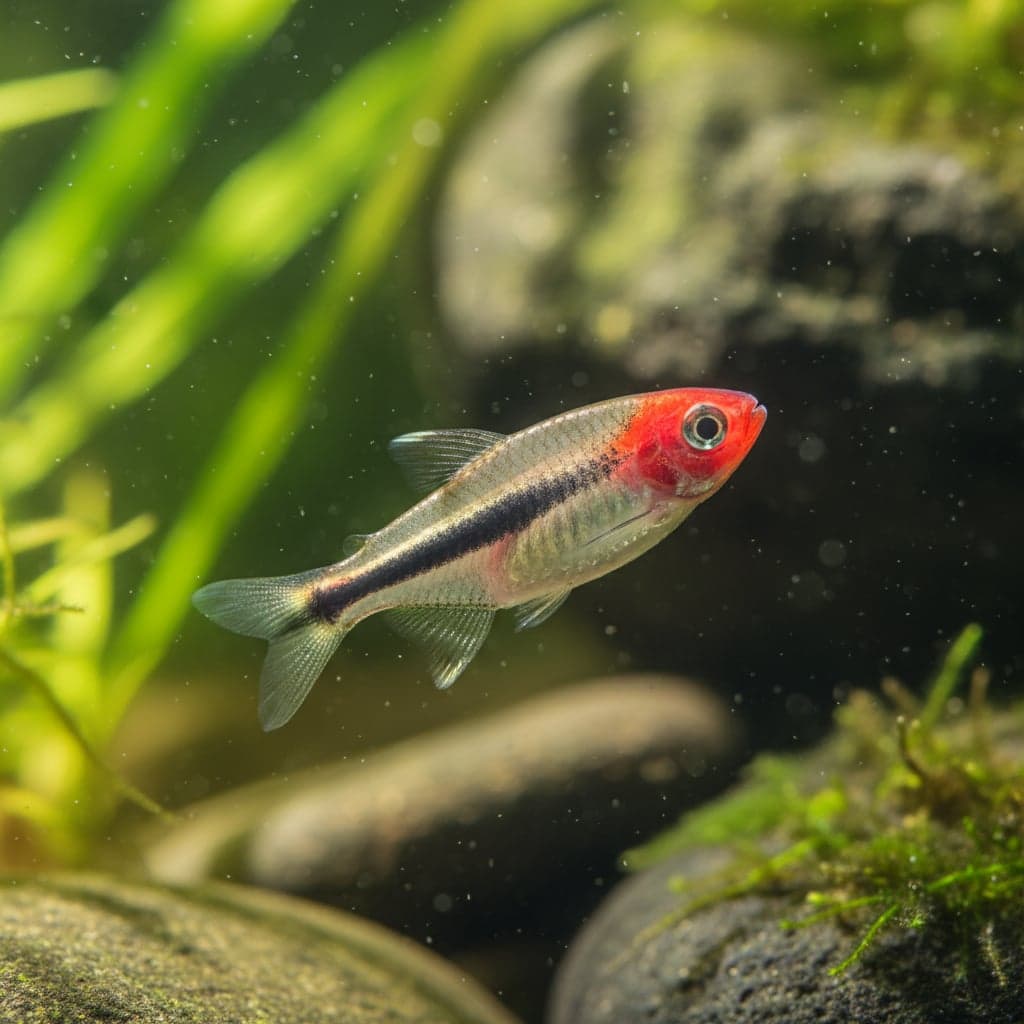
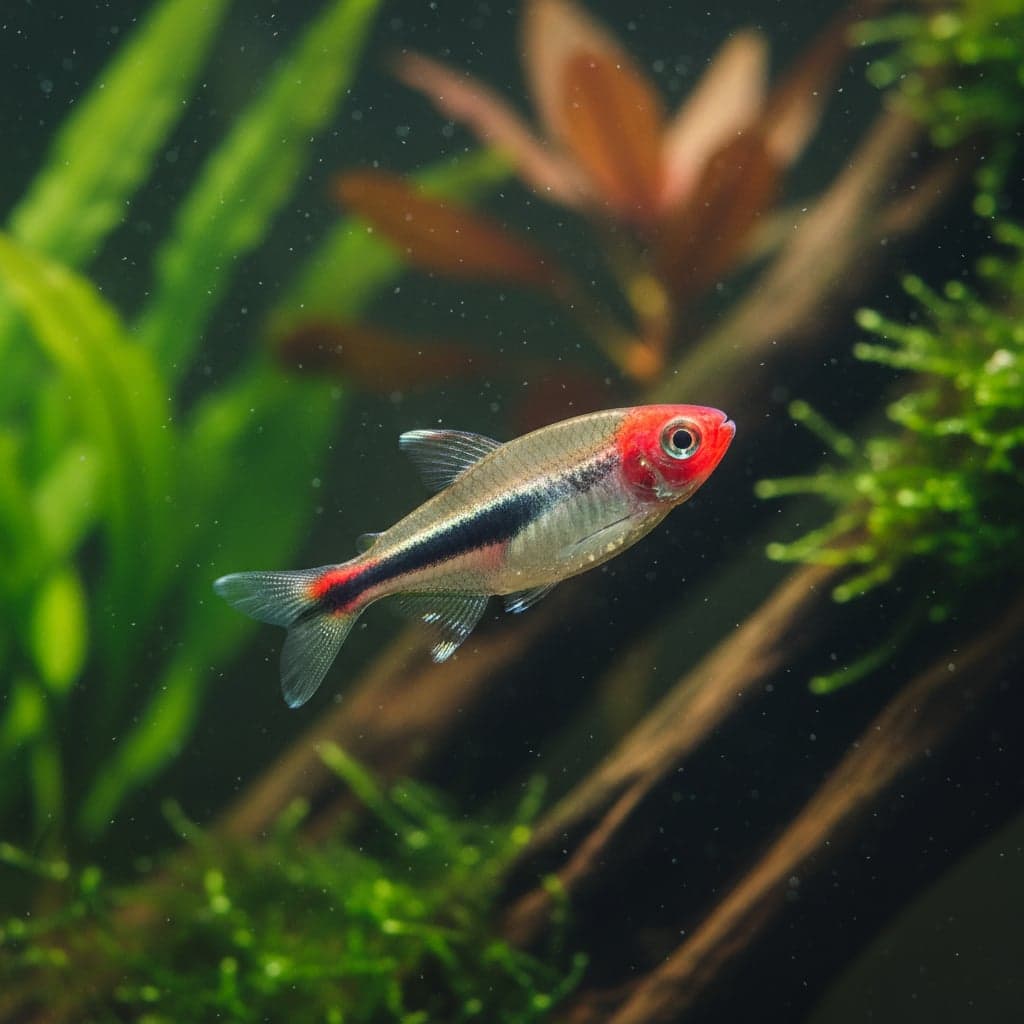
Very similar to the true Rummynose Tetra but with a slightly different red pattern. Equally beautiful schooler.
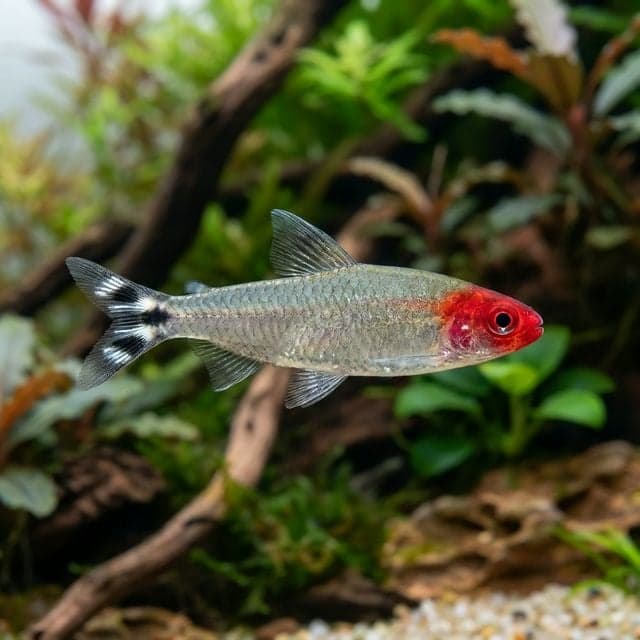
False Rummynose
The False Rummynose, scientifically known as Petitella georgiae, is a captivating freshwater fish that has been gaining popularity among aquarists due to its striking appearance and peaceful disposition. A member of the Characidae family, this fish features a sleek, elongated body adorned with bright red markings on its head and dorsal fin, which resemble the famed Rummynose Tetra, hence the common name. Its shimmering scales reflect light beautifully, creating an eye-catching display in any aquarium setting. The False Rummynose grows to about 2 inches in length, making it suitable for both nano tanks and larger setups.
In the aquarium hobby, the False Rummynose is significant for its visual appeal and its role in creating a lively community tank atmosphere. It exhibits lively behavior, often darting around the tank in small schools, which not only enhances the aesthetics of the aquarium but also contributes to the interaction of visual stimuli for the observer. The species serves as an important ambassador for the conservation of its natural habitats, as its popularity can lead to increased interest in preserving the ecosystems from which it originates.
Natural Habitat & Origin
The native range of the False Rummynose is primarily found in the clear waters of the Rio Orinoco basin in Venezuela. This species inhabits areas characterized by slow-moving streams and blackwater environments, where the waters are rich in tannins, giving them a tea-colored appearance. The natural habitat is usually densely vegetated with submerged roots and fallen leaves, providing ample hiding spots and breeding grounds for the fish. The ecological context is crucial for the survival of the False Rummynose, as the complexity of this environment allows for a diverse array of microorganisms which contribute to the overall health of the species.
These conditions play an essential role in the care and maintenance of False Rummynose in captivity. By mimicking their natural habitat, aquarists can provide a more conducive environment that promotes the well-being of these fish. Understanding the environmental context of the False Rummynose is not only vital for their survival but also enhances the enjoyment of keeping them in aquaria.
Care Requirements
To ensure the optimal health and longevity of the False Rummynose, specific water parameters must be maintained. The ideal pH level should range between 5.5 and 7.5, with a temperature range from 74°F to 82°F (23°C to 28°C). The water hardness should be moderately soft, ideally between 2 to 10 dGH. Setting up a suitable tank for these fish requires a minimum size of 10 gallons, allowing for adequate swimming space.
The tank should feature a soft substrate—like sand or fine gravel—and include plenty of plants, driftwood, and hiding places to replicate their native habitat. Low to moderate lighting is recommended, with floating plants or taller plants providing shaded areas. This setup not only enhances the visual appeal of the aquarium but also creates a comfortable environment for the False Rummynose to thrive.
Diet & Feeding
The False Rummynose is an omnivorous species, which allows for a varied and balanced diet. In captivity, these fish will thrive on high-quality flake foods and small pellets designed for freshwater fish. Supplementing their diet with live and frozen foods, such as daphnia, brine shrimp, and bloodworms, can enhance their coloration and vitality. It's essential to avoid overfeeding, as this can lead to water quality issues; regular feedings of modest portions will help maintain their health.
A well-rounded diet should mimic the natural foraging behavior of False Rummynoses, providing them with nutrients and variety. Ensuring that their nutritional needs are met will promote optimal growth and enhance their vibrant colors, contributing to an eye-catching display in your aquarium.
Behavior & Temperament
False Rummynoses are known for their peaceful and social behavior, making them an excellent addition to community tanks. These fish are shoaling species, meaning they thrive in groups of six or more, which is essential for their emotional well-being. They display natural schooling behavior, often darting in synchronized movements, which presents a lively and interactive scene in the aquarium.
In terms of aggression, False Rummynoses are generally non-aggressive and can coexist peacefully with other fish species. They tend to occupy the mid to upper levels of the tank, making them an ideal species to complement bottom-dwelling inhabitants. Providing adequate space and suitable tank mates will promote harmony within the aquarium and reduce stress among the fish.
Tank Mates
Choosing the right tank mates is crucial for the well-being of False Rummynoses. They are compatible with many peaceful community fish such as other small tetras, rasboras, guppies, Corydoras catfish, and certain dwarf cichlids. When selecting tank mates, it’s important to avoid aggressive species that may stress or harm the False Rummynose.
Potential tank mates to avoid include larger or more aggressive fish, such as cichlids (e.g., Oscars or Jack Dempsey), and any fin-nipping species that could harass the False Rummynose. Creating a balanced community aquarium with appropriate companions will contribute to the overall success of maintaining False Rummynoses.
Breeding
Breeding False Rummynoses in captivity can be a rewarding experience but requires specific conditions to be met. These fish are egg scatterers, meaning they do not exhibit parental care once the eggs are laid. To encourage breeding, it’s essential to condition the breeding pair with high-quality live or frozen foods for several weeks. Providing a separate breeding tank with softened water (pH around 6.0) and a temperature of approximately 76°F (24°C) can create a conducive environment for spawning.
The breeding tank should be sparsely decorated with fine-leaved plants or spawning mops to provide the female with suitable places to lay her eggs. Once spawning occurs, it is advisable to remove the adults post-spawning to prevent them from consuming the eggs. Given optimal conditions, the eggs will typically hatch within 24 to 36 hours, and the fry will be free-swimming within a few days. Feeding the fry with infusoria or finely powdered foods during their early development will promote healthy growth.
Common Health Issues
False Rummynoses, like many freshwater fish, can be susceptible to certain health problems. Common ailments include ich (Ichthyophthirius multifiliis), fin rot, and bacterial infections. Maintaining stable water parameters and conducting regular water changes is vital for preventing these issues.
Preventative measures include quarantining new fish before introducing them into a community tank and ensuring that the aquarium environment is clean and stress-free. Observing your False Rummynose for any signs of illness, such as changes in behavior or physical appearance, will allow for early intervention and treatment, helping to ensure a long and healthy life for these charming fish.