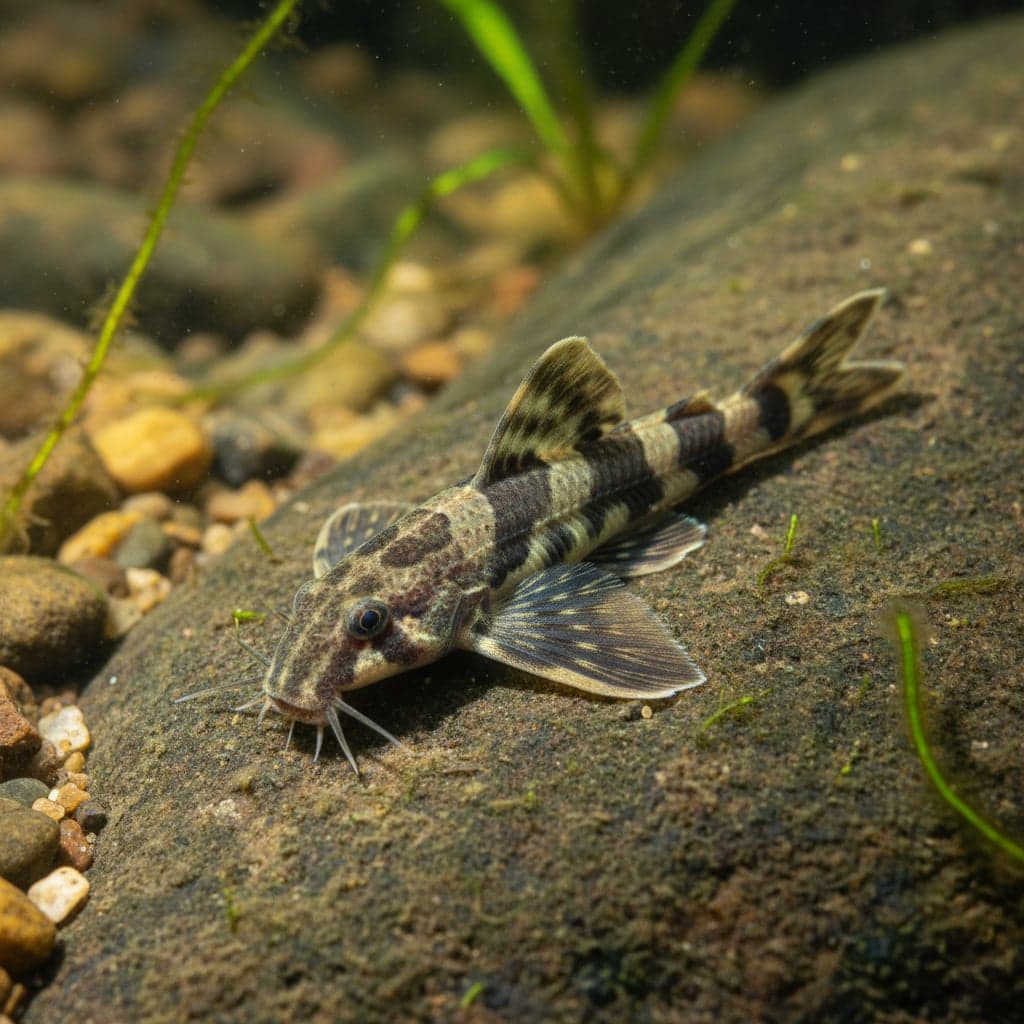
Hairy Puffer
The Hairy Puffer (Pao baileyi) is a bizarre and aggressive freshwater pufferfish from the Mekong River, covered in sensory "hair-like" appendages and acting as a master of ambush.

Hairy Puffer
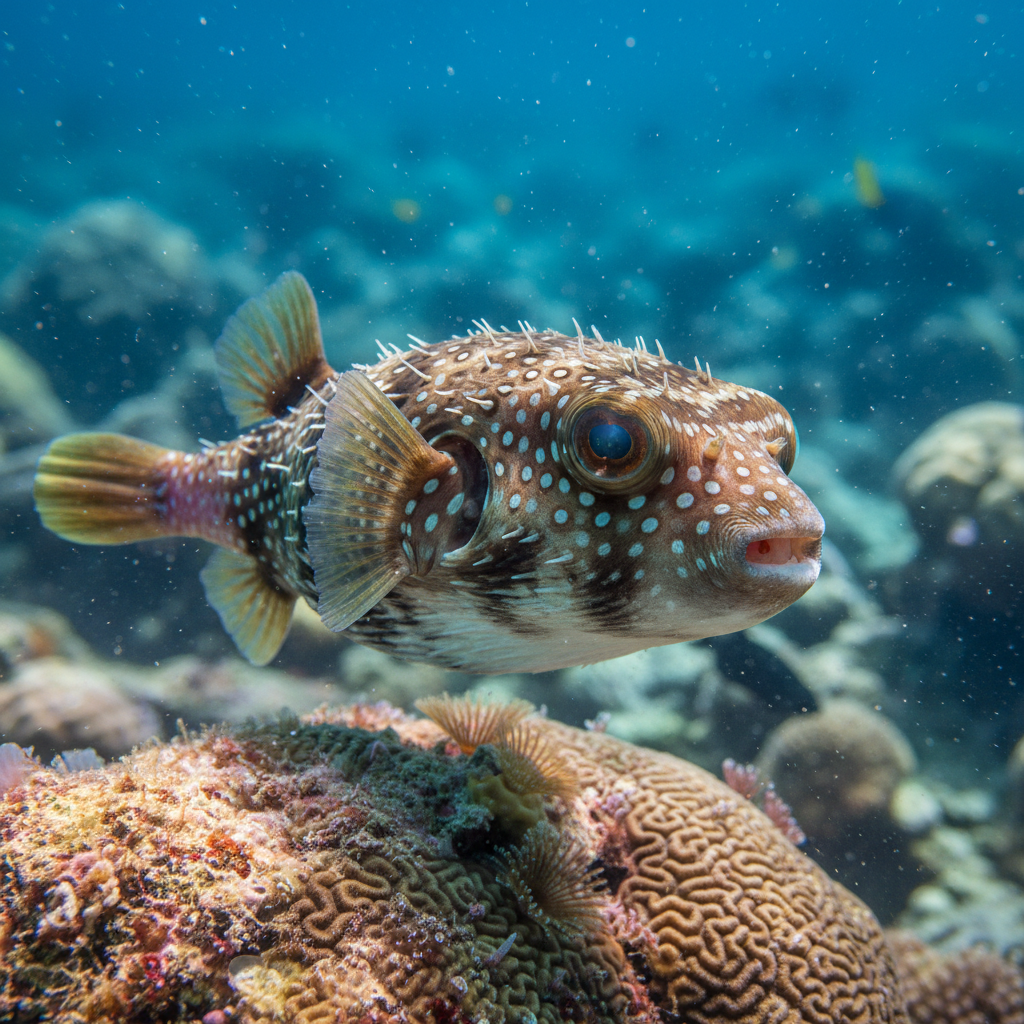
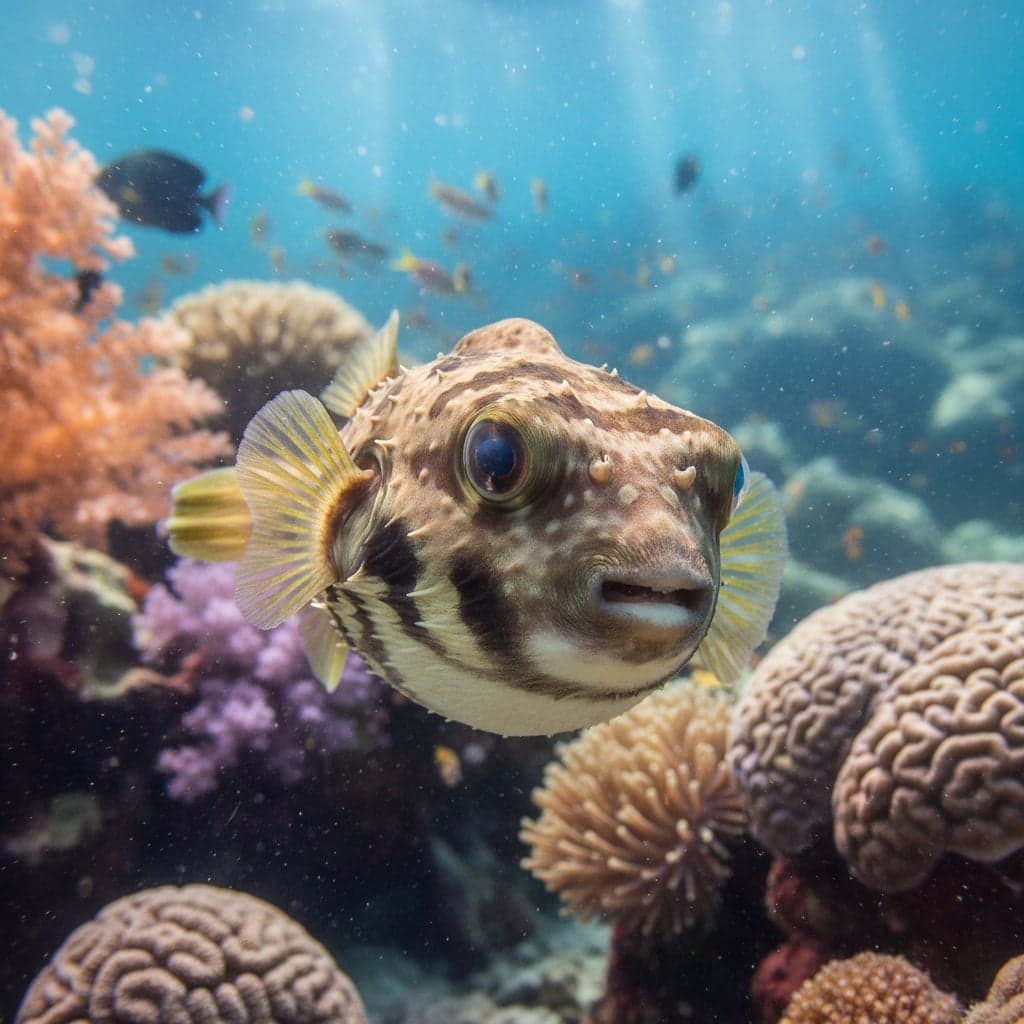
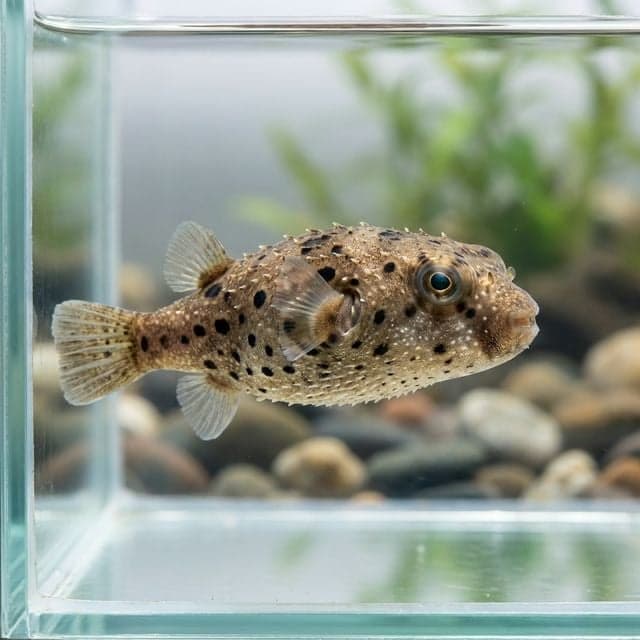
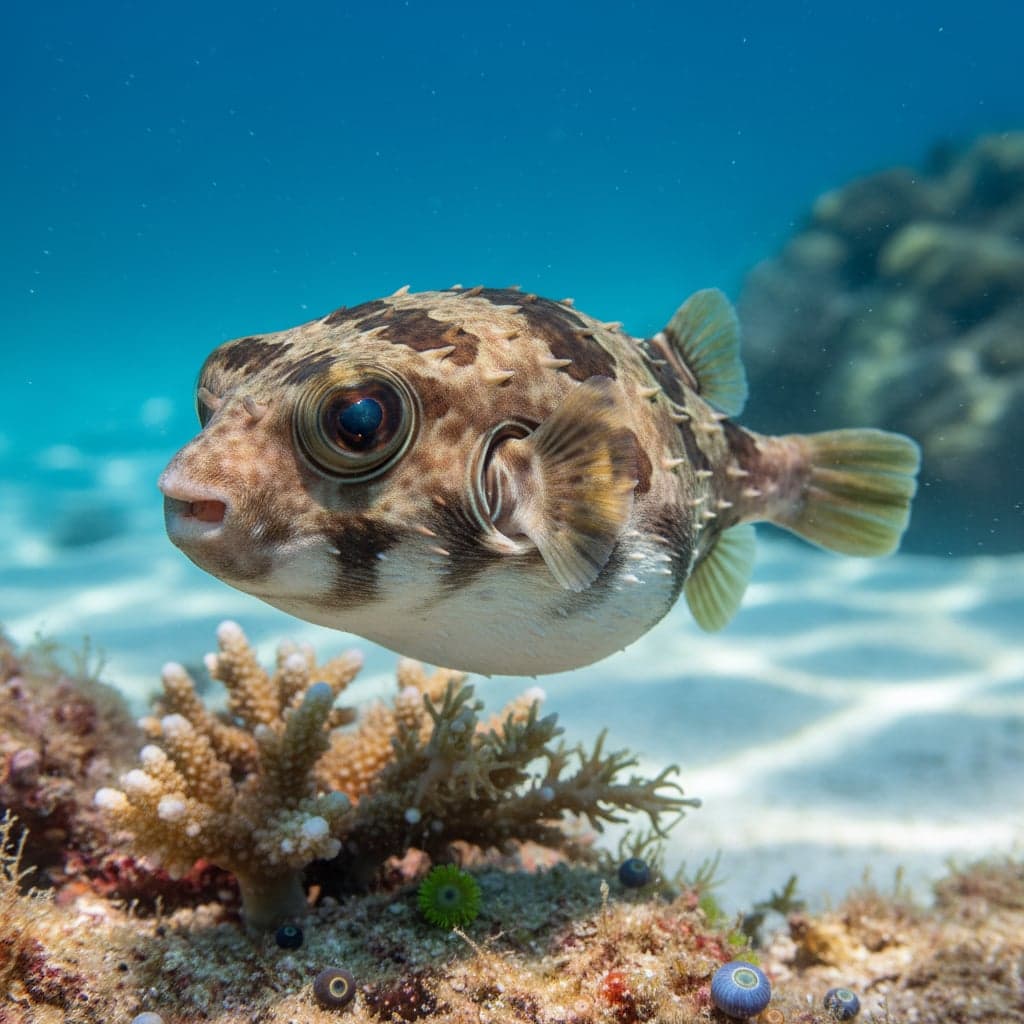
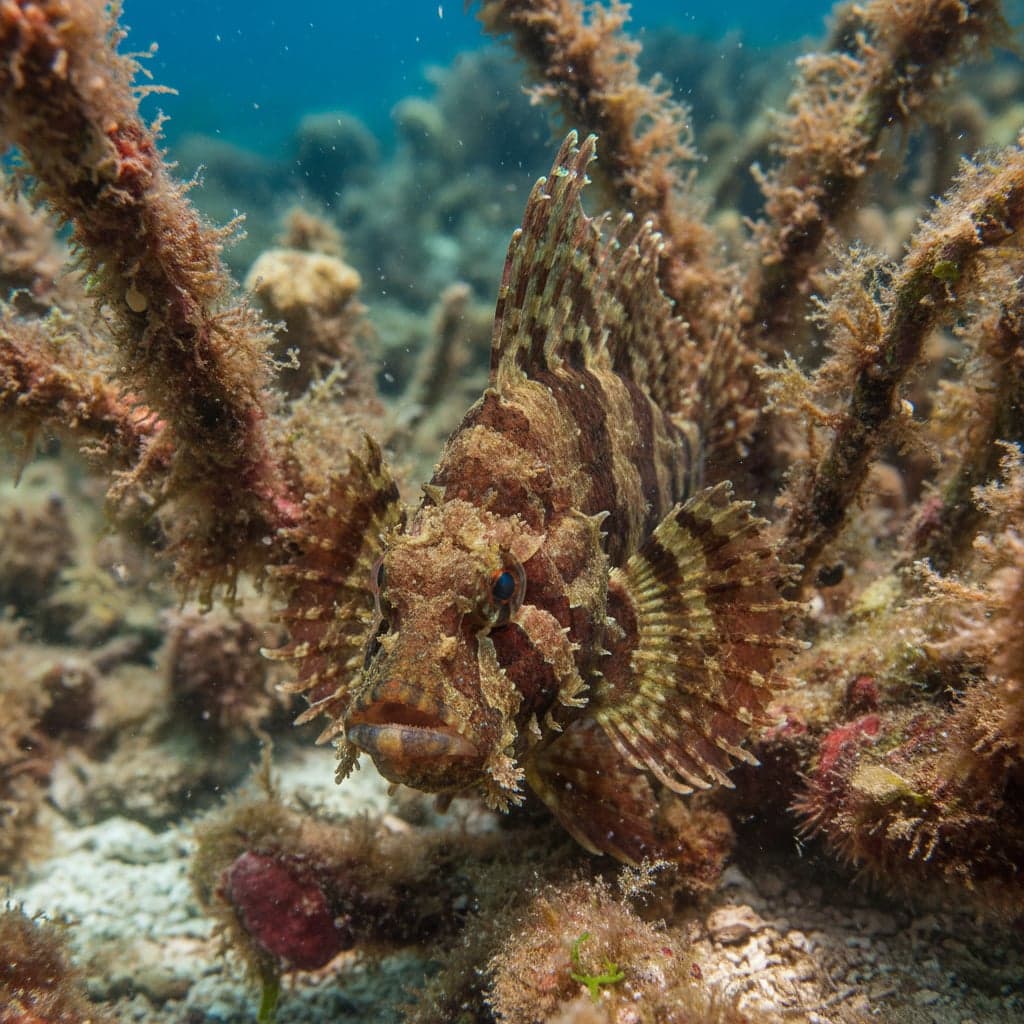
The Hairy Puffer (Pao baileyi) is one of the most unique-looking freshwater puffers in the hobby. Its body is mottled in shades of brown, olive, and grey, perfectly mimicking the rocky riverbeds of its home. Its most striking feature is the numerous fleshy appendages, known as cirri, that cover its head and body. These look like small hairs and are sensory organs that help the puffer detect the movement of prey in turbulent or murky water.
It is a master of camouflage and a lethal ambush predator. In the aquarium, it will often spend hours sitting motionless on a rock or buried in the sand, waiting for a meal to wander within striking distance.
Natural Habitat & Origin
The Hairy Puffer is endemic to the Mekong River basin, particularly in the rocky mainstream sections of the river in Thailand and Laos. They are typically found in areas with high water flow and plenty of crevices between boulders and submerged logs. Unlike many other puffers that prefer still or slow-moving water, the Hairy Puffer is well-adapted to the powerful currents of the Mekong.
Care Requirements
The Hairy Puffer requires a specialized setup that reflects its riverine origin. A minimum tank size of 30 gallons (120L) is required for a single adult. Because they come from fast-flowing rivers, they require high oxygen levels and a moderate to strong water current. Efficient filtration is a must, as puffers are messy eaters and produce a high bioload.
The aquarium should be decorated with large, smooth river stones, boulders, and driftwood to create numerous caves and hiding spots. A sand substrate is ideal, as they may occasionally bury themselves. pH should be kept neutral to slightly alkaline (6.5 to 7.5). They are sensitive to nitrates and require regular, large water changes.
Diet & Feeding
Hairy Puffers are primarily molluscivores and carnivores. In the wild, they feed on a variety of crabs, prawns, snails, and small fish.
In the aquarium, their diet must include hard-shelled foods to wear down their continuously growing "beak." Staple foods should include:
- Snails (Pond, Ramshorn)
- Shell-on shrimp or prawns
- Small crabs or crayfish
- Mussels and clams
They may occasionally accept high-quality sinking carnivore pellets, but live or frozen meaty foods are essential for their health. As sedentary predators, they have a relatively slow metabolism and should not be overfed.
Behavior & Temperament
The Hairy Puffer is exceptionally aggressive and highly territorial. They do not tolerate other fish and often do not even tolerate their own kind unless in an exceptionally large tank. They are highly intelligent and will often "beg" for food or interact with their owners, but this personality hides a ruthless predatory instinct.
They are ambush predators; they do not pace the tank but rather choose a spot and wait. This makes them appear "boring" to some, but their sudden, lightning-fast strike during feeding is a spectacle.
Tank Mates
The Hairy Puffer is best kept in a species-only, solitary tank. It is virtually impossible to keep this fish with tank mates long-term. Even much larger fish are at risk of being bitten or harassed, and any smaller fish will be eaten. Traditional "puffer-safe" fish like large barbs or fast-moving danios are often eventually caught off guard by the puffer's ambush tactics. Do not attempt to house with peaceful fish like Gouramis or Tetras.
Breeding
Breeding Pao baileyi in captivity is extremely rare. They are substrate spawners, laying eggs in caves or crevices which the male then guards. However, getting a pair to tolerate each other long enough to spawn is the primary challenge. Most specimens in the hobby are wild-caught.
Common Health Issues
The most common issues are internal parasites and overgrown teeth (beaks) from a lack of hard-shelled food. If the beak grows too long, the puffer will be unable to eat and will starve. They are also sensitive to high nitrates and ammonia. Like all scale-less fish, they are more sensitive to certain medications, especially copper. Maintaining high water quality and a proper diet is the best preventative strategy.