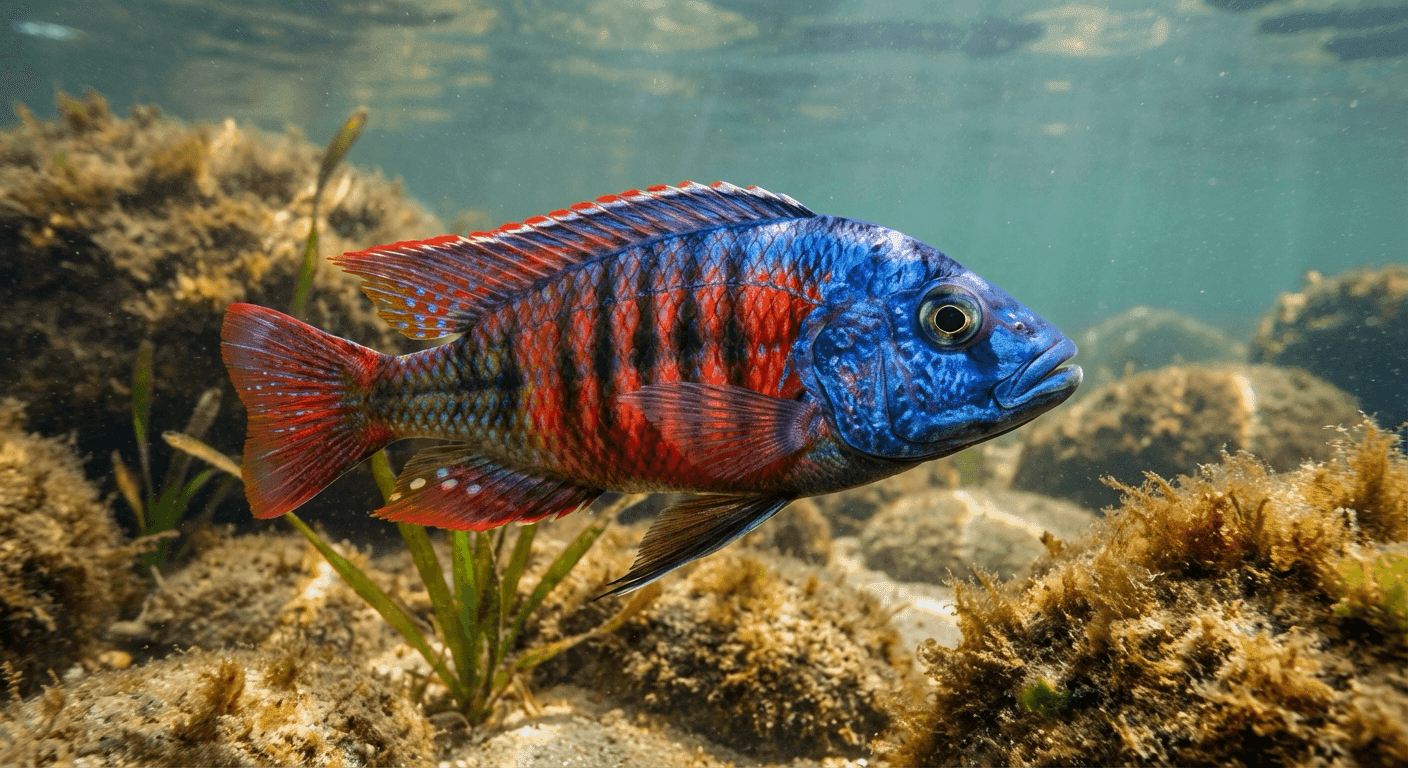
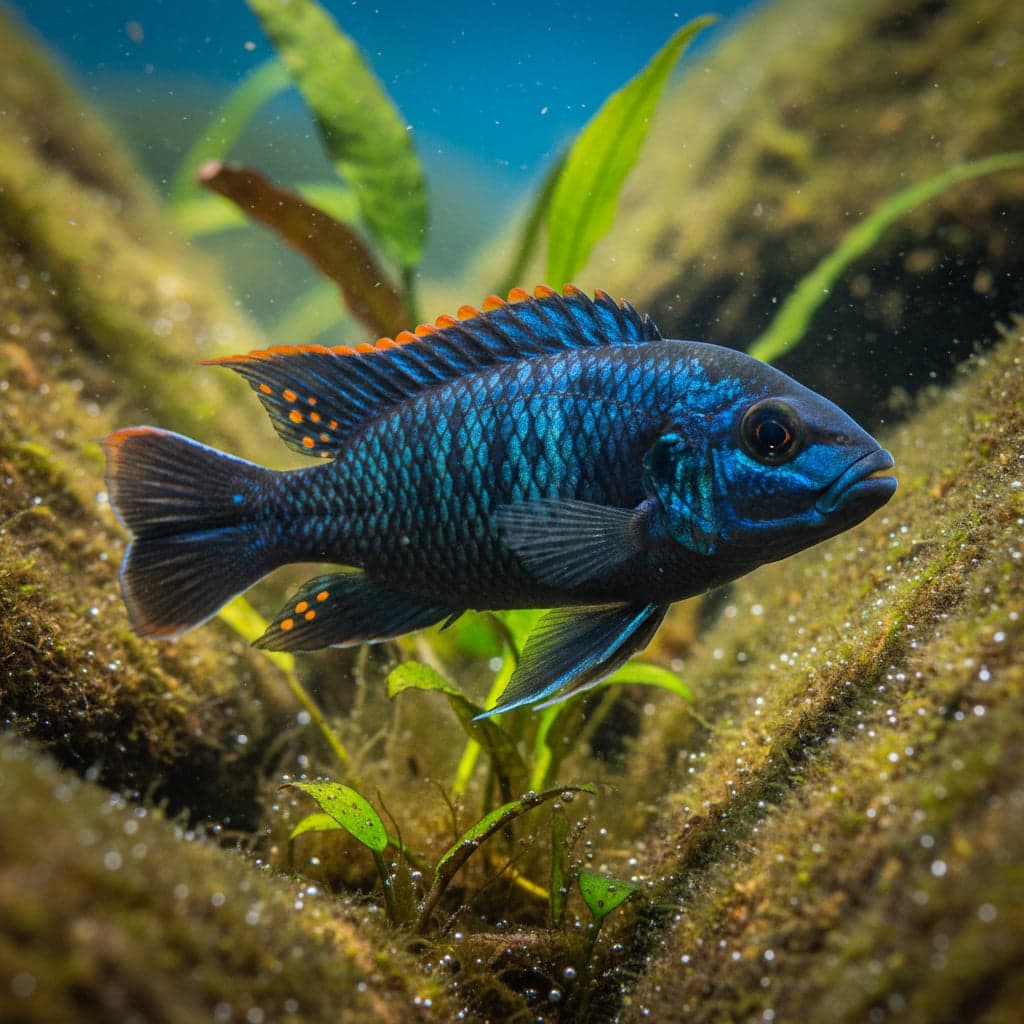
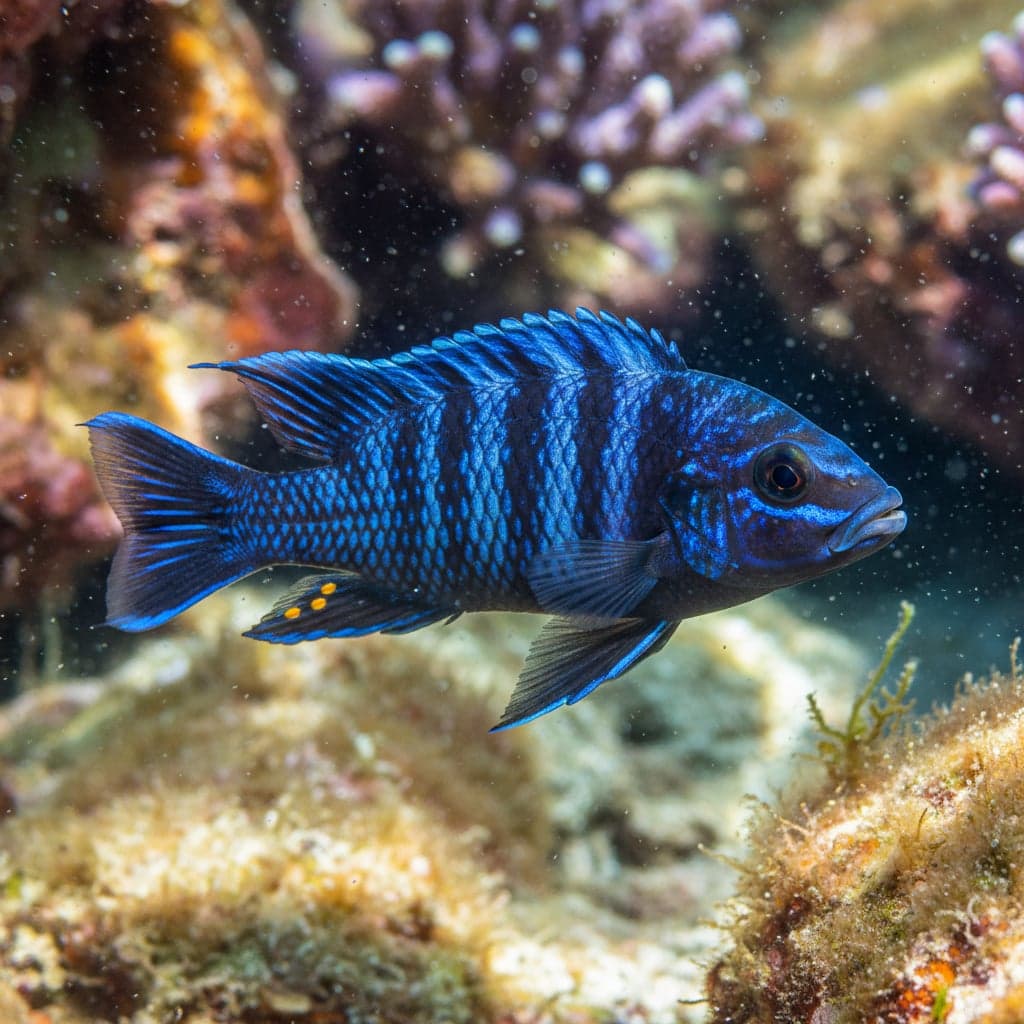
Hap Livingstonii: Nimbochromis livingstonii
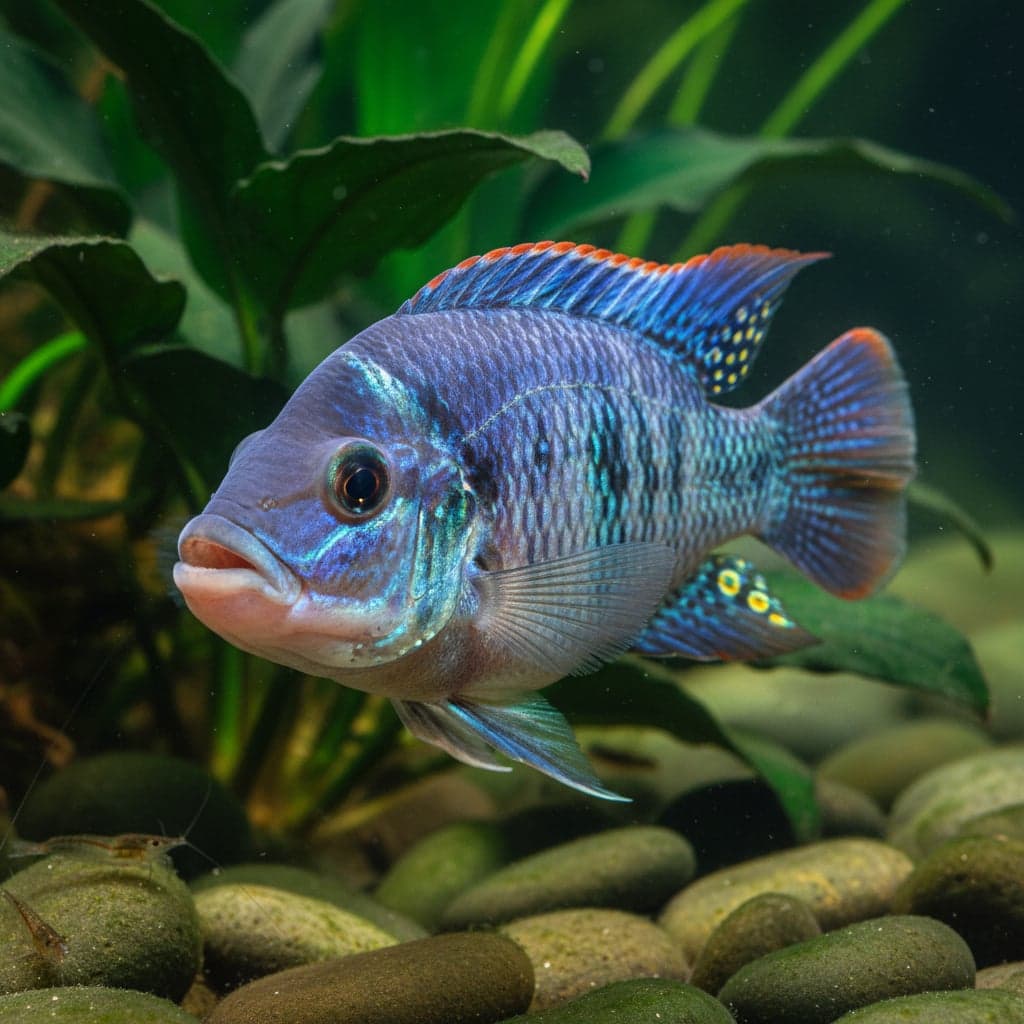
The Hap Livingstonii (Nimbochromis livingstonii), also known as the Kalingono, is a large and intelligent predator from Lake Malawi, famous for its unique strategy of "playing dead" to ambush prey.
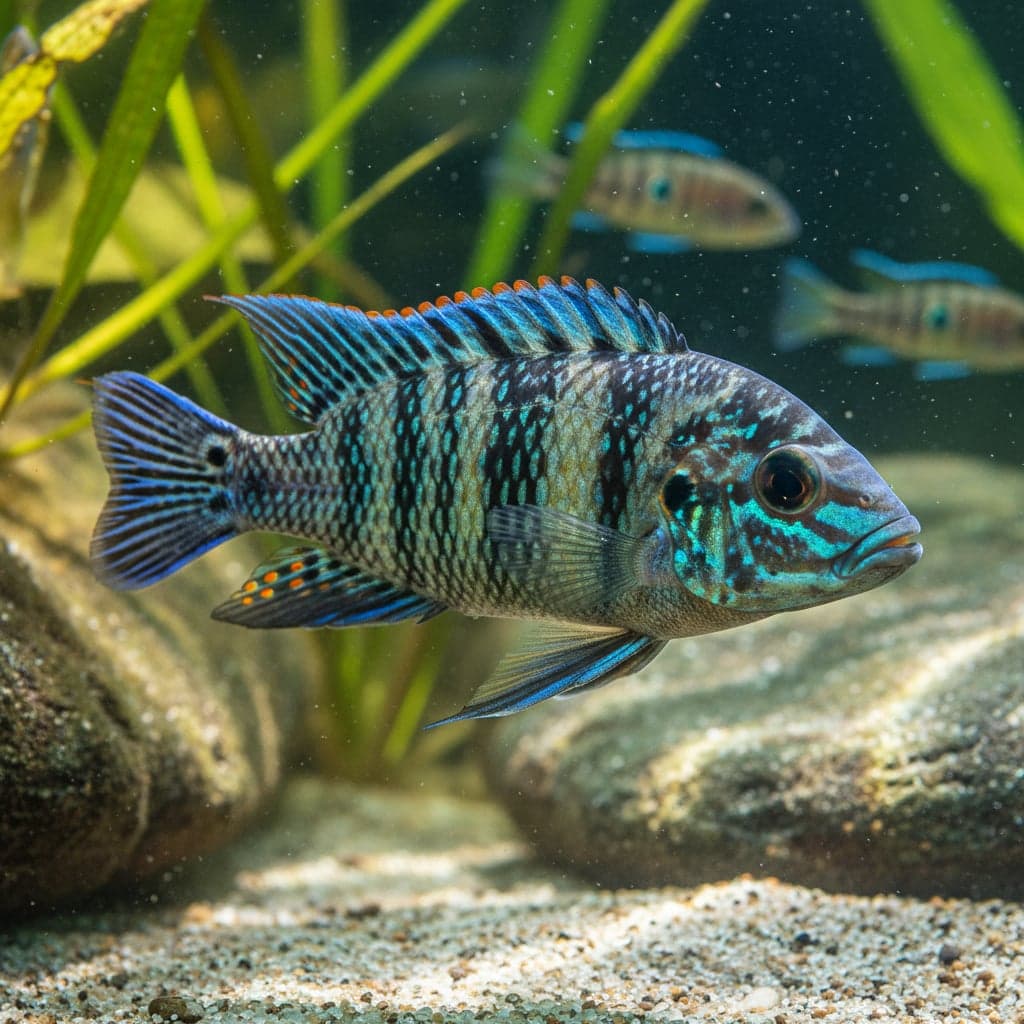
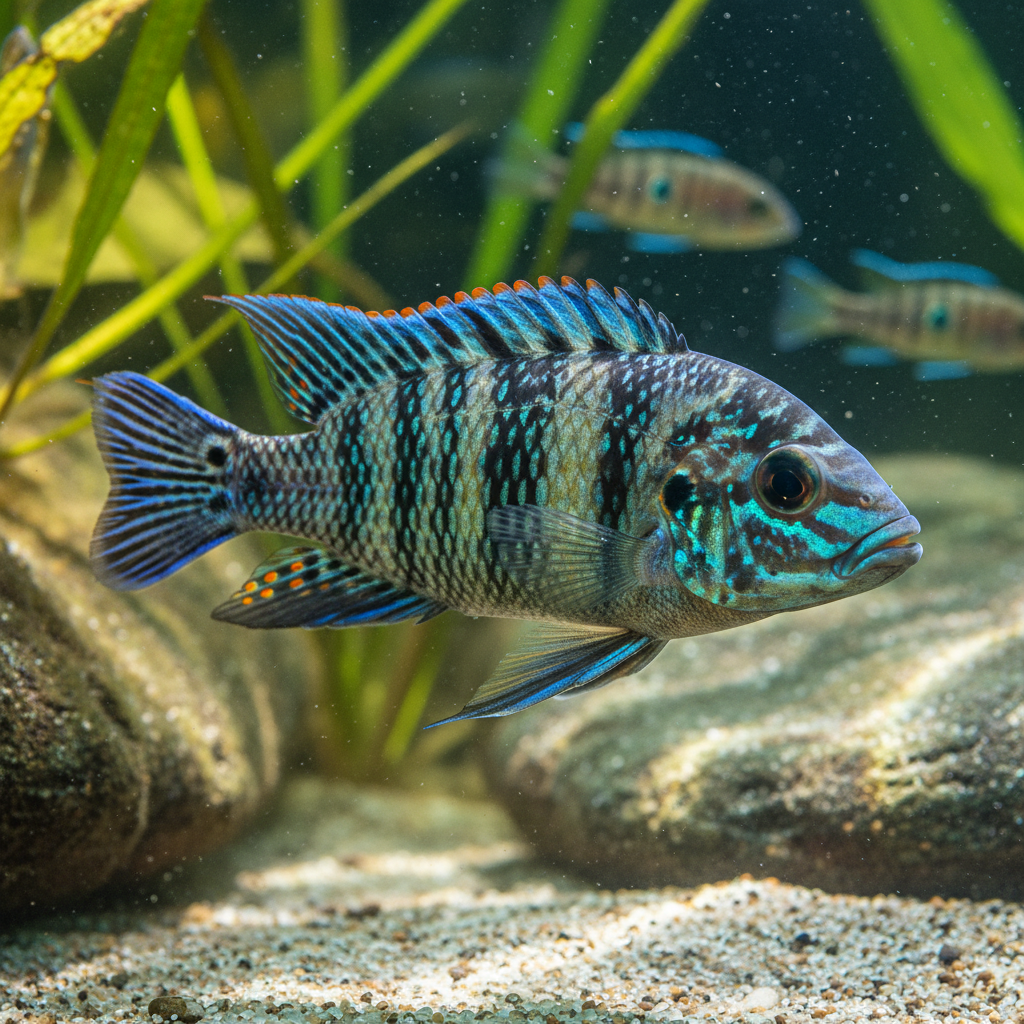
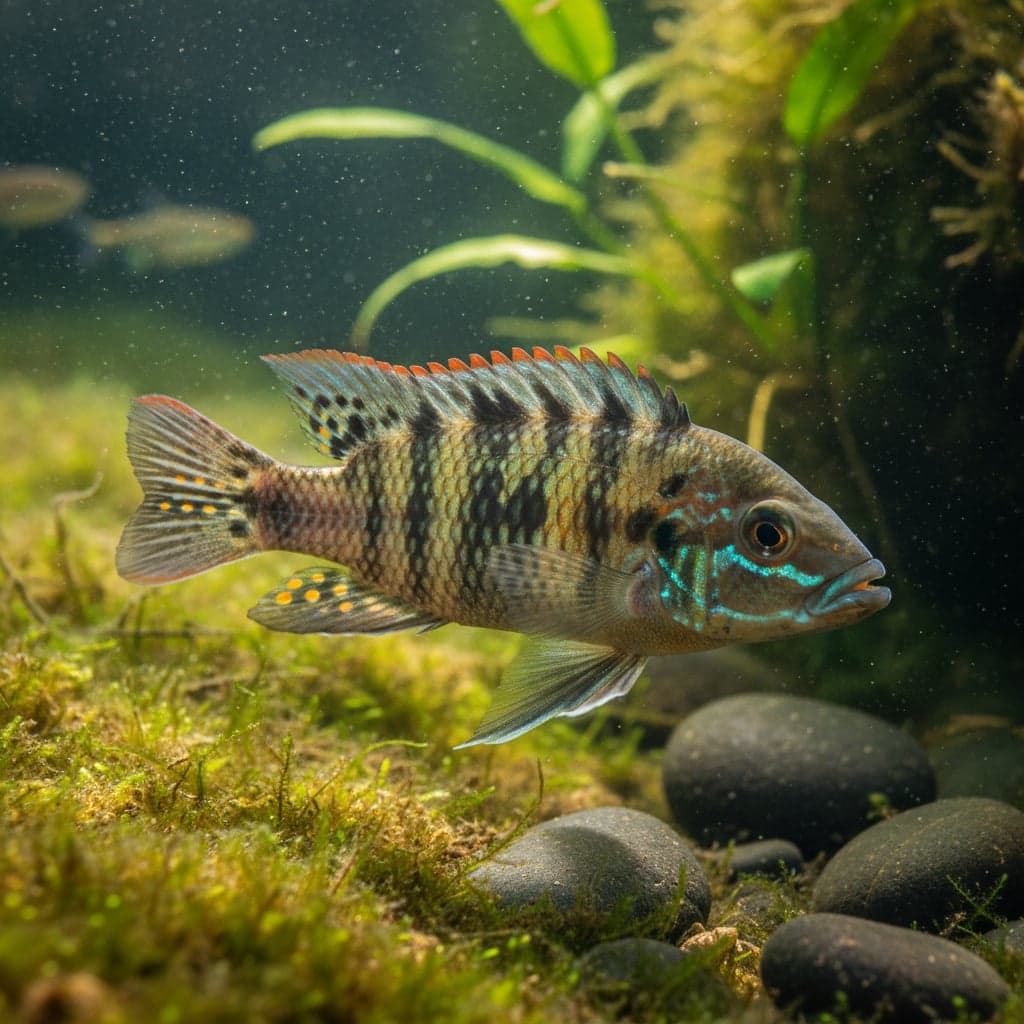
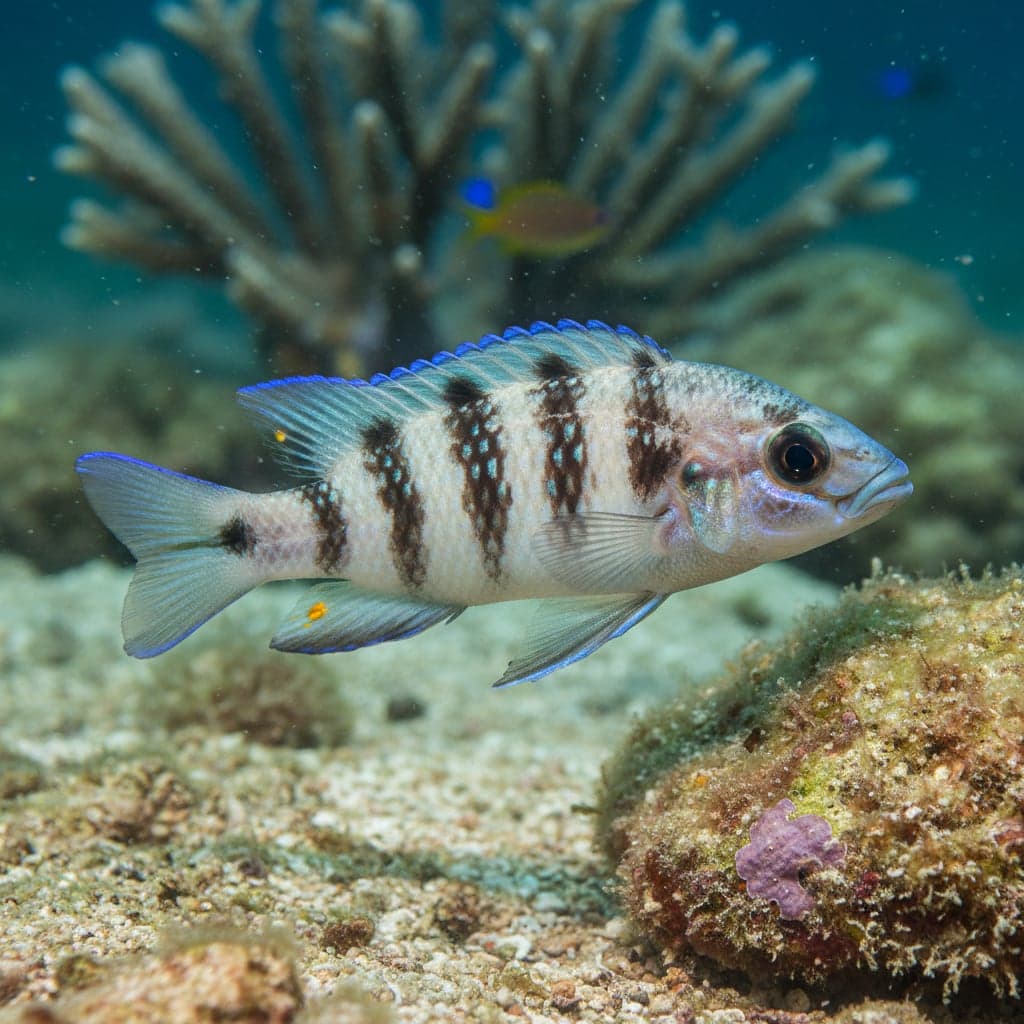
The Hap Livingstonii (Nimbochromis livingstonii), known locally in Malawi as the "Kalingono" (the sleeper), is one of the most intellectually fascinating cichlids in the hobby. It features a stunning "camouflage" pattern consisting of large, irregular dark brown blotches on a cream, white, or silvery background. This pattern is designed to break up its silhouette against the sandy and rocky substrate of Lake Malawi.
It is globally famous for its unique hunting technique called thanatosis (playing dead). The fish will lie perfectly flat on its side on the sand, looking like a decaying carcass. When small, inquisitive fish swim nearby to investigate or forage on the "corpse," the Livingstonii suddenly springs to life and swallows the unsuspecting prey in a single gulp.
Natural Habitat & Origin
Hap Livingstonii is endemic to Lake Malawi, where it is widely distributed across the entire lake. Unlike many cichlids that are restricted to rocky reefs, the Livingstonii is a roamer, found in sandy areas, among Vallisneria beds, and in intermediate zones where rocks meet sand. The water in Lake Malawi is famously hard, alkaline, and crystal clear.
Care Requirements
This is a large, powerful predator that requires significant space. A minimum tank size of 125 gallons (500L) is required for an adult. Because of their hunting behavior, a sand substrate is mandatory; they cannot properly "play dead" or forage on coarse gravel.
The water must be kept hard and alkaline (pH 7.8 to 8.6). High oxygen levels and strong filtration are essential to handle the bioload of a large piscivore. The aquarium should be decorated with a few large boulders to create territories, but the center should remain open with a flat sandy area to allow them to exhibit their natural ambush behavior.
Diet & Feeding
In the wild, Nimbochromis livingstonii is a specialized piscivore (fish-eater).
In the aquarium, they should be fed a protein-rich diet:
- High-quality carnivore pellets
- Frozen meaty foods like krill, mysis, and silversides
- Chopped prawns or earthworms
- Whole "lancer" fish or white bait
Avoid feeder goldfish, as they are nutritionally poor and can introduce parasites. Because of their low-activity ambush style, they have a slower metabolism than active swimmers and should not be overfed to prevent "Malawi Bloat."
Behavior & Temperament
While not a hyper-active bully like some Mbuna, the Livingstonii is a ruthless predator. It is relatively peaceful toward any fish too large to be considered food, but it is highly aggressive toward its own kind and other Nimbochromis species. Males are particularly territorial and should ideally be kept in a harem of one male to 3-4 females.
Tank Mates
Suitable tank mates include other large, robust Malawi Haps and Alulonocara (Peacocks) that are too large to be swallowed.
- Blue Dolphins (Cyrtocara moorii)
- Fossorochromis rostratus
- Large Aulonocara species
- Synodontis catfish
Avoid any small fish (under 5-6 inches as adults) as they will eventually become a meal. Also, avoid housing them with highly aggressive Mbuna that might out-compete the Livingstonii for food or stress it out with constant nipping.
Breeding
They are maternal mouthbrooders. Spawning typically occurs on a flat rock or in a pit dug into the sand. The female will carry the eggs (often more than 100) in her mouth for about 3 weeks. During this period, she is extremely vulnerable and should be provided with plenty of hiding spots. The fry are large and can be fed crushed flakes or baby brine shrimp immediately after release.
Common Health Issues
The most significant health threat is Malawi Bloat, often triggered by high nitrates or an inappropriate diet. They are also sensitive to sudden shifts in pH. Maintaining pristine water quality through regular, large water changes is the best way to prevent health problems.