Hockeystick Pencilfish: Nannostomus eques
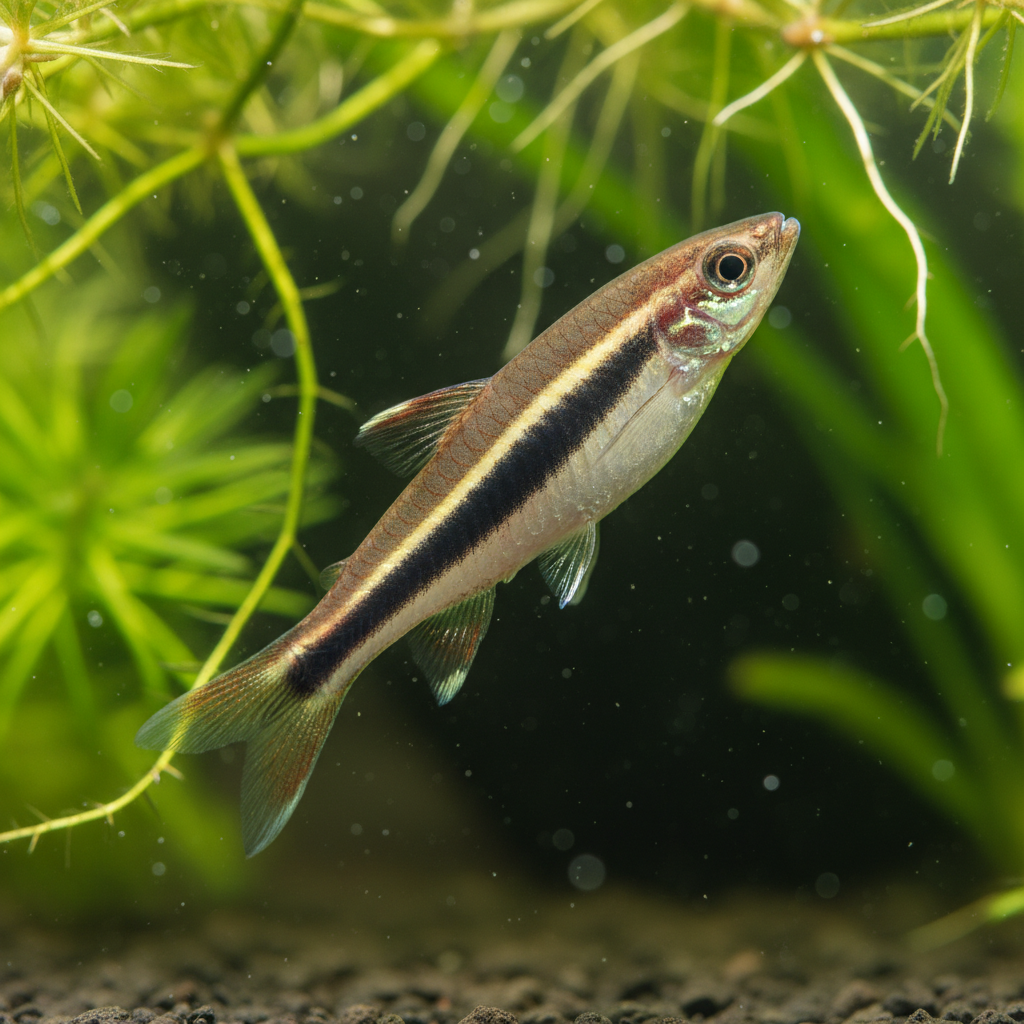
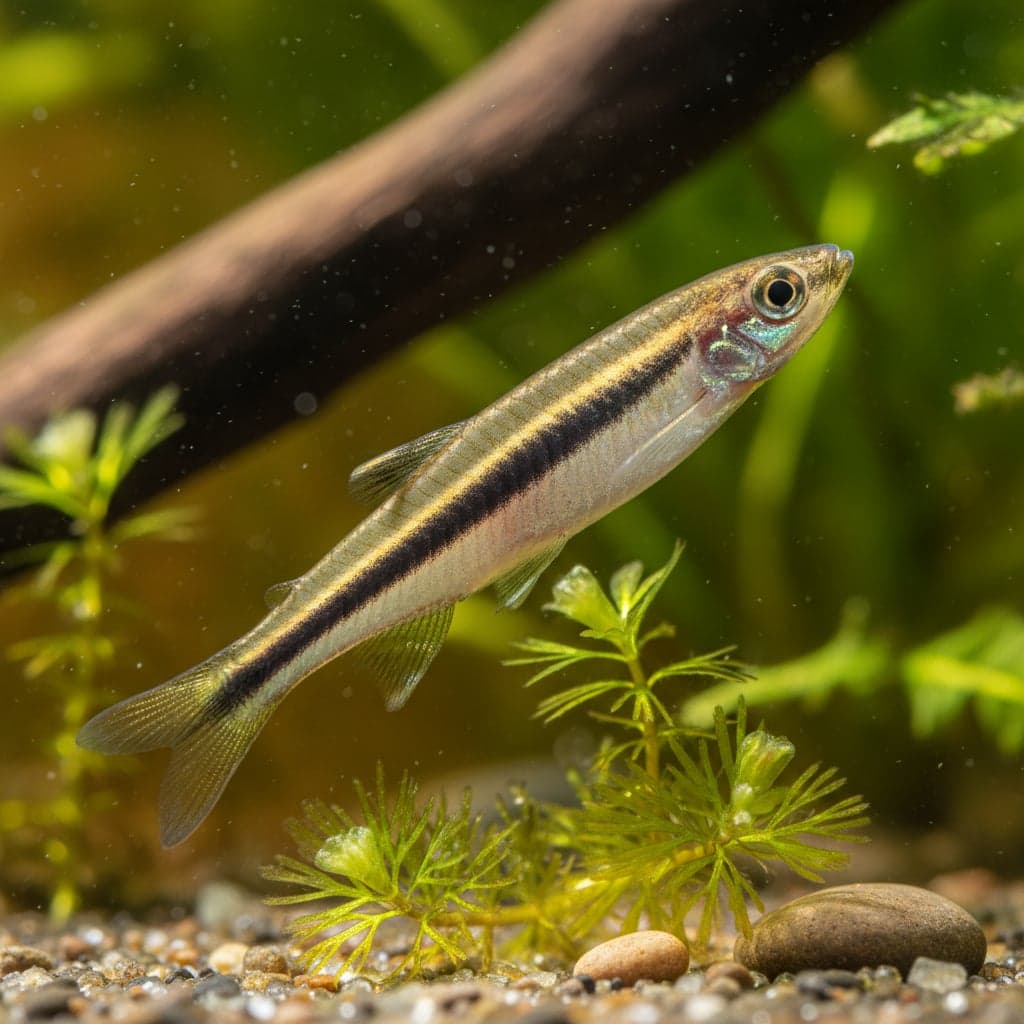
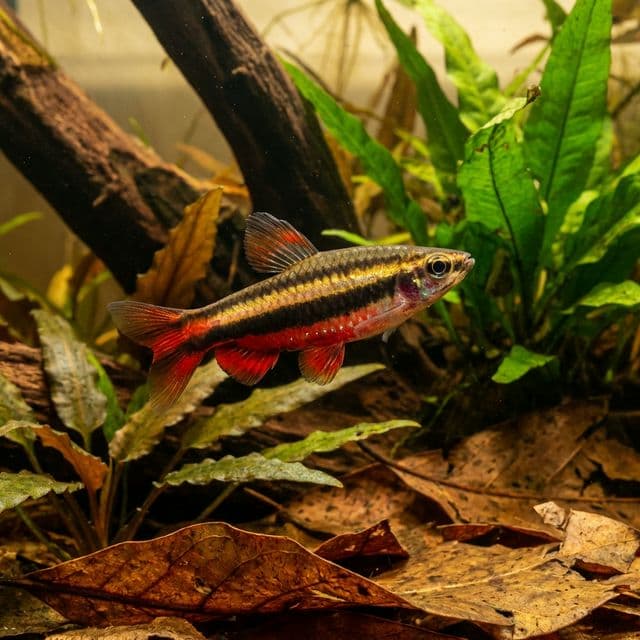
The Hockeystick Pencilfish (Nannostomus eques) is a charming nano fish famous for its extraordinary 45-degree tail-down swimming angle, allowing it to mimic a floating twig for camouflage.
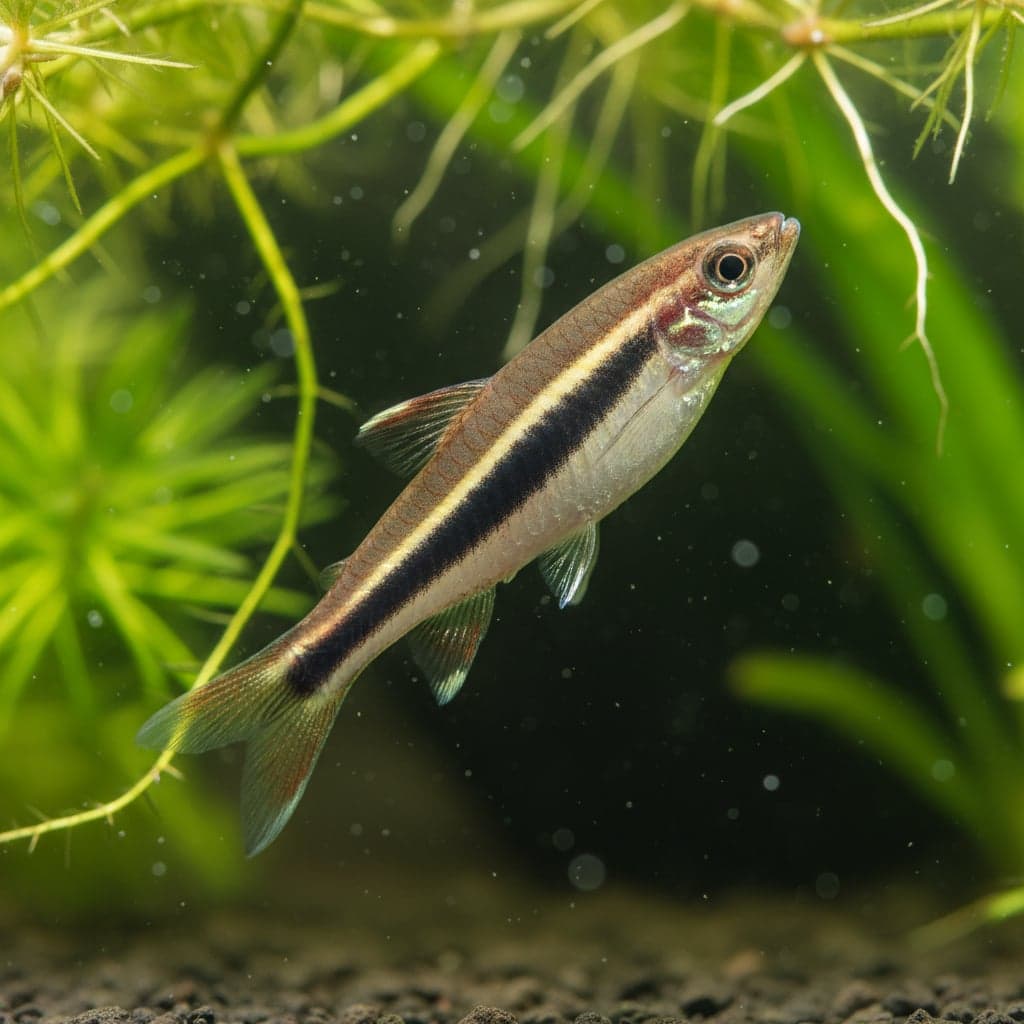
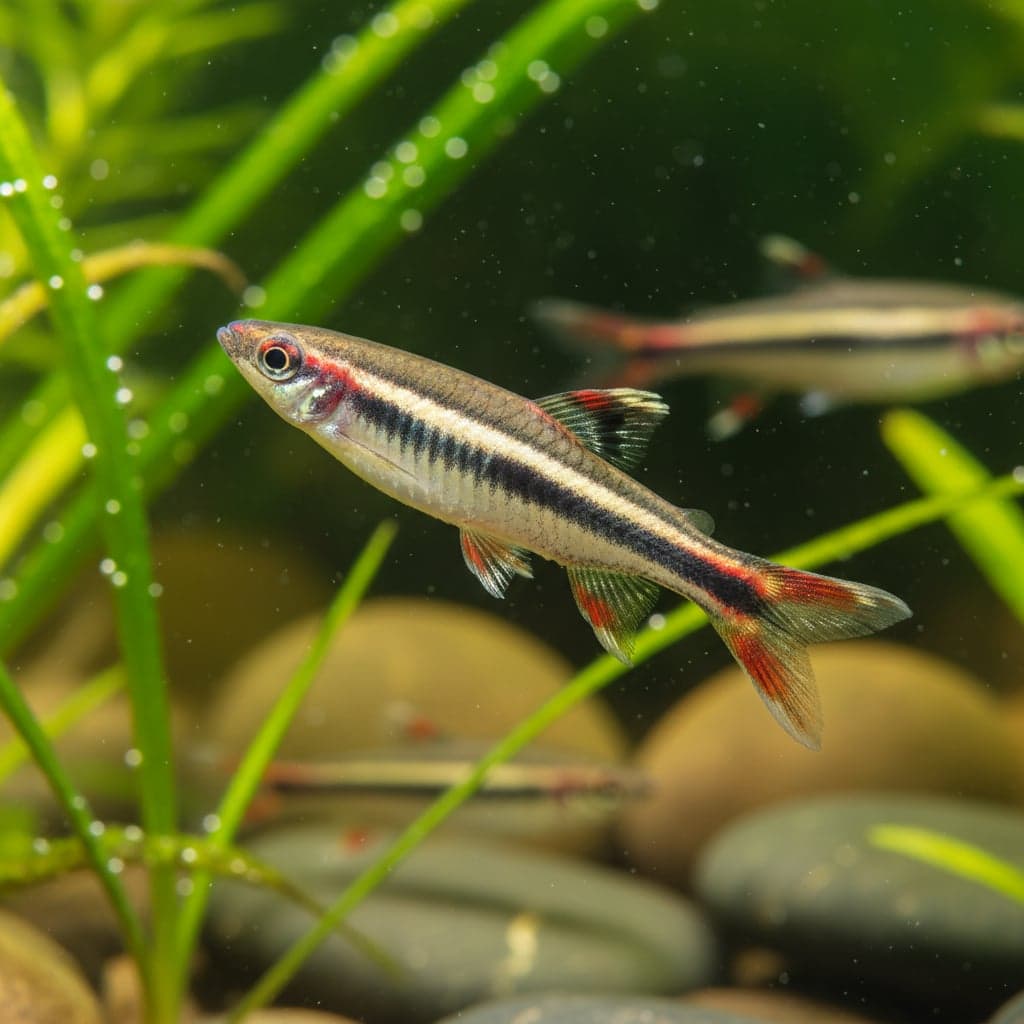
The Hockeystick Pencilfish (Nannostomus eques), also known as the Brown Pencilfish or Diptail Pencilfish, is one of the most uniquely behaving species in the freshwater hobby. Its most defining characteristic is its stationary posture: it swims and rests at a consistent 45-degree tail-down angle. This peculiar orientation, combined with its slender, dark-striped body, allows it to perfectly mimic a piece of fallen wood or a floating twig, providing it with exceptional camouflage against predators from below.
In the aquarium, they are prized for their peaceful nature and their tendency to hover near the water surface. When kept in a group, their synchronized angular swimming creates a mesmerising and highly distinct visual effect that is unlike any other tropical fish.
Natural Habitat & Origin
Nannostomus eques is native to the vast Amazon and Orinoco River basins, spanning Brazil, Colombia, and Venezuela. They are primarily found in slow-moving blackwater tributaries, flooded forests (igapó), and swampy areas. These habitats are characterized by low light, high tannin content (stained water), and a high density of floating vegetation and submerged branches.
Care Requirements
The Hockeystick Pencilfish is a relatively hardy species but thrives best in a specialized blackwater-style setup. A minimum tank size of 75 litres (20 gallons) is recommended, but a larger surface area is more important than depth, as they spend the vast majority of their time in the upper third of the water column.
Maintain stable parameters: a pH of 5.5 to 7.0 (alkaline water is unsuitable long-term) and a temperature of 75°F to 82°F (24°C to 28°C). The inclusion of floating plants (like Amazon Frogbit or Salvinia) is highly recommended, as they provide the security of overhead cover. Driftwood and dried leaf litter (like Catappa or Oak leaves) will release beneficial tannins and help replicate their natural, acidic environments.
Diet & Feeding
In the wild, Hockeystick Pencilfish are micro-predators that feed on small insects, larvae, and zooplankton that fall onto or hover near the water surface.
In captivity, they are not picky but have very small mouths:
- High-quality, finely crushed flakes and micro-pellets
- Frozen foods like baby brine shrimp, cyclops, and daphnia
- Live foods (especially wingless fruit flies or small larvae) will trigger their natural surface-hunting behavior
They are slow, deliberate feeders and should be fed in an area where more aggressive tank mates won't out-compete them.
Behavior & Temperament
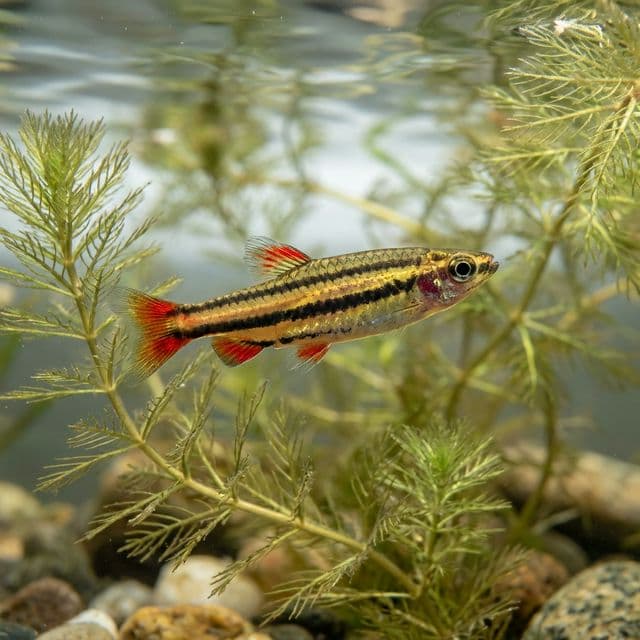
They are exceptionally peaceful and social. They MUST be kept in a group of at least 6-10 individuals. In a school, they are far more confident and will stay in the open. They are strictly non-aggressive and spend most of the day hovering nearly motionless or slowly "sculling" through the water. At night, their daytime lateral stripes fade, and they develop a mottled "night pattern" of dark blotches for better camouflage while sleeping.
Tank Mates
Suitable tank mates include other peaceful, quiet species from similar environments:
- Other Pencilfish species
- Small Tetras (especially Neon or Cardinal Tetras)
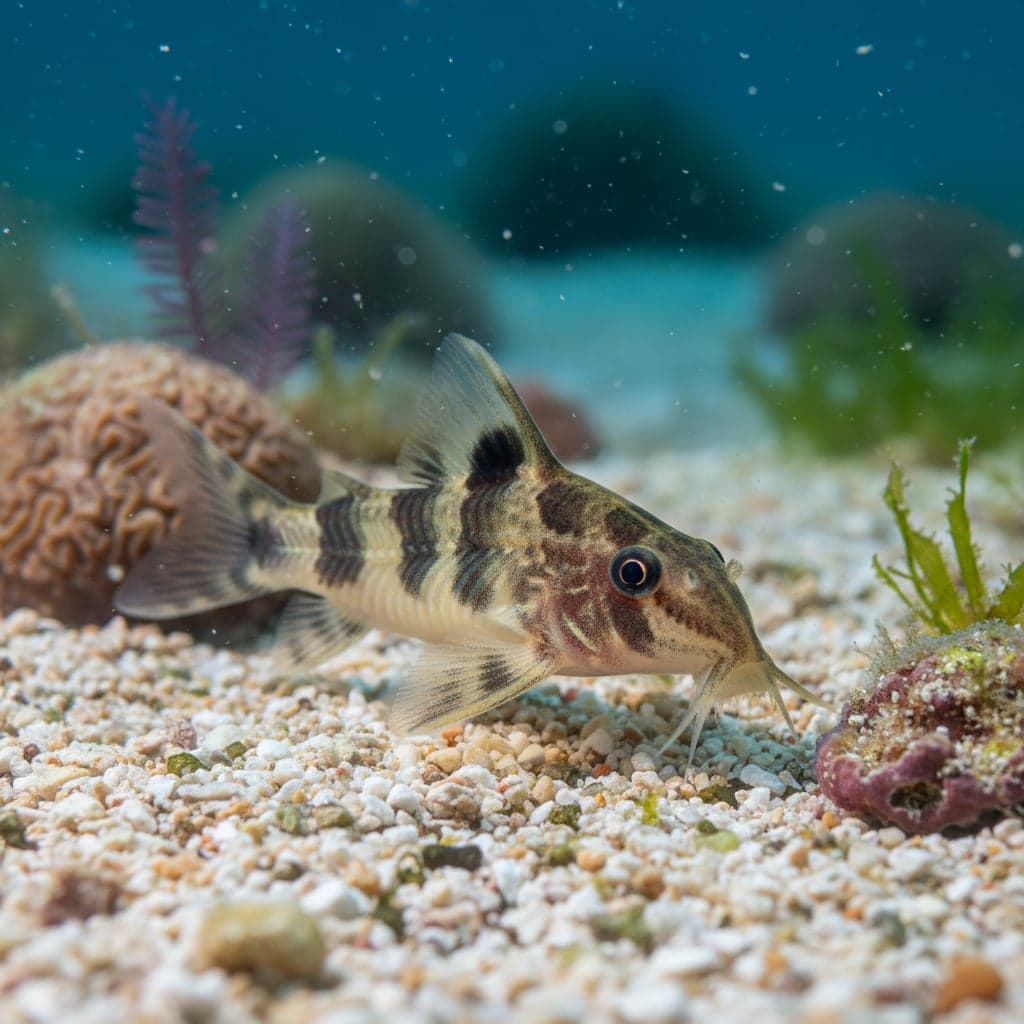
- Corydoras and small Loricariids (Otocinclus)
- Apistogramma (Dwarf Cichlids)
- Hatchetfish
Avoid keeping them with boisterous or aggressive fish (like larger Cichlids or fast-moving barbs) that might intimidate them or out-compete them for food at the surface. Their delicate nature makes them unsuitable for tanks with high-flow or aggressive inhabitants.
Breeding
Nannostomus eques is a moderately difficult species to breed. They are egg scatterers that prefer to spawn among the roots of floating plants or dense mosses. A separate breeding tank with very soft, acidic water (pH 5.5, dGH <2) and low light is required. After spawning, the parents should be removed to prevent them from eating the eggs. The fry are tiny and require infusoria or liquid food initially, followed by baby brine shrimp as they grow.
Common Health Issues
They are generally disease-resistant if kept in acidic, clean water. Their primary vulnerability is to sudden changes in water chemistry and high nitrates. Like many wild-type Characins, they can be susceptible to "Neon Tetra Disease" or skin flukes if stressed. Maintaining a stable, blackwater environment with high-quality filtration and low nitrates is the best way to ensure their longevity.