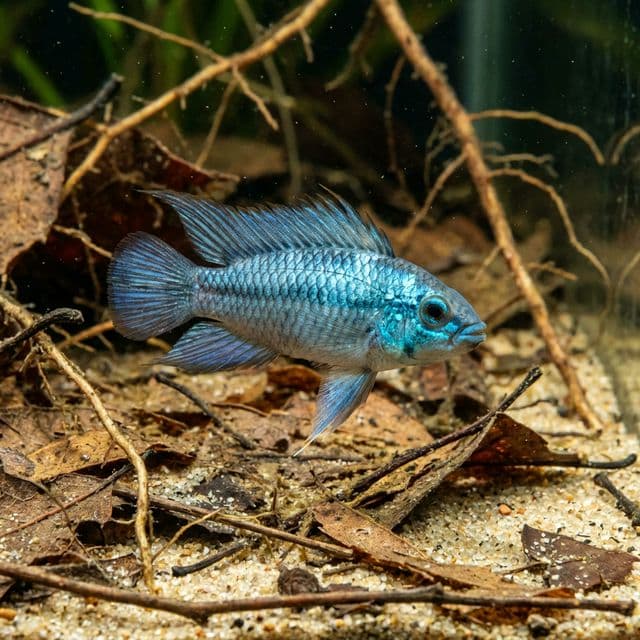
Honeycomb Combtail: Belontia hasselti
The Honeycomb Combtail (Belontia hasselti) is a robust, large labyrinth fish from Southeast Asia, named for the intricate mosaic-like honeycomb pattern that adorns its fins.
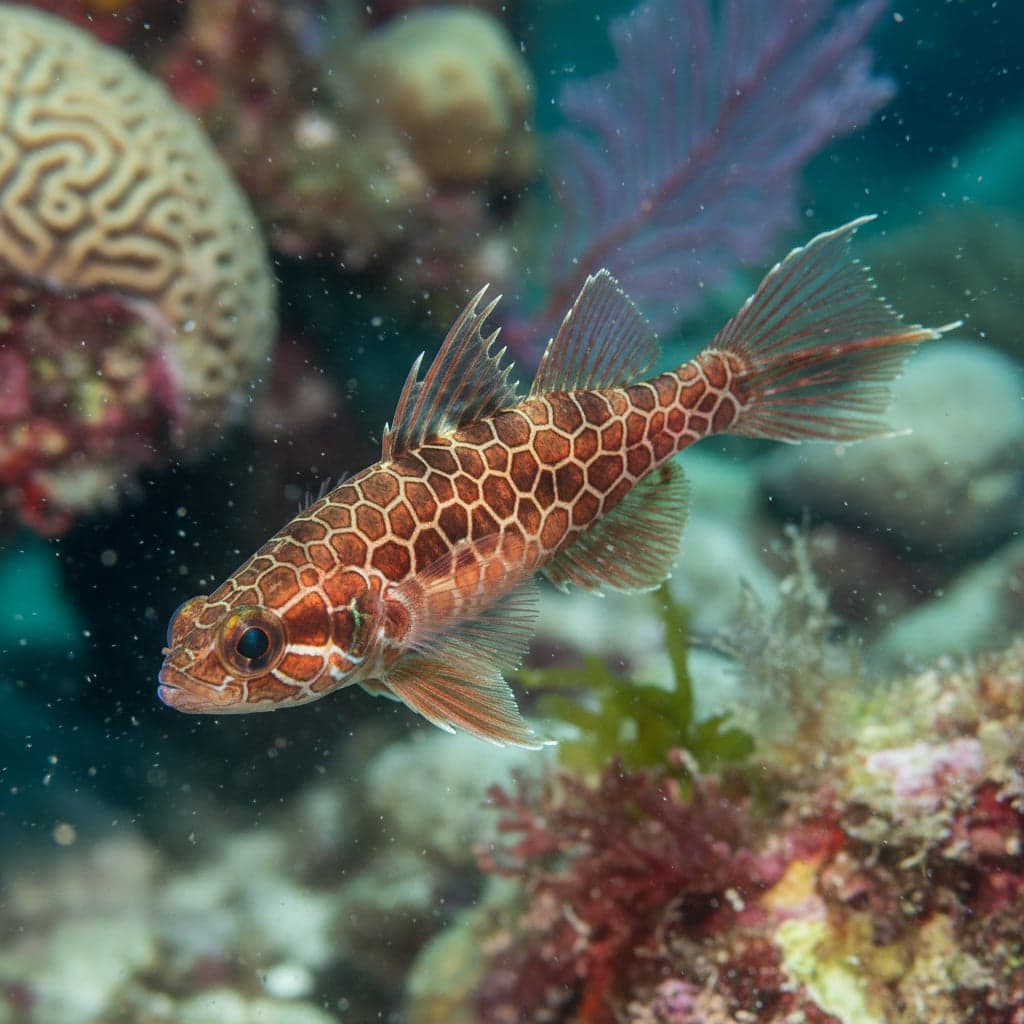
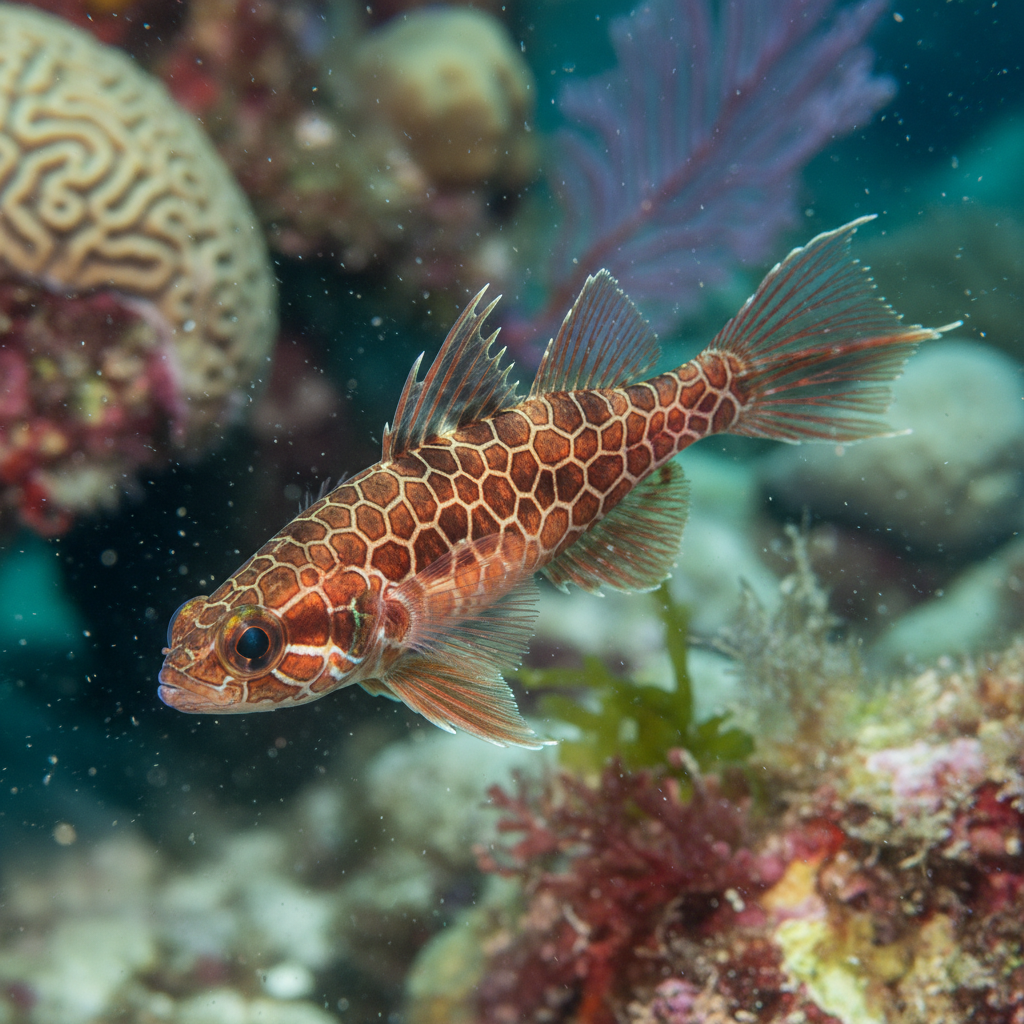
The Honeycomb Combtail (Belontia hasselti), also known as the Malay Combtail or Javan Combtail, is a significant departure from the delicate beauty of common gouramis. It is a large, heavily built labyrinth fish with a cryptic, brownish-grey body designed to vanish into the tannin-stained waters of its homeland. Its most spectacular feature is a fine, black-edged mosaic or "honeycomb" pattern that covers its unpaired fins, giving it an almost reptilian aesthetic.
In the aquarium, they are celebrated for their high intelligence and complex social behaviors. However, they are also famously pugnacious, possessing a level of territoriality and aggression that rivals many medium-sized cichlids.
Natural Habitat & Origin
Belontia hasselti is widely distributed across the Malay Peninsula, Sumatra, Borneo, and Java. They inhabit slow-moving, heavily vegetated environments such as peat swamps, stagnant ditches, and the calm margins of rivers. These "blackwater" habitats are often characterized by low light, extremely soft and acidic water, and a high concentration of dissolved tannins from decomposing leaf litter and peat.
Care Requirements
The Honeycomb Combtail is a hardy and adaptable species but requires a spacious setup. A minimum tank size of 40 gallons (150L) is recommended for a single specimen or a mated pair. They are capable of breathing atmospheric air using their labyrinth organ, but they still require high water quality and efficient filtration.
Maintain stable parameters: a pH of 6.0 to 7.5 and a temperature of 74°F to 82°F (23°C to 28°C). The tank should be scaped with large driftwood branches, boulders, and robust plants (like Microsorum or Large Anubias). Floating vegetation is essential, as it provides the shaded, secure environment these fish prefer. A tight-fitting lid is mandatory, as they are capable jumpers.
Diet & Feeding
Honeycomb Combtails are micro-predators. In the wild, they feed on small fish, aquatic insects, and crustaceans.
In captivity, they are eager feeders:
- High-quality carnivore pellets and large flakes
- Frozen foods like Bloodworms, Mysis shrimp, and Krill
- Chopped seafood (shrimp, fish fillet) for larger specimens
- Live foods will strongly stimulate their natural hunting instincts
They are greedy eaters and will quickly learn to recognize their owner as the source of food.
Behavior & Temperament
They are semi-aggressive to aggressive and highly territorial. Unlike many gouramis, the Honeycomb Combtail has a very strong "combative" nature. They will aggressively defend their chosen territory against any intruders, especially other labyrinth fish. They are best kept singly or as a compatible, long-term mated pair. They are known for their "individual personalities," often becoming quite interactive with their keepers.
Tank Mates
Suitable tank mates must be robust enough to handle the Combtail's personality:
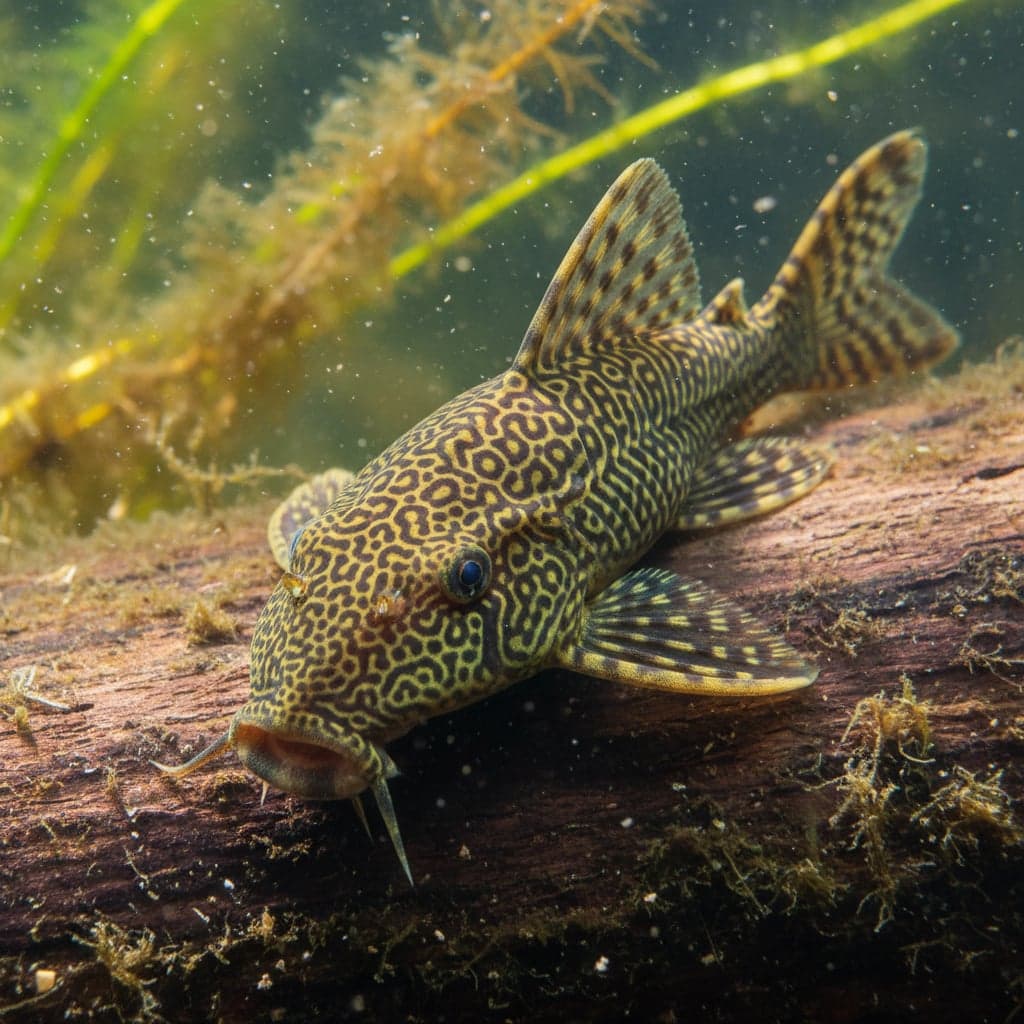
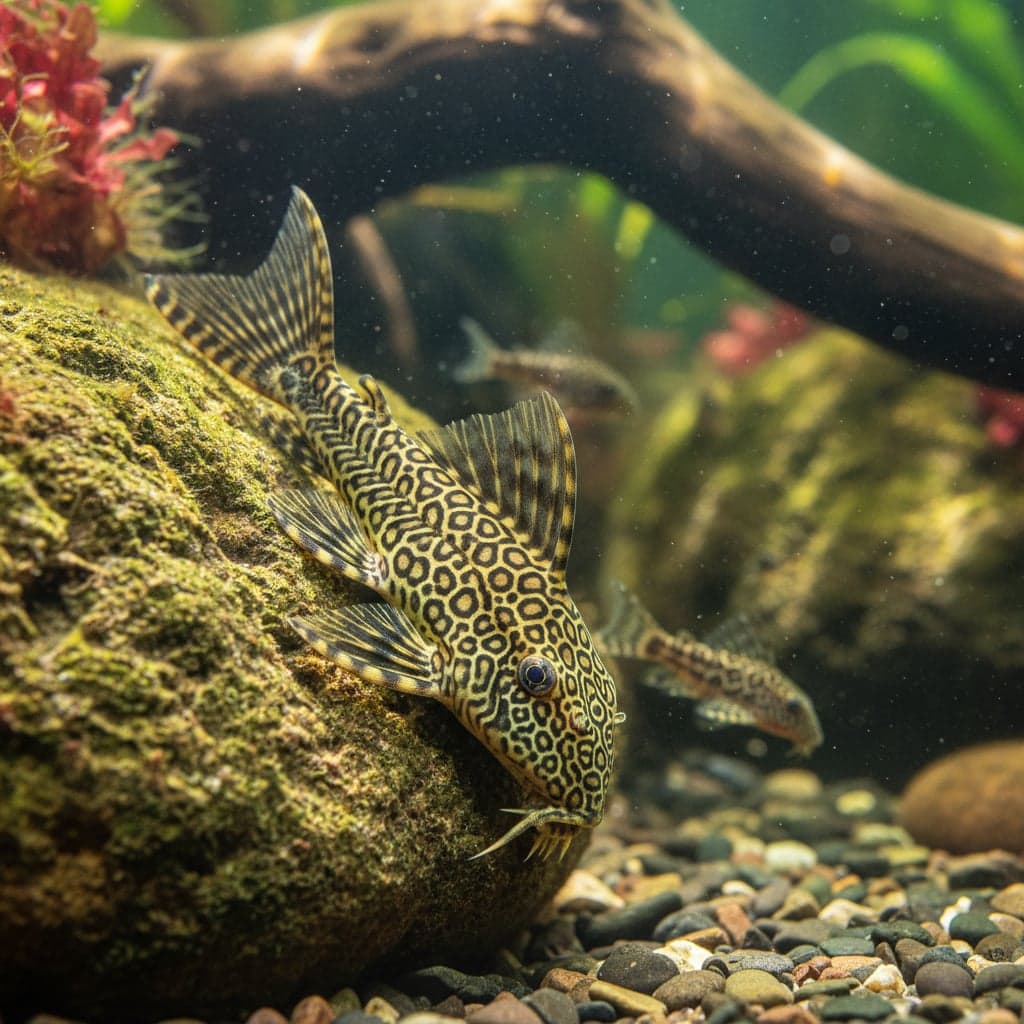
- Medium-sized, robust Catfish (like Synodontis or larger Loricariids)
- Fast-moving, larger Barbs (like Tinfoil Barbs or Filament Barbs)
- Medium-sized, semi-aggressive Cichlids (depending on tank size)
- Larger Rainbowfish
Avoid keeping them with small, delicate, or long-finned species (like Guppies or long-finned Tetras), as they will likely be seen as prey or bullied.
Breeding
Belontia hasselti is a bubblenest builder, but their nests are often less organized than those of other gouramis, frequently incorporating bits of floating vegetation. They are biparental, meaning both the male and female may participate in guarding the nest and fry, which is unusual for labyrinth fish. However, the male is still the primary guardian. Spawning is an intense process, and a separate large breeding tank is required. The fry are relatively large and can be fed baby brine shrimp almost immediately after absorbing their yolk sacs.
Common Health Issues
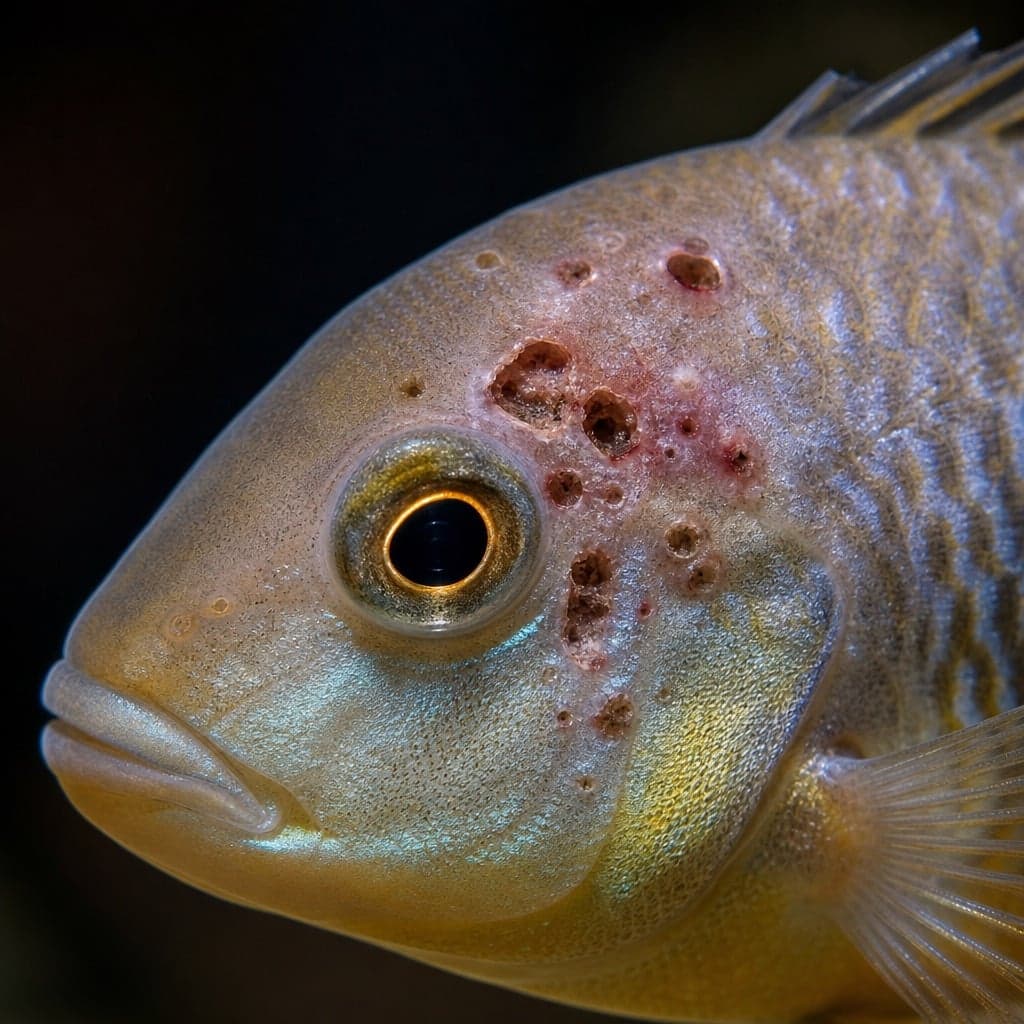
They are exceptionally robust fish. Their primary vulnerability is to poor water quality and high nitrates, which can lead to "Hole-in-the-Head" disease or fin rot. Providing high-quality filtration and regular water changes is the best preventive measure. Like all labyrinth fish, they require access to warm, humid air above the water surface to keep their labyrinth organ healthy.