Honeycomb Driftwood Catfish: Centromochlus perugiae
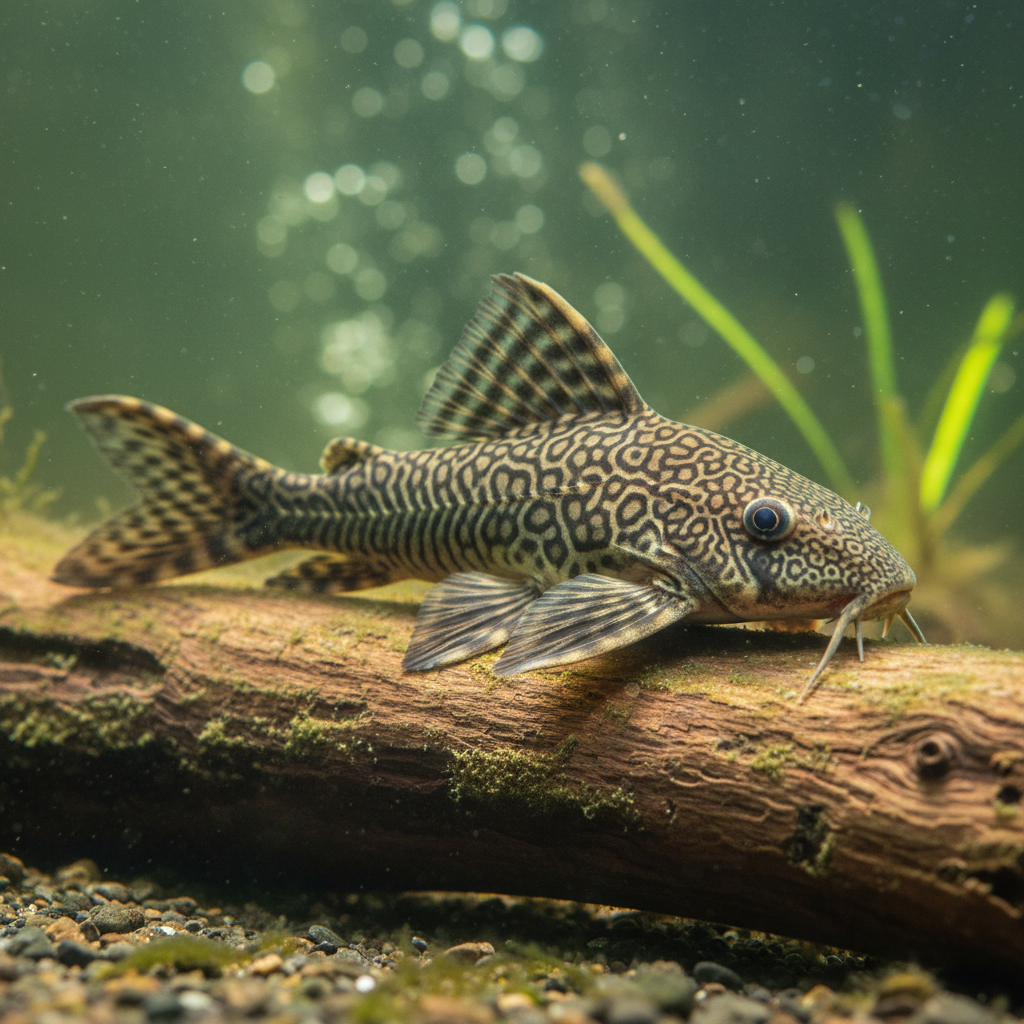
The Honeycomb Driftwood Catfish (Centromochlus perugiae) is a miniature, heavily patterned catfish known for its striking reticulated design and its unique, internal fertilization reproductive strategy.
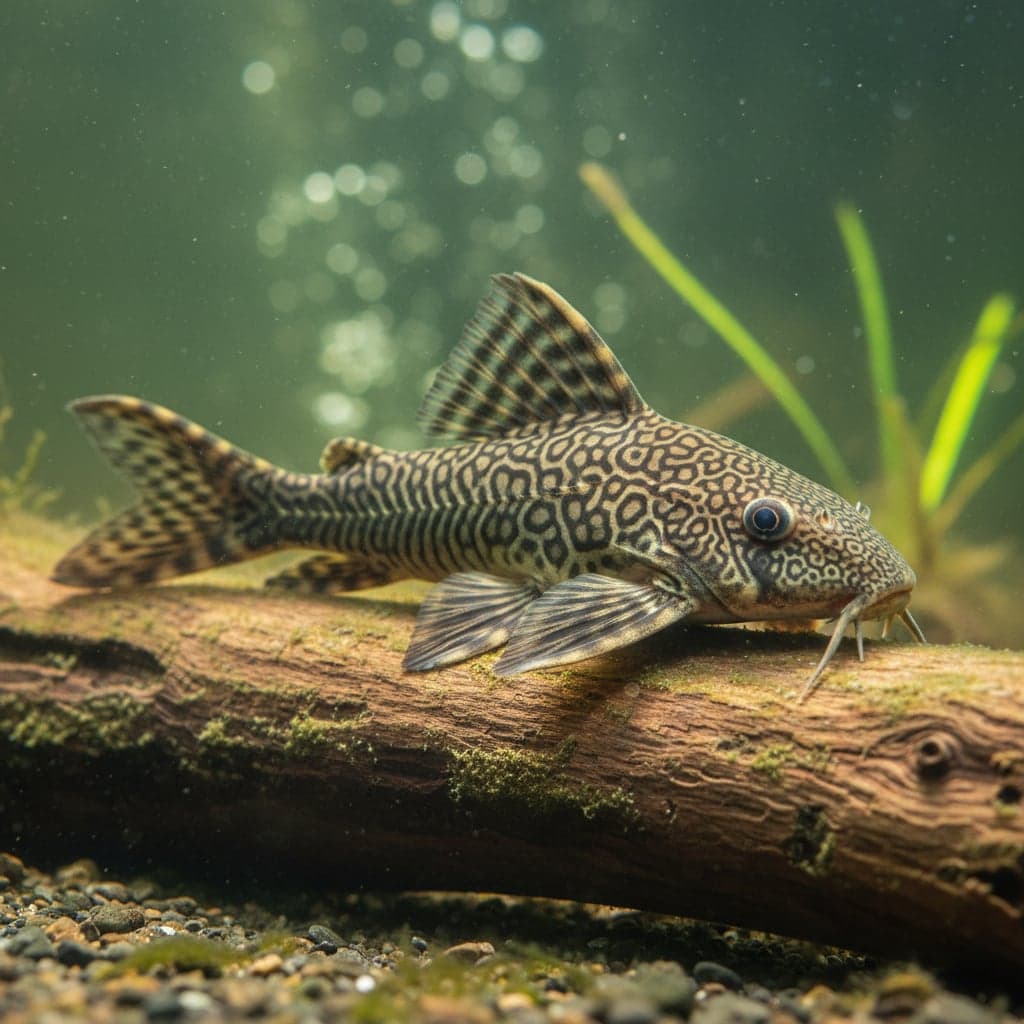
The Honeycomb Driftwood Catfish (Centromochlus perugiae), sometimes categorized under the genus Duringlanis, is a fascinating nano-catfish that packs a massive amount of personality into a tiny frame. It is easily identifiable by its spectacular, high-contrast "honeycomb" pattern of black reticulated lines over a creamy-white or pale yellow base. Unlike many other catfish that are slow and methodical, the Honeycomb Driftwood Catfish is a "feeding frenzy" specialist—strictly nocturnal during the day, but exploding into a blur of chaotic, high-speed swimming as soon as food hits the water at night.
In the aquarium, they are prized for their unique appearance and their bizarre reproductive biology. They are one of the few siluriform (catfish) species that practice internal fertilization, where the male uses a modified anal fin to fertilize the female.
Natural Habitat & Origin
This species is native to the Amazon and Orinoco River basins, specifically found in the slow-moving rivers and forest streams of Ecuador, Peru, and Colombia. They are primarily inhabitants of the "driftwood zone"—the tangled masses of submerged branches and roots that accumulate along the riverbanks. During the day, they wedge themselves into the tightest crevices of decaying wood, coming out only under the cover of total darkness.
Care Requirements
The Honeycomb Driftwood Catfish is relatively hardy but has very specific behavioral needs. A minimum tank size of 20 gallons (75L) is recommended, but a larger footprint with low height is ideal. The most critical requirement is the provision of adequate hiding spots. They MUST have access to narrow PVC pipes, hollow driftwood, or "catfish caves." They are extremely social and feel secure only when they can "pile up" inside a tight space together.
Maintain stable parameters: a pH of 6.0 to 7.5 and a temperature of 74°F to 82°F (24°C to 28°C). Filtration should be efficient, but excessive current should be avoided. The inclusion of dried leaf litter (like Catappa leaves) will help replicate their natural blackwater environment.
Diet & Feeding
Honeycomb Driftwood Catfish are specialized micro-predators. In the wild, they feed on terrestrial insects that fall into the water and small aquatic larvae.
In captivity, they can be tricky to feed because of their strict nocturnality:
- High-quality sinking carnivore pellets (fed after lights out)
- Frozen foods such as Bloodworms, Mysis shrimp, and Blackworms
- Live foods (daphnia, cyclops) will trigger their frantic surface-skimming feeding behavior
- Crucial: They are "bolted" feeders. They eat very quickly and then immediately return to their hiding spots. Ensure they are getting enough food before more active mid-water tank mates consume it.
Behavior & Temperament
They are peaceful and deeply social. To see their natural behavior and reduce stress, they should be kept in a group of 6 or more. During the day, you will likely not see them at all; they will be wedged tightly into wood or pipes. However, as soon as the blue "night lights" come on and food is introduced, they become incredibly active, darting around the tank with surprising speed. They are completely non-aggressive and can be kept with even the smallest and most delicate of tank mates.
Tank Mates
Suitable tank mates include other peaceful Amazonian species:
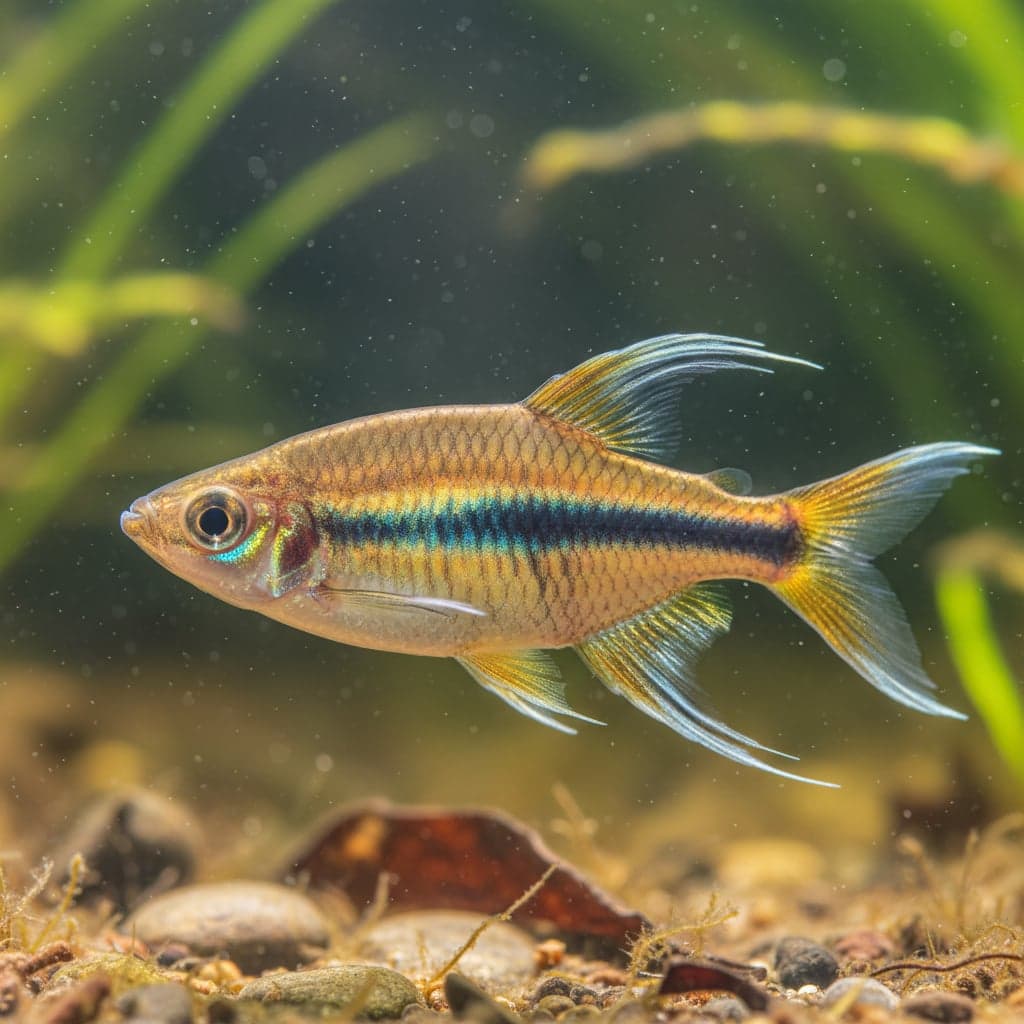
- Tetras, Rasboras, and Hatchetfish
- Pencilfish
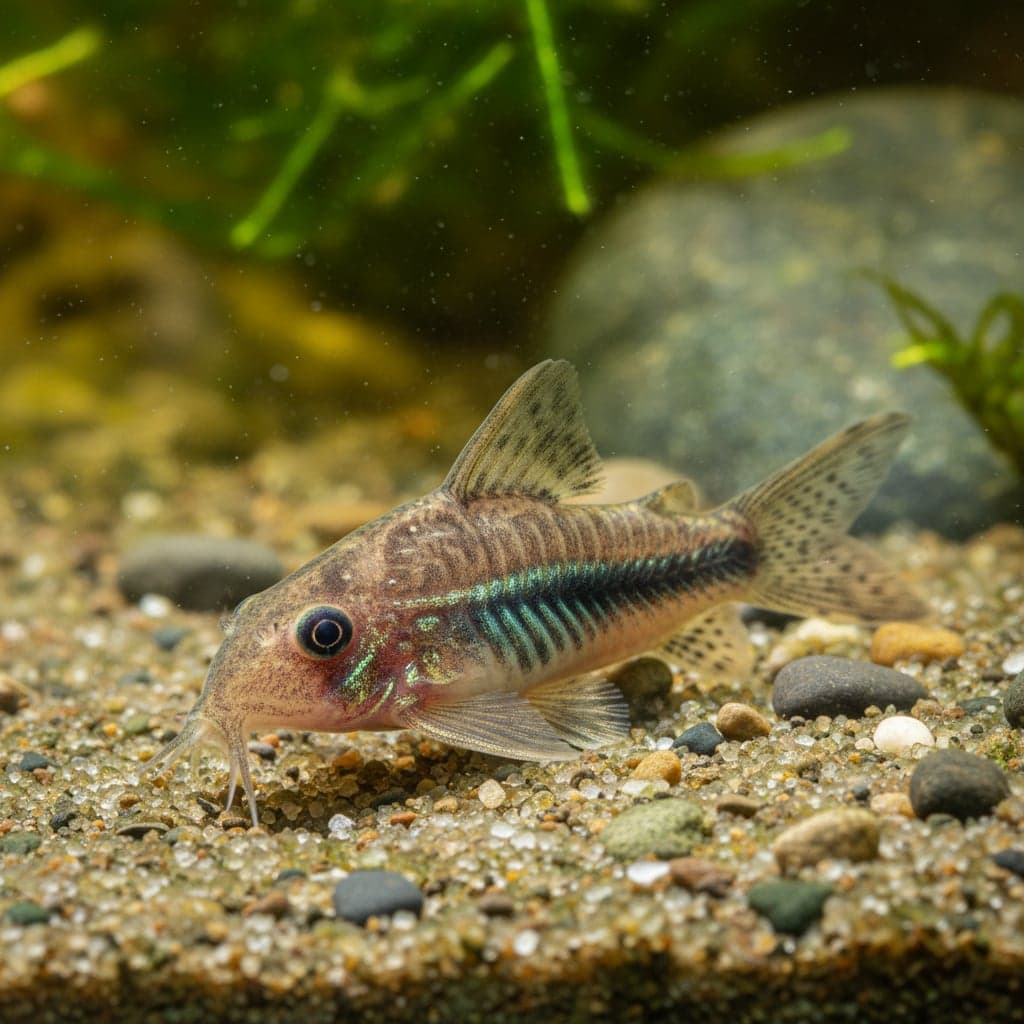
- Other small, peaceful catfish (Corydoras, Otocinclus)
- Dwarf Cichlids (Apistogramma)
Avoid keeping them with very large or aggressive fish that can fit them in their mouths, as they are small and relatively defenseless once out of their caves.
Breeding
Breeding Centromochlus perugiae is a fascinating process. As mentioned, they practice internal fertilization. The male has a modified anal fin called an andropodium. After mating, the female can store sperm for several days before depositing fertilized eggs in a secure crevice or on a flat surface. The eggs hatch in 2-4 days, and the fry are relatively large but still require fine foods like baby brine shrimp and crushed flakes.
Common Health Issues
They are generally robust. However, they are sensitive to external parasites and skin flukes if water quality is poor. Because they are "scaleless" catfish, they are highly sensitive to medications containing copper or salt. Always use half-doses for these species. Ensuring their refuge (driftwood or pipes) is clean and free of sharp edges is also important to prevent physical injury to their delicate skin.