Inca Dwarf Cichlid: Apistogramma baenschi
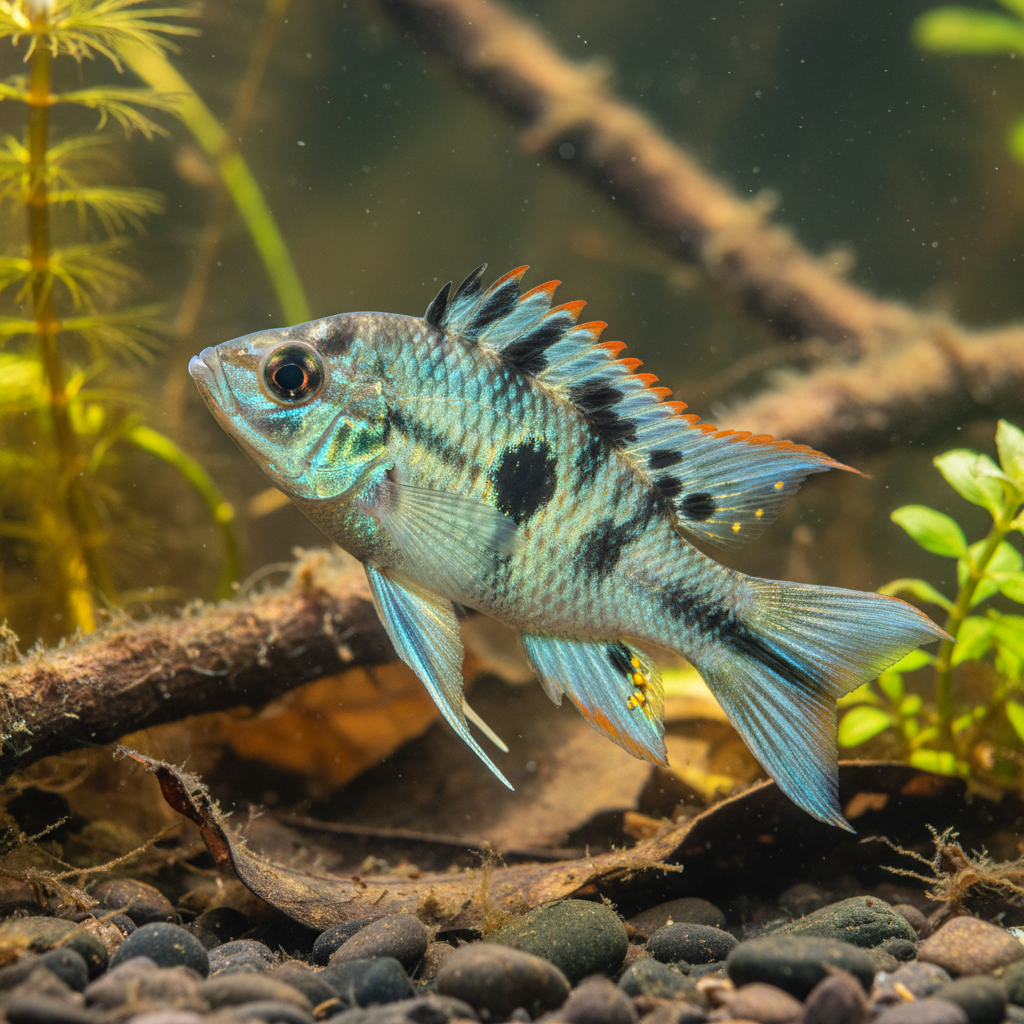
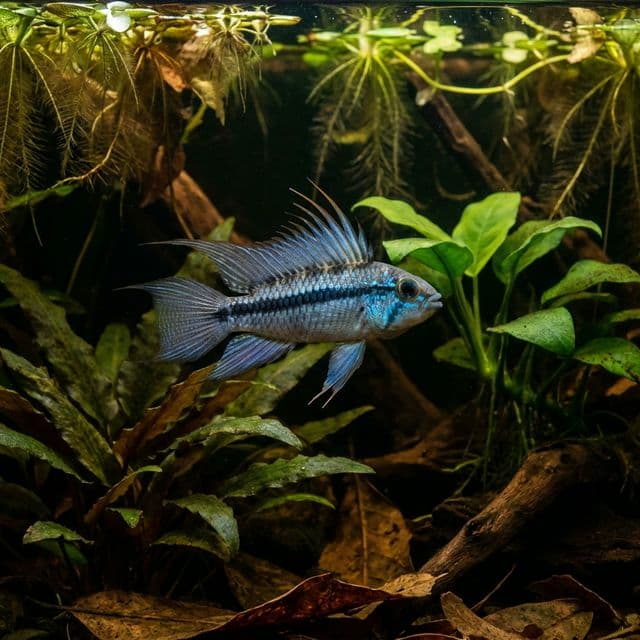
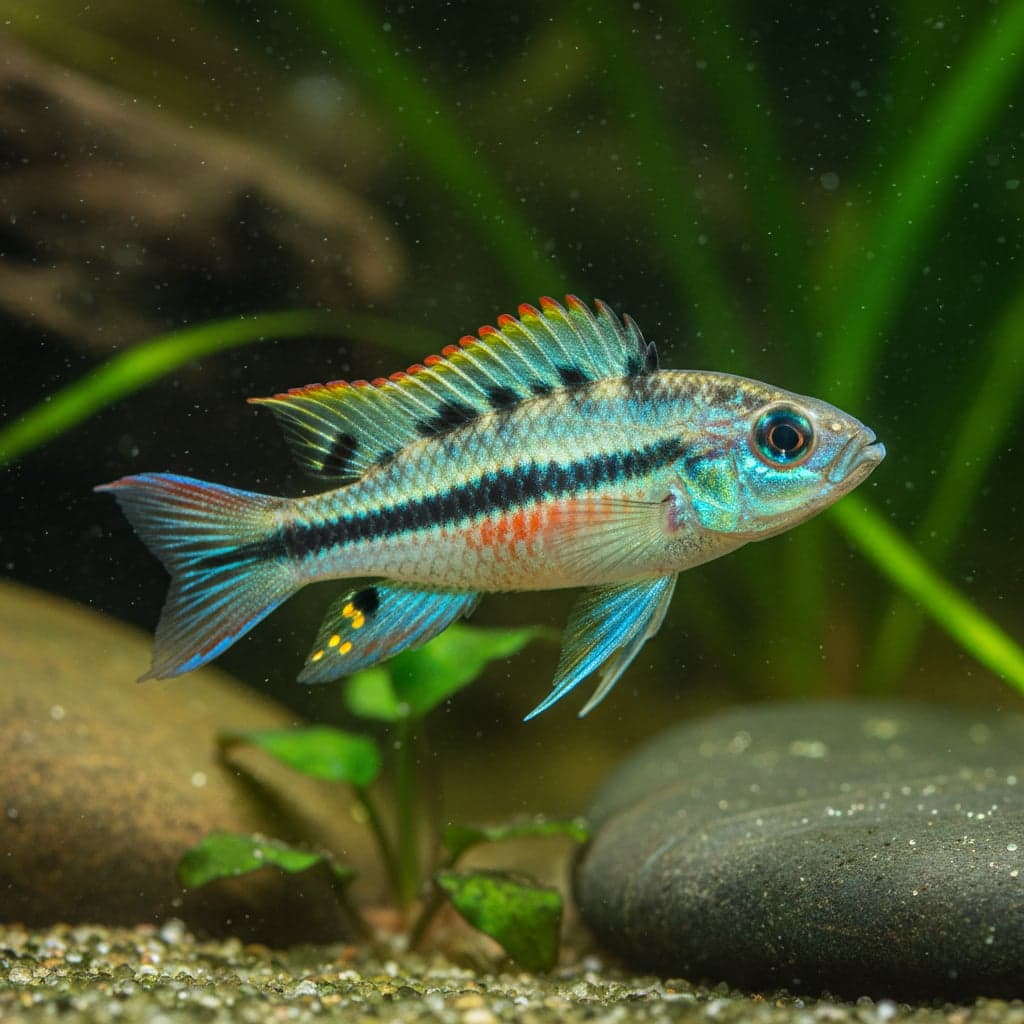
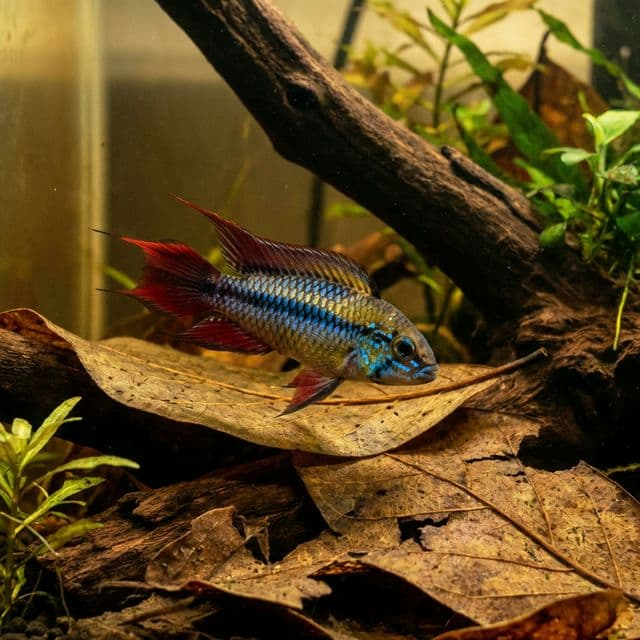
The Inca Dwarf Cichlid (Apistogramma baenschi) is one of the most magnificent dwarf cichlids, famous for the male's sky-high dorsal fin and brilliant iridescent blue and yellow body.
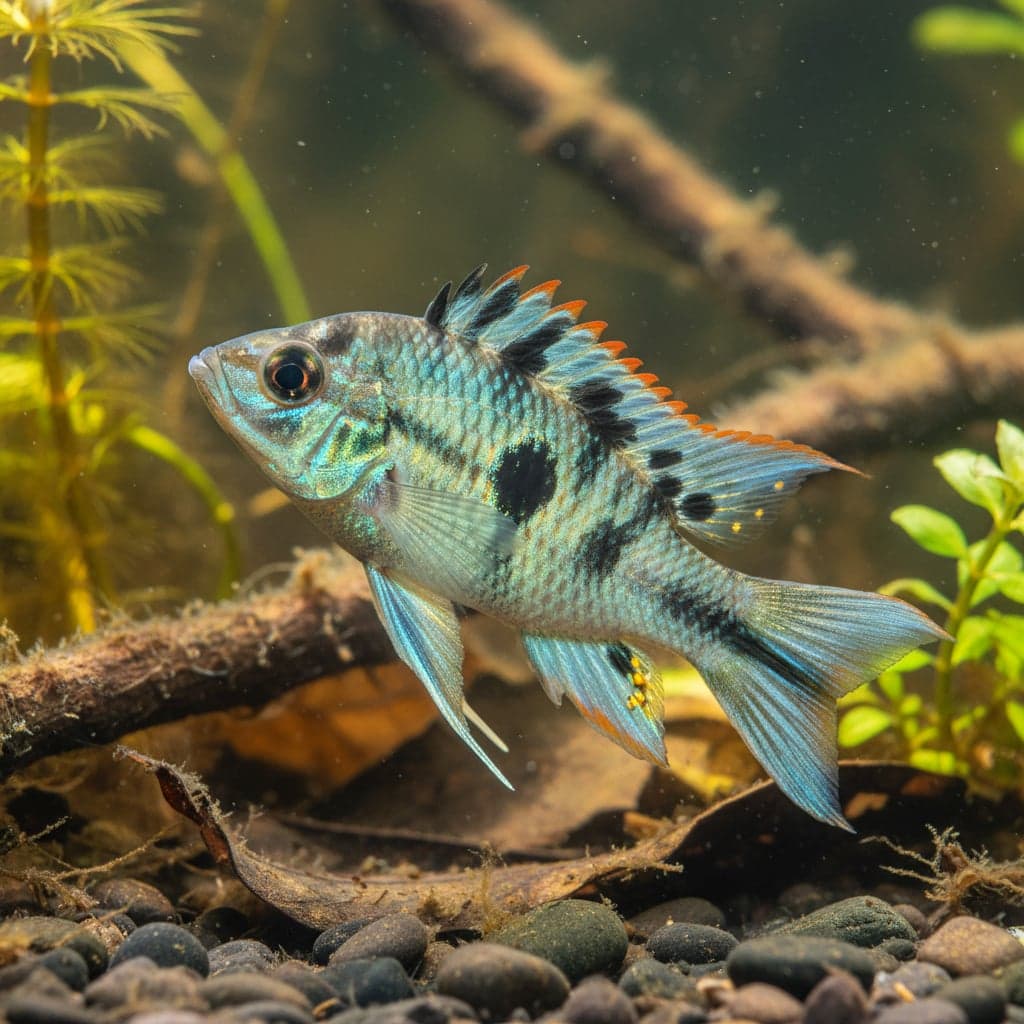
The Inca Dwarf Cichlid (Apistogramma baenschi) is a showstopper among South American dwarfs. Discovered relatively recently (2002), it quickly became a favorite for its dramatic appearance. Males possess an extraordinarily tall, serrated dorsal fin that can be raised like a banner, giving them a fierce and regal profile. Their coloration is equally intense, featuring thick dark vertical bars over a body shimmering with metallic sky-blue and golden-yellow. Females, like most Apistogramma, are smaller and turn a bright, protective lemon-yellow when breeding.
In the aquarium, they are the "jewels of the leaf litter." They require soft, acidic water to show their best colors and are fascinating to watch as they meticulously defend their small territories.
Natural Habitat & Origin
Apistogramma baenschi is restricted to the Rio Shanusi and Rio Paranapura basins in the San Martin region of Peru. They are found in slow-moving streams and forest pools characterized by blackwater conditions. These habitats are filled with deep layers of fallen leaves and submerged wood, resulting in very low pH and tannin-stained water.
Care Requirements
The Inca Dwarf Cichlid is a sensitive species that requires precise water chemistry. A minimum tank size of 75 litres (20 gallons) is suitable for a single pair — these 6cm Apistos need enough footprint for a defended cave territory without crowding.
Maintain stable parameters: a pH of 5.0 to 6.5 (ideally < 6.0) and a temperature of 75°F to 82°F (24°C to 28°C). They are sensitive to nitrogenous waste; pristine water quality via regular small water changes is mandatory. The tank should be decorated with fine sand, piles of dried leaves (Indian Almond or Beech), and multiple small caves (ceramic pots or coconut shells). Dense planting with Bolbitis or Java Moss provides the cover they need to feel secure.
Diet & Feeding
In the wild, they are micro-predators, sifting through the leaf litter for tiny crustaceans and worms.
In captivity, they can be finicky:
- High-quality sinking micro-pellets
- Strict requirement: Frozen or live foods are essential for health and color. Bloodworms, Blackworms, Daphnia, and Cyclops are ideal.
- Baby Brine Shrimp (Artemia) is excellent for bringing them into breeding condition.
- Tip: They are "picky" eaters; ensure the food actually reaches the bottom where they spend most of their time.
Behavior & Temperament
They are territorial but generally peaceful towards non-cichlids. A male will defend a small area (usually around a cave), and the female will defend the immediate area inside the cave. They should be kept in a "harem" (one male to multiple females) if the tank is large enough, or as a single pair in smaller setups. They are intelligent and will quickly recognize their owner as the source of food.
Tank Mates
Suitable tank mates include other peaceful, soft-water species that occupy the upper water columns:
- Small Characins (Nannostomus pencilfish, Nematobrycon Emperor Tetras)
- Hatchetfish
- Small, peaceful catfish (Otocinclus)
- Corydoras (though they may be bullied if they wander too close to a breeding cave)
Avoid keeping them with aggressive cichlids or hyper-active fish that might outcompete them for the specialized foods they require.
Breeding
Breeding the Inca Dwarf Cichlid is a highly rewarding challenge. They are secretive cave spawners. The female will lay her eggs on the ceiling of a cave, where she will guard them with extreme ferocity. Once the fry are free-swimming, she will lead them around the tank in a tight cloud. The fry require infusoria or freshly hatched baby brine shrimp to survive.
Common Health Issues
They are prone to bacterial infections and Bloat if the water quality is poor or if the diet is too low in quality protein. They are also sensitive to high levels of dissolved minerals; "hard" water will cause them to stress and lose their vibrant colors. Using RO (Reverse Osmosis) water to maintain a soft environment is the best way to ensure their longevity.