Indonesian Tiger Fish: Datnioides microlepis
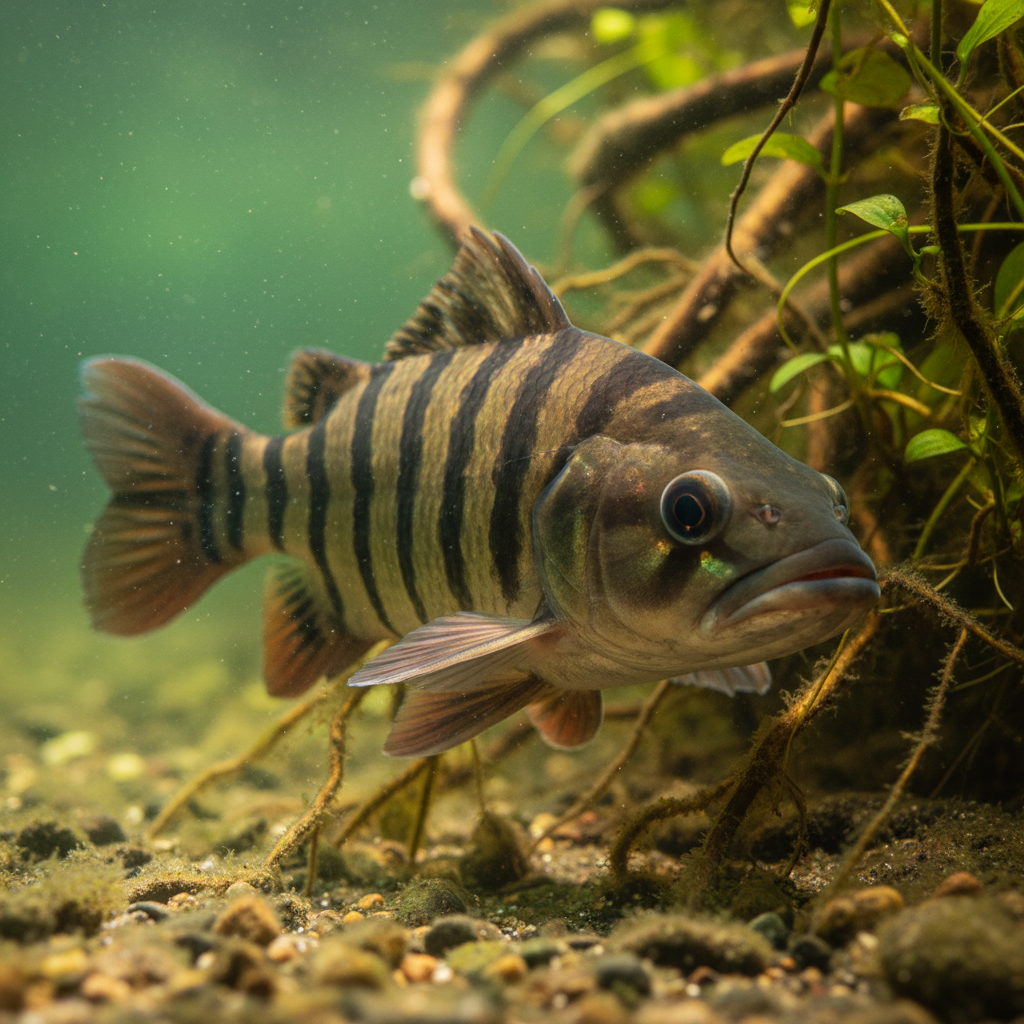
The Indonesian Tiger Fish (Datnioides microlepis), also known as the Indo Tiger or Datnoid, is a legendary and commanding predator from Southeast Asia, prized for its massive adult size and bold, high-contrast vertical stripes.

The Indonesian Tiger Fish (Datnioides microlepis), or "Indo Tiger," is one of the most prestigious species in the large-fish hobby. It is a powerfully built predator with a deeply laterally compressed body and a distinctive high-backed profile. Its appearance is iconic: a golden-to-bronze base color marked by five to seven broad, vertical black bars that resemble the stripes of a tiger. As these fish mature, they develop an incredible presence, often becoming the uncontested centerpiece of massive predatory displays.
In the aquarium, they are prized for their intelligence and "monster fish" personality. While they can be reclusive as juveniles, adults are bold, inquisitive, and often learn to recognize their keepers, making them one of the more rewarding large-scale freshwater species to maintain.
Natural Habitat & Origin
Datnioides microlepis is native to the Mekong and Chao Phraya river basins in Mainland Southeast Asia, as well as the rivers of Sumatra and Borneo. They are typically found in large, slow-moving rivers, lakes, and floodplains. They are often associated with areas of significant submerged structure, such as fallen timber, large rock outcrops, and dense floating vegetation, where they can lurk in the shadows and ambush passing prey.
Care Requirements
The Indonesian Tiger Fish is a massive species that requires a tremendous amount of space and heavy-duty filtration. A minimum tank size of 180 gallons (700L) is required for a single adult, with larger systems (300+ gallons) being necessary for life-long health and to accommodate their significant width and height.
Maintain stable parameters: a pH of 7.0 to 8.0 and a temperature of 75°F to 82°F (24°C to 28°C). They are exceptionally sensitive to water quality, particularly high levels of nitrates and dissolved organics. Oversized biological filtration (such as a large sump) and frequent, massive water changes (30-50% weekly) are non-negotiable. The tank should feature massive pieces of driftwood and smooth river stones to provide the fish with a sense of security without obstructing the open swimming lanes they need.
Diet & Feeding
They are strictly carnivores. In the wild, they hunt for fish, crustaceans, and larger aquatic insects.
In captivity, they require a varied, nutrient-dense diet:
- They primarily thrive on high-quality frozen or fresh foods: Prawns, shrimp (with shells), mussels, and strips of white fish.
- Many individuals can be transitioned to high-quality carnivore pellets, which is highly recommended for balanced nutrition.
- Live foods (quarantined feeder fish or ghost shrimp) can be used to stimulate their natural ambush response but should not be the primary diet.
- Tip: Avoid overfeeding, as they have a high metabolism and can produce significant waste. Feed once a day or every other day for adults.
Behavior & Temperament
They are ambush predators. By day, they often hover near structure, perfectly camouflaged by their stripes, waiting for a meal. They are semi-aggressive and territorial toward other Datnoids and similarly shaped fish. However, they are generally peaceful toward fish too large to be considered food. They possess a "locking" mechanism in their fins (hence the name Datnioides, meaning "saw-like") which they use to wedge themselves into structure if threatened.
Tank Mates
Suitable tank mates include other "Monster Fish" that are large enough not to be eaten:
- Arowanas (Osteoglossum species)
- Large Cichlids (Oscars, Bichirs, or Severums)
- Large Catfish (Pangasius or Pimelodus species)
- Stingrays (in very large tanks)
- Silver Dollars (as "dither fish" in massive setups)
Avoid keeping them with any small, peaceful fish, as they will eventually become a meal.
Breeding
Breeding Datnioides microlepis in captivity is extraordinarily rare and has only been achieved in massive pond-like setups or specialized commercial facilities. They are scattered spawners that release eggs into the water column. The fry are exceptionally difficult to raise and require a constant supply of microscopic live foods. Currently, nearly all specimens in the hobby are wild-caught.
Common Health Issues
The primary health concern is stress-induced "instability." Datnoids can "turn off" their stripes and become a solid, dark, muddy color if they are stressed, unhappy with water parameters, or bullied. This is often a sign of poor water quality or inadequate shelter. They are also prone to oxygen deprivation and "bloat" if the diet is not varied enough. Providing a stress-free environment with pristine, oxygen-rich water and high-quality nutrition is the key to maintaining their vibrant, stable tiger coloration.