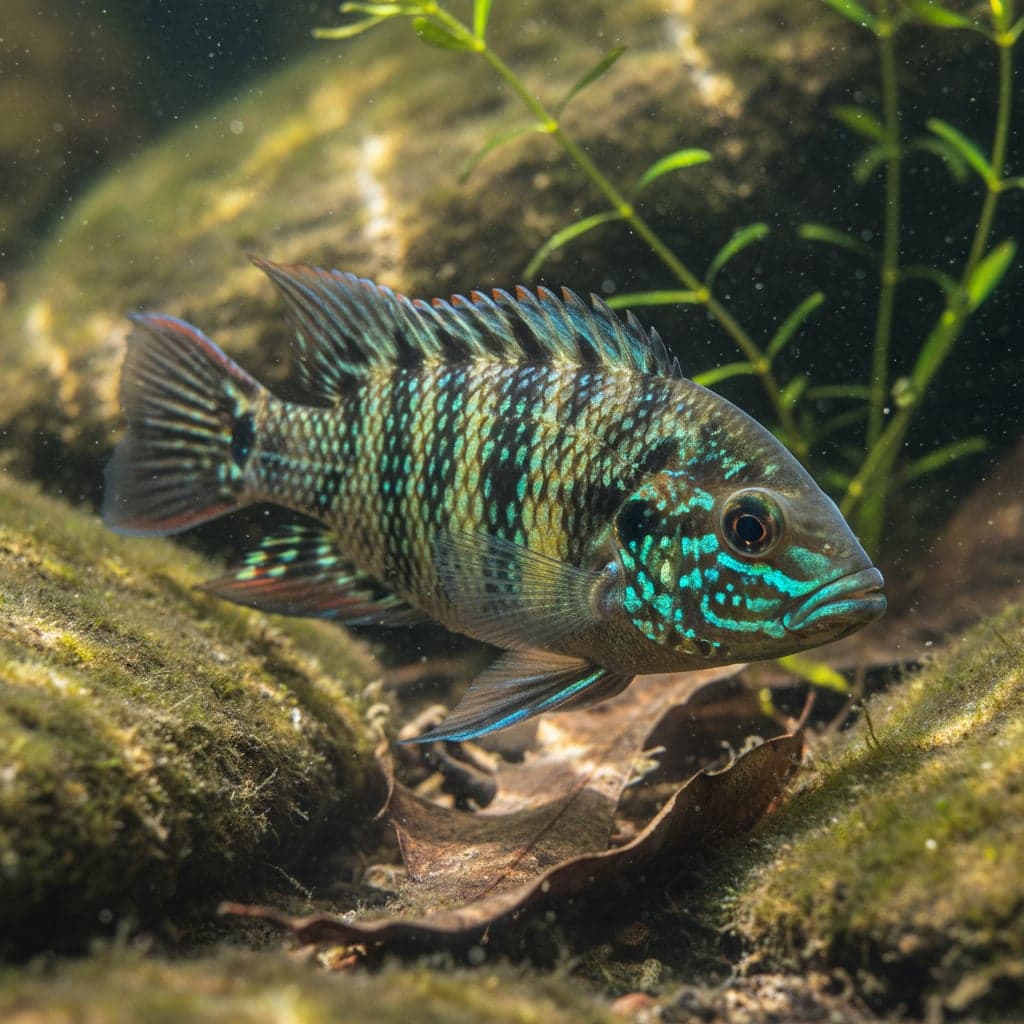
Irian Golden Nugget Gudgeon: Giuris margaritacea
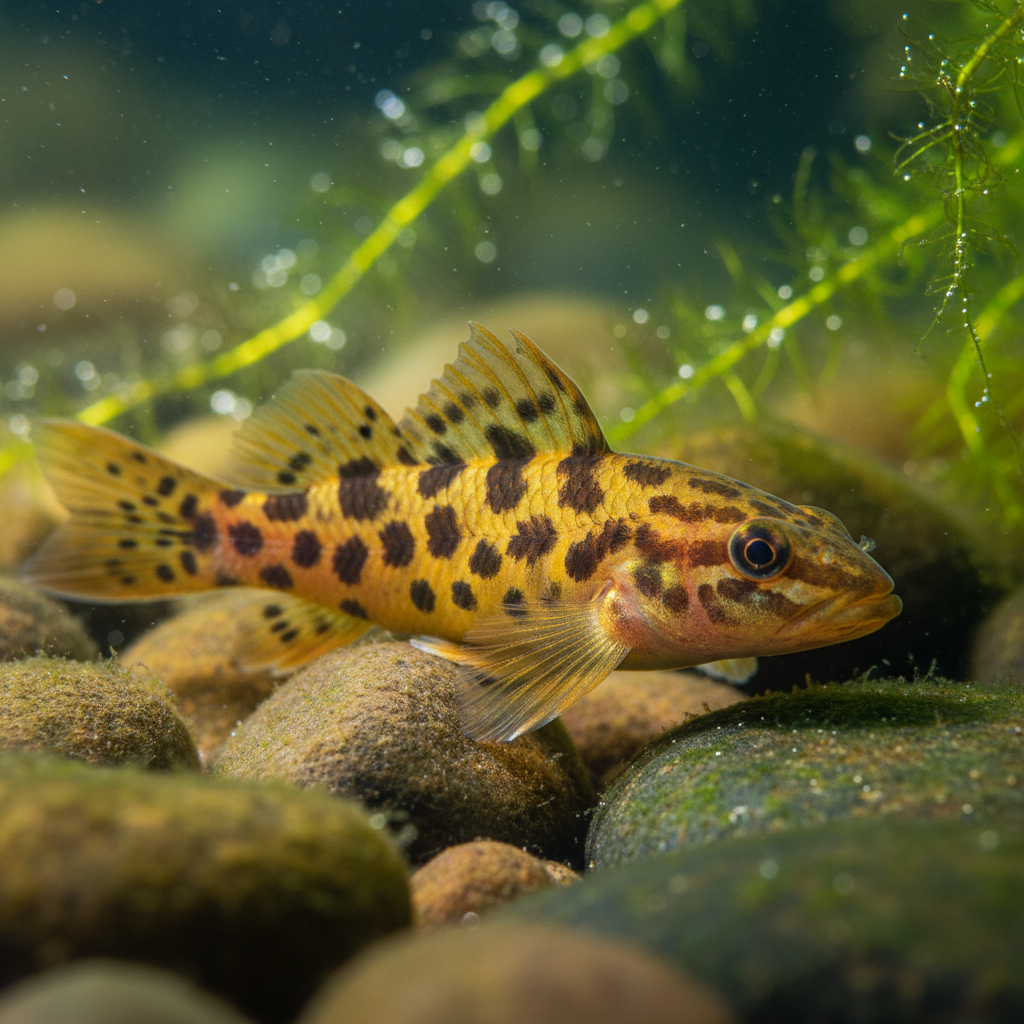
The Irian Golden Nugget Gudgeon (Giuris margaritacea), or Snakehead Gudgeon, is a robust and striking predator from New Guinea, prized for its iridescent markings and commanding presence.
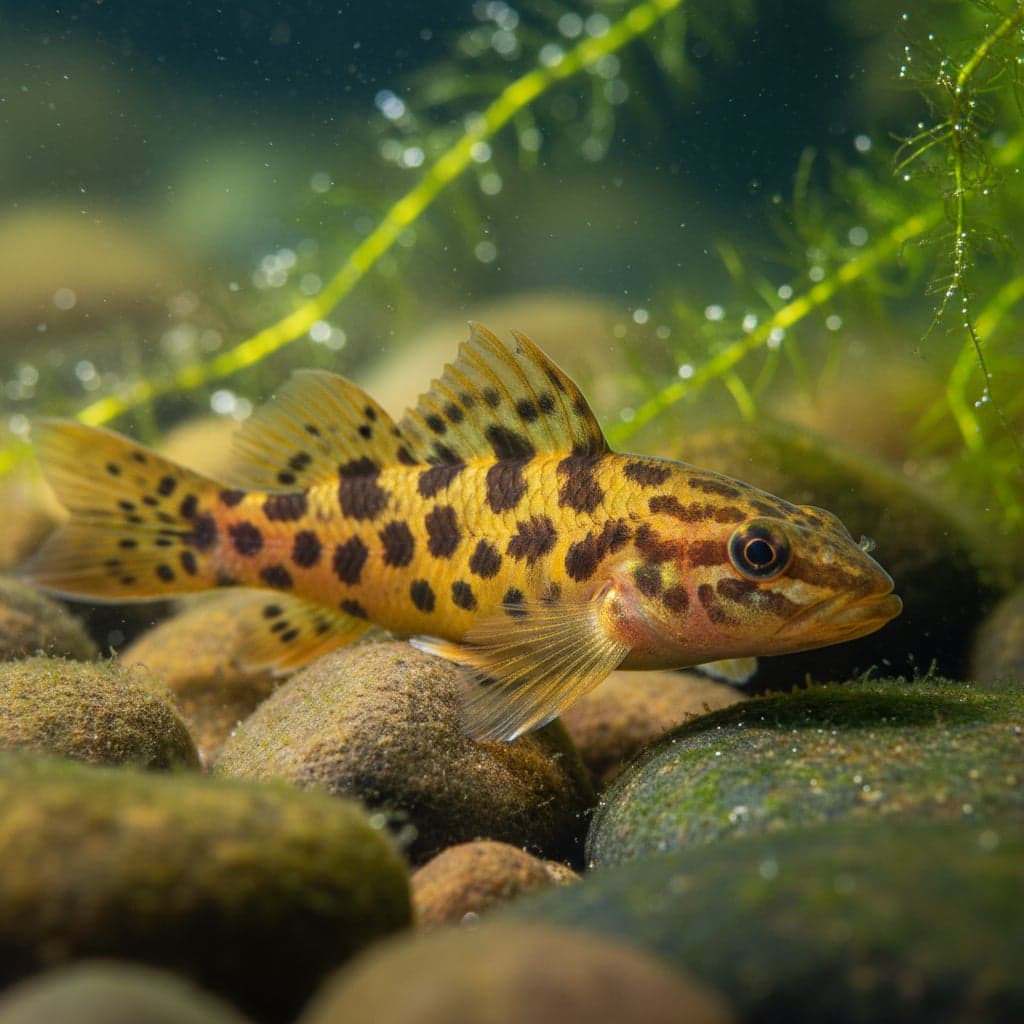
The Irian Golden Nugget Gudgeon (Giuris margaritacea), also known as the Snakehead Gudgeon, is an impressive and often overlooked species in the freshwater hobby. Native to the pristine waterways of New Guinea, it possesses a streamlined, powerful body that hints at its predatory efficiency. Its coloration is a sophisticated blend of deep olive-to-charcoal tones, adorned with a fine network of iridescent gold and silver "nugget" spots along its flanks. As it matures, it develops a deep, high-backed profile and large, expressive eyes, making it a truly majestic resident for larger display aquariums.
In the aquarium, they are bold and observant. While they spent a significant amount of time perched on the substrate or scanning the mid-water columns, they are highly responsive to their environment. They are predators by nature, but their relatively peaceful interaction with fish too large to eat makes them an excellent "oddball" choice for structured community setups.
Natural Habitat & Origin
Giuris margaritacea is widely distributed across the Indo-Pacific region, with significant populations in Irian Jaya (West Papua), Papua New Guinea, and the Solomon Islands. They inhabit a wide variety of environments, from fast-flowing mountain streams to the slow-moving, brackish reaches of coastal estuaries. They are most commonly found in areas with clear water and abundant physical structure, such as submerged logs, undercut banks, and large rock outcrops.
Care Requirements
The Snakehead Gudgeon is a robust species that require a substantial amount of space as it reaches its 8-inch (20 cm) adult size. A minimum tank size of 55 gallons (200L) is recommended for a single individual or a pair.
Maintain stable parameters: a pH of 7.0 to 8.0 and a temperature of 75°F to 82°F (24°C to 28°C). They are exceptionally hardy but appreciate highly oxygenated water with moderate flow. The tank should be decorated with large pieces of driftwood and smooth river stones to provide the fish with a variety of "perching" spots. Dense planting around the perimeter of the tank will help them feel secure while maintaining the open swimming lanes they need to patrol their territory.
Diet & Feeding
They are specialized carnivores. In the wild, they hunt for small fish, crustaceans, and aquatic larvae.
In captivity, they require a varied, protein-rich diet:
- They primarily thrive on frozen foods: Mysis shrimp, Krill, and enriched Brine Shrimp.
- Larger specimens will readily accept chopped prawns, mussels, and earthworms.
- Most individuals can be transitioned to high-quality carnivore sinking pellets.
- Note: They have large mouths and a high predatory drive; they will consume any fish or shrimp small enough to be swallowed.
Behavior & Temperament
They are peaceful but predatory. While they do not typically go looking for trouble, they are assertive and will defend their chosen perching spots from other bottom-dwellers. They are generally peaceful toward middle and upper-water dwelling fish that are too large to be considered prey. They are highly intelligent and will quickly learn the feeding schedule, often coming to the front of the glass to greet their owner.
Tank Mates
Suitable tank mates include other robust, medium-sized species:
- Rainbowfish (larger species like Boesemani)
- Medium-sized Cichlids (Severums or Angelfish)
- Larger Barbs (Filament Barbs)
- Robust Catfish (Synodontis or larger Corydoras species)
- Other Gudgeons of similar size
Avoid keeping them with very small fish (Tetras, Rasboras) or delicate, slow-moving species that might be intimidated by their predatory presence.
Breeding
Breeding Giuris margaritacea in captivity is a rare and challenging event. They are substrate spawners, typically laying their eggs in a secluded spot on a flat rock or inside a hollow log. Both parents participat in guarding the nest. The fry are exceptionally small and require microscopic live foods (infusoria) as their first food source. Currently, nearly all specimens in the hobby are wild-caught.
Common Health Issues
They are remarkably disease-resistant but can be sensitive to high levels of nitrates. Maintaining excellent water quality and providing a varied, high-quality diet are the best ways to ensure their iridescent patterns remain vivid and their activity levels high. Routine quarantine of new arrivals is always recommended.