Knight Goby: Stigmatogobius sadanundio
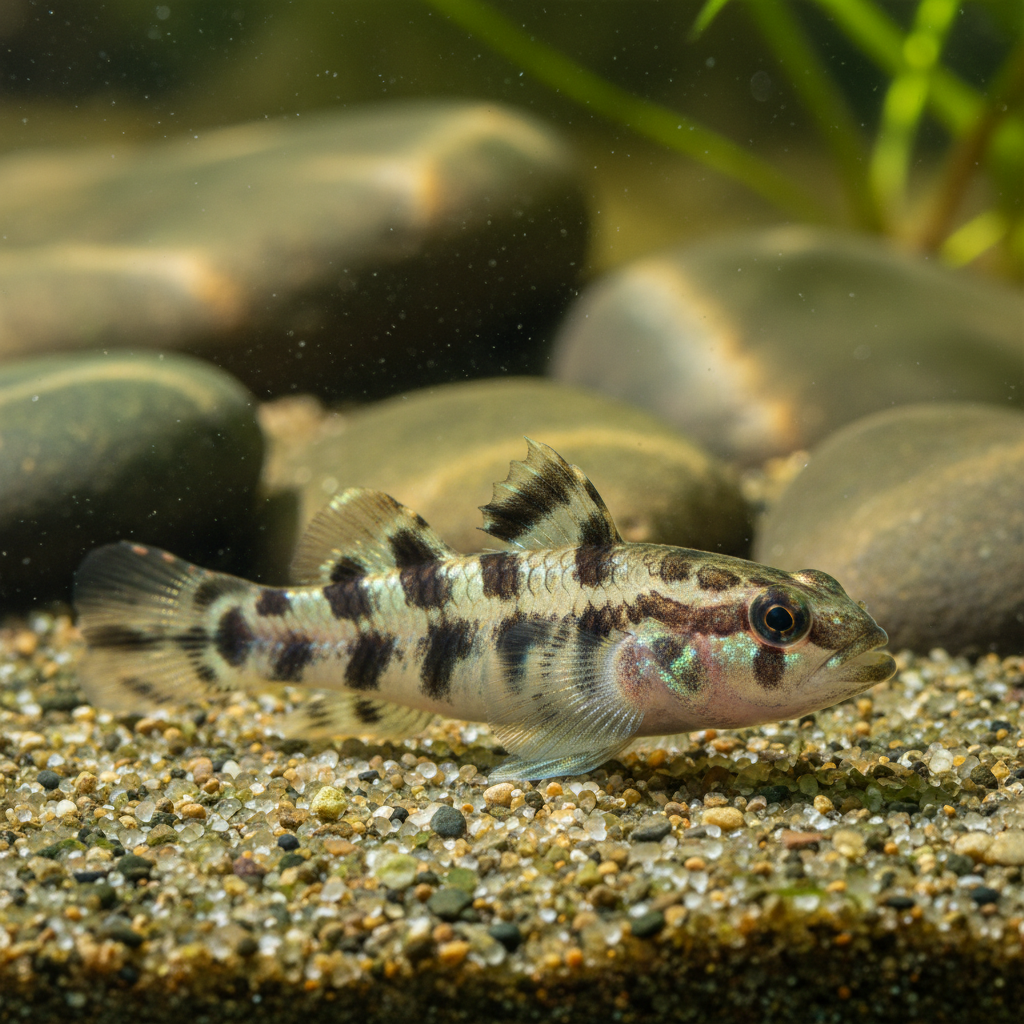
The Knight Goby (Stigmatogobius sadanundio) is a majestic, spotted species from the mangrove estuaries of Southeast Asia, known for its bold markings and impressive dorsal fins.
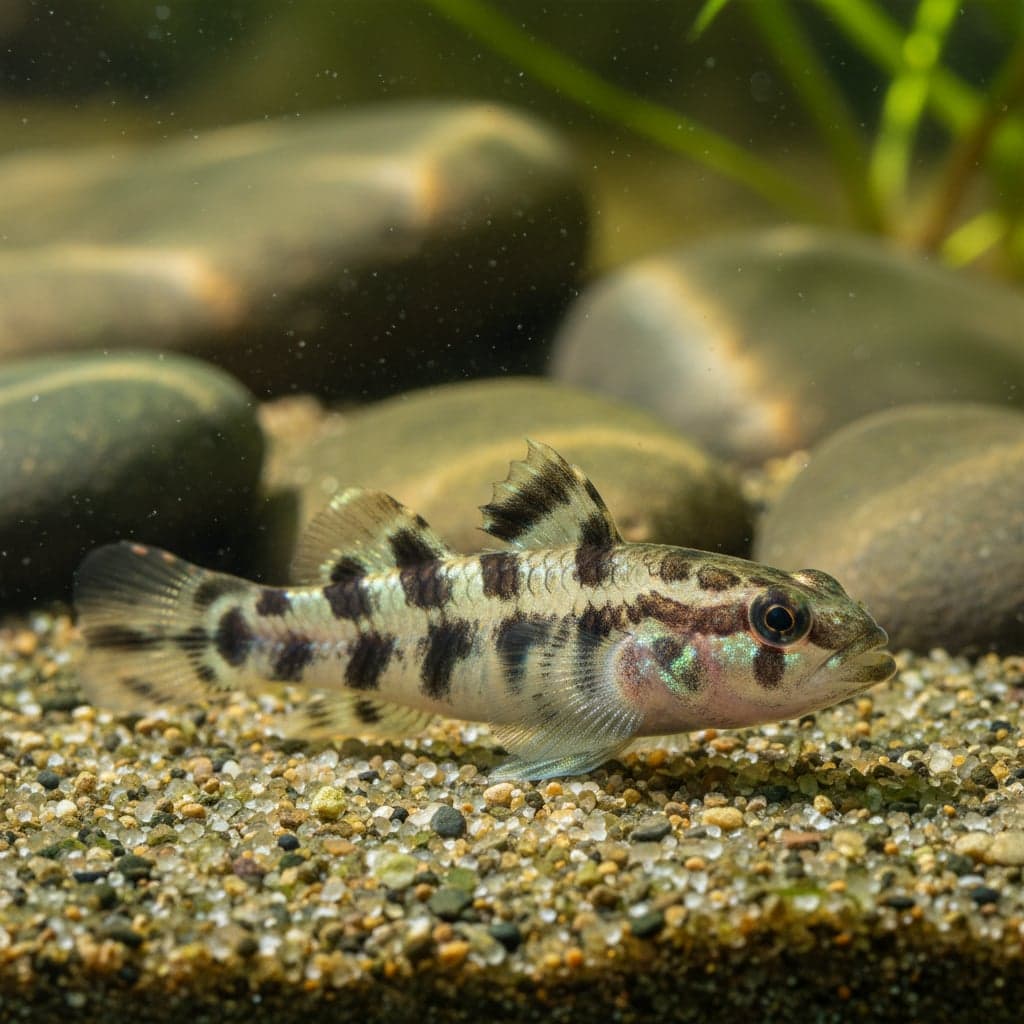
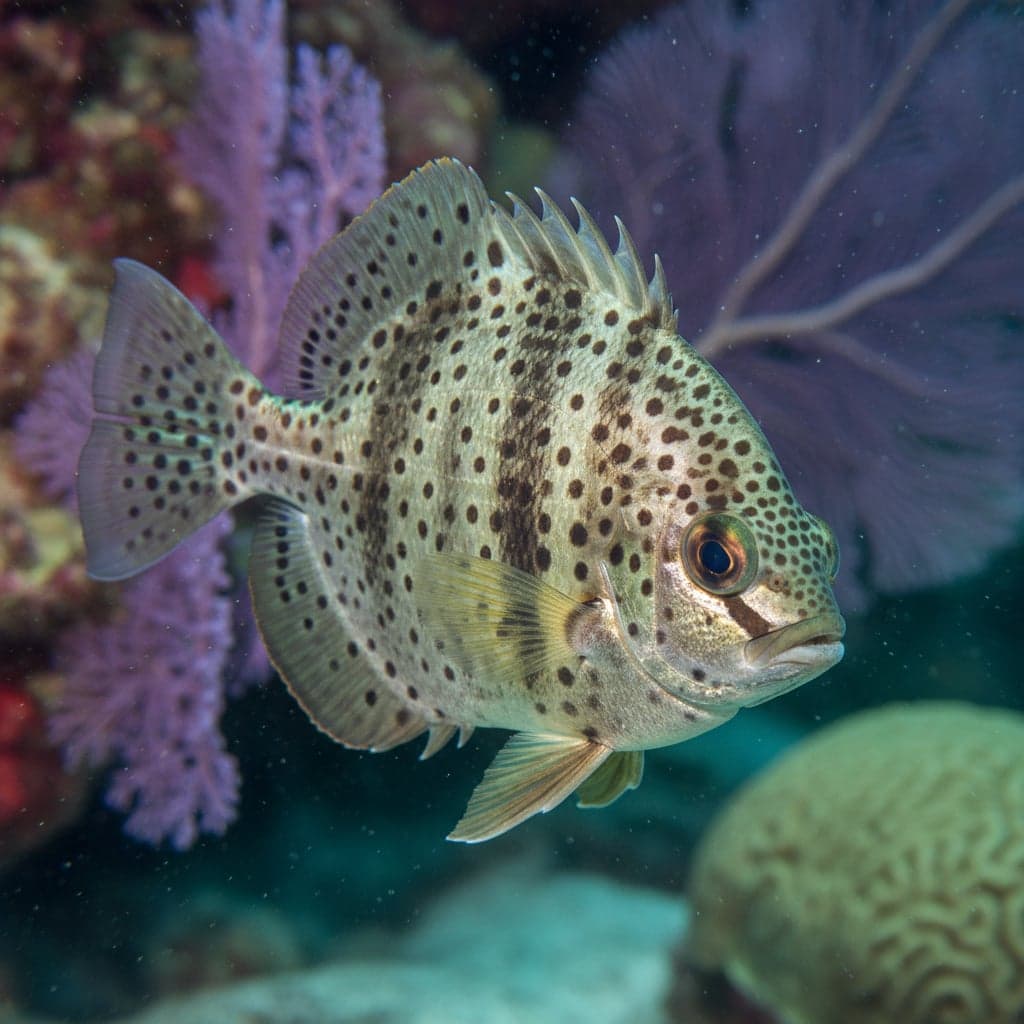
The Knight Goby (Stigmatogobius sadanundio) is the armored sentinel of the mangrove swamp. Native to the complex estuaries of Southeast Asia, it is defined by its stark, sophisticated aesthetic: a pale blue-grey or silvery body punctuated by a series of large, perfectly round black spots that resemble the rivets on a medieval suit of armor. Its crowning glory is its magnificent, elongated first dorsal fin, which adult males will frequently snap open in a dramatic display of dominance or courtship. For the aquarist capable of providing a brackish environment, the Knight Goby is a highly interactive and visually arresting resident that commands attention with its watchful, intelligent eyes and territorial grace.
In the aquarium, they are thoughtful, methodical, and highly territorial. They are "perch-and-watch" predators that spend much of their day stationed on a rock or piece of wood, observing their environment with an air of dignified authority.
Natural Habitat & Origin
Stigmatogobius sadanundio is native to the coastal regions of Southeast Asia, ranging from India and Sri Lanka to Thailand, Indonesia, and the Philippines. They are primarily inhabitants of mangrove swamps, estuaries, and river mouths where the water is brackish—a mix of incoming seawater and outgoing fresh river water. These environments are characterized by complex root systems, muddy substrates, and a high degree of structural complexity. While they can survive in pure freshwater for short periods, their long-term health, color, and lifespan depend on the presence of marine salt and the alkaline conditions of the estuary.
Care Requirements
The Knight Goby is a hardy species if its environmental needs are met. A minimum tank size of 30 gallons (100L) is recommended for a single individual or a pair.
They must be kept in brackish water for optimal health; a specific gravity of 1.002 to 1.005 is ideal. Maintain stable, alkaline parameters: a pH of 7.5 to 8.5 and a temperature of 75°F to 82°F (24°C to 28°C). The aquarium must be highly structured, with plenty of caves, terracotta pots, and driftwood roots to provide distinct territories. They are sensitive to poor water quality, especially the buildup of nitrogenous waste, so a robust filtration system and regular water changes are essential. Provide a substrate of fine sand or smooth gravel to protect their delicate ventral fins.
Diet & Feeding
They are active carnivores with a surprisingly large mouth relative to their body size. In the wild, they hunt small crustaceans, insect larvae, and tiny fish.
In captivity, they require a protein-rich, meaty diet:
- High-quality sinking carnivore pellets and wafers should be the staple.
- They relish live or frozen foods: Mysis shrimp, Brine Shrimp, Bloodworms, and chopped seafood.
- Tip: They are "opportunistic" hunters and will eagerly snap up any small fish or shrimp that are small enough to be eaten.
- They prefer to eat from the substrate or as food drifts past their chosen "perch."
- Ensure that faster-moving community fish do not consume all the food before it reaches the bottom-dwelling gobies.
Behavior & Temperament
They are semi-aggressive and intensely territorial. They do not school and will actively chase away any other bottom-dwellers that enter their perceived territory. Males are particularly aggressive toward other males, and keeping multiple in a small tank without enough visual barriers is not recommended. They are not schooling fish but can be kept as a group in a very large, complex tank. They are master "lurkers" and will blend in perfectly with their surroundings, only becoming highly active during feeding or territorial displays.
Tank Mates
Suitable tank mates are other robust species that share their preference for brackish, alkaline water:
- Mollies and Guppies (wild-type or robust varieties)
- Glassfish
- Bumblebee Gobies (in a large enough tank)
- Orange Chromides
- Monos or Scats (in very large tanks)
Avoid keeping them with very small fish (like Neon Tetras) or slow-moving fish with long fins, which may be nipped or eaten.
Breeding
Breeding Stigmatogobius sadanundio is possible in the aquarium. They are cave spawners. The male will clean a chosen site, usually the ceiling of a cave or a flat stone, and entice a female to enter. After spawning, the female is chased away, and the male takes full responsibility for guarding and fanning the eggs. The eggs hatch in 2 to 4 days. The fry are exceptionally small and require "infusoria" or marine rotifers initially. Replicating the fluctuating salinity of a mangrove swamp can often trigger spawning behavior.
Common Health Issues
The primary health concern is bacterial infections and skin parasites caused by keeping them in pure freshwater. Without the protective properties of salt and high pH, they waste away and lose their brilliant spots. They are also prone to Fin Rot if the substrate is dirty. Maintaining a consistent brackish gravity, providing a high-protein diet, and ensuring plenty of territories is the best way to ensure the majestic "Knight" of the mangroves remains a highlight of your aquarium.