Lavender Firefish: Nemateleotris lavandula
The Lavender Firefish (Nemateleotris lavandula) is a pastel masterpiece of the marine world, defined by its exquisite pink-lavender iridescence and its signature "spike" dorsal fin.
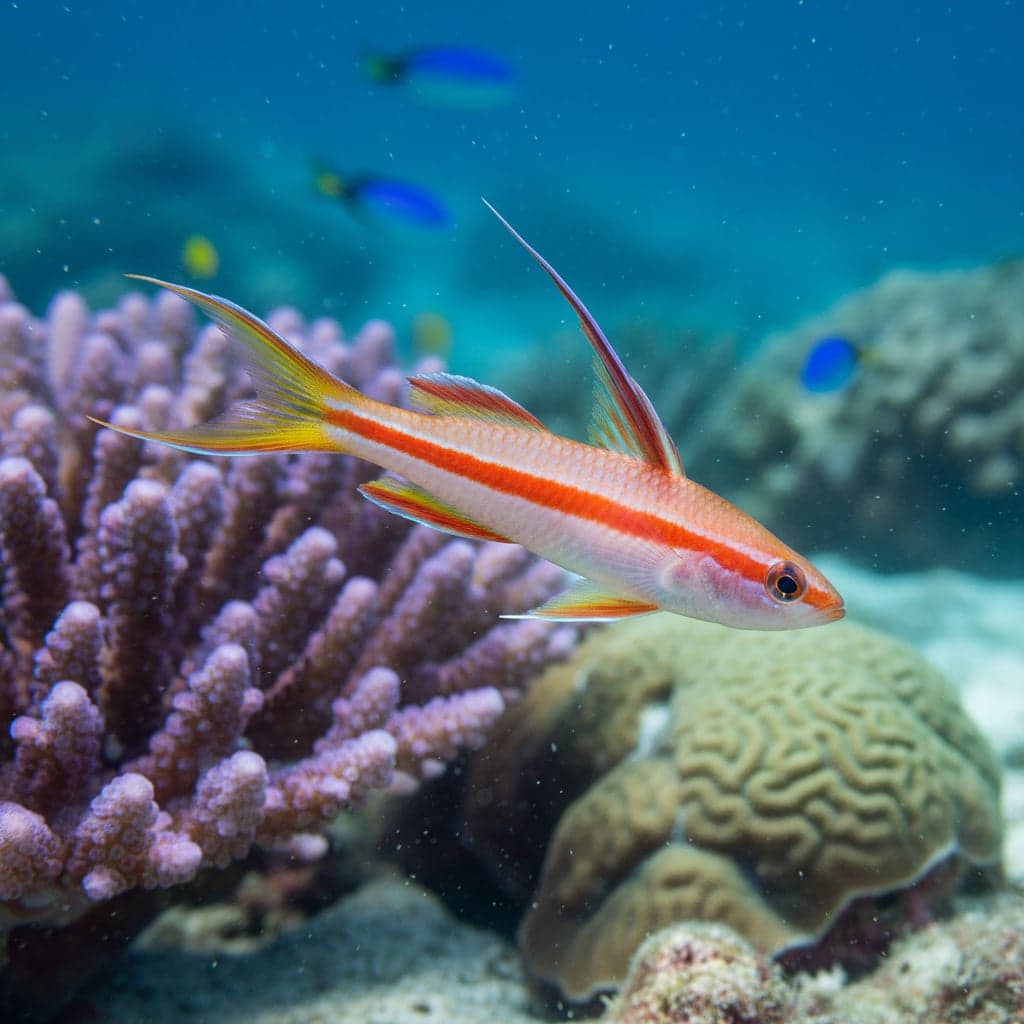
The Lavender Firefish (Nemateleotris lavandula), also known as the Lavender Dartfish, is a species of profound elegance. It is defined by its exotic, pastel-lavender to deep violet body coloration, which sets it apart from its primary relatives, the Firefish and Purple Firefish. Its most iconic feature is the elongated first dorsal fin ray, a white "spike" that the fish flickers rhythmically to communicate with its mate or to warn off rivals. This "flick" is more than just a display; it is a kinetic anchor that helps the fish maintain a steady position against reef currents. For the reef aquarist, the Lavender Firefish is a sophisticated, non-aggressive resident that brings a unique color temperature to the lower and middle water columns.
In the aquarium, they are the epitome of "peaceful energy." They spend their day hovering just inches above the substrate or their favorite bolt-hole, darting forward to catch passing copepods with surgical precision.
Natural Habitat & Origin
Nemateleotris lavandula is native to the western Pacific Ocean, particularly around the reefs of Japan, the Ryukyu Islands, and Palau. They are deep-reef specialists, typically found on sandy rubble slopes at depths of 25 to 70 meters. These areas are characterized by clear, high-oxygen water and moderate currents. They are strictly social in the wild, often living in pairs that share a single burrow. Their environment is one of extreme security and proximity to shelter; they never venture far from a hole in the reef where they can retreat at the first sign of danger.
Care Requirements
The Lavender Firefish is a hardy species but requires pristine water quality and a secure system. A minimum tank size of 20 gallons (75L) is required for a pair.
Maintain stable marine parameters: a pH of 8.1 to 8.4 and a temperature of 75°F to 81°F (24°C to 27°C). They MUST have a tightly fitting lid or a mesh cover; they are notorious jumpers and will leap from the tank if startled. The aquarium should feature a thick layer of fine sand and various rock caves, allowing them to choose or excavate multiple bolt-holes. They prefer moderate water flow that mimics the currents of the deep reef slopes. Because they are shy and retreat easily, providing plenty of sight-blocks (rockwork) is essential for their long-term security.
Diet & Feeding
They are zooplanktivores, naturally feeding on floating organisms in the water column.
In captivity, they require frequent feedings of high-quality, protein-rich foods:
- Enriched frozen Mysis shrimp, Brine shrimp, Calanus, and finely chopped seafood should be the staples.
- High-quality marine pellets and flakes are usually accepted once the fish is acclimated.
- Tip: Because they have a small stomach and a high metabolism, they should be fed 2 to 3 times per day in small amounts.
- They are "picky" feeders that only take food caught in the water column; they rarely forage from the substrate.
Behavior & Temperament
They are exceptionally peaceful. They will not bother corals, invertebrates, or other fish. They are best kept either as a single individual or as a mated pair. Keeping more than one Lavender Firefish of the same sex in a small tank will lead to relentless fighting over territory and dorsal-fin flickering. They are compatible with almost any peaceful community reef species. However, they are easily outcompeted for food and intimidated by aggressive or fast-swimming tank mates.
Tank Mates
Suitable tank mates are other peaceful and slow-moving reef species:
- Anthias and Chromis
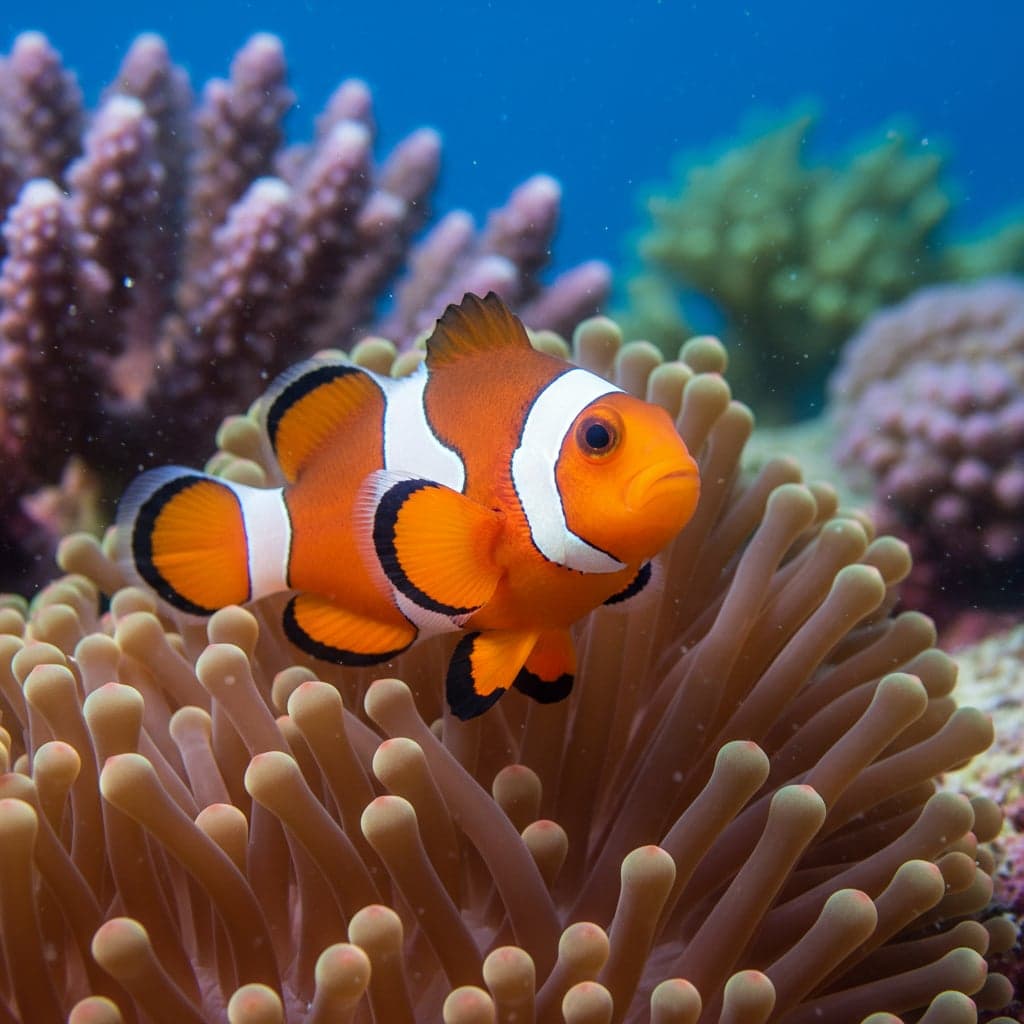
- Clownfish
- Blennies and Gobies
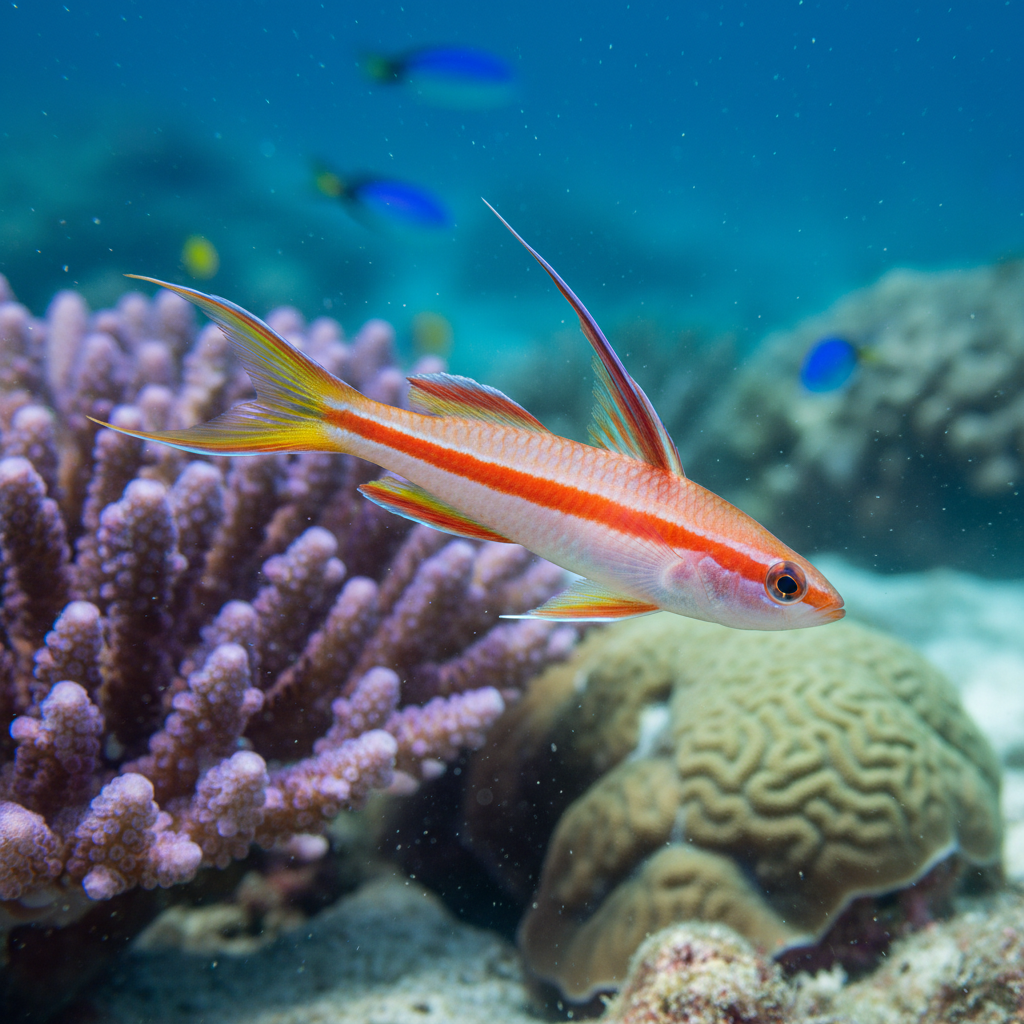
- smaller, peaceful Wrasses
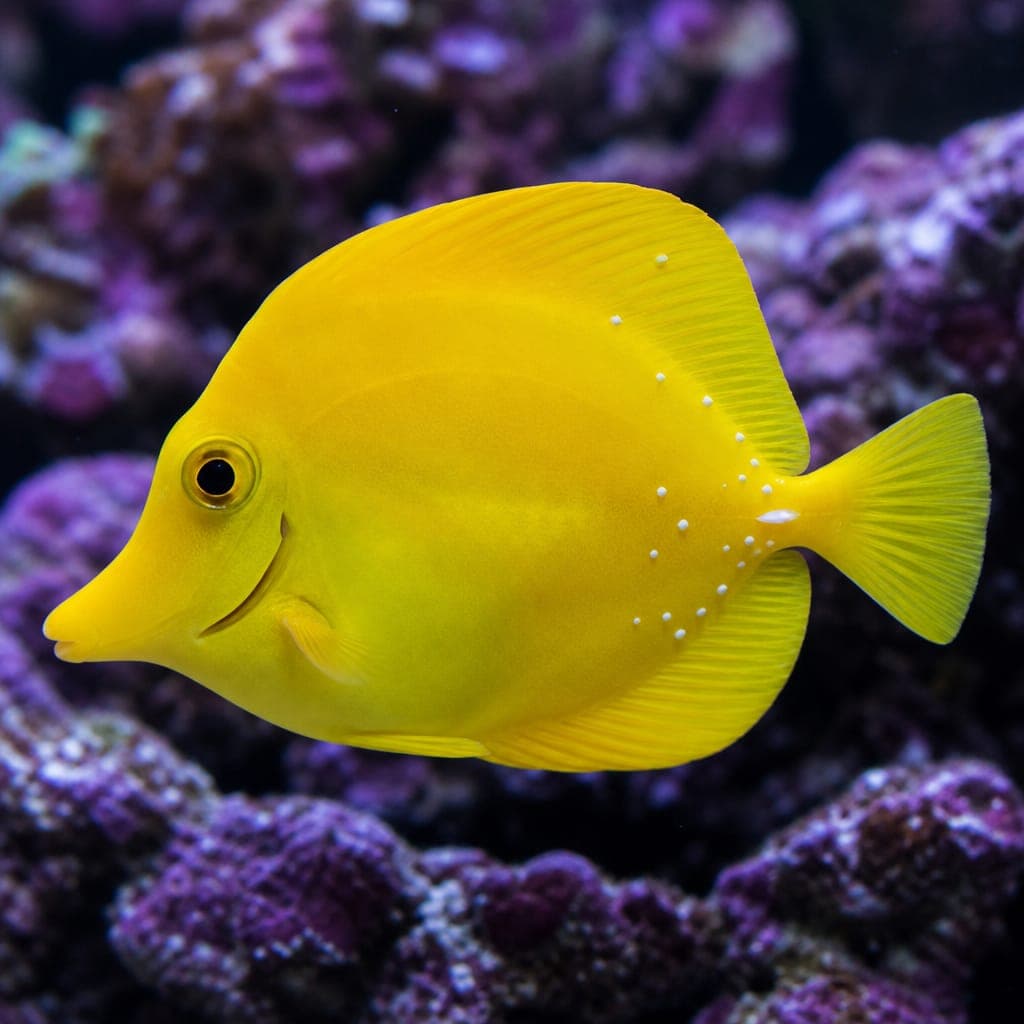
- peaceful Tangs (in larger systems)
Avoid keeping them with aggressive Dottybacks, large Hawkfish, or predatory Scorpaenids that might view the slender firefish as a meal.
Breeding
Breeding the Lavender Firefish in captivity is possible but challenging. They are cave spawners. Mated pairs will lay a clutch of adhesive eggs on the roof or walls of their burrow. The male is primarily responsible for guarding and fanning the eggs. While spawning is frequently observed in mature, peaceful systems, raising the tiny pelagic larvae is extremely difficult due to their requirement for specialized live rotifers and precise water quality during the first weeks of development.
Common Health Issues
The primary health concern is stress-induced Ich or Marine Velvet if they are bullied or if water quality is poor. They are also sensitive to rapid changes in salinity. Maintaining a stable, high-oxygen, and quiet environment with a secure lid is the best way to ensure the exquisite Lavender Firefish remains a vibrant and elegant resident of your reef.