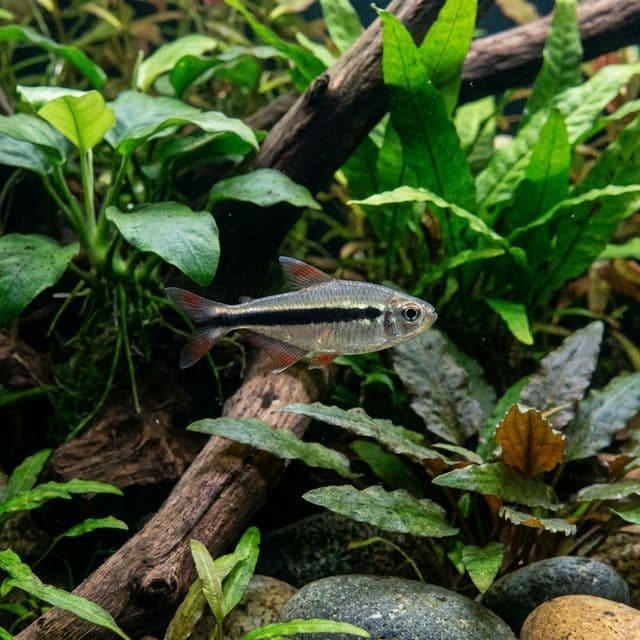
Lemon Tetra: Hyphessobrycon pulchripinnis
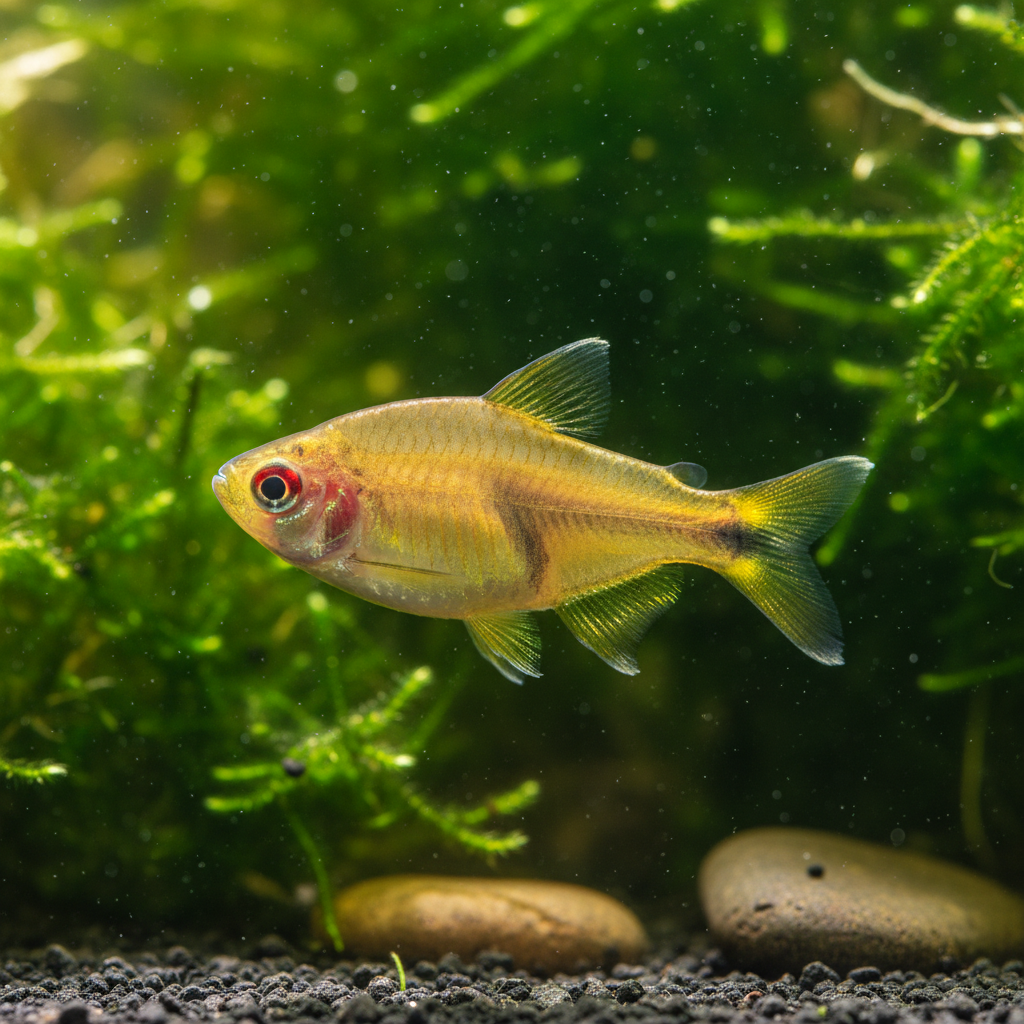
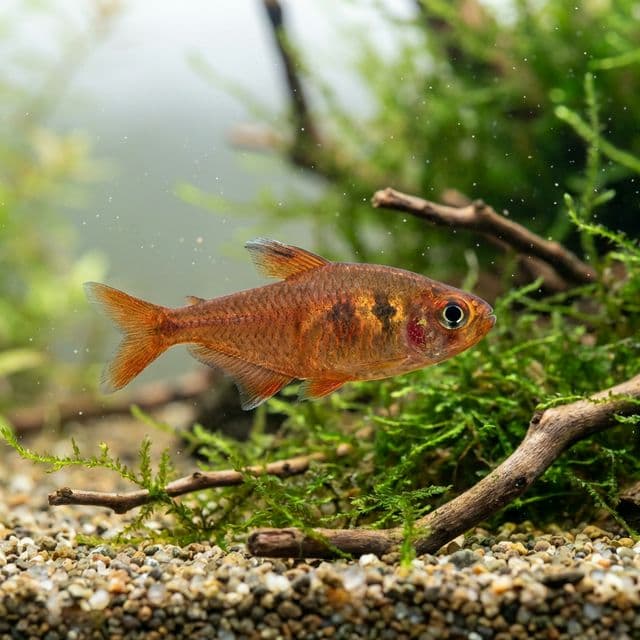
The Lemon Tetra (Hyphessobrycon pulchripinnis) is a translucent masterpiece from the Amazon, defined by its radiant lemon-yellow hue and its startlingly bright, cherry-red eyes.

The Lemon Tetra (Hyphessobrycon pulchripinnis) is a species that rewards the patient aquarist. While they may appear drab in a dealer's tank, once settled into a mature aquarium, they transform into a radiant, translucent lemon-yellow. Their most striking feature is a brilliant, cherry-red upper half of the iris, which provides a stunning contrast to their yellow bodies. They are also defined by a bold black-and-yellow leading edge on their dorsal and anal fins. For the community aquarist, the Lemon Tetra is a kinetic, elegant, and exceptionally peaceful schooler that brings a unique "neon" glow to the middle water column—especially when kept in the large groups they naturally prefer.
In the aquarium, they are the epitome of coordinated movement. They are tight-schooling fish that prefer the middle levels of the tank, moving with a social synchronicity that makes them one of the most cohesive tetra species in the hobby.
Natural Habitat & Origin
Hyphessobrycon pulchripinnis is native to the Tapajós River basin in Brazil, a major tributary of the Amazon. They are blackwater specialists, typically found in the clear, tea-colored waters of smaller forest streams and flooded forests. These areas are characterized by soft, acidic water and low mineral content, with the substrate covered in a thick layer of decomposing leaf litter and fallen branches. In the wild, they are found in massive schools near the margins where the canopy provides dappled shade, making their reflective yellow bodies and red eyes critical for inter-school recognition in the shadows.
Care Requirements
The Lemon Tetra is an exceptionally hardy and adaptable species, but they show their best colors in soft, acidic conditions. A minimum tank size of 20 gallons (75L) is required for a small school.
Maintain stable parameters: a pH of 6.0 to 7.2 and a temperature of 73°F to 82°F (23°C to 28°C). While they are adaptable to harder water, they will never achieve their full "lemon" intensity outside of soft water. The aquarium should be designed with a dark substrate and plenty of aquatic plants (like Amazon Swords or Cryptocorynes) which mimic their forest home. Adding driftwood and dried leaves (like Indian Almond leaves) will release beneficial tannins, further enhancing their health and coloration. TIP: They are highly sensitive to sudden changes in water chemistry; regular, small water changes are far better than infrequent, large ones.
Diet & Feeding
They are opportunistic omnivores that feed on tiny insects, crustaceans, and organic debris in the wild.
In captivity, they are not picky and will accept almost any food offered:
- High-quality micro-pellets and crushed flakes should be the staple.
- They MUST have frequent offerings of live or frozen foods to maintain their vibrant red eyes: Baby Brine Shrimp, Cyclops, Daphnia, and finely chopped Bloodworms.
- Tip: To maintain their deep yellow hue, include foods rich in carotenoids or specialized "color-enhancing" flakes in their weekly rotation.
- They are middle-water feeders and will capture food as it drifts through the water column.
Behavior & Temperament
They are peaceful and social. They MUST be kept in groups of at least 6 to 8 individuals; in smaller numbers, they become shy, skittish, and will lose their radiant color. They are a "shoaling" species that will not harass or nip at other species. They are compatible with almost any peaceful community fish, including delicate species like Discus or dwarf cichlids.
Tank Mates
Suitable tank mates are other peaceful species from similar environments:
- Other Tetras (Neon, Cardinal, Rummy-Nose)
- Corydoras and Otocinclus
- Dwarf Cichlids (like Apistogramma)
- Honey Gouramis
- Rasboras
Avoid keeping them with large, aggressive, or fast-swimming species that might outcompete them for food or view the small tetras as a meal.
Breeding
Breeding the Lemon Tetra is relatively straightforward for the experienced hobbyist. They are egg scatterers. A breeding pair or small group should be moved to a separate tank with very soft, acidic water and fine-leaved plants or a spawning grid. Spawning usually occurs in the early morning. The parents should be removed immediately after spawning to prevent them from eating the eggs. The fry hatch in about 24 hours and require infusoria or "liquid" fry food as their first food before they can take Baby Brine Shrimp.
Common Health Issues
The primary health concern is stress-induced Ich if water quality is poor or if they are kept in insufficient numbers. They are also sensitive to high nitrate levels. Maintaining a stable, well-planted, and clean environment with a large, social school is the best way to ensure the glowing Lemon Tetra remains the radiant star of your Amazonian biotope.