Lined Barb: Desmopuntius johorensis
The Lined Barb (Desmopuntius johorensis) is a sleek, horizontally-striped beauty of the Southeast Asian peat swamps, known for its peaceful schooling nature and golden-tan shimmer.

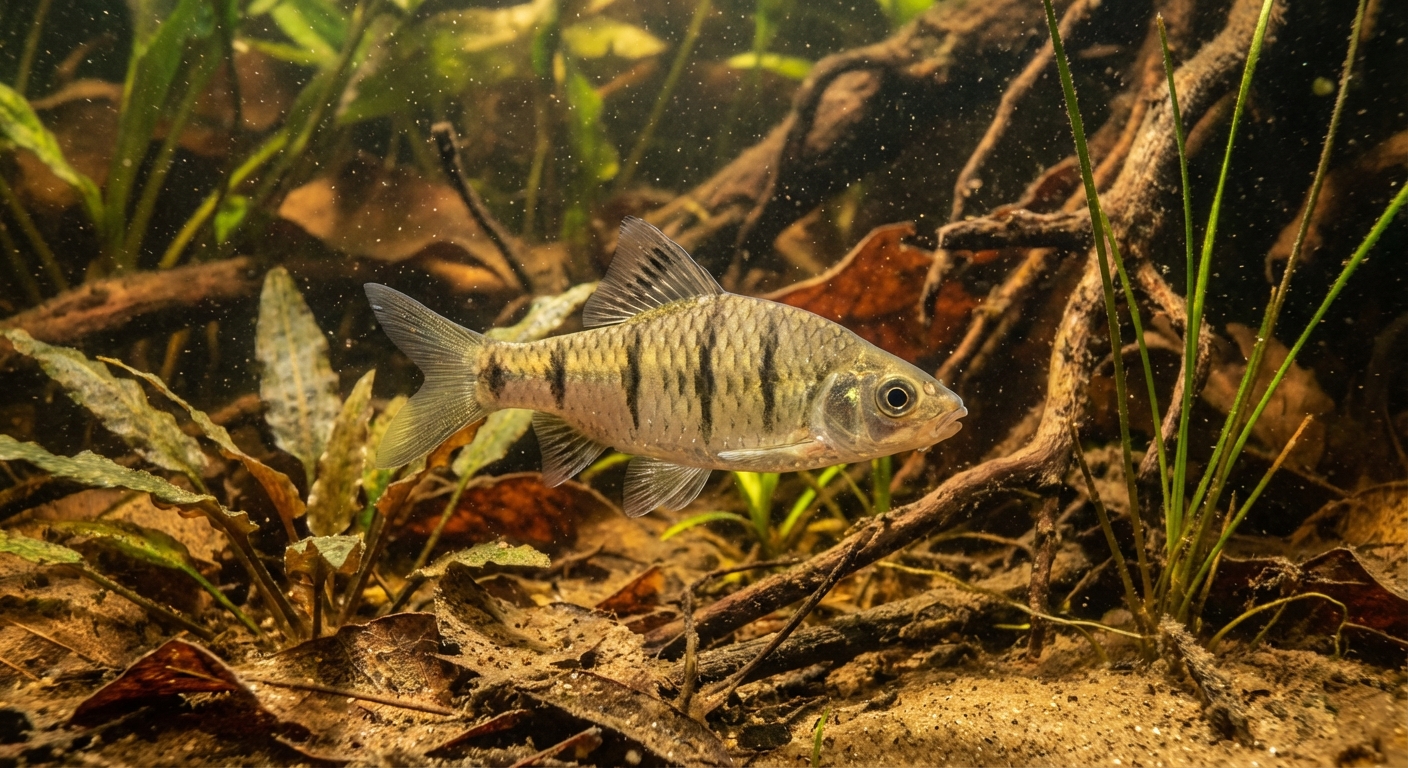
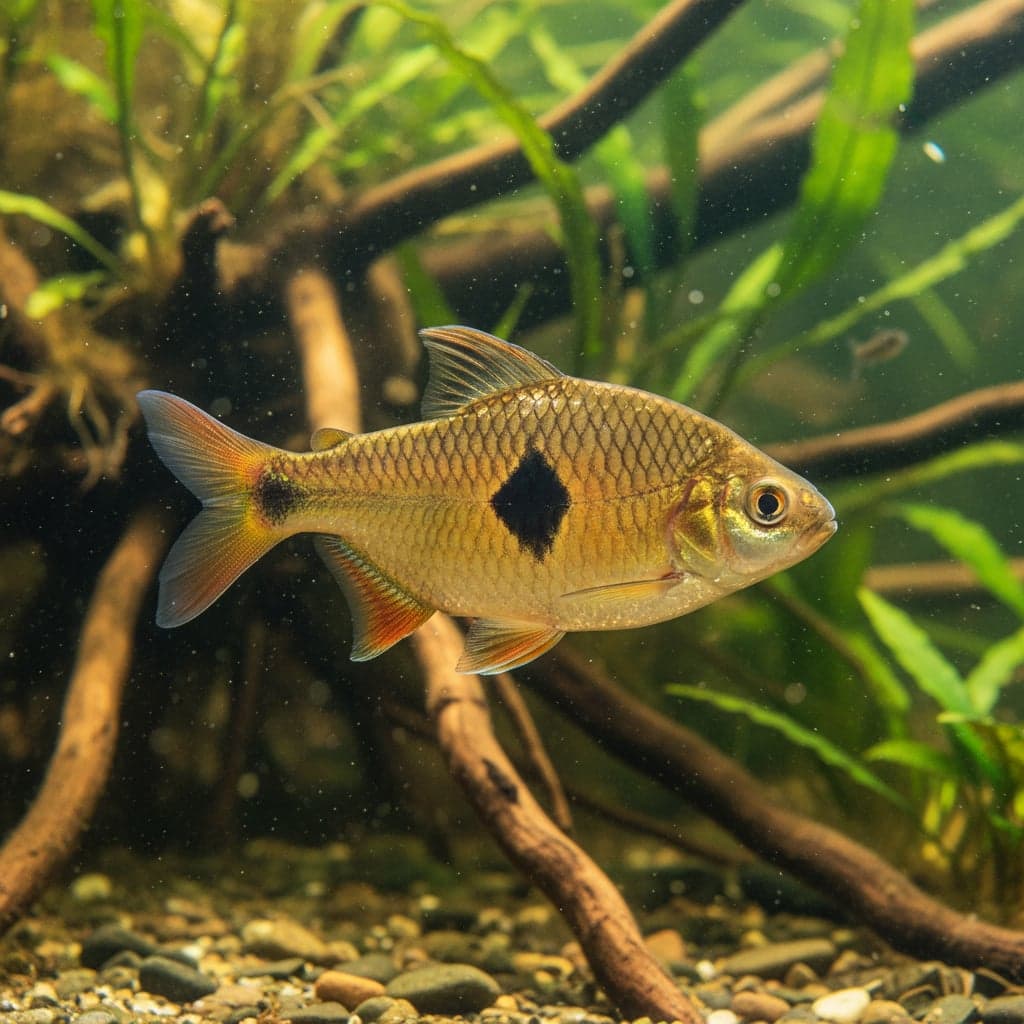
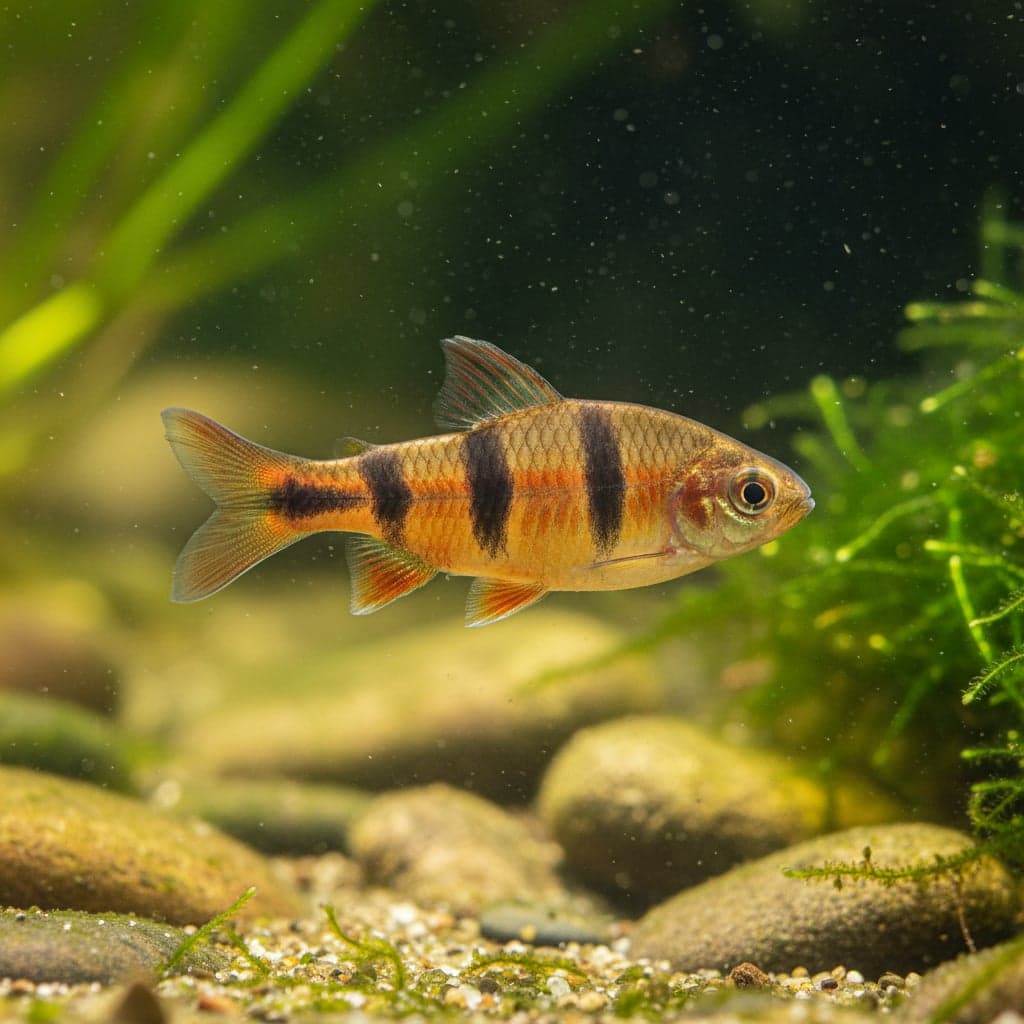
The Lined Barb (Desmopuntius johorensis), also known as the Melons Barb or Striped Barb, is a striking and often overlooked species in the aquarium hobby. It is defined by its golden-tan, slender body and 4-5 bold, solid dark-brown horizontal stripes that run from the gill cover to the base of the tail. Unlike many of its vertically-striped relatives (like the Tiger Barb), the Lined Barb is exceptionally peaceful and social, making it a perfect candidate for the larger community aquarium. It is a fish that brings both structured beauty and constant, shimmering movement to the middle levels of the tank.
In the aquarium, they are the epitome of social coordination. They are "tight" schoolers that prefer the open middle-water column, moving with a synchronized grace that is enhanced when they are kept in the large groups they naturally favor.
Natural Habitat & Origin
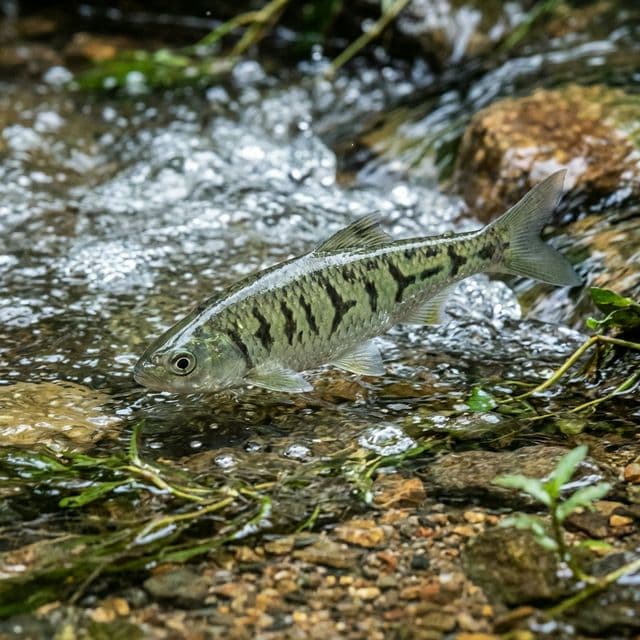
Desmopuntius johorensis is native to the Malay Peninsula and the islands of Borneo and Sumatra. They are blackwater-associated species, typically found in slow-moving forest streams and peat swamp margins. These areas are characterized by soft, acidic water stained with tannins from massive accumulations of submerged wood and leaf litter. In the wild, they are found in loose, large schools near overhanging vegetation, where they forage for insects, small crustaceans, and organic detritus.
Care Requirements
The Lined Barb is a hardy and adaptable species but shows its best health and most vibrant golden shimmer in soft, slightly acidic water. A minimum tank size of 30 gallons (110L) is required for a school.
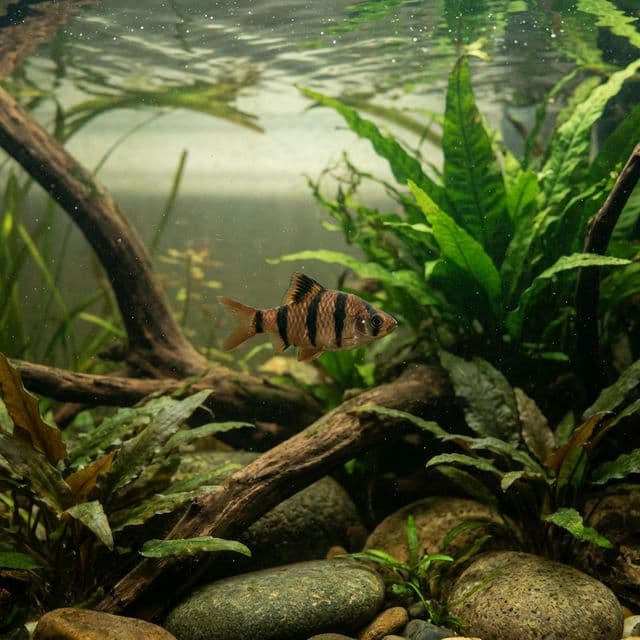
Maintain stable parameters: a pH of 5.5 to 7.0 and a temperature of 73°F to 81°F (23°C to 27°C). The aquarium should feature plenty of open swimming space complemented by dense planting along the back and sides. Adding driftwood and dried leaves (like Indian Almond leaves) will release beneficial tannins and humic acids, further mimicking their natural swamp-stream home. TIP: They are active swimmers; ensure the aquarium is "long" rather than "tall" to accommodate their horizontal schooling paths.
Diet & Feeding
They are opportunistic omnivores, feeding on a variety of organic matter in the wild.
In captivity, they are not picky and will accept almost any food:
- High-quality flakes and micro-pellets should be the staple.
- They MUST have frequent offerings of live or frozen foods to maintain their condition: Brine shrimp, Mysis shrimp, and Bloodworms.
- Tip: They are fast, social feeders. In a community tank, ensure that slower-moving fish have a chance to eat, as the Lined Barbs will often reach the food first.
- Offering vegetable-based flakes or blanched spinach occasionally provides important dietary fiber.
Behavior & Temperament
They are peaceful and gregarious. They MUST be kept in a school of at least 6 to 8 individuals; in smaller numbers, they can become shy or skittish. Unlike the boisterous Tiger Barb, the Lined Barb is generally not a "nippy" species and is safe for tank mates with longer fins. Their active but gentle nature makes them an ideal alternative for aquarists who want the "look" of a barb without the territorial aggression often associated with the genus.
Tank Mates
Suitable tank mates are other peaceful community species:
- Other Barbs (Cherry Barbs, Five-Banded Barbs)
- Rasboras and Tetras
- Gouramis and Angelfish
- Corydoras and smaller Loaches
- Most peaceful community fish
Avoid keeping them with very large, aggressive predators that might view the slender barbs as prey.
Breeding
Breeding Lined Barbs in captivity is relatively straightforward. They are egg scatterers. A breeding pair or small group should be moved to a separate tank with soft, slightly acidic water and a spawning grid or fine-leaved plants to protect the eggs. Spawning usually occurs at dawn. The parents should be removed immediately after spawning to prevent them from eating the eggs. The fry hatch in about 24 to 36 hours and require infusoria or liquid fry food initially before they can transition to Baby Brine Shrimp.
Common Health Issues
They have very few specific health issues but are sensitive to poor water quality and high nitrate levels. Maintaining a consistent water change schedule and a well-planted, stable environment is the best way to ensure the golden-striped Lined Barb remains a thriving and energetic part of your Southeast Asian biotope.