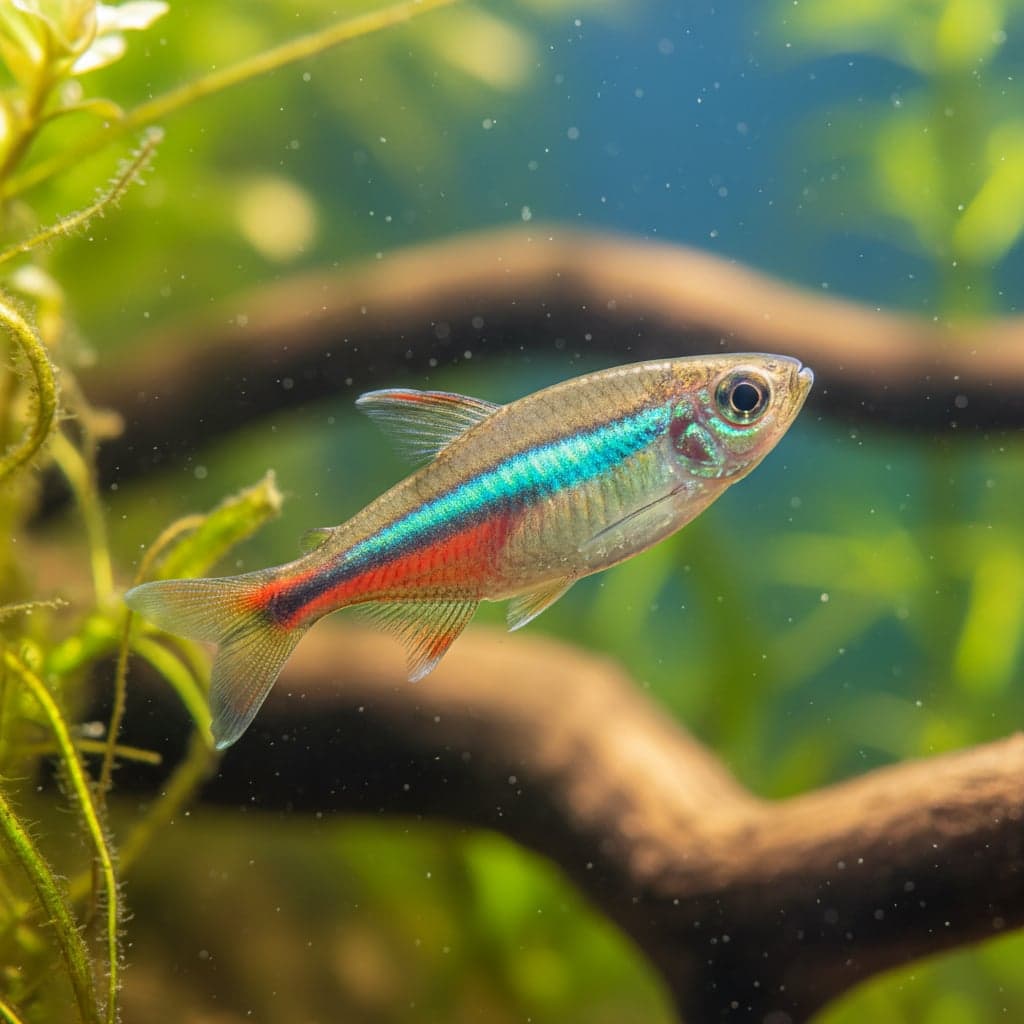
Lipstick Barb: Desmopuntius rhomboocellatus
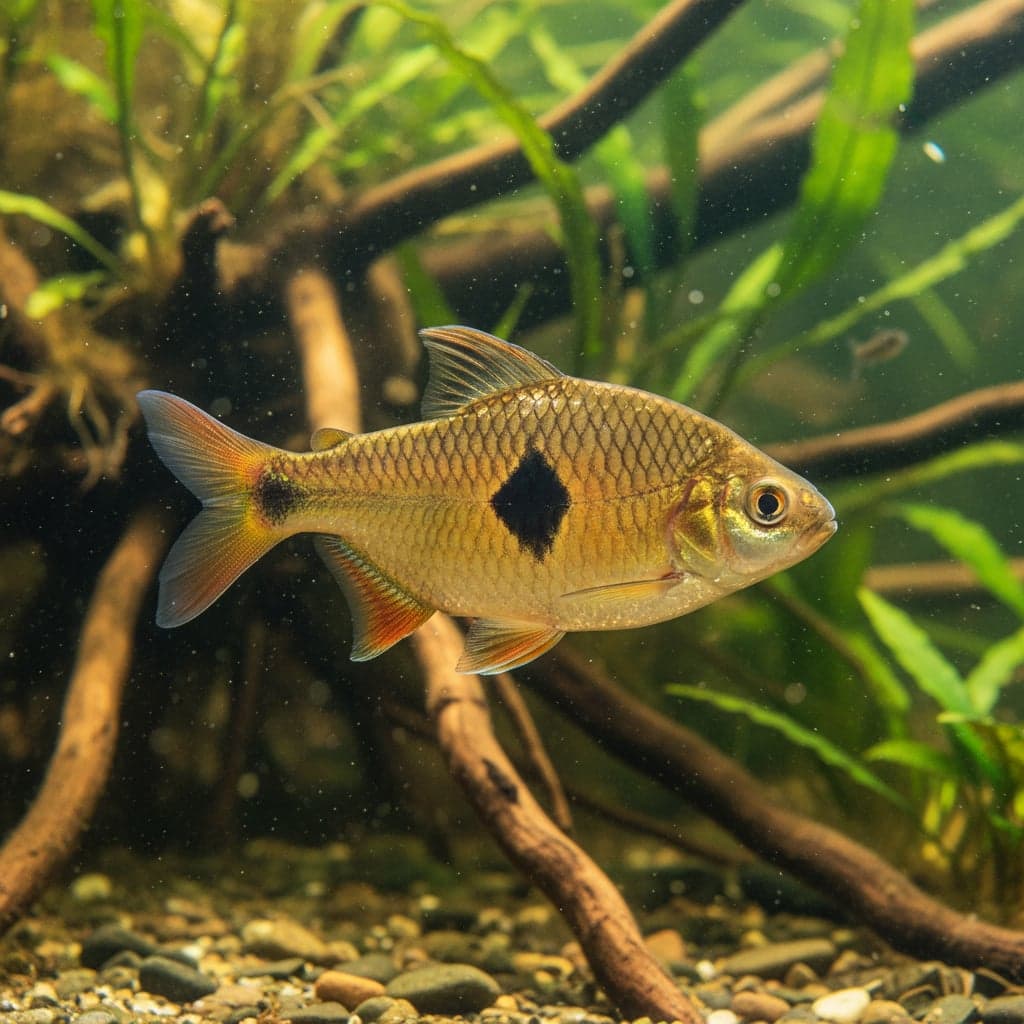
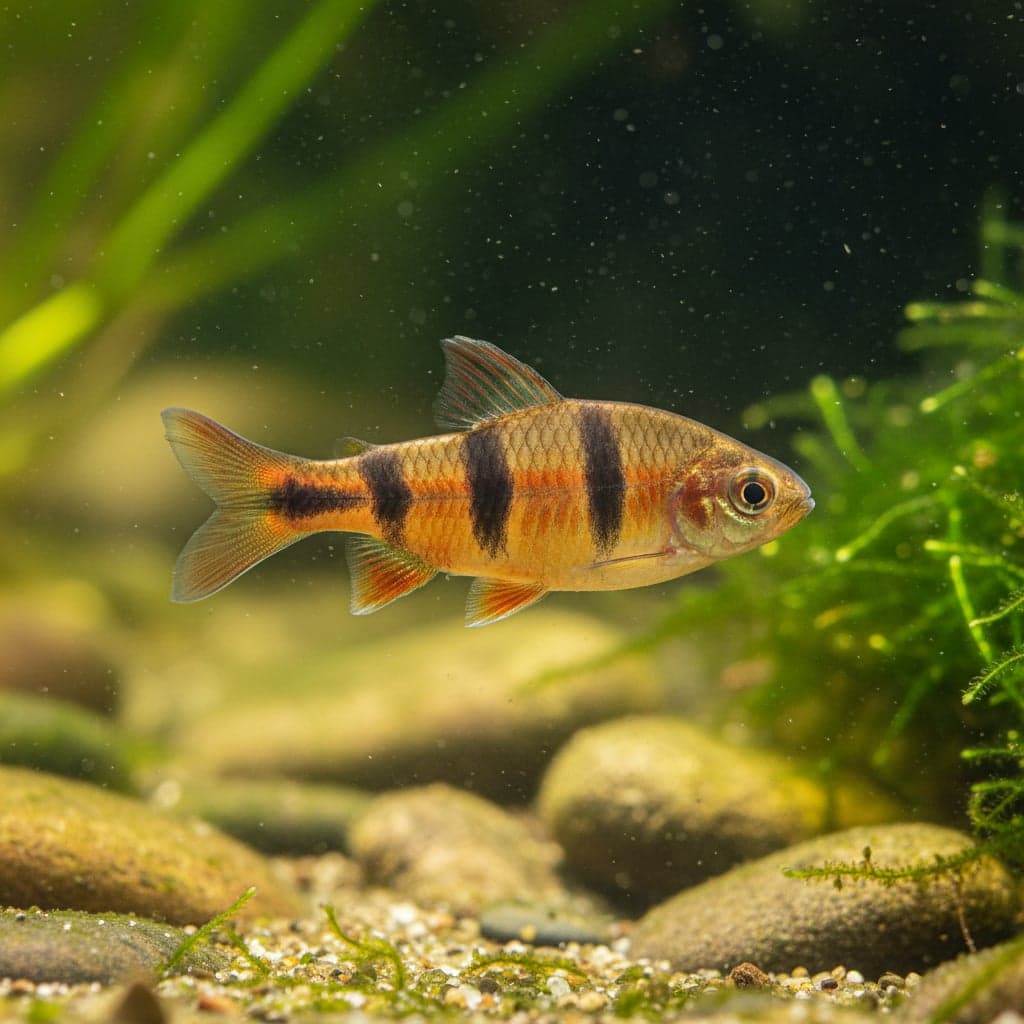
The Lipstick Barb (Desmopuntius rhomboocellatus) is a gem of the Southeast Asian blackwaters, famous for its glowing orange hue and signature diamond-shaped black 'lipstick' markings.
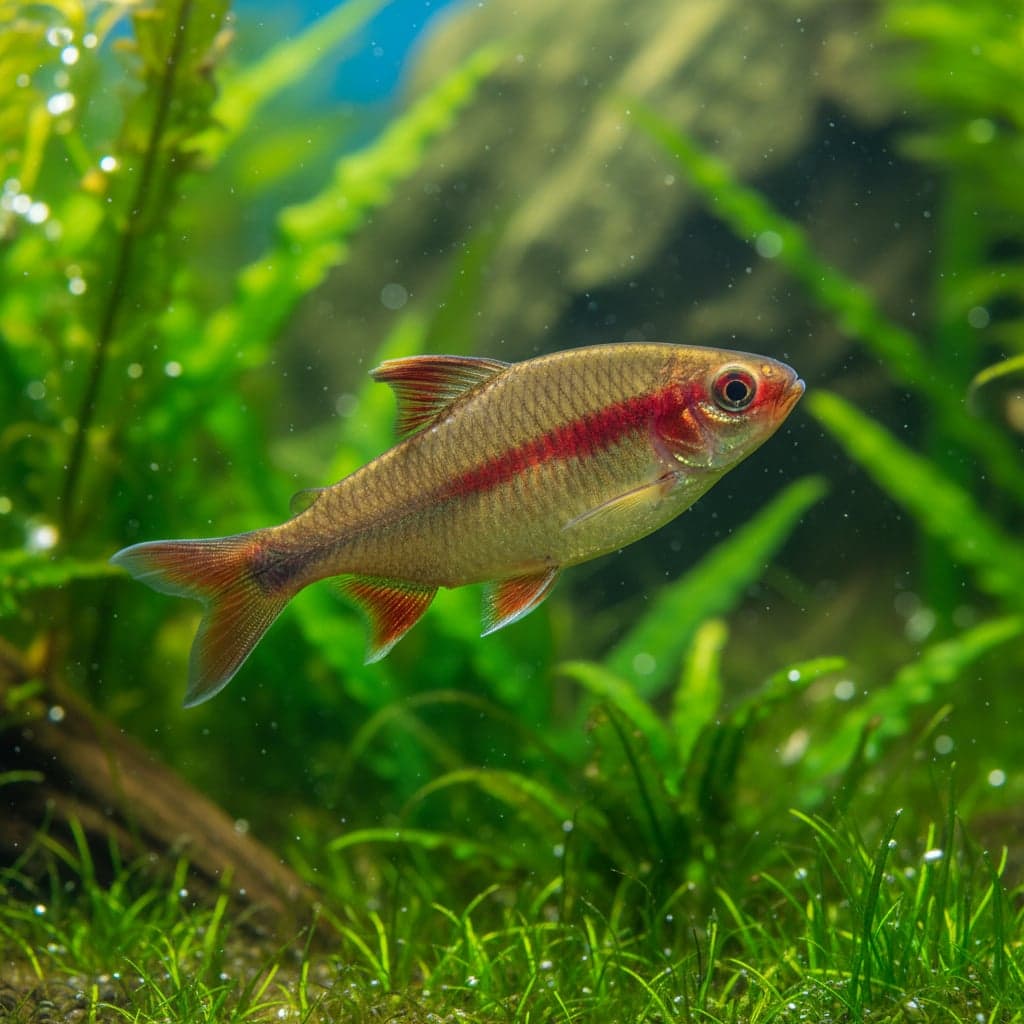
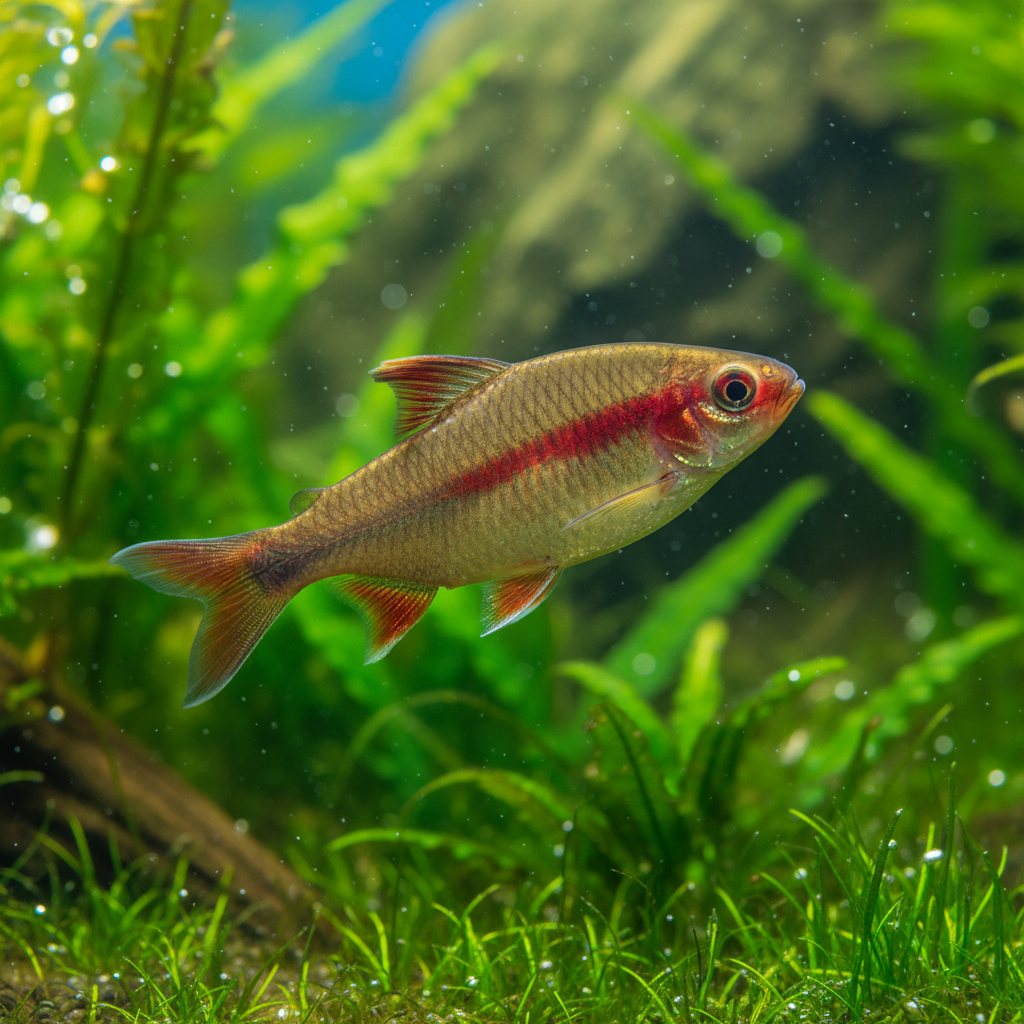
The Lipstick Barb (Desmopuntius rhomboocellatus), also known as the Diamond-Heeled Barb, is one of the most visually distinct and sought-after cyprinids in the hobby. It is defined by its vibrant, glowing orange-bronze body and a series of 4-5 bold, dark-green to black diamond-shaped blotches that run vertically along its flanks. Its common name "Lipstick Barb" refers to the concentrated reddish pigment often found around the mouth and gills in dominant males. Unlike the common Tiger Barb, the Lipstick Barb is exceptionally peaceful, making it a premium choice for high-end planted aquascapes and blackwater setups.
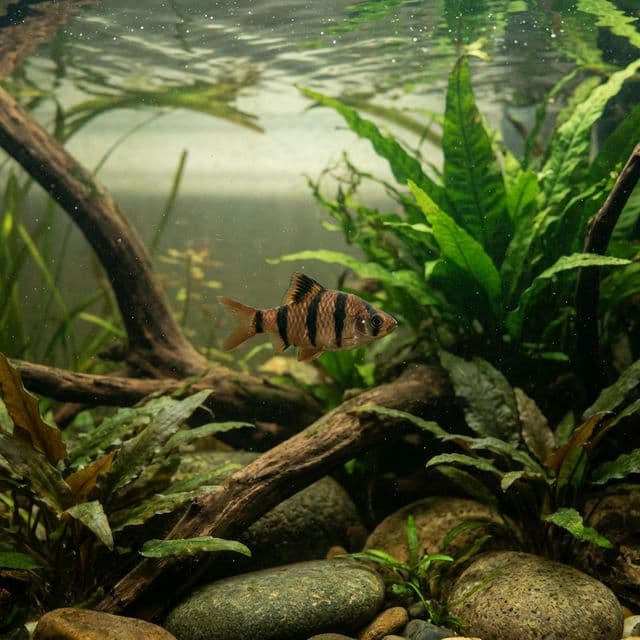
In the aquarium, they are the definition of "controlled movement." They are tightly-knit schoolers that prefer the dappled light of a well-planted tank, where their copper shimmer and dark diamonds create a striking contrast against green foliage and dark substrate.
Natural Habitat & Origin
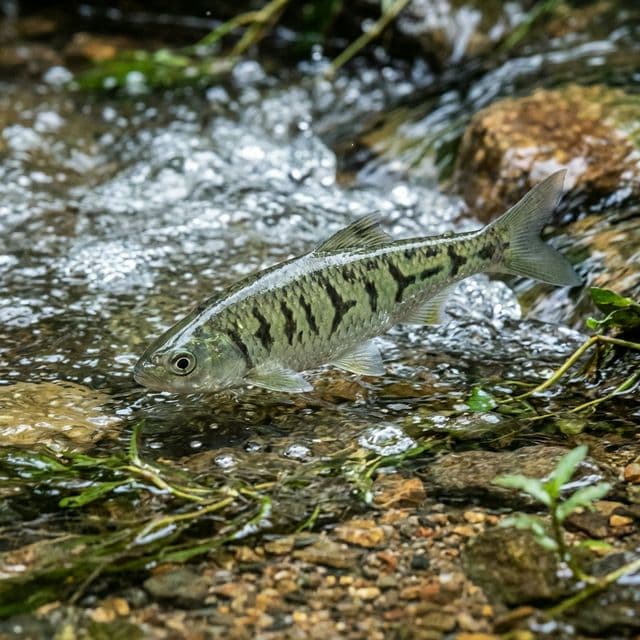
Desmopuntius rhomboocellatus is endemic to the island of Borneo (Central and Southern Kalimantan). They are specialized blackwater residents, found in slow-moving forest streams and peat swamp margins. These habitats are characterized by extremely soft, highly acidic water that is deeply stained with tannins from submerged roots, branches, and leaf litter. In the wild, they are typically found in the shadows of overhanging vegetation, where they forage for small invertebrates, insect larvae, and organic detritus.
Care Requirements
The Lipstick Barb is a moderate-difficulty species because it is sensitive to fluctuations in water chemistry and requires specific conditions to display its best colors. A minimum tank size of 20 gallons (75L) is required for a school.
Maintain stable parameters: a pH of 5.0 to 7.0 and a temperature of 74°F to 82°F (24°C to 28°C). The aquarium MUST feature soft, acidic water to mimic their peat swamp origins. Use of driftwood, Indian Almond leaves, and peat filtration is highly recommended to provide the necessary humic acids and tannins. TIP: They are shy in bright light; use floating plants (like Salvinia or Frogbit) to create shaded areas. Their colors will appear washed out in hard water or under intense, direct lighting.
Diet & Feeding
They are opportunistic omnivores, naturally feeding on a variety of organic matter and tiny aquatic organisms.
In captivity, they are not fussy but require a varied diet to maintain their intense orange-bronze luster:
- High-quality flakes and micro-pellets enriched with carotenoids (like spirulina or krill) should be the staple.
- They MUST have frequent offerings of live or frozen foods: Daphnia, Cyclops, and Baby Brine Shrimp.
- Tip: Avoid large, hard foods. Their mouths are relatively small, and they prefer to "pick" at food particles as they drift through the water column.
- Offering finely chopped blanched spinach or cucumber occasionally provides important dietary fiber.
Behavior & Temperament
They are peaceful and social. They MUST be kept in a school of at least 6 to 10 individuals; in smaller numbers, they become extremely reclusive and may lose their vibrant coloration due to stress. They are not aggressive nippers and are safe for tank mates with long fins (like Bettas or Gouramis). Within the school, they exhibit interesting social hierarchies, with dominant males displaying the most intense "lipstick" red and shimmering bronze.
Tank Mates
Suitable tank mates are other peaceful, soft-water species:
- Rasboras (Harlequins, Lambchops)
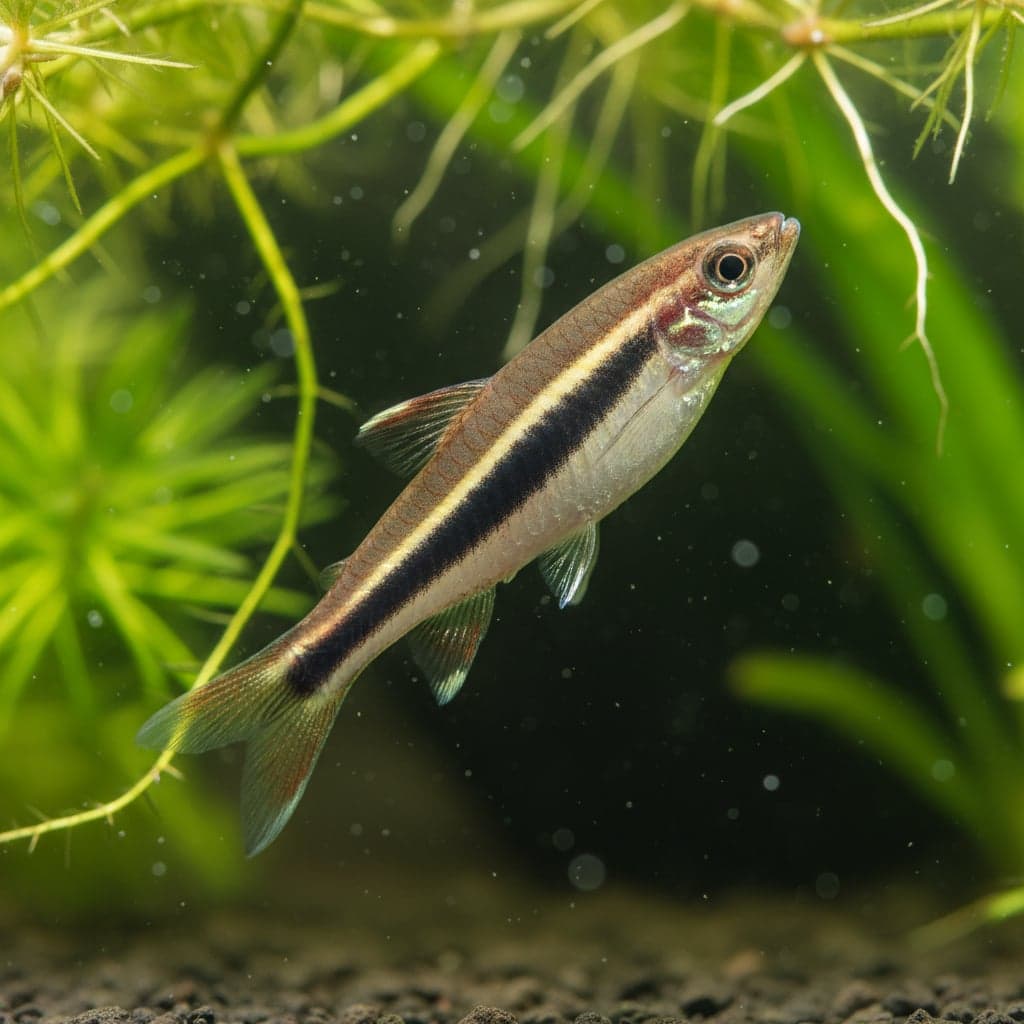
- Small Tetras (Embers, Neons)
- Dwarf Cichlids (Apistogramma)
- Chocolate Gouramis or Sparkling Gouramis
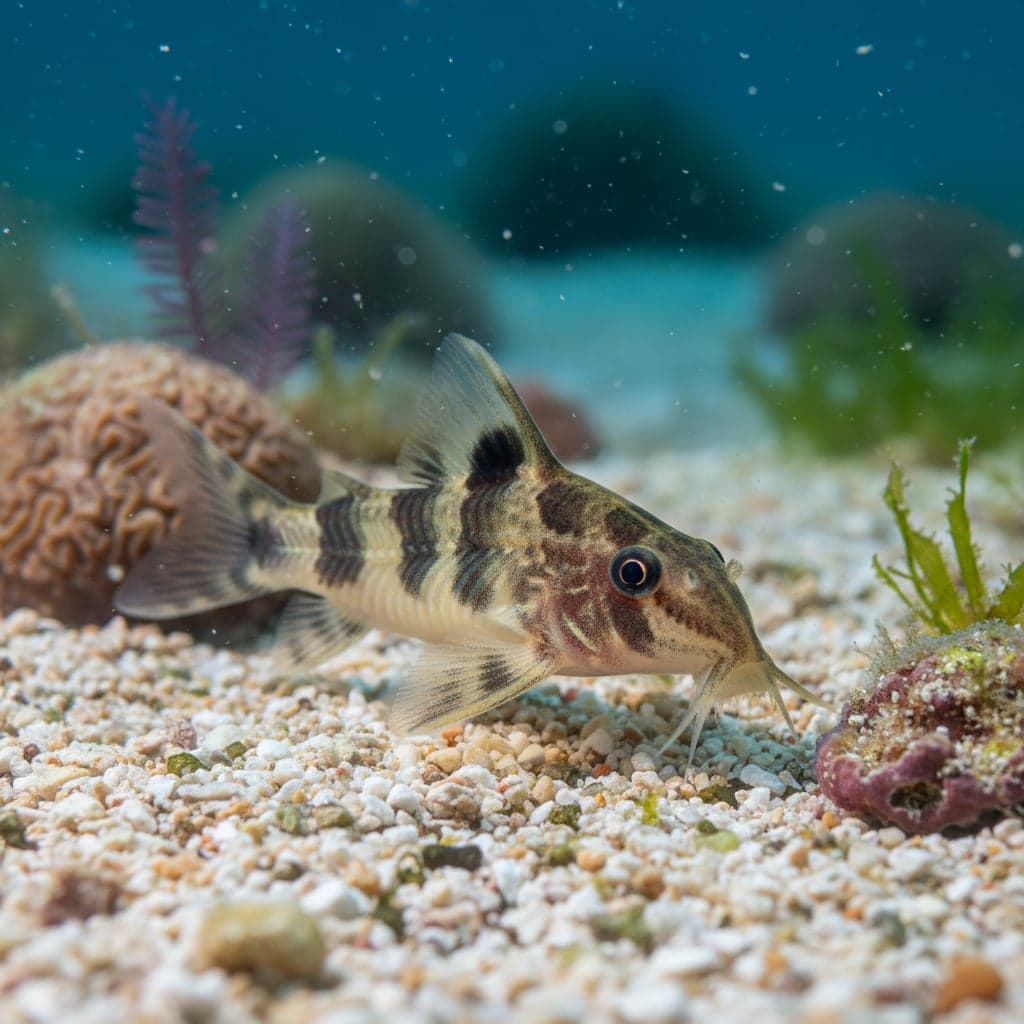
- Corydoras and smaller Loaches (like Kuhli Loaches)
Avoid keeping them with very large, aggressive predators or boisterous fish (like larger Barbs or Rainbowfish) that might outcompete them for food or stress the shy school.
Breeding
Breeding Lipstick Barbs in captivity is possible but requires precise control over water quality. They are egg scatterers. A breeding pair or small group should be moved to a separate tank with very soft water (GH 1-3) and a pH of ~5.5. The tank should have plenty of fine-leaved plants or moss. After a morning spawning ritual, the parents must be removed immediately. The fry are exceptionally small and require "infusoria" or "liquid fry food" for the first week before they can accept freshly hatched baby brine shrimp.
Common Health Issues
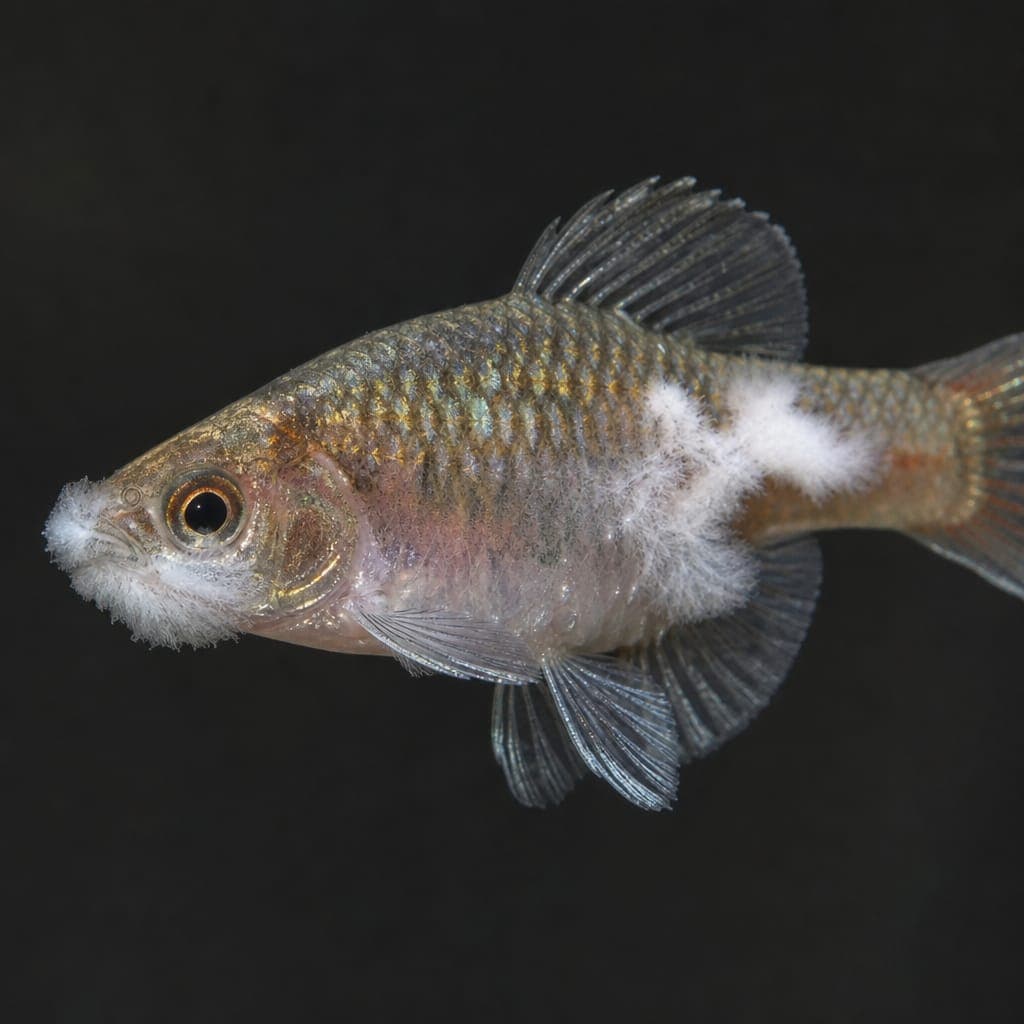
They are highly sensitive to sudden changes in pH or Nitrate levels, which can lead to stress-induced Ich or fungal infections. Ensuring a stable, mature environment with consistent maintenance is the best way to ensure the shimmering "Diamond-Heel" Lipstick Barb remains a thriving and vivid part of your Bornean biotope.