Llanero Whiptail: Lamontichthys llanero
The Llanero Whiptail (Lamontichthys llanero) is a specialized, elegant loricariid from the Orinoco, known for its extremely wide 'wing-like' pectoral fins and its requirement for high-flow, oxygen-saturated water.
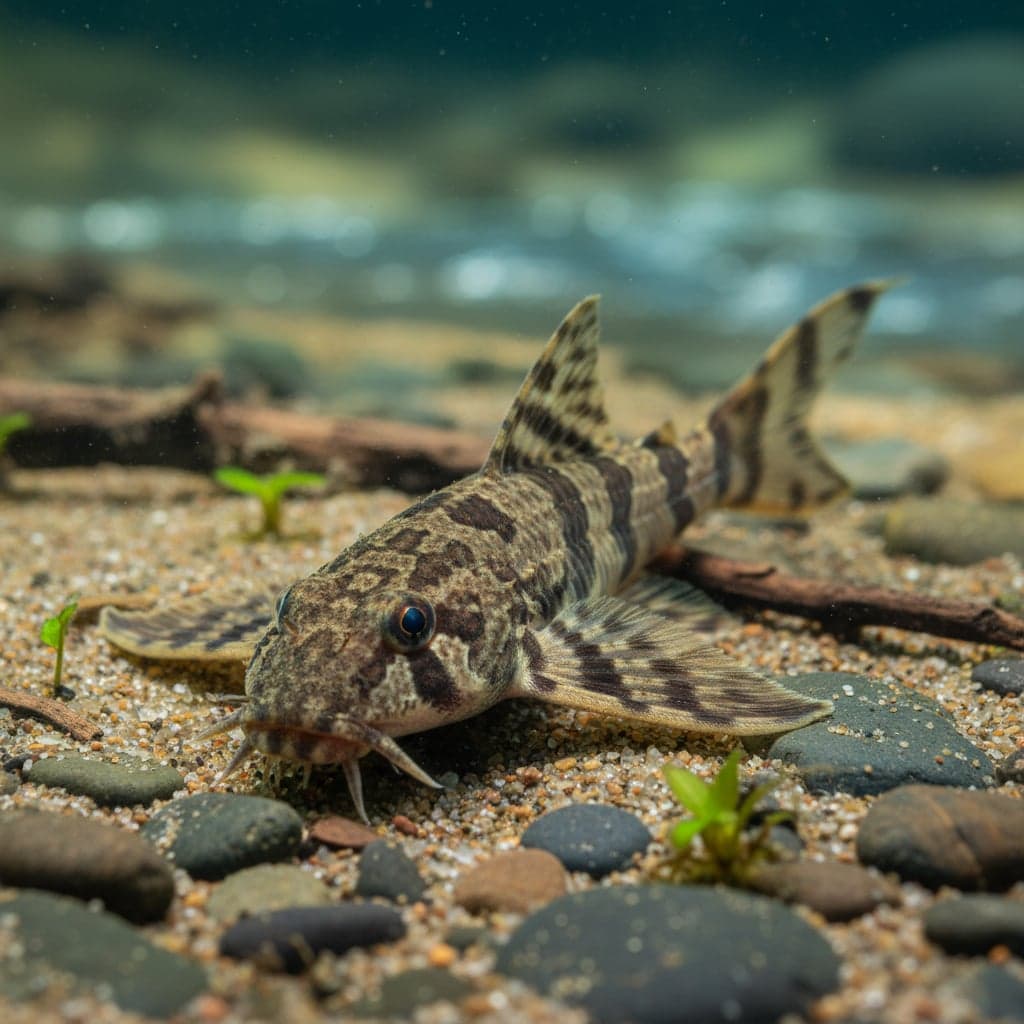
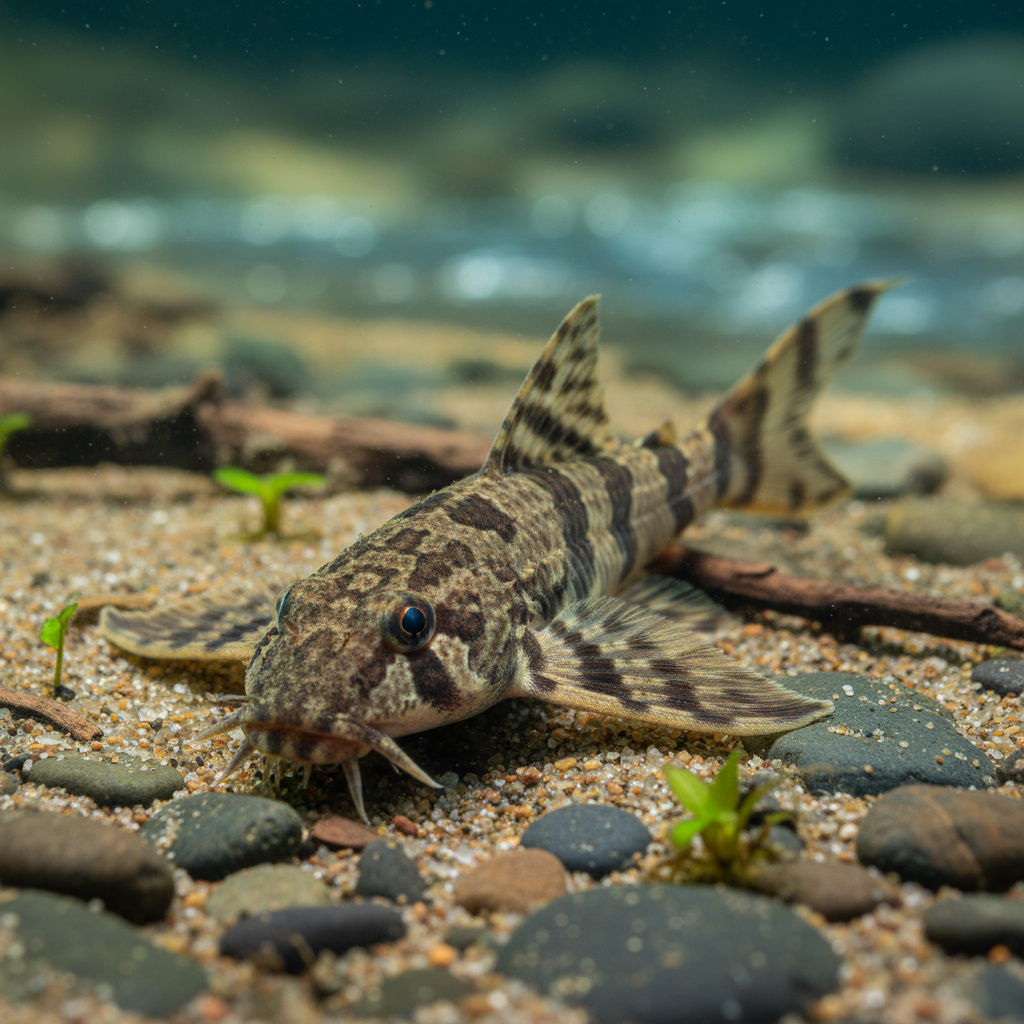
The Llanero Whiptail (Lamontichthys llanero) is the pinnacle of elegance in the loricariid world. It is defined by its exceedingly long, slender body and spectacularly wide pectoral and pelvic fins that expand like wings, allowing it to "glue" itself to rocks in the fastest-moving rapids. Unlike the more common Farlowella twig cats, the Lamontichthys species are defined by their seven rays in the pectoral fins and a more robust, "winged" appearance. It is a fish for the specialist; it is a delicate masterpiece of evolution that requires specialized "river manifold" setups with high turnover and pristine, oxygen-rich water.
In the aquarium, they are the "fliers" of the substrate. They do not scurry; they glide across flat surfaces, using their specialized mouth and wide fins to navigate strong currents with absolute precision.
Natural Habitat & Origin
Lamontichthys llanero is native to the Orinoco River basin, specifically in the "Llanos" regions of Colombia and Venezuela. They inhabit high-flow sections of clear-water rivers and seasonally flooded plains where the water is turbulent and saturated with oxygen. They are typically found clinging to large, water-worn boulders or submerged wood in areas of maximum current. The water in these regions is generally soft and neutral, characterized by low organic waste and high clarity.
Care Requirements
The Llanero Whiptail is an Advanced-difficulty species due to its intolerance for poor water quality and low oxygen levels. A minimum tank size of 30 gallons (110L) is required for a single individual or a pair.
Maintain stable parameters: a pH of 6.0 to 7.5 and a temperature of 74°F to 82°F (24°C to 28°C). CRITICAL CARE NOTE: They MUST have strong water circulation. An "Oland" or "River Manifold" type setup using powerheads to create a directional, high-oxygen current is essential for their long-term health. The aquarium should feature large, smooth river rocks and stable driftwood for grazing. They have very little body fat and can deteriorate quickly if the environment is not highly stable and rich in oxygen. TIP: Ensure the tank is "oversized" in terms of filtration, but keep the intake protected, as their long fins can be susceptible to suction.
Diet & Feeding
They are specialized Aufwuchs grazers, naturally feeding on the biofilm, algae, and micro-crustaceans that colonize sun-lit rocks in fast water.
In captivity, they can be difficult to transition to prepared foods:
- High-quality sinking algae wafers and Repashy "Soilent Green" or "Bottom Scratcher" are excellent staples once they learn to recognize them.
- They MUST have access to natural biofilm; a mature tank with smooth rocks is essential.
- Supplemental feedings of blanched zucchini, cucumber, and spinach are vital for their dietary fiber.
- Tip: They are slow feeders. Ensure boisterous bottom-dwellers (like large Corys) do not outcompete them for food.
- Occasional feedings of frozen Bloodworms or Daphnia provide necessary protein.
Behavior & Temperament
They are supremely peaceful. They show no aggression towards other fish and generally ignore everything except for the surface they are currently grazing. They are social among their own kind but do not school in the tight, traditional sense. They are most active at night or in the dim light of dawn and dusk, when they will emerge from their camouflage positions to forage.
Tank Mates
Suitable tank mates are other "hillstream" or high-flow specialists:
- Otocinclus and smaller Loricariids
- Corydoras (that tolerate flow)
- Small Tetras or Rasboras that occupy the middle column
- Freshwater Shrimp (they are safe with even the smallest shrimp)
Avoid keeping them with large, boisterous, or aggressive fish (like large Cichlids or Goldfish) that could stress them or damage their delicate, elongated fins.
Breeding
Breeding Lamontichthys llanero in captivity is rare and documented only by dedicated specialists. They are believed to be "open-substrate spawners," laying small clutches of eggs on smooth rocks or the aquarium glass in areas of high current. The eggs are then guarded by the male. Rearing the fry is exceptionally difficult, as they require constant grazing in a high-oxygen environment and are extremely sensitive to any accumulation of waste.
Common Health Issues
The primary health concern is starvation and oxygen deprivation. If they are seen breathing rapidly or "hanging" at the very top of the water surface, it is a sign of critical oxygen failure. They are also sensitive to high Nitrates and dissolved organics, which can lead to bacterial infections of the fins. Maintaining a high-flow, low-waist "river" environment is the only way to successfully keep this winged masterpiece of the Orinoco.