Chameleon Loach: Syncrossus beauforti
The Chameleon Loach (Syncrossus beauforti) is a boldly patterned, highly active loach from Southeast Asia, famous for its 'tiger' stripes and its assertive, sometimes aggressive, personality.
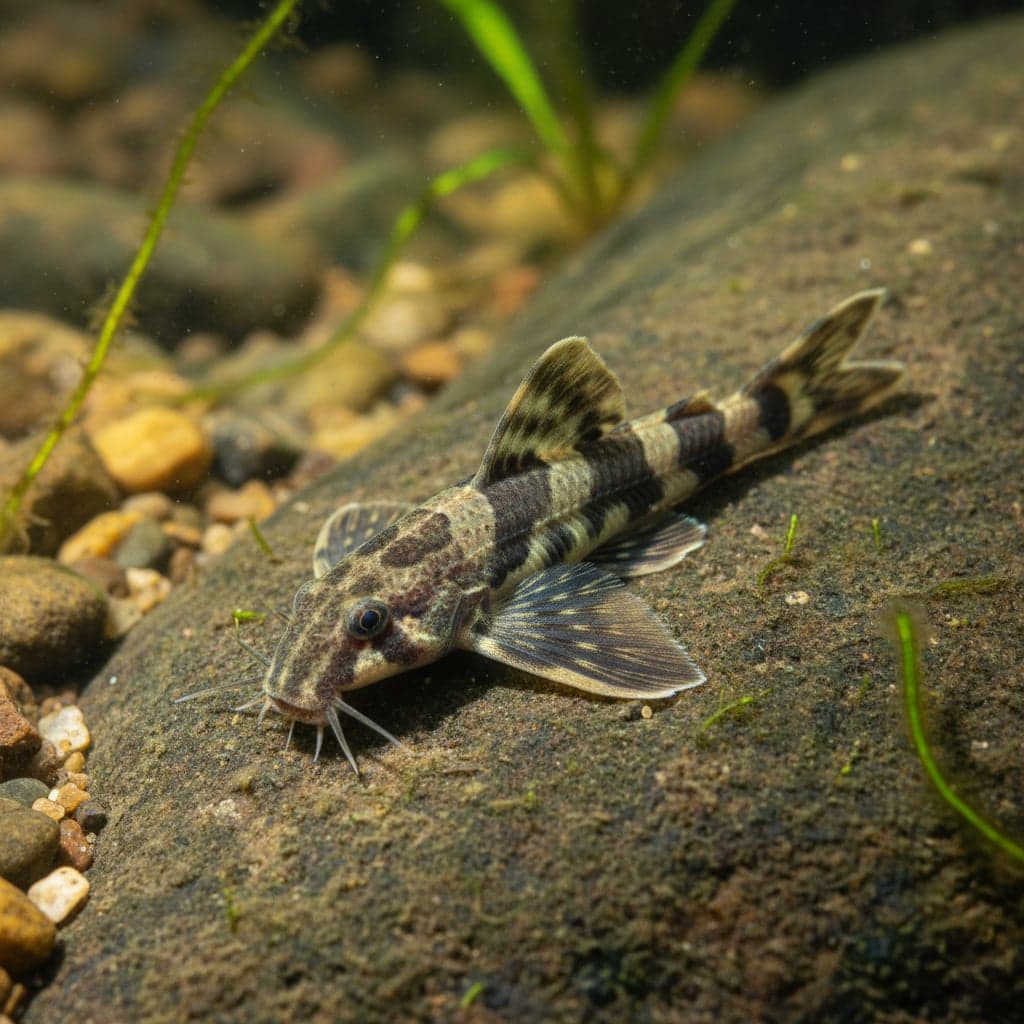
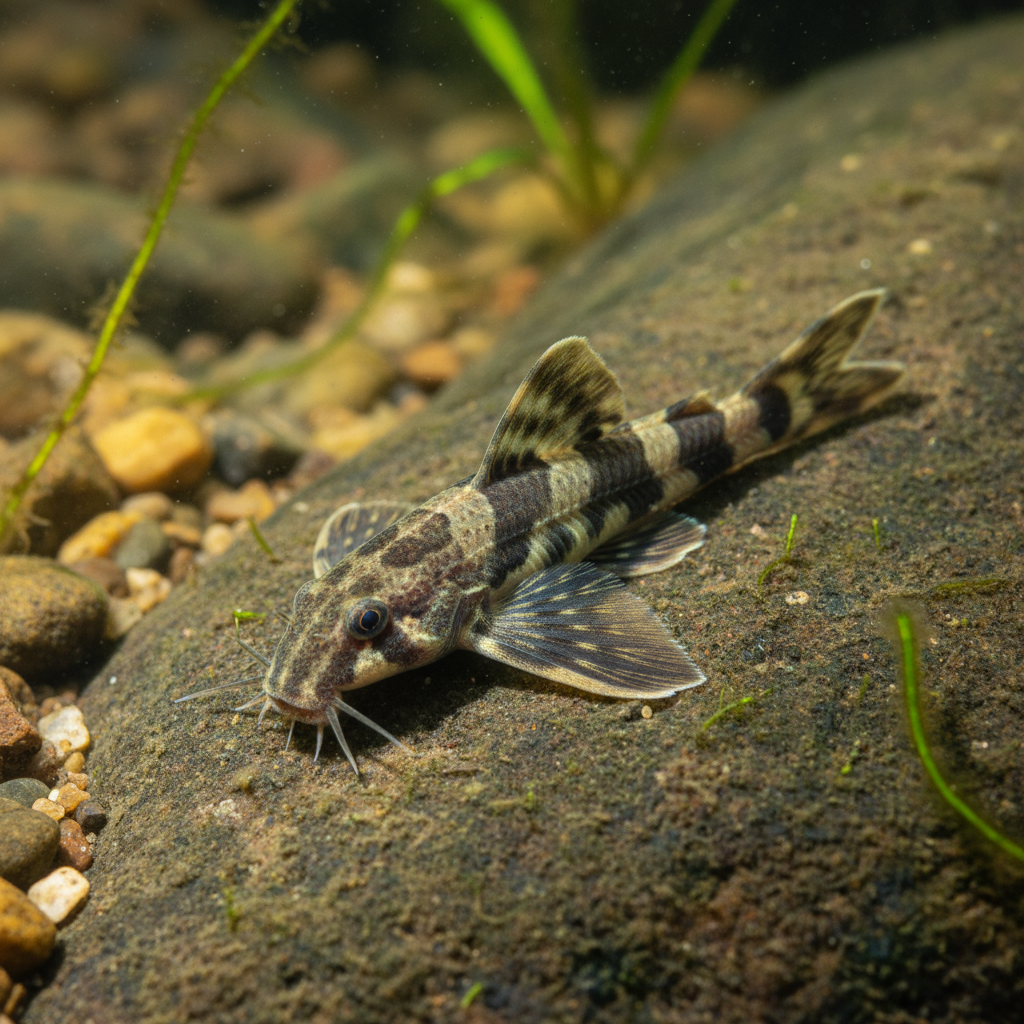
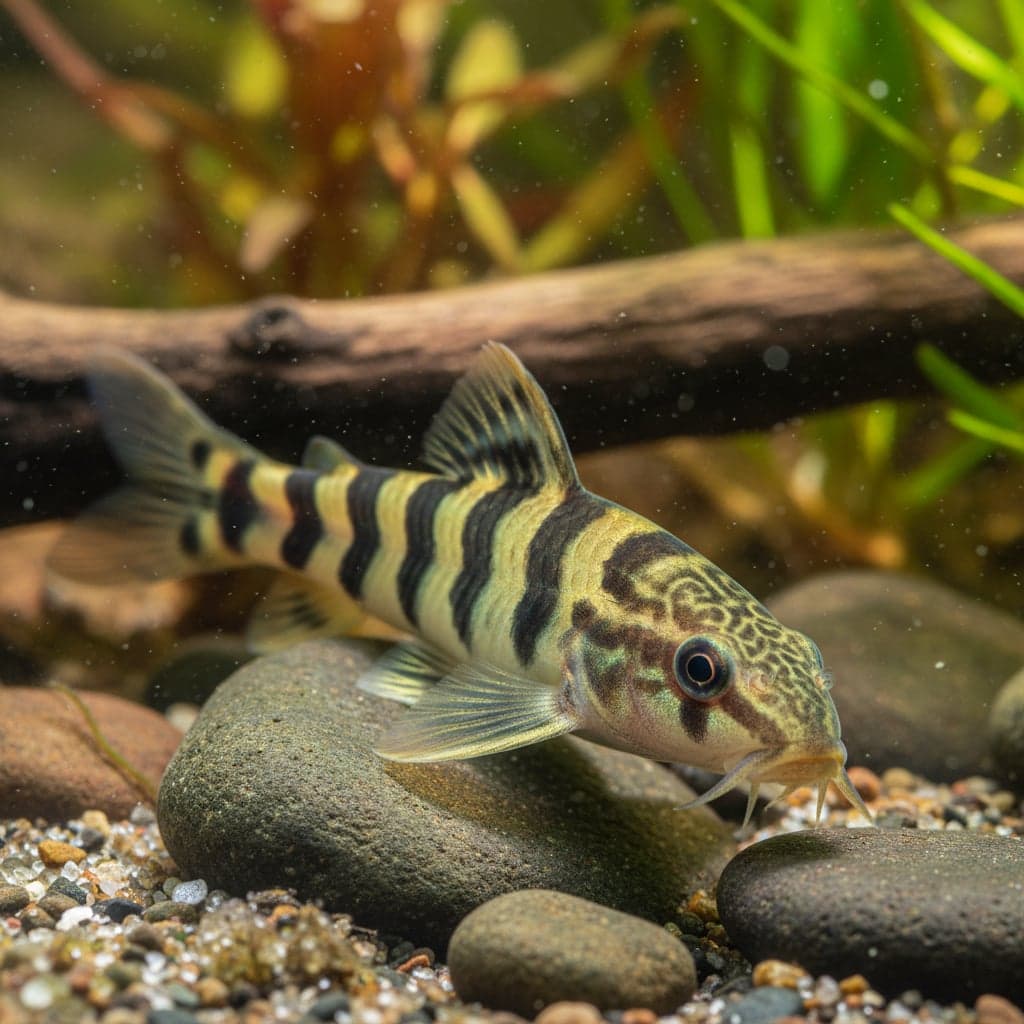
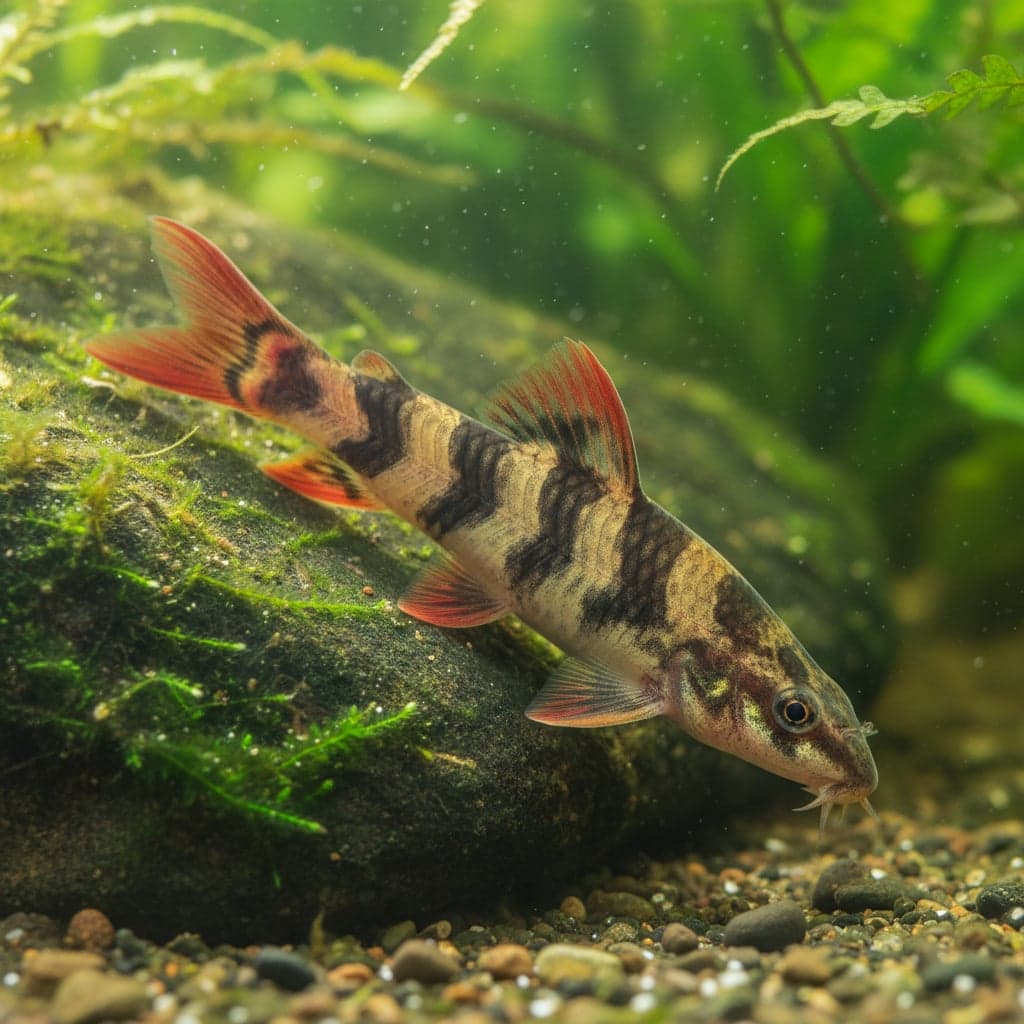
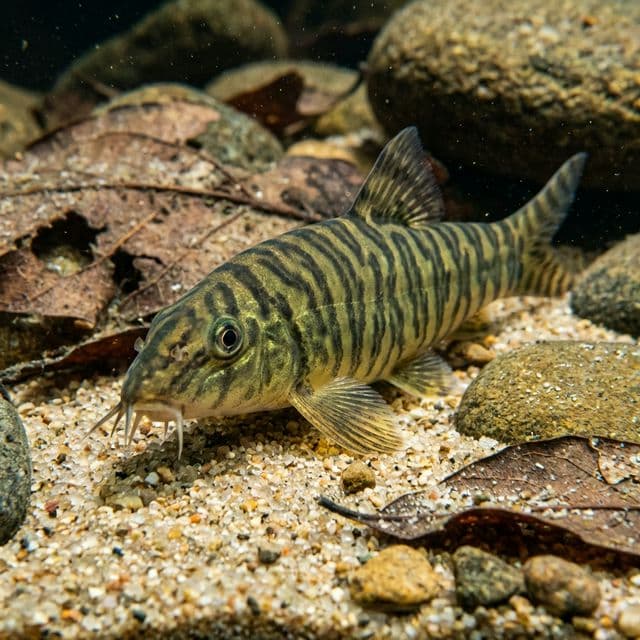
The Chameleon Loach (Syncrossus beauforti), also known as the Barred Loach or Tiger Botia, is a powerhouse of activity and personality. It is defined by its glossy, yellowish-green body adorned with 10-12 bold, dark-brown vertical bars and a series of fine spots on its fins. Despite the common misnomer "Loach Catfish," it is a true Botiid loach with a high-backed, hydrodynamic profile and a specialized sub-ocular spine that it can "click" to deter predators. It is one of the more assertive and boisterous loaches, requiring careful tank mate selection and a significant amount of swimming space to accommodate its high energy levels.
In the aquarium, they are constant explorers. They are most active when kept in a social group of their own kind, which allows them to establish a complex hierarchy, reducing individual aggression towards other species.
Natural Habitat & Origin
Syncrossus beauforti is native to Southeast Asia, including the Mekong and Chao Phraya river basins across Thailand, Cambodia, and Malaysia. They inhabit large, clear-water rivers with rocky or stony substrates and moderate to high flow. During the rainy season, they migrate into flooded forest regions to forage and spawn. They are typically found in the swiftest sections of the river, using their streamlined bodies to navigate currents while searching for aquatic invertebrates and crustaceans among the boulders.
Care Requirements
The Chameleon Loach is an Intermediate-difficulty species due to its larger size and its potentially aggressive temperament. A minimum tank size of 75 gallons (280L) is required for a small group.
Maintain stable parameters: a pH of 6.5 to 7.5 and a temperature of 75°F to 82°F (24°C to 28°C). The aquarium MUST feature efficient filtration and high oxygen levels. They are active foragers and produce a significant bio-load. The setup should include large, smooth rocks and heavy driftwood branches to create natural boundaries and hiding spots. Because they enjoy digging, a fine sand or smooth gravel substrate is essential to protect their sensitive barbels. TIP: They are "jumpers"; a tightly fitting lid is mandatory.
Diet & Feeding
They are carnivorous foragers, with a specialized talent for hunting aquatic snails.
In captivity, they require a varied, protein-rich diet:
- High-quality sinking pellets and carnivore wafers should be the staple.
- They are excellent biological snail control; they will quickly clear a tank of pest snails like bladder or ramshorn snails.
- They MUST have frequent offerings of live or frozen foods: Bloodworms, Mysis shrimp, and chopped seafood.
- Tip: They are fast, competitive feeders. Ensure slower-moving bottom dwellers get their share.
- Occasional offerings of blanched vegetables (like cucumber) can provide some fiber, though protein should dominate their intake.
Behavior & Temperament
They are assertive and can be aggressive, especially towards smaller or more passive species. They MUST be kept in a group of at least 5 to 6 individuals to help disperse their natural territorial aggression. In smaller groups, a dominant individual may harass weaker tank mates. They are known for making audible "clicking" sounds when excited or defending territory. Their playful behavior often involves high-speed chases and "shadowing" other fish, which can be stressful for slow-moving tank mates.
Tank Mates
Suitable tank mates are other large, robust, and fast-moving species:
- Larger Barbs (Tinfoil Barbs, Filament Barbs)
- Medium to large Rainbowfish
- Robust Cichlids (that share similar water parameters)
- Other large Loaches (Clown Loaches)
- Larger, fast-moving Tetras (Congo Tetras)
Avoid keeping them with small, delicate fish (like Neons or Guppies), slow-moving long-finned fish (like Angelfish), or other shy bottom dwellers that could be bullied.
Breeding
Breeding Syncrossus beauforti in captivity is extremely rare and usually only achieved on commercial farms using hormonal induction. In the wild, they are migratory spawners that release their eggs in the upper reaches of rivers during the monsoon season. There are few reliable accounts of natural spawning in home aquaria.
Common Health Issues
They are particularly susceptible to Skin Parasites (like Ich) and "Skin Flukes" if water quality is poor or if they are stressed by overcrowding. They are also sensitive to certain medications, so always check for copper or formalin sensitivity before treating a loach tank. Maintaining a large, well-filtered, and stable environment with frequent water changes is the best way to ensure the strikingly barred Chameleon Loach remains a healthy, energetic centerpiece of your Southeast Asian river biotope.