Long-barbel Goatfish: Parupeneus macronema
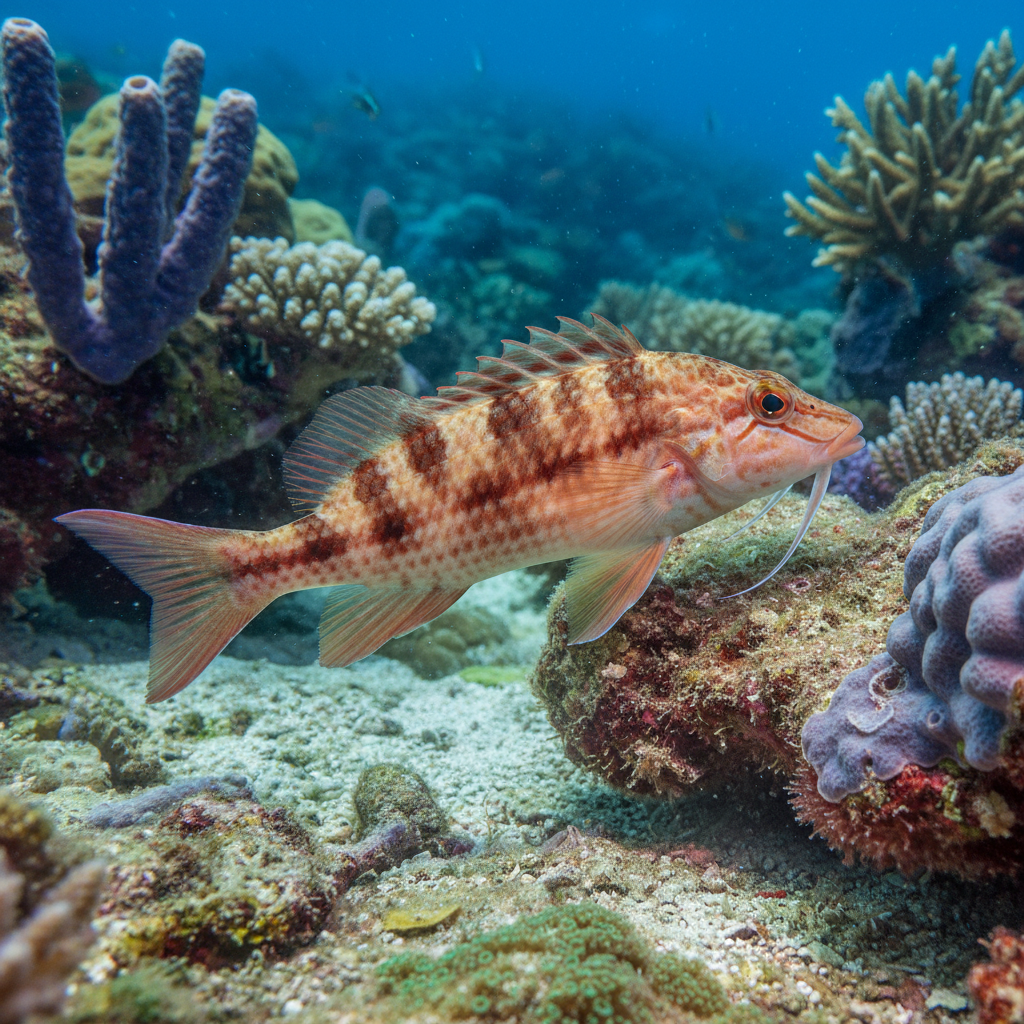
The Long-barbel Goatfish (Parupeneus macronema) is a dynamic marine scavenger, renowned for its exceptionally long sensory barbels and its mesmerizing ability to change colors as it hunts across the reef substrate.
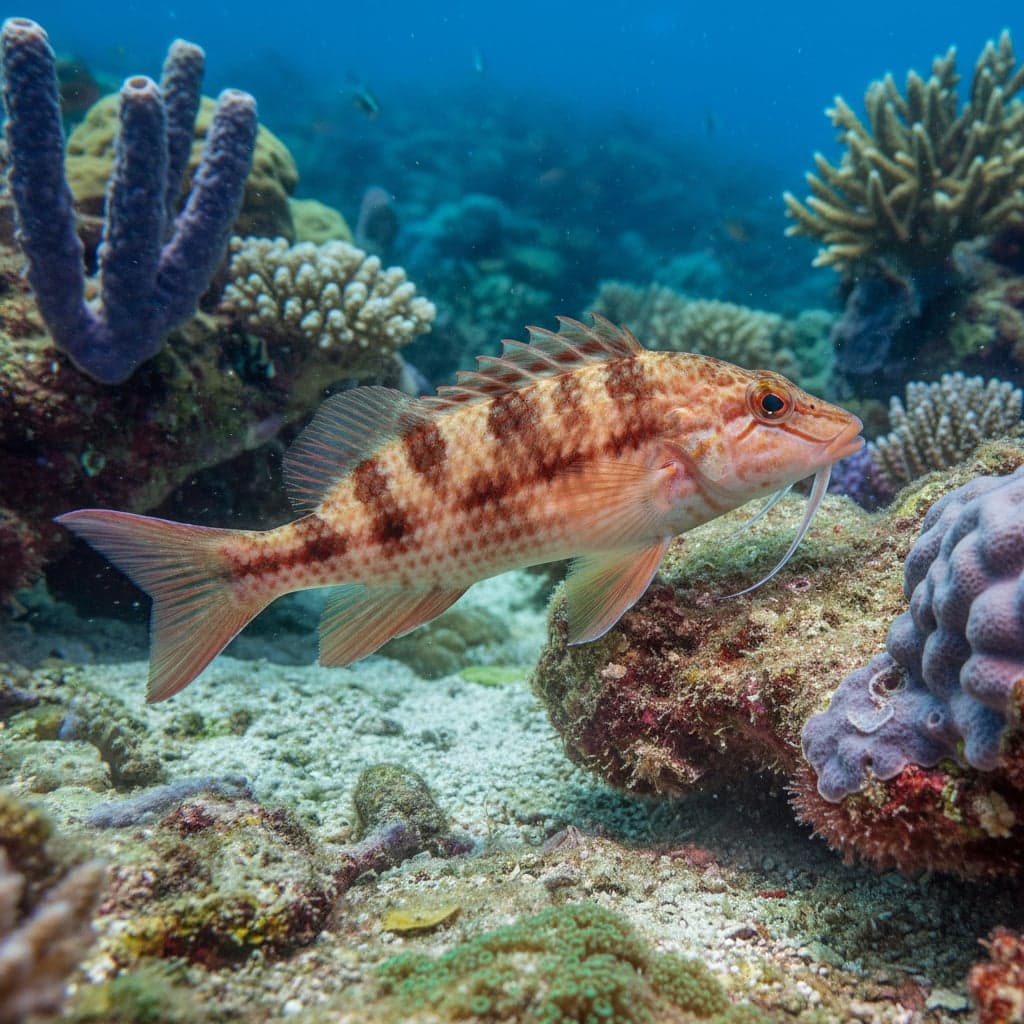
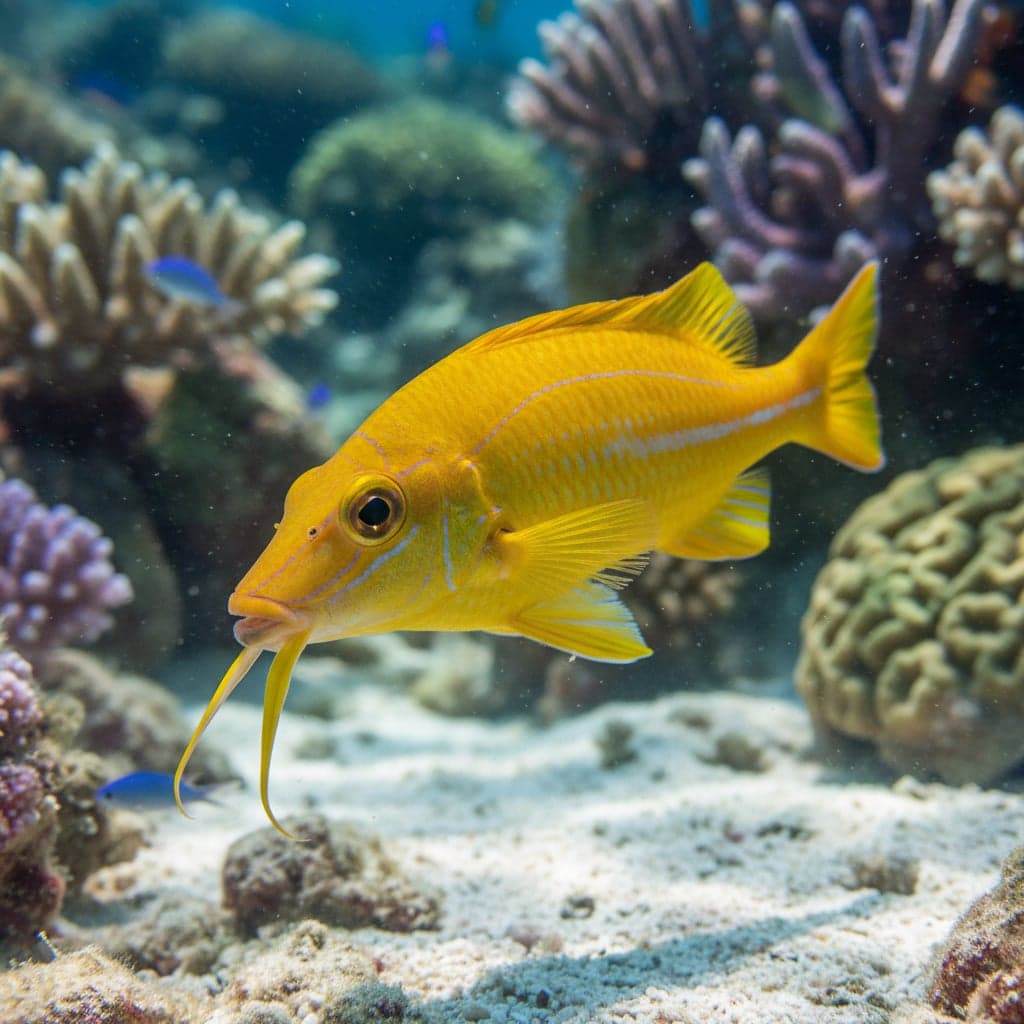
The Long-barbel Goatfish (Parupeneus macronema) is a master of the benthos. It is defined by its streamlined, pale-pinkish to yellowish body and a prominent dark horizontal band that starts behind the eye and ends in a large, dark blotch at the base of the tail. Its most signature feature, however, is the pair of extremely long, chin-mounted barbels (often reaching back to the base of the pectoral fins) which it uses as sophisticated chemosensory "hands" to detect crustacean prey buried deep within the sand. It is a fish that brings both fascinating sensory behavior and a critical ecological service—sand aeration—to the marine aquarium.
In the aquarium, they are the definition of "industry." They rarely stop moving, constantly hovering just above the substrate with their barbels in motion, sifting through the top layer of sand with a specialized "scanning" behavior that is beautiful to witness.
Natural Habitat & Origin
Parupeneus macronema is widely distributed across the Indo-Pacific, ranging from the Red Sea and East Africa to the Hawaiian Islands and the Marquesas. They are soft-bottom specialists, typically found in sandy patches near coral reefs, lagoons, and seaward reef slopes at depths of 1 to 40 meters. They spend their days in small, loose groups or as solitary individuals, patrolling the reef-sand interface. At night, they become more reclusive, often resting against rocks where they can flatten their fins and change their color to a mottled red/brown for camouflage.
Care Requirements
The Long-barbel Goatfish is an Intermediate-difficulty species primarily because of its specialized feeding habits and its requirement for a large, open area of high-quality sand. A minimum tank size of 75 gallons (280L) is required for an adult.
Maintain stable marine parameters: a pH of 8.1 to 8.4 and a temperature of 75°F to 82°F (24°C to 28°C). The aquarium MUST feature a deep, fine sand bed (at least 2-3 inches). Use of coarse gravel or sharp crushed coral will damage their delicate barbels, leading to infection and starvation. The setup should include plenty of open "running room" on the sand, complemented by live rock structures that provide shade and security. TIP: They are high-energy fish with a fast metabolism; efficient skimming and powerful filtration are essential to manage the waste produced by their constant foraging.
Diet & Feeding
They are specialized carnivorous scavengers, naturally feeding on worms, small crustaceans, and other infaunal invertebrates.
In captivity, they must be fed multiple times daily to maintain their body weight:
- High-quality marine pellets and flakes should be offered, but they MUST have frequent meaty foods: Mysis shrimp, Brine shrimp, chopped squid, and krill.
- Tip: They are "prospectors"; they will find food that other fish miss, but you must ensure that enough food reaches the bottom for them.
- They are excellent for cleaning up uneaten food that falls into the sand, but a healthy population of "clean-up crew" (like sand-sifting snails) will compete with them for resources.
- Offering live blackworms can be a great way to trigger their natural hunting response.
Behavior & Temperament
They are exceptionally peaceful and social. They show no interest in other fish and occupy a niche that very few other reef species use. They are diurnal, spending the entire light cycle active on the sand. While they are usually peaceful towards other goatfish, they can be competitive over prime foraging spots, though this rarely escalates to real aggression. They are "reef-safe" in terms of corals, but they will eagerly consume small ornamental shrimp and crabs.
Tank Mates
Suitable tank mates are other peaceful reef species:
- Anthias and Chromis (that occupy the upper water column)
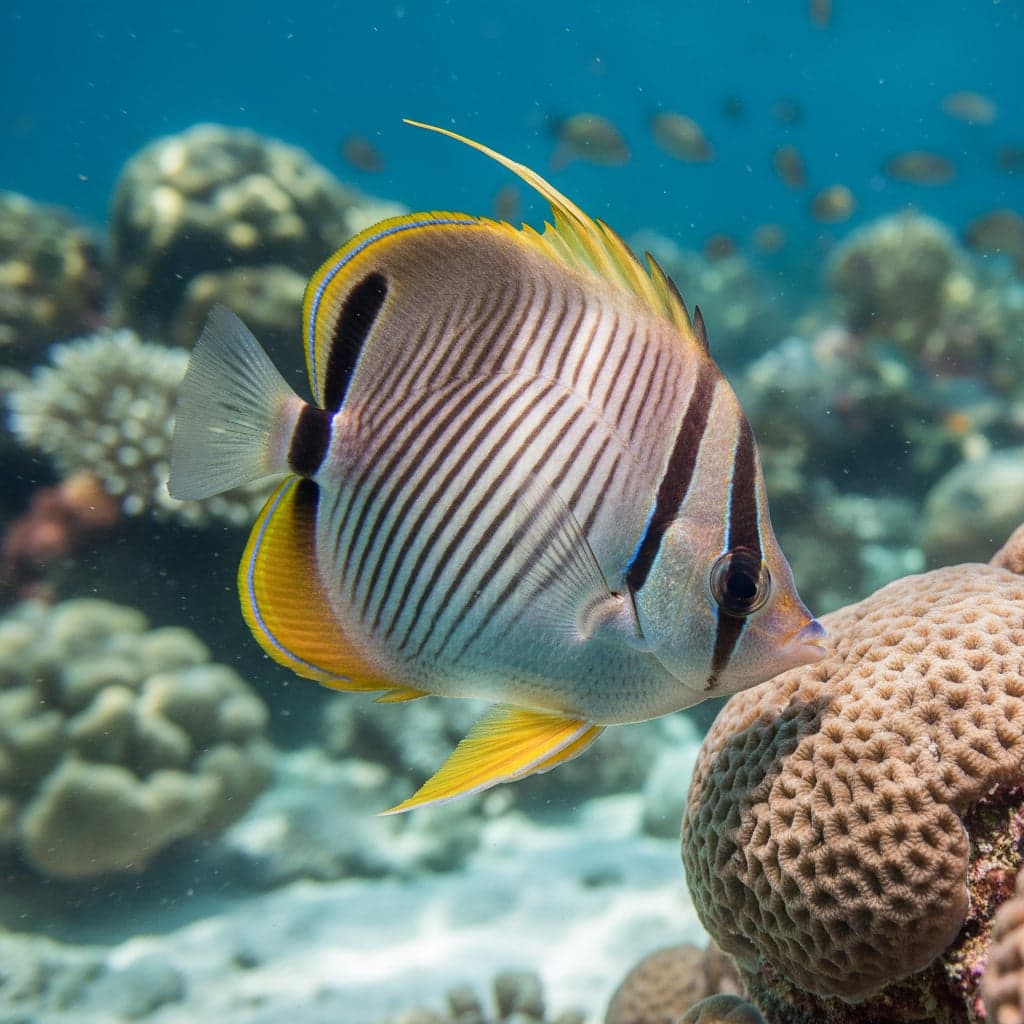
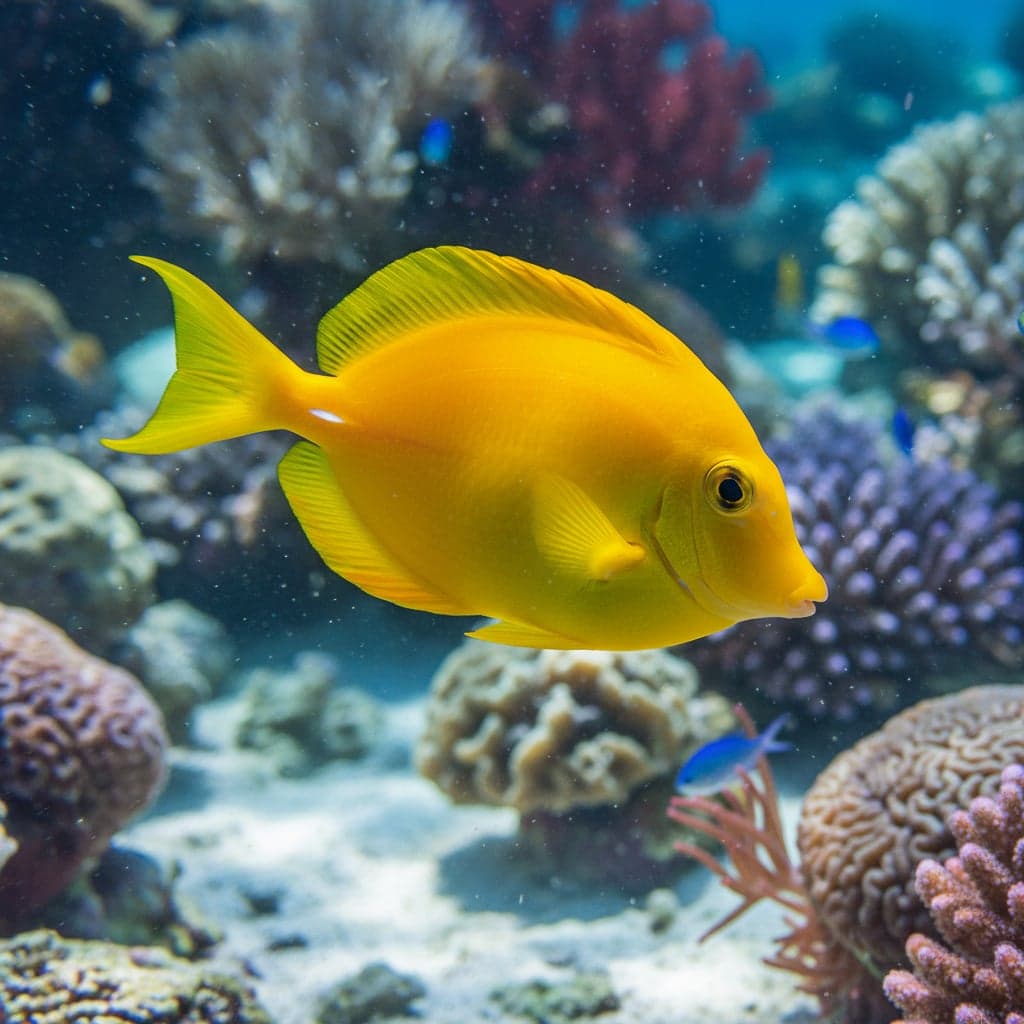
- Tangs and Angelfish
- Blennies and Gobies
- Larger, robust invertebrates (like large Starfish or Urchins)
Avoid keeping them with very aggressive bottom-dwellers (like large Triggers or Groupers) that might view the goatfish as food or competition. Be cautious with delicate, small shrimp, as they are likely to be hunted.
Breeding
Breeding Long-barbel Goatfish in captivity is not documented. In the wild, they are pelagic spawners, releasing their eggs and sperm into the water column during dusk. The larvae then drift with the plankton before settling onto the sand as juveniles. This complex life cycle makes them extremely difficult to reproduce in a closed aquarium system.
Common Health Issues
The primary health concern is Barbel Erosion. If kept on rough substrate, the barbels can wear down and become infected (Barbel Rot). They are also sensitive to high levels of Nitrate and organic phosphates. Maintaining a pristine, soft-sand environment with frequent water changes and a high-protein diet is the best way to ensure the tireless, sand-sifting Long-barbel Goatfish remains a healthy and engaging part of your reef ecosystem.