Elephantnose Fish: Gnathonemus petersii
The Elephantnose Fish (Gnathonemus petersii) is a biological marvel, equipped with a specialized chin 'trunk' for foraging and a sophisticated electrosensory system used for navigation and communication in murky waters.
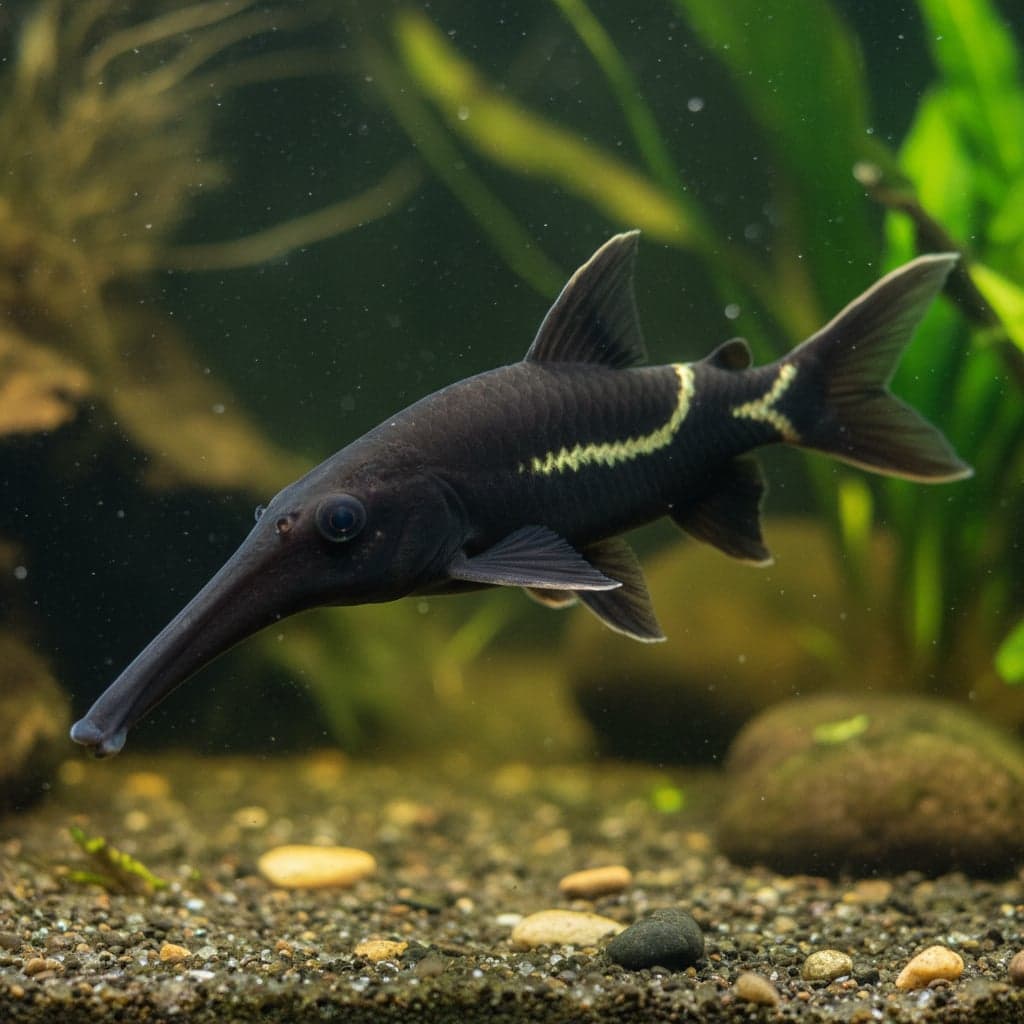
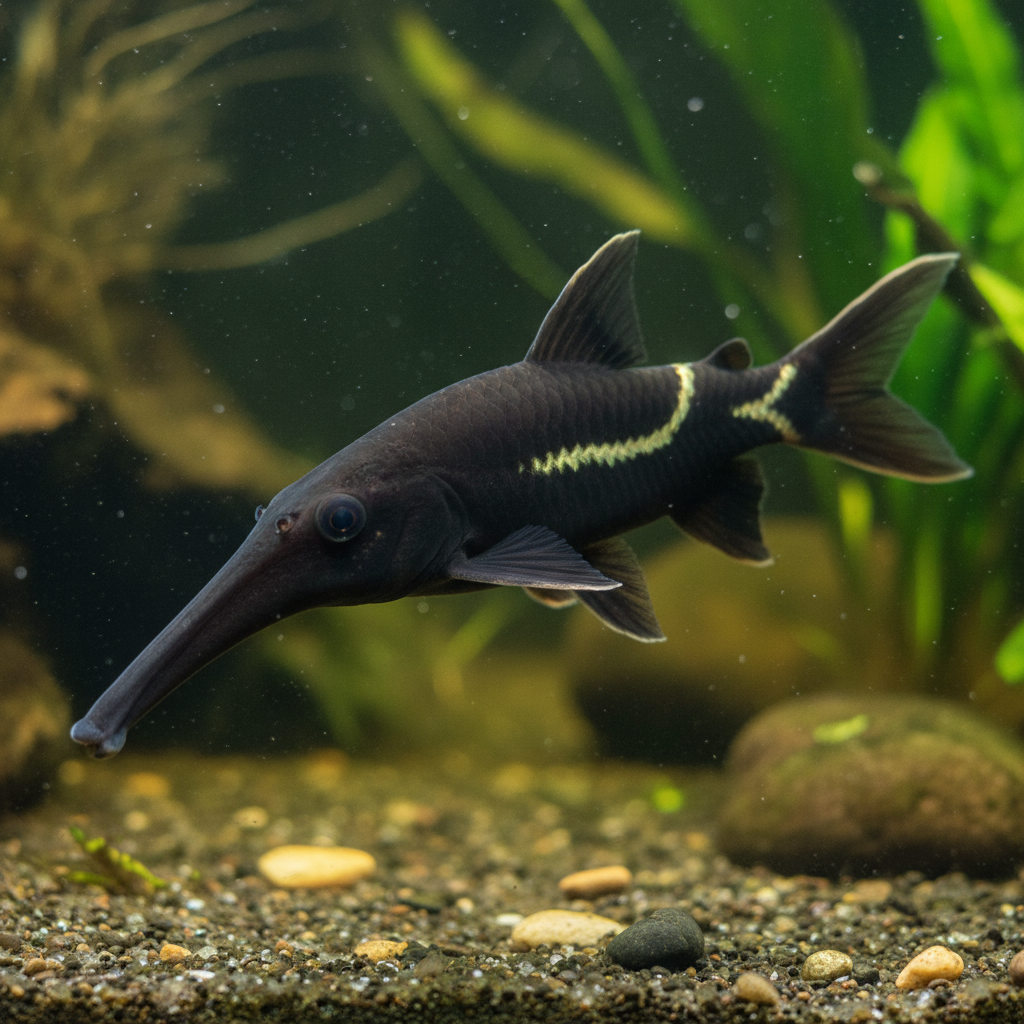
The Elephantnose Fish (Gnathonemus petersii), or Peters' Elephantnose, is one of the most intellectually and biologically intriguing fish in the world. It is defined by its dark brown to black, laterally compressed body and a distinctive trunk-like extension of the lower jaw known as the "Schnauzenorgan." This organ is exceptionally sensitive and is used not for breathing, but as a tactile and chemosensory probe to find food in the substrate. Most famously, the Elephantnose Fish possesses an active electrosensory system, generating a weak electrical field to "see" its environment, detect prey, and even communicate with others of its kind, making it a high-intelligence resident that requires a specialized environment to thrive.
In the aquarium, they are the "scientists" of the substrate. They are inquisitive and highly active at night, using their trunk to systematically sift through sand with a precision that few other species can match.
Natural Habitat & Origin
Gnathonemus petersii is native to West and Central Africa, specifically the Niger, Ogun, and Congo river basins. They inhabit muddy, slow-moving rivers and stagnant pool margins where the water is often dark with tannins and low in visibility. In these murky environments, where traditional eyesight is limited, they have evolved their electroreceptive capabilities to navigate complex underwater environments of submerged roots and dense vegetation. They are typically found in areas with deep leaf litter and soft, silty bottoms.
Care Requirements
The Elephantnose Fish is an Advanced-difficulty species due to its specific sensory requirements and its sensitivity to poor water quality. A minimum tank size of 40 gallons (150L) is required for a single adult.
Maintain stable parameters: a pH of 6.0 to 7.5 and a temperature of 75°F to 82°F (24°C to 28°C). The aquarium MUST feature a soft, sandy substrate. Use of coarse gravel is unacceptable as it will damage the delicate "trunk" organ, leading to infection and starvation. The setup should be dimly lit or feature heavily shaded areas using floating plants or large-leaved species like Anubias. TIP: They are highly sensitive to electrical noise; ensure that aquarium equipment (heaters, pumps) is well-maintained and not leaking stray voltage, as this can severely stress the fish's sensory system. Providing multiple "dens" or PVC pipes for security is essential.
Diet & Feeding
They are nocturnal carnivorous foragers, naturally feeding on insect larvae, small crustaceans, and worms buried in the mud.
In captivity, they can be difficult to feed and are often prone to starvation if matched with fast-moving competitors:
- They MUST have frequent offerings of live or frozen foods: Bloodworms, Tubifex, and Blackworms are their preferred diet.
- Most individuals will not accept dry flakes or pellets initially.
- Tip: They feed primarily at night. It is best to dim the lights and offer food directly near their hiding spot to ensure they receive enough nutrition.
- Providing a "feeding tube" where food is placed directly into the sand can encourage their natural foraging behavior.
Behavior & Temperament
They are peaceful towards other species but aggressive towards their own kind. In a standard home aquarium, they should be kept as solitary specimens. Keeping two Elephantnose Fish together often results in one bullying the other to death unless the tank is massive (500L+). They are shy and reclusive during the day but become remarkably active and inquisitive after sunset. They are known to exhibit "play" behavior and can be trained to recognize their owners over time.
Tank Mates
Suitable tank mates are other peaceful, non-competitive species:
- Congo Tetras (excellent as they occupy different layers)
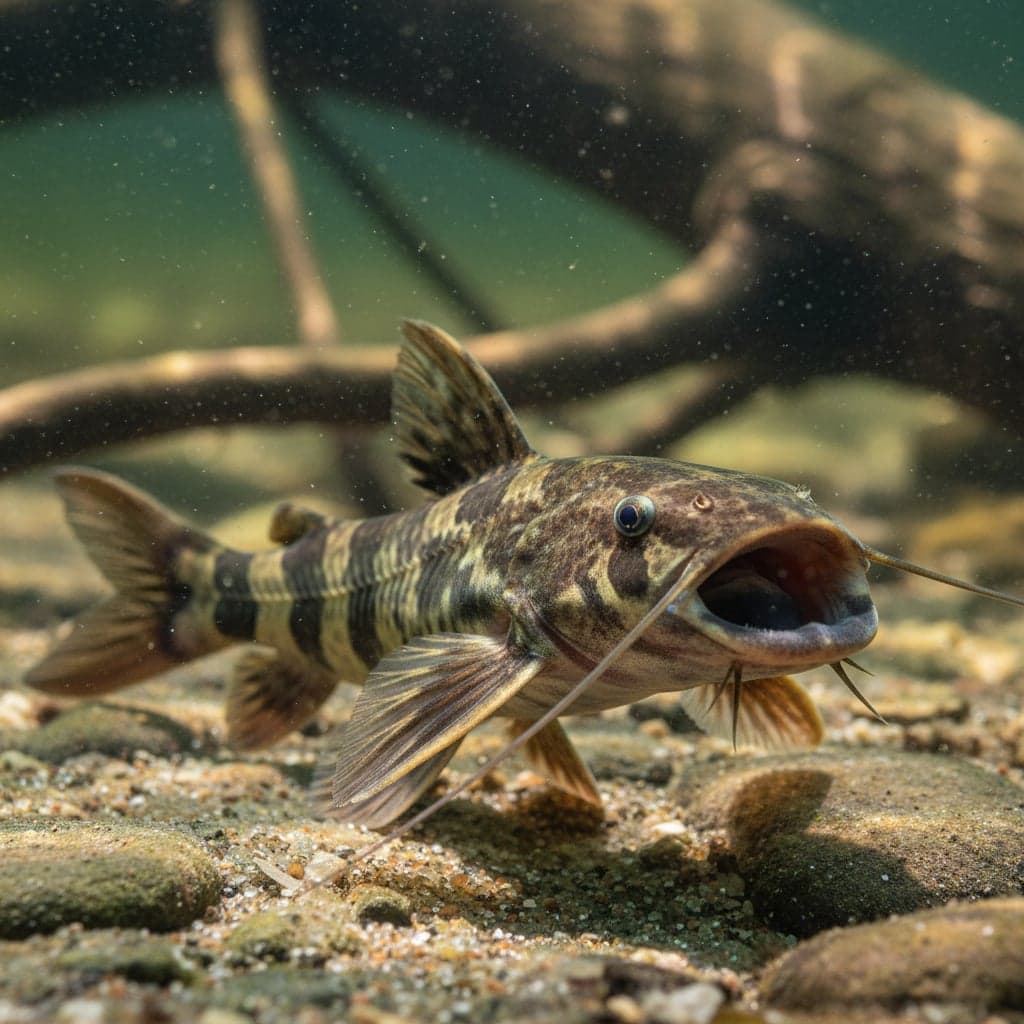
- Synodontis Catfish
- African Butterflyfish
- West African Dwarf Cichlids (Pelvicachromis)
- Larger Rasboras or Rainbowfish
Avoid keeping them with aggressive, fast-moving, or boisterous fish (like large Barbs or Mbuna) that will outcompete the slow-feeding Elephantnose or stress it with constant activity.
Breeding
Breeding Gnathonemus petersii in captivity is exceptionally rare. In the wild, they are believed to breed during the rainy season in flooded forest areas. Spawning involves complex electrical signaling between the male and female. There are no reliable reports of commercial-scale breeding or successful home aquarium breeding to date.
Common Health Issues
The primary health concern is Trunk Injury and Starvation. If the sensory organ is damaged by sharp gravel, the fish loses its ability to find food. They are also highly sensitive to sudden changes in water chemistry and many medications (especially copper). Maintaining a pristine, soft-sand environment with low-light conditions and a focus on high-quality frozen foods is the best way to ensure the fascinating, intelligent Elephantnose Fish thrives in your African biotope.