Loreto Tetra: Hyphessobrycon loretoensis
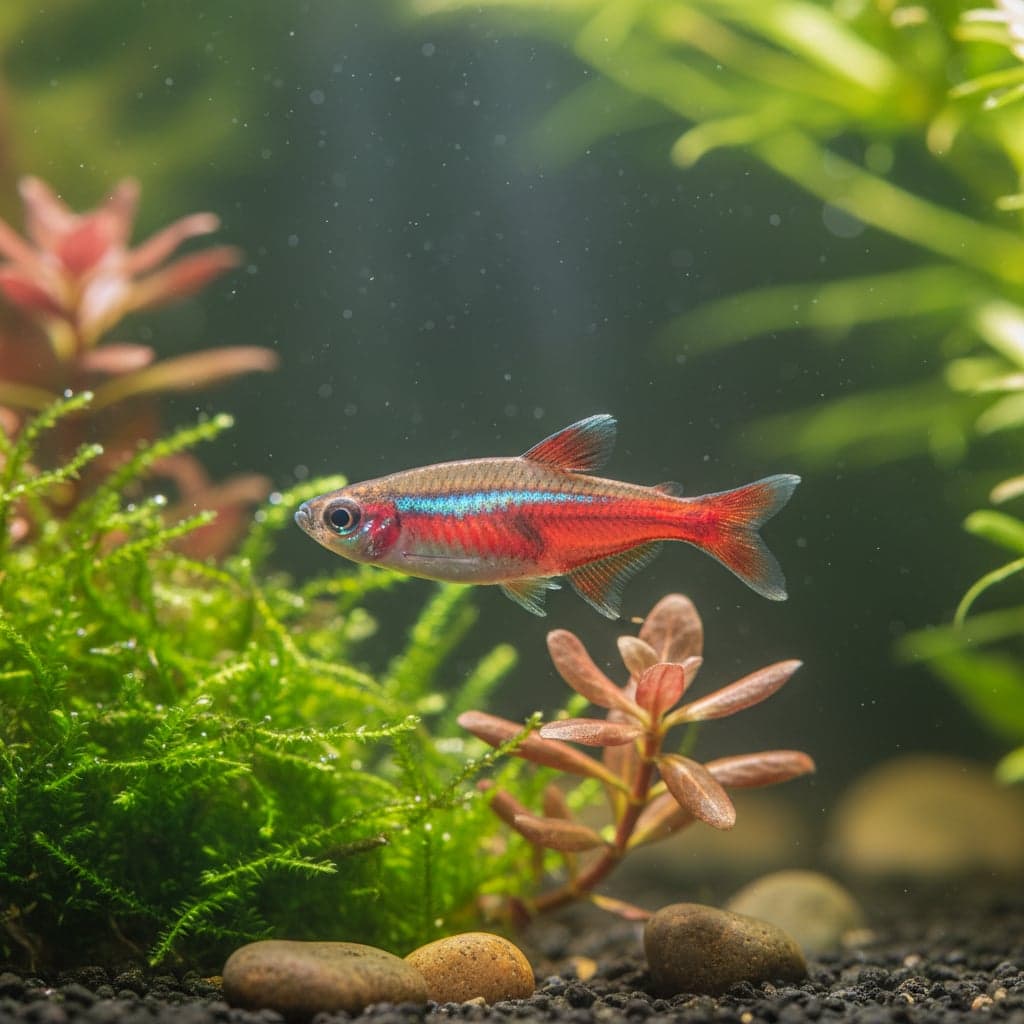
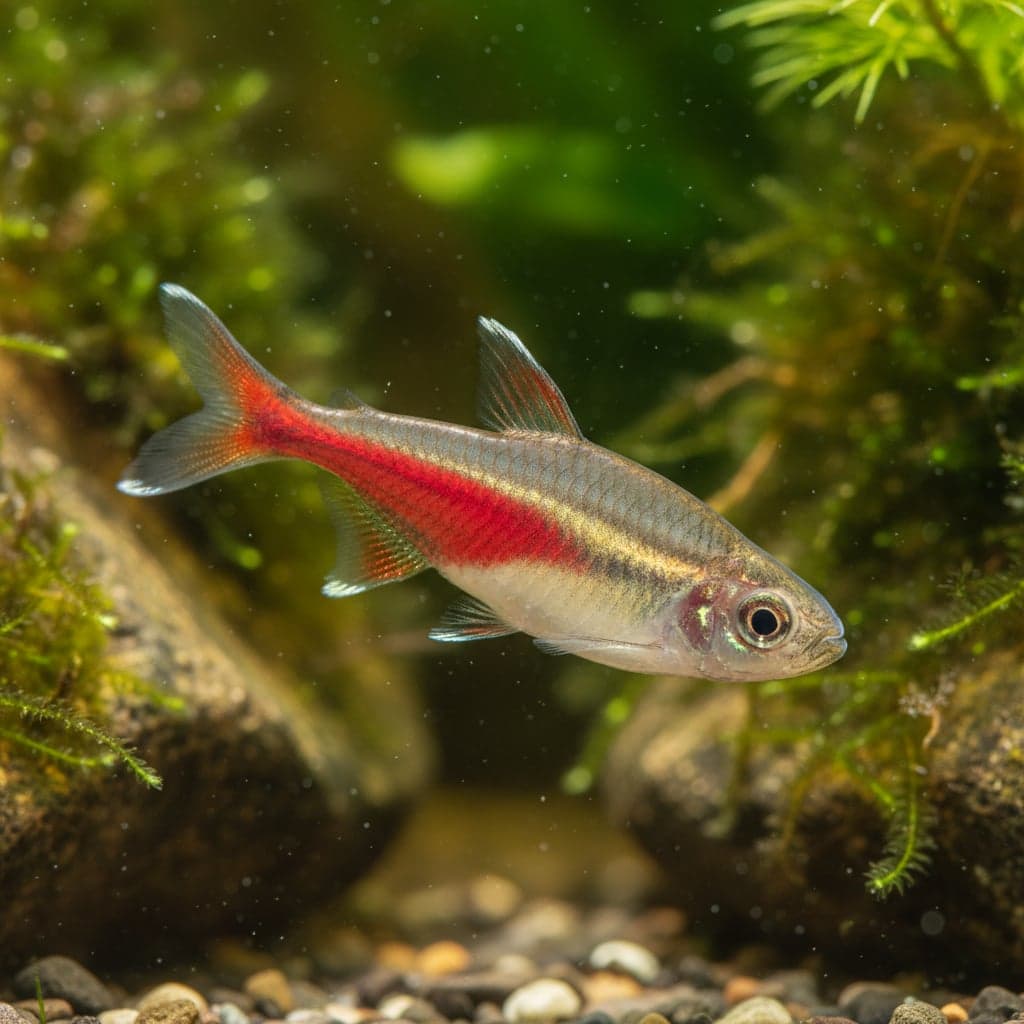
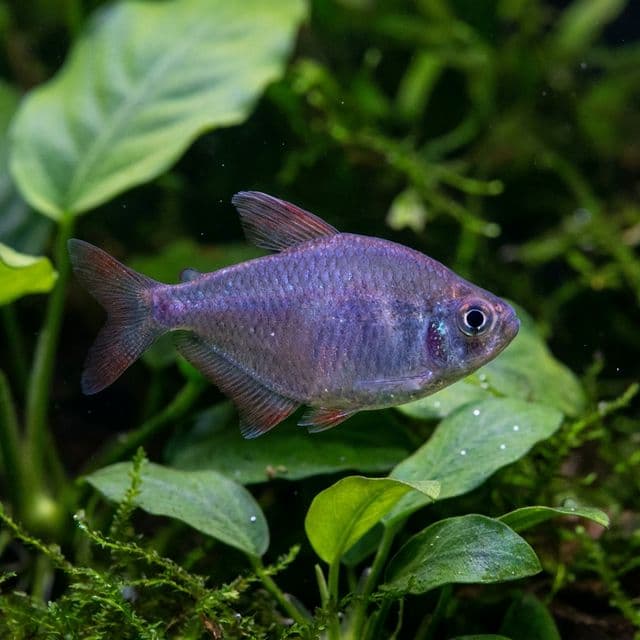
The Loreto Tetra (Hyphessobrycon loretoensis) is a hidden treasure of the Amazon, defined by its stark black lateral stripe and a vibrant, fire-red tail that pops in blackwater setups.
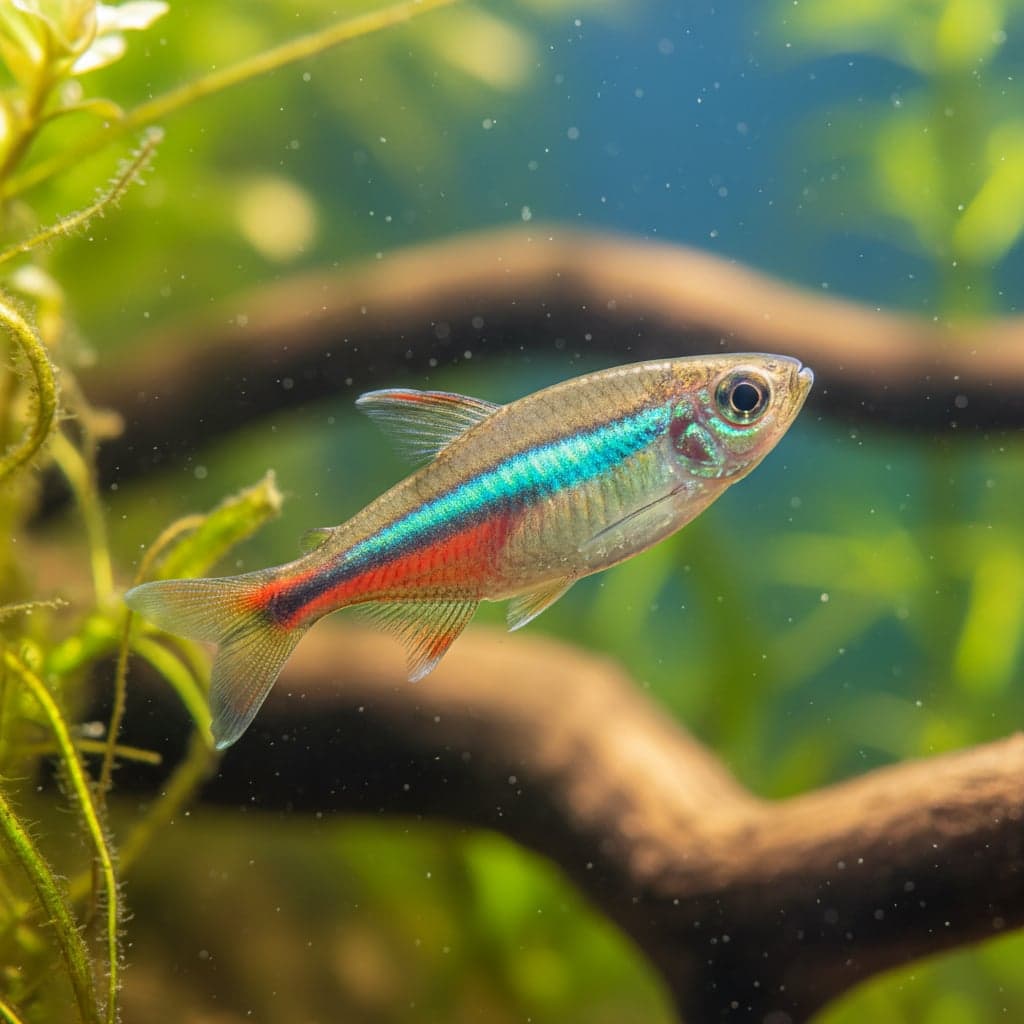
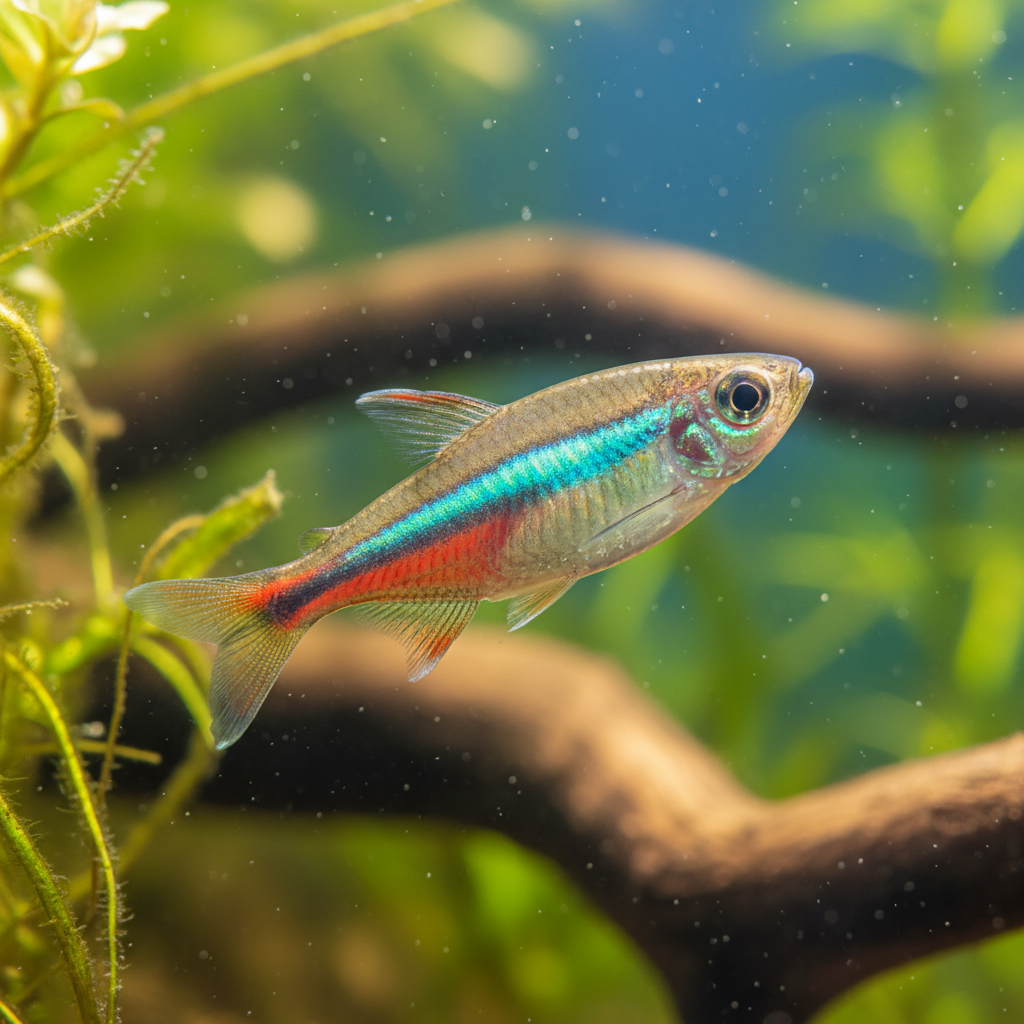
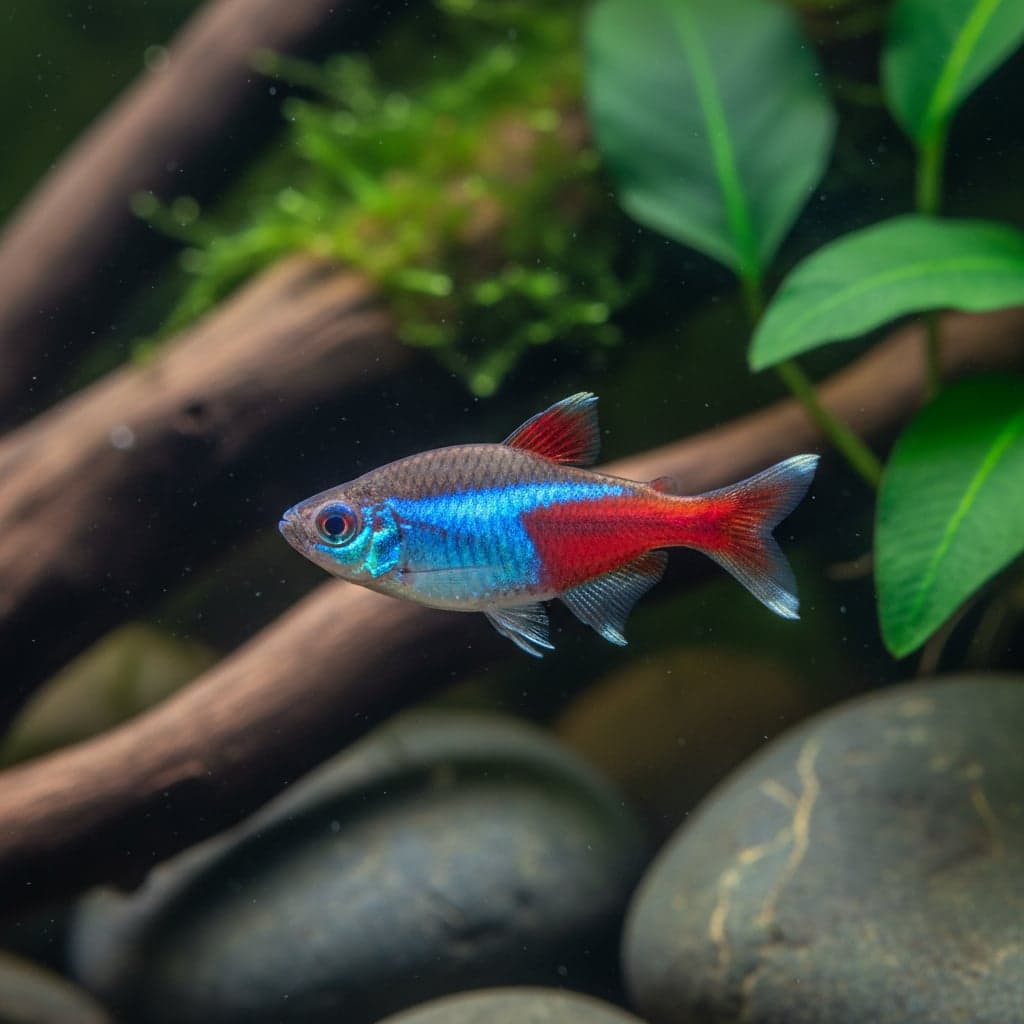
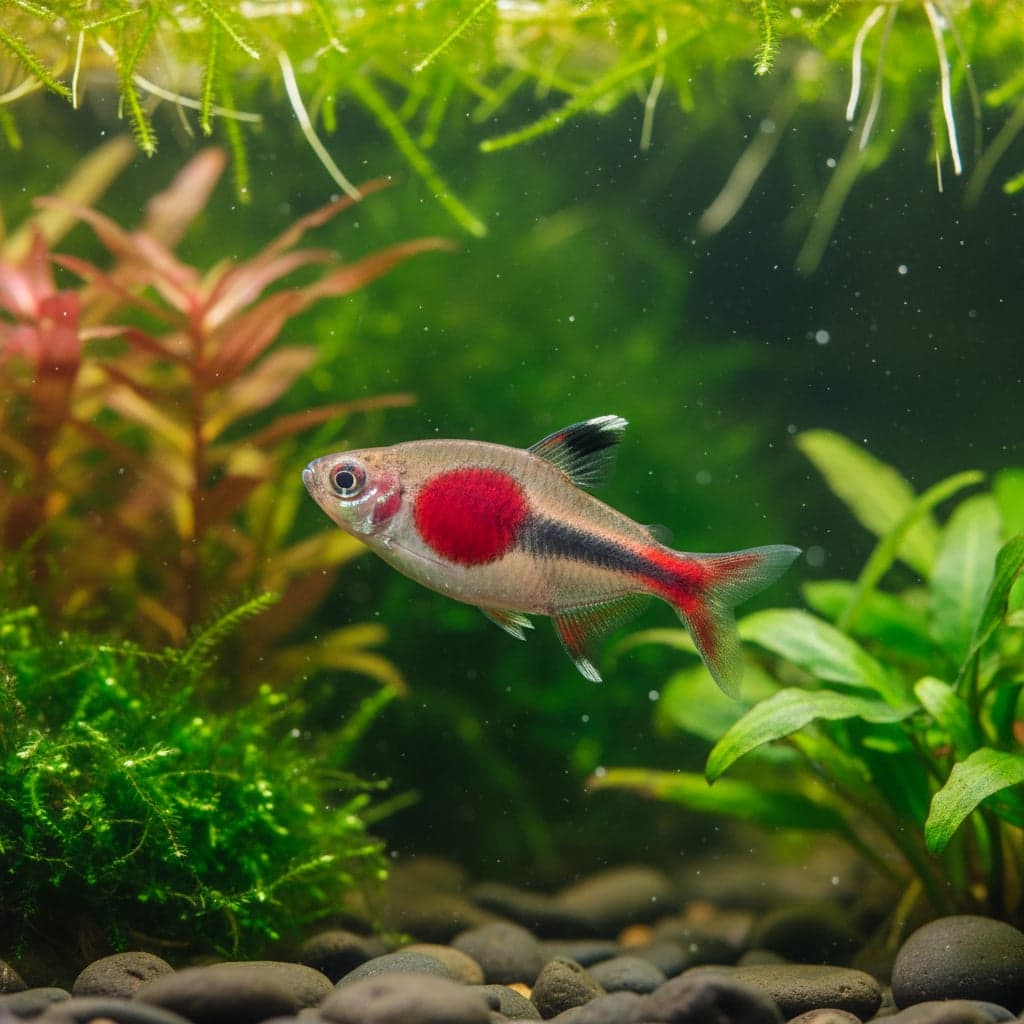
The Loreto Tetra (Hyphessobrycon loretoensis) is an exercise in elegant contrast. It is defined by its subtle silver-grey body punctuated by a broad, velvet-black horizontal stripe that runs from the tip of its snout to the base of its tail. Its most signature feature, however, is its vibrant, fire-red caudal (tail) fin, which provides a stunning pop of color against its otherwise monochromatic palette. It is a peaceful and highly social schooler that is often overlooked in favor of flashier species, yet it remains one of the most rewarding additions for a meticulously designed, tannin-rich blackwater biotope.
In the aquarium, they are the "subtle highlights." They are best displayed in a large school, where their synchronized movement and the flashes of their red tails create a sophisticated and dynamic visual texture.
Natural Habitat & Origin
Hyphessobrycon loretoensis is endemic to the Loreto region of Peru, specifically in the Upper Amazon Basin. They inhabit small, slow-moving rainforest streams and ephemeral pools where the water is heavily stained by tannins (Blackwater). These environments are characterized by extremely low mineral content and high acidity. They are almost always found in the shelter of dense submerged vegetation or deep layers of leaf litter, where their dark lateral line provides perfect camouflage in the dappled forest light.
Care Requirements
The Loreto Tetra is an Intermediate-difficulty species primarily because of its sensitivity to fluctuations in water chemistry and its requirement for specific "blackwater" conditions. A minimum tank size of 15 gallons (60L) is required for a school of 10-12.
Maintain stable parameters: a pH of 5.5 to 7.0 (ideally below 6.5) and a temperature of 75°F to 82°F (24°C to 28°C). The aquarium MUST feature soft, tannin-enriched water. Use of Indian Almond leaves, peat filtration, and driftwood is essential to maintain their vibrant health and coloration. They are highly sensitive to bright light; the setup should include plenty of floating plants to create a dim, secure environment. TIP: They are naturally shy; provide an abundance of line-of-sight breaks using fine-leaved plants like Cabomba or Myriophyllum to help them feel safe enough to venture into the open.
Diet & Feeding
They are omnivorous micro-predators, naturally feeding on tiny aquatic invertebrates, insect larvae, and organic detritus.
In captivity, they are not fussy but require high-quality, small-sized foods:
- Premium micro-flakes and crushed floating pellets should be the staple.
- They MUST have frequent offerings of live or frozen foods: Baby Brine Shrimp, Cyclops, and Daphnia are ideal for maintaining their red tail vibrancy.
- Tip: They are "mid-water" feeders. Ensure that other, faster species in the tank do not outcompete them for food.
- Occasional offerings of spirulina-based micro-foods provide necessary dietary fiber.
Behavior & Temperament
They are supremely peaceful and social. They MUST be kept in a group of at least 8-10 individuals to feel secure; in smaller numbers, they become reclusive and their colors will significantly fade. They are "tight" schoolers, moving as a single unit when they feel exposed. They are completely non-territorial and will never bother other tank mates, making them an ideal resident for nano-fish community setups.
Tank Mates
Suitable tank mates are other peaceful, small Amazonian species:
- Other Nano-Tetras (Ember Tetras, Green Neons)
- Pencilfish and Marble Hatchetfish
- Corydoras (specifically smaller species like C. habrosus)
- Dwarf Cichlids (Apistogramma)
- Chocolate Gouramis (which share their blackwater needs)
Avoid keeping them with large, boisterous, or predatory fish (like Angelfish or large Barbs) that could easily swallow the small Loreto Tetra or stress it with constant activity.
Breeding
Breeding Hyphessobrycon loretoensis in captivity is challenging and requires a dedicated spawning setup. They are egg-scatterers that provide no parental care. Successful spawning requires extremely soft, acidic water (dH <2, pH 5.0-6.0) and very dim lighting. The parents should be removed immediately after spawning to prevent them from eating the eggs. The fry are tiny and require specialized micro-infusoria for the first few days before they can accept freshly hatched baby brine shrimp.
Common Health Issues
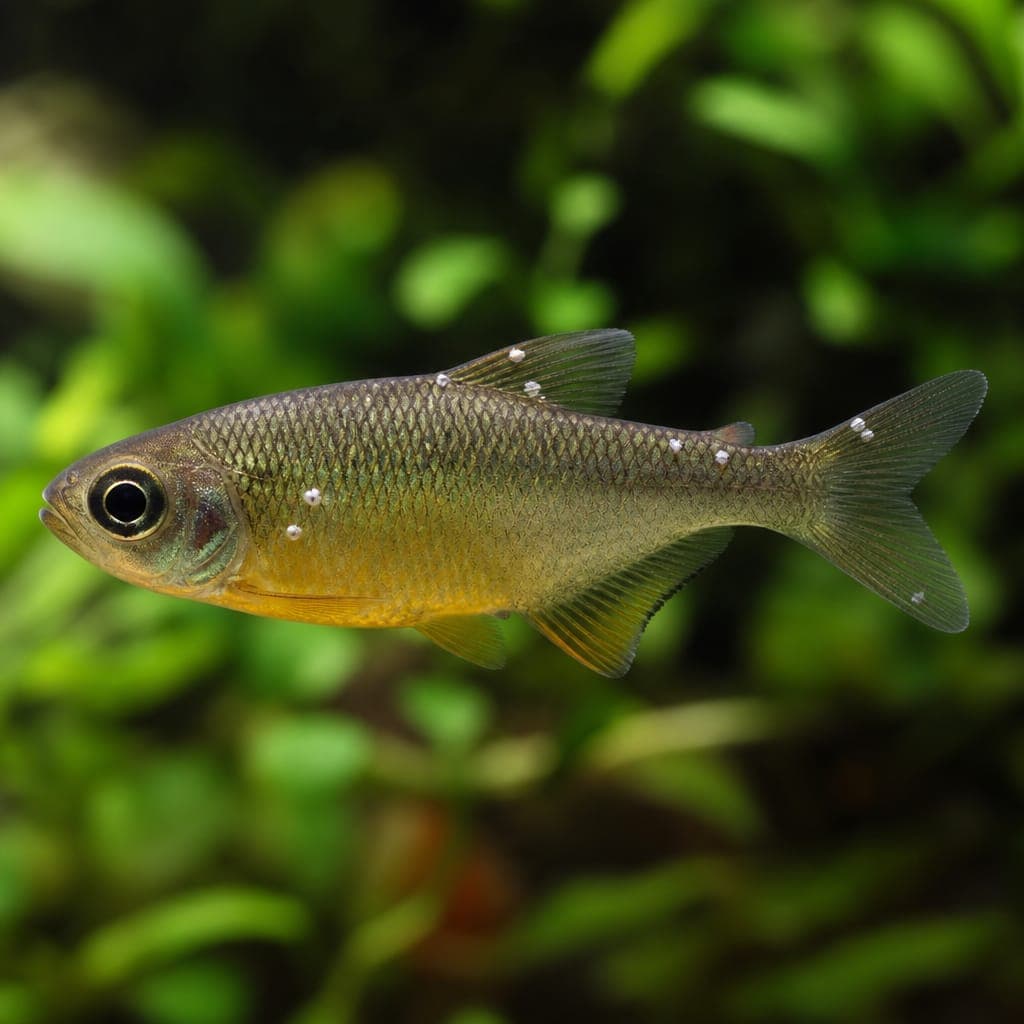
The primary concern is Shock from Water Fluctuations. They are very sensitive to sudden changes in pH or temperature and are prone to Ich (White Spot) if stressed. Maintaining a stable, tannin-rich blackwater environment with zero nitrate accumulation is the best way to ensure the elegant and fiery-tailed Loreto Tetra thrives in your South American display.