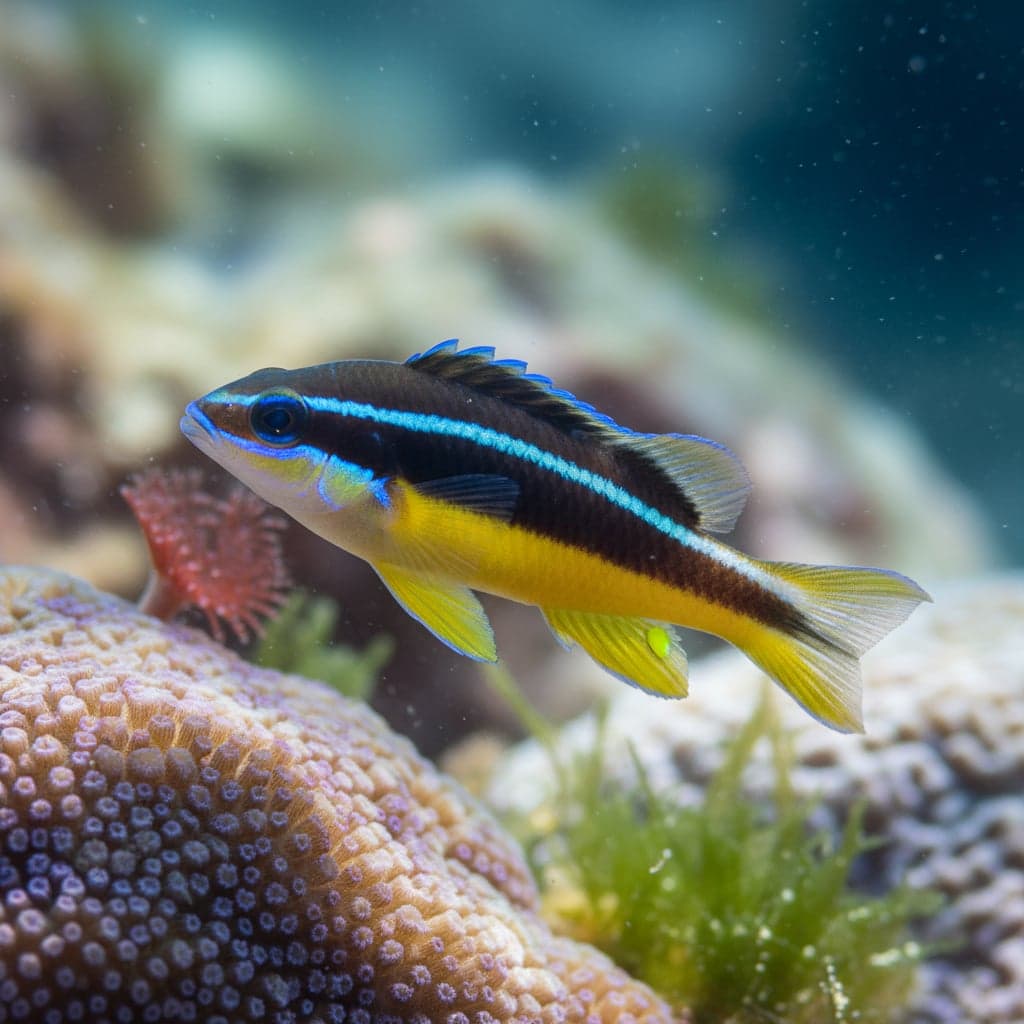
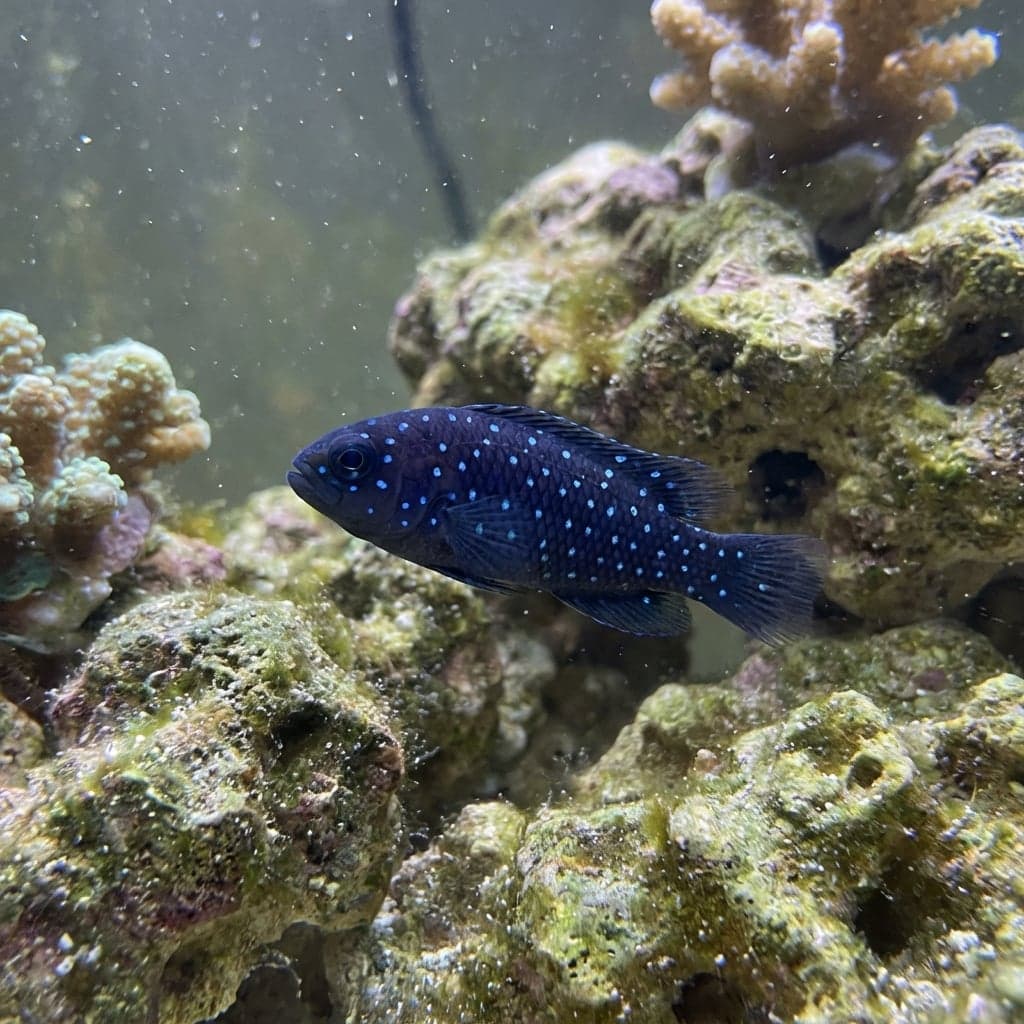
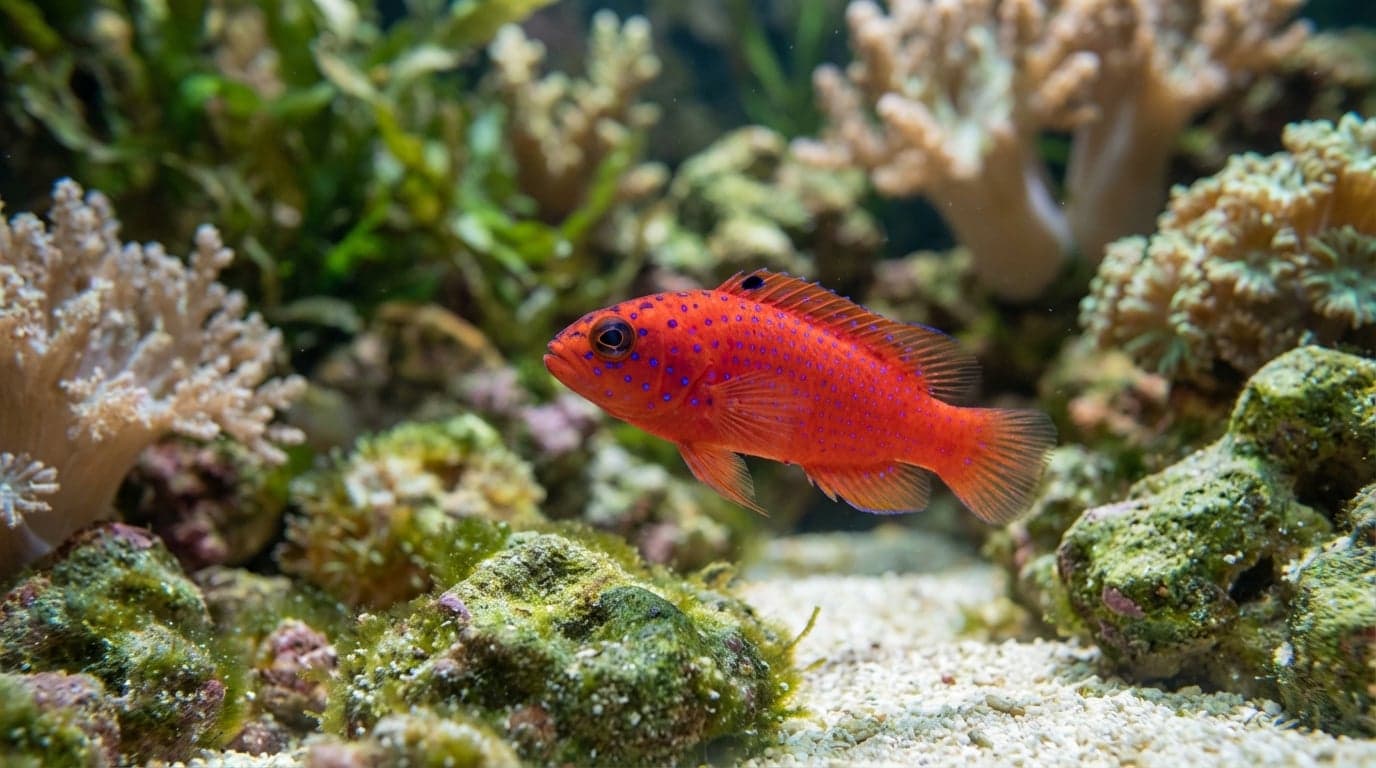
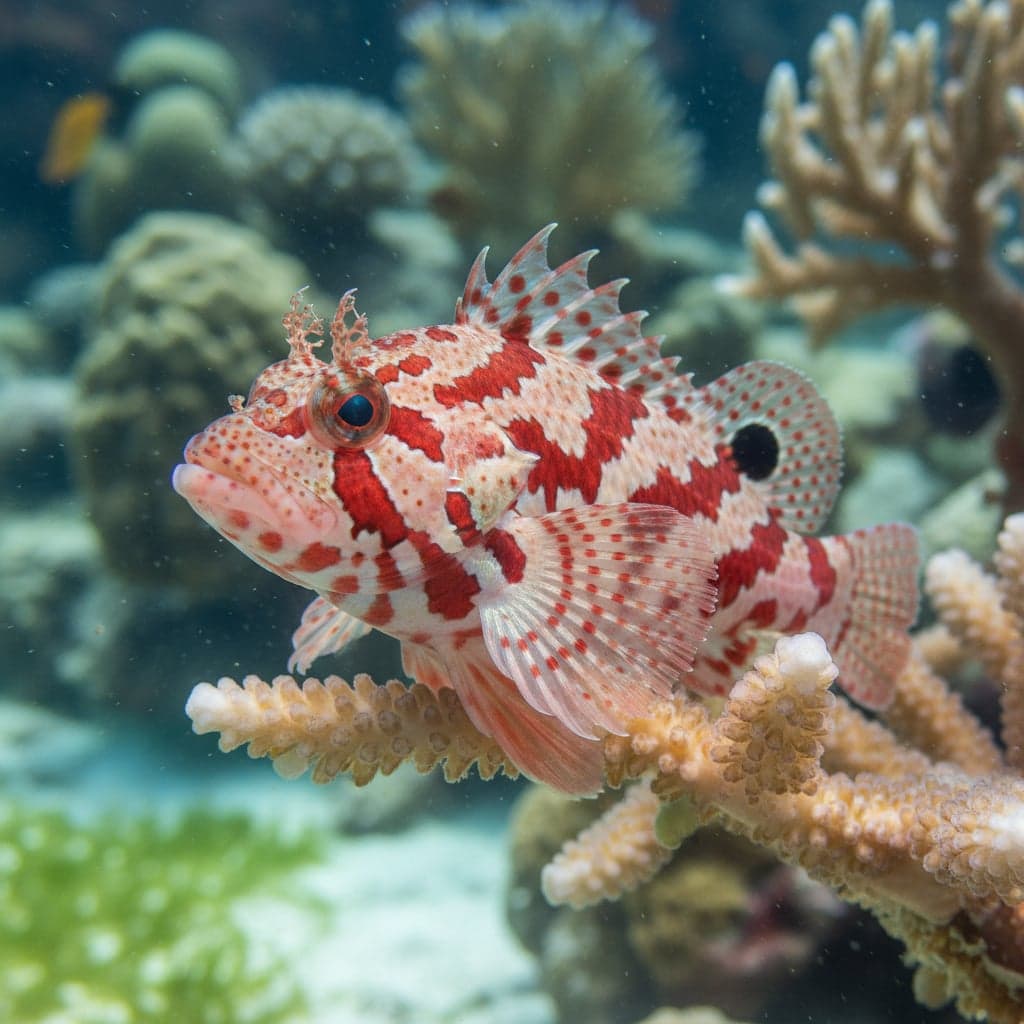
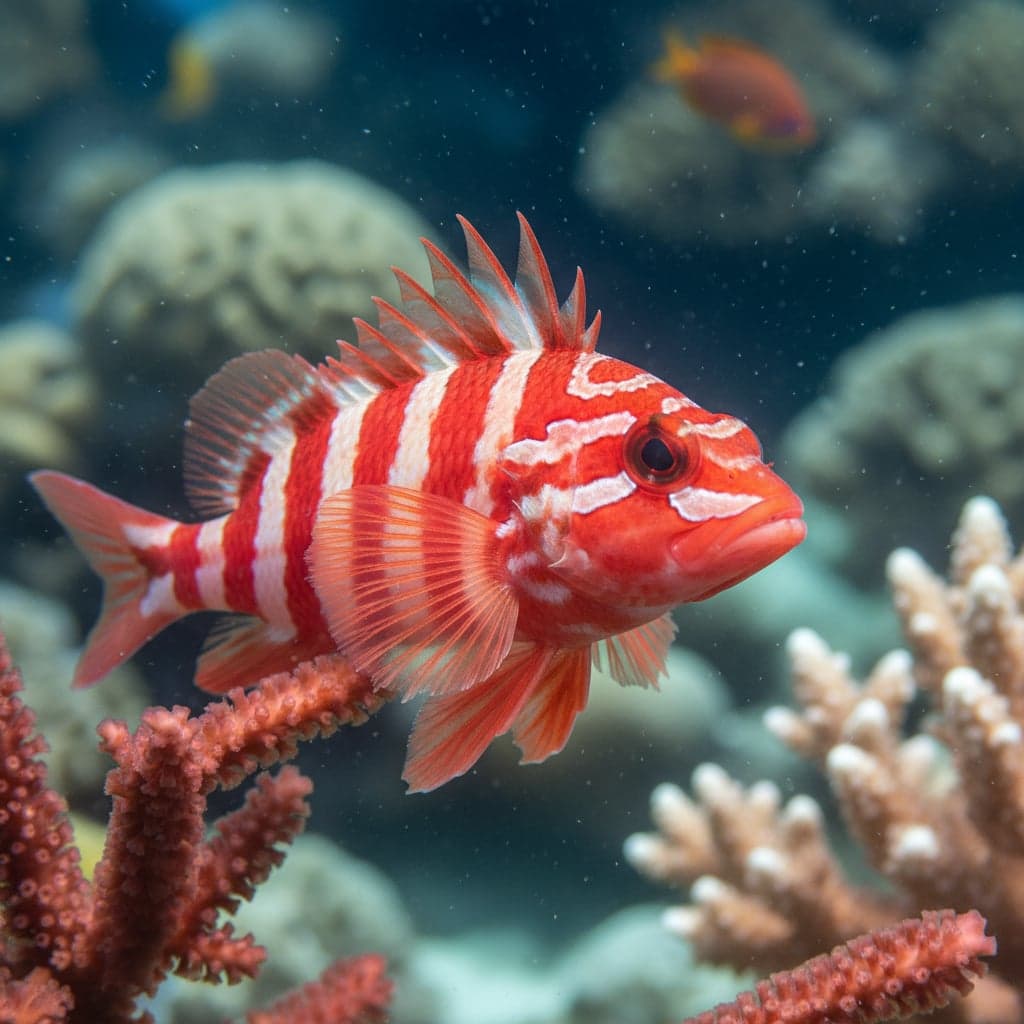
Magenta Dottyback
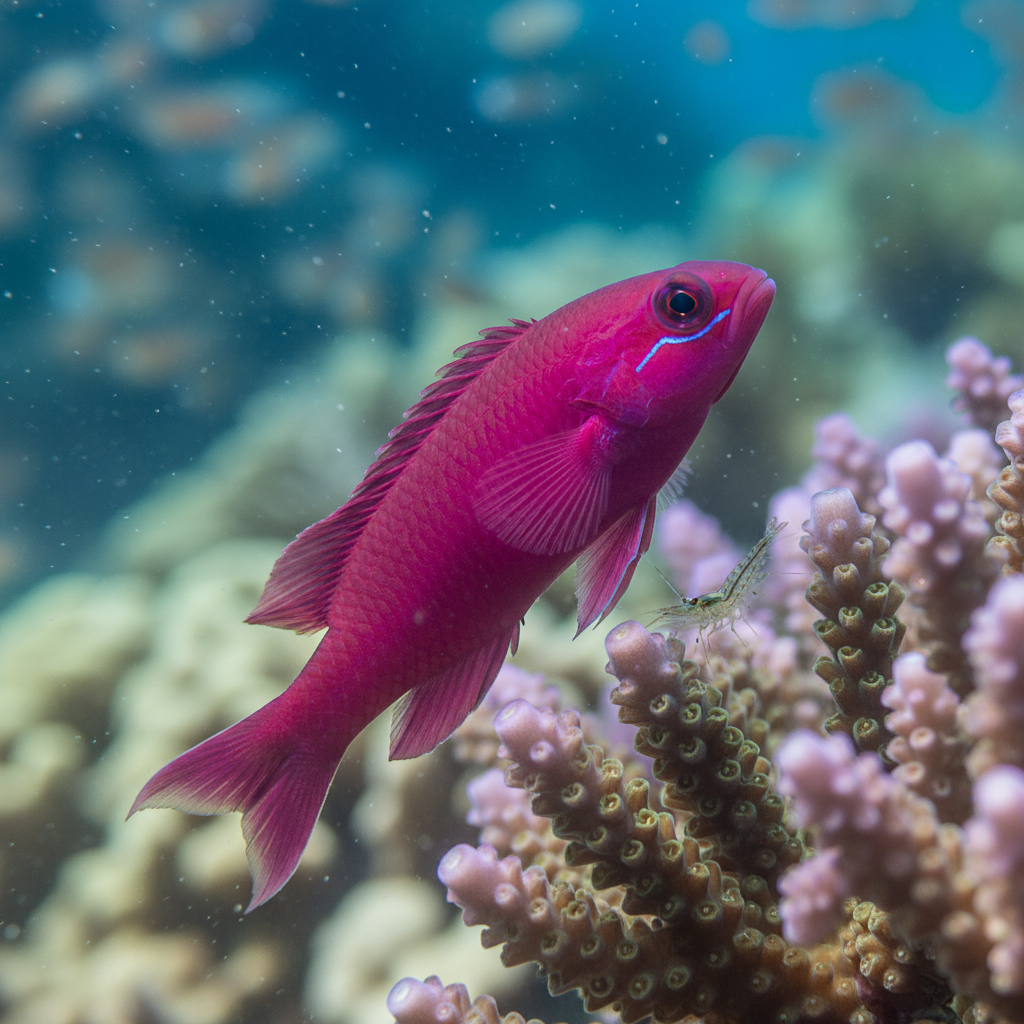
The Magenta Dottyback (Pictichromis porphyreus) is a small, intensely purple reef fish — hardy and reef-safe, but bold and territorial.

Magenta Dottyback
The Magenta Dottyback (Pictichromis porphyreus), also sold as the purple or strawberry dottyback, is a small reef fish of one job: saturated magenta-purple from nose to tail. Adults reach only about 6 cm (2.5 inches). Hardy, inexpensive and easy to feed, it is a genuine beginner livestock choice on water quality and diet — and a planning problem on temperament. Frontmatter lists Beginner and Semi-aggressive together for that reason: the fish survives novice mistakes, but it will rearrange a nano community if you stock shy neighbours first.
Despite the tiny size, it holds territory against much larger tankmates. Add it last, or give it a rock pile that is clearly its own.
Natural Habitat & Origin
Pictichromis porphyreus occurs in the western Pacific, living tight to the reef among rock, rubble and crevices and darting out to take small crustaceans and zooplankton. It is secretive when threatened — a flash of purple into a hole — and bold when the cave is claimed.
In the aquarium recreate that: abundant live rock with holes, caves and overhangs to own as territory and night shelter. A bare open box with nowhere to claim turns boldness into constant mid-water chasing. Fine sand or rubble under the rock is fine; the fish is not a sand-sifter.
Care Requirements
Stable marine parameters: salinity about 1.024–1.026, pH 8.1–8.4, temperature 24–26°C (75–79°F). Around 75 litres (20 US gallons) and up works when rockwork is dense; more volume dilutes disputes with other small predators. A secure lid is wise — startled dottybacks jump.
It tolerates typical reef conditions once settled. Still quarantine new arrivals. Marine ich (Cryptocaryon irritans) and marine velvet (Amyloodinium ocellatum) are not rare in small imports, and copper does not belong on a display reef — see medications and a quarantine protocol. Captive-bred fish (common for this species) often settle faster but still deserve QT — hardiness is not immunity, and a purple fish that looks fine in the bag can seed Cryptocaryon into a soft-coral nano overnight.
Arrange rock so lines of sight break: two cave clusters separated by open sand or a tall ridge gives the fish a claim without owning every inch of glass. Continuous open rock walls encourage patrol-and-chase behaviour that reads as “aggression” when the aquascape is the real problem.
Keep nitrogen compounds in check — ammonia, nitrite and nitrate. Use the Aquarium Tracker if you want a simple log of salinity and temperature while the nano finds its rhythm.
Diet & Feeding
Carnivore. Wild intake is small crustaceans and zooplankton. In the aquarium it is usually an eager feeder: frozen mysis and enriched brine shrimp, finely chopped seafood, and quality marine pellets or flakes. Feed once or twice a day; it does not need the multi-meal plankton schedule of anthias, but it will happily overeat if you dump food.
Enthusiasm at the glass can starve slower fish. If you keep shy gobies or small wrasses, target-feed or feed in a way that reaches them after the dottyback has taken its share. Marine diets and feeding schedules cover community timing.
Behavior & Temperament
Semi-aggressive and territorial well above its length. It patrols and defends a chosen cave; in a small tank that can feel like the whole aquascape. It may harass smaller or timid fish, especially other cave-dwellers of similar shape (grammas, other dottybacks, some gobies). Best added last so established fish already own space.
Frontmatter Solitary is the practical rule: one magenta per nano unless the system is large and heavily broken by rock. Two Pictichromis of similar size in 75 litres is a common fight. Toward robust, mid-water fish it is often manageable; toward a single firefish in a tiny cave network it can be relentless.
Tank Mates
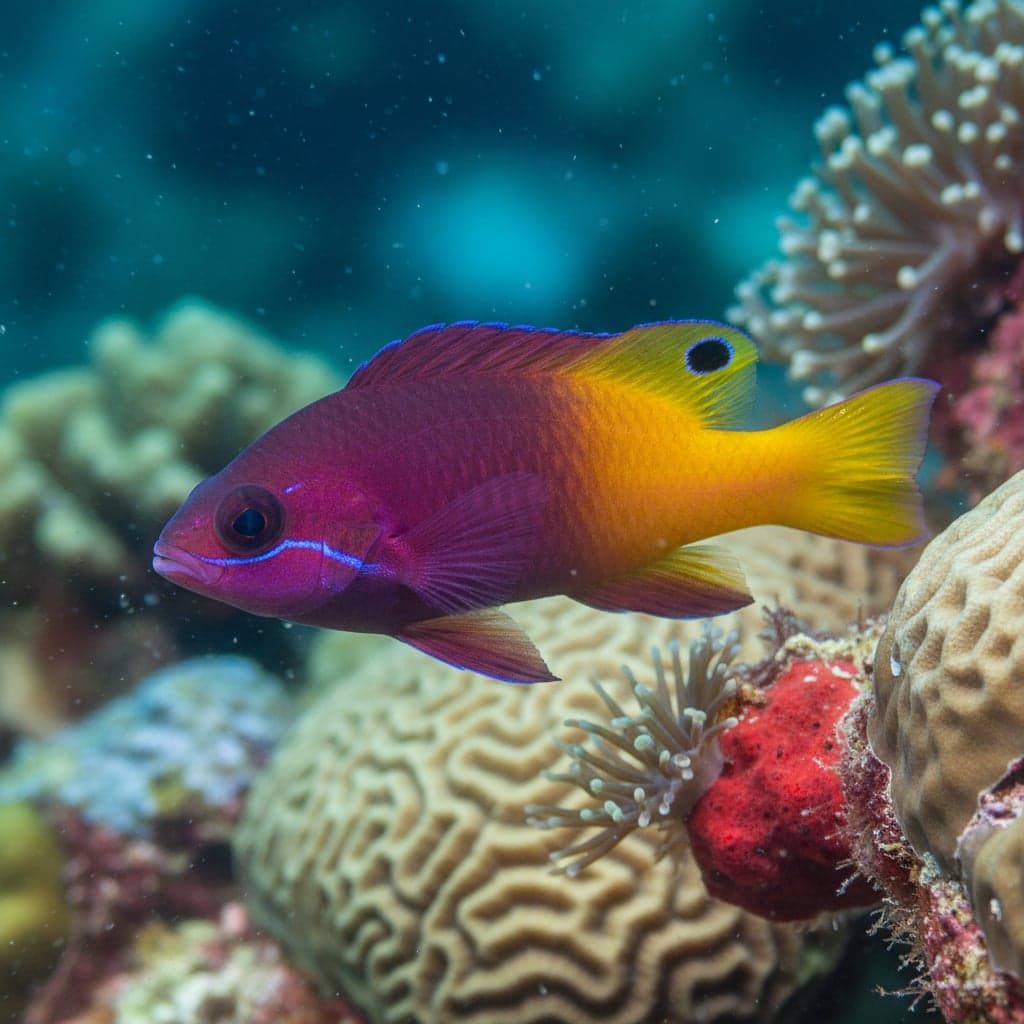
Pair with fish that can ignore or push back: common clownfish, damsels, larger wrasses, and other assertive community fish. Avoid very shy or tiny species in the same rock pile. Do not house with other territorial pseudochromids in small systems — including the royal dottyback — unless volume and aquascape honestly split territories.
Reef-safe with corals: it does not eat polyps. The shrimp caveat is real — as a small predator it may eat ornamental shrimp, tiny crustaceans and bristleworms. Some keepers call that pest control; shrimp keepers should treat “reef-safe” as coral-safe, not cleaner-shrimp-safe. Snails and larger clean-up crew are usually left alone.
Breeding
Commercially bred; captive-bred specimens are often available and tend to be hardy and display-ready. Males guard a clutch in a crevice. Rearing larvae takes dedicated effort (small foods, separate rearing), but the species is a realistic candidate for marine breeding projects compared with pelagic wrasses or tangs. Wild fish still appear in the trade — quarantine either way.
Common Health Issues
Not especially disease-prone when water is stable, still a marine fish. Marine ich and velvet follow stress and poor QT. Jumping is the other common loss — seal the lid. Aggression injuries on tankmates are a husbandry issue, not a pathogen: restock or re-scape if the purple bully owns the tank.
Mindful of temperament and the shrimp caveat, P. porphyreus remains an easy, brilliantly coloured beginner fish for a small reef — jewel purple that earns its keep when you add it last and give it a cave, not when you expect a peaceful nano angel in purple paint.